

Most people know their dog is clever. They’ve seen it. The way your dog tilts their head when you pick up the leash. The way they somehow always know when you’re about to leave, even before you’ve touched your keys. You’ve probably laughed it off, chalked it up to routine, and moved on. But researchers across the world are now uncovering just how deep that intelligence actually runs.
Scientists have suggested that dogs can be as smart as a two-year-old child, and research on dog intelligence has demonstrated that our four-legged friends can learn in more complex ways than previously known. What’s even more striking is that much of their intelligence doesn’t show up in the ways we’d expect. It’s hidden inside everyday behaviors that most of us barely notice. Here are seven of those behaviors, and what they’re really telling you.
#1: They Know When You’re Upset Before You Say a Word
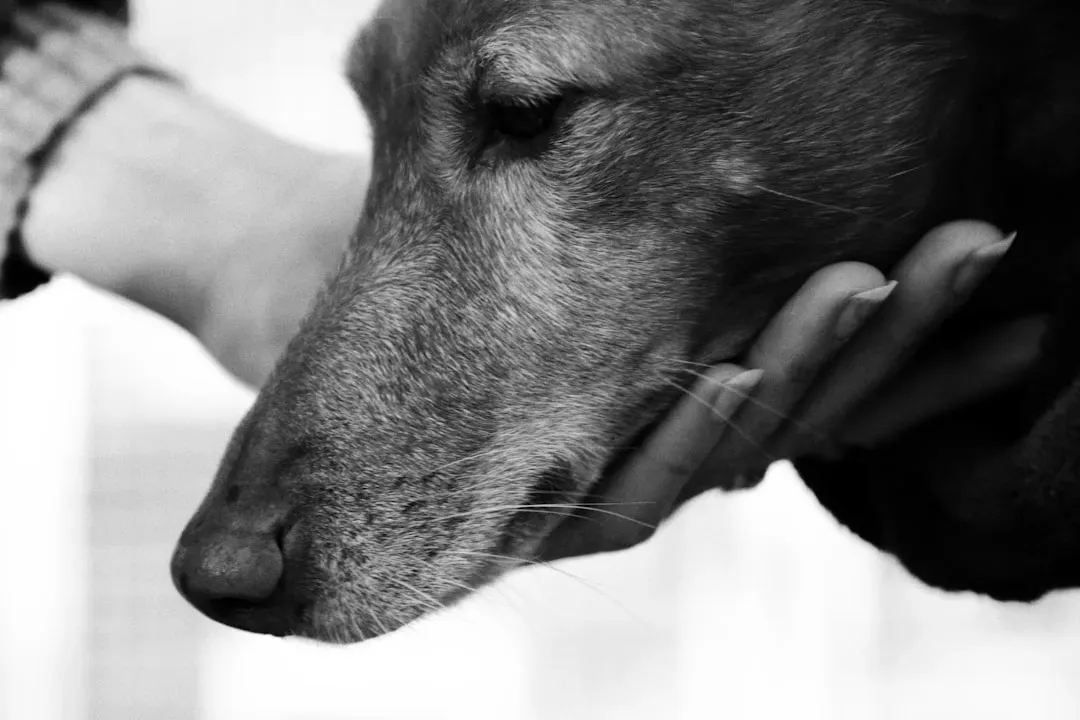
There’s a reason your dog sidles up to you on a rough day, even when you haven’t made a sound. Intelligent dogs are very good at sensing and interpreting your emotions. This isn’t just warmth or loyalty. It’s a specific cognitive skill that researchers have spent years trying to understand.
A smart dog will read your sadness and double up as an emotional support dog by taking steps to comfort you, such as cuddling up with you or refusing to leave your side until your tears dry. That response is deliberate. It’s your dog processing emotional data and responding accordingly, which is a form of social intelligence that goes well beyond basic instinct.
Research shows that dogs watch human social cues to decide who to cooperate with. In one study, dogs observed an experimenter interact with a helper and a non-helper. When the experimenter reached for a clipboard just out of reach, the helper always handed it over while the non-helper moved it further away. Dogs quickly developed a preference for the helper. They’re not just reading your emotions in the moment. They’re forming judgments about people’s character over time.
#2: They Can Learn Words Without Being Directly Taught
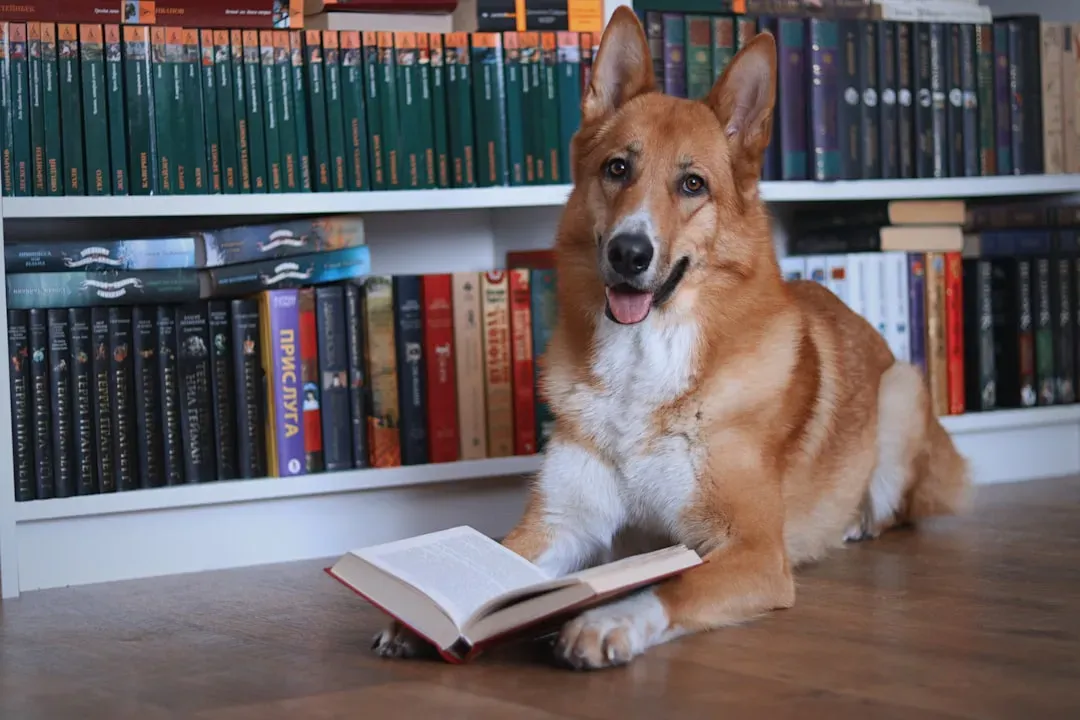
Here’s a fact that genuinely surprised researchers when it was confirmed: some dogs can pick up new vocabulary simply by listening to conversations they aren’t part of. New research suggests that some intelligent dogs can expand their vocabulary in just the same way toddlers pick up new words by overhearing conversations.
Researchers at Eötvös Loránd University in Hungary wanted to find out whether dogs that were “gifted” at learning toy names could also learn new words simply by eavesdropping. These gifted dogs were identified when their owners contacted the researchers to say they believed their dog knows the names of toys. What they found was remarkable. The dogs didn’t need direct instruction. They absorbed language passively, the way a young child absorbs words from a room full of adults talking.
The average dog can learn around 165 words, while certain brainiacs can learn upwards of 200. In one study, a remarkable Border Collie named Rico knew the names of more than 200 items and could remember them for weeks. He also showed he could learn new objects by exclusion, inferring the name of a new object just by recognizing it as one for which he didn’t yet have a name. That’s a level of logical deduction most people wouldn’t expect from a dog.
#3: They Read Your Body Language Better Than You Realize
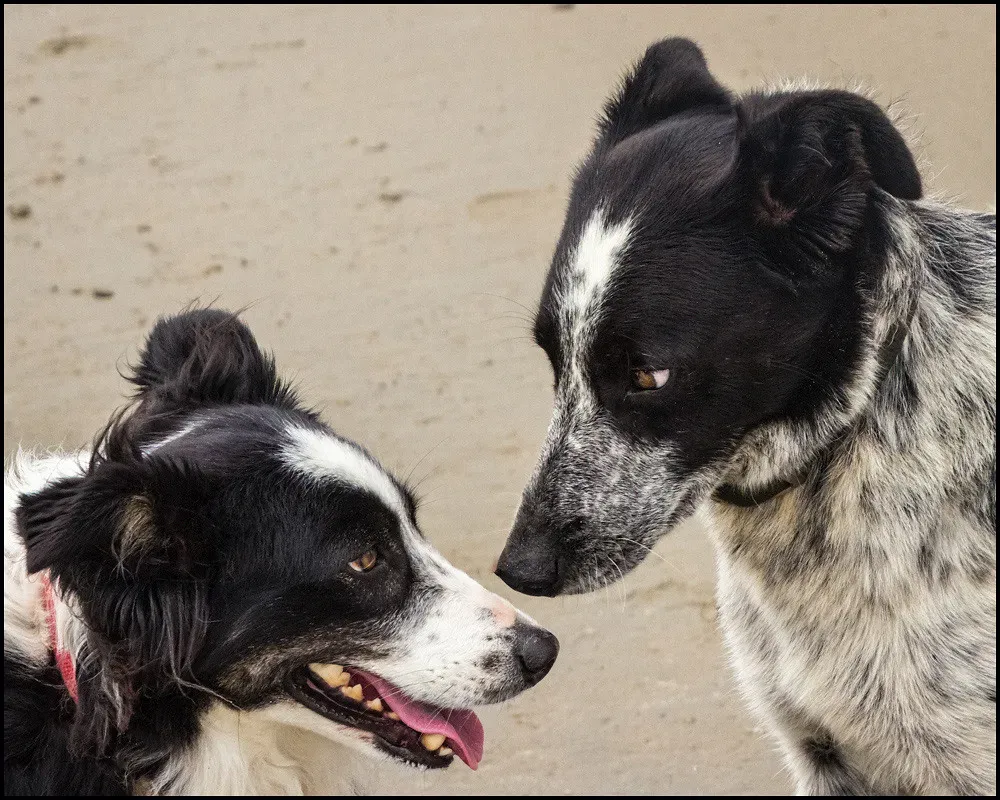
Dogs have spent thousands of years alongside humans. That kind of coexistence leaves marks, particularly cognitive ones. Dogs can learn from observing humans. Having spent roughly 15,000 years interacting with humans, dogs are quite adept at understanding human messages even without training. They don’t need a lesson. They just watch, and they learn.
Decades ago, dogs caught the interest of comparative psychologists after studies showed they could outperform apes on certain tasks. While apes could better use logic to find hidden food, dogs gained more from social and communicative cues, such as an experimenter pointing to the location of food. That tells us something important: dog intelligence is social at its core, and it’s calibrated specifically for reading people.
Being highly observant is a characteristic that smart dogs share. When you pull out your suitcase, a dog recognizes it as a sign something is about to change, like you’re going on a trip. Dogs may show their understanding by trying to jump or hide in the suitcase, or they might stick unusually close to you. They’re not just noticing the object. They’re predicting the future based on patterns they’ve already mapped.
#4: They Manipulate You, and It Works
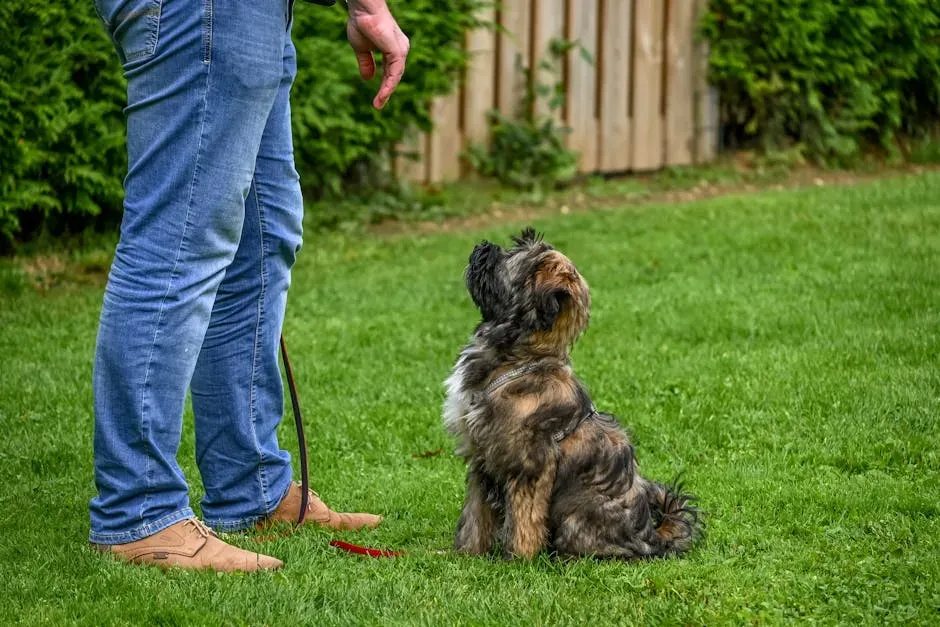
This one might sting a little, but it’s genuinely fascinating. As one expert puts it, our pets also train us. Do we jump up when they run to the back door? Do we get out the food when they bring us their bowl? How well-trained you are is a sign of how smart your dog is. Think about that for a second. They’ve figured out which actions produce which results from you, and they repeat those actions consistently.
All these factors can, ironically, reveal a dog’s cognitive ability. They are selecting activities they do or do not want to participate in, deciding whether the reward is worth their time. That’s cost-benefit reasoning. It’s not glamorous, but it’s real intelligence at work every single day in your living room.
Dogs love attention, and smart dogs will know how to get it. Intelligent dogs will place their head under your hand and bump it to prompt you to give them a scratch behind the ears, or they may even “pet” you as an example of how they want you to pet them. They’ve studied your behavior, identified what works, and developed a repeatable strategy. That’s not begging. That’s planning.
#5: Their Problem-Solving Goes Far Beyond Treat Puzzles

Problem solving is a classic measure of intelligence. It requires deductive reasoning skills, and it’s crucial to adapting and surviving in any environment. When people think of dogs solving problems, they usually picture a puzzle toy. But the real-world applications run much deeper than that.
Intelligent dogs also excel at problem-solving, whether that is figuring out a puzzle toy or how to open the front door. Dogs that figure out latches, cabinet doors, or how to retrieve a toy stuck under the couch aren’t just being resourceful. Smart dogs may also get into trouble more often because of their outstanding skills. They might figure out how to get out of their crate or reach a forbidden item from the counter. Frustrating, yes. Dumb? Definitely not.
A study conducted at the University of Helsinki found that self-control and turning to humans in problem situations are valuable traits for pet dogs, while impulsiveness and an independent problem-solving style can lead to challenges in daily life. So even how your dog chooses to solve a problem, whether by working it out alone or looking to you for help, reflects a specific cognitive style that researchers can now measure and study.
#6: They Have a Real Memory, Not Just Habit

It’s easy to dismiss your dog’s behavior as pure conditioning. They sit when you say “sit” because they’ve been rewarded for it. But the picture is more nuanced than that. Dogs’ ability to apply learned information demonstrates a capacity to retain information and apply it, comparable to remembering something you learned in school years ago. That’s not a reflex. That’s memory.
A really smart dog will remember commands over time, even if they haven’t been used in a while. This kind of long-term retention shows that learning in dogs isn’t simply about repetition reinforcing a behavior. There’s genuine storage and recall happening inside that furry head.
Using a “semantic violation paradigm,” researchers spoke a word that dogs were trained to know while showing them an object. Sometimes the object matched the word; other times, they were mismatched. In humans, the mismatch triggers a distinct electrical response in the frontal lobe known as the N400 effect. In a 2024 study, dogs showed a comparable EEG response. Their brains, it turns out, process language and meaning in ways that are meaningfully similar to ours.
#7: They’re Hard-Wired for Cooperative Communication from Birth

Perhaps the most surprising thing about dog intelligence is how early it appears, and where it comes from. By 16 weeks of age, nine out of ten cognitive skills tested had already developed in puppies. The skills emerge at markedly different time points, indicating that they are separate forms of intelligence rather than just one. Dogs aren’t just generally smart or generally slow. Like humans, they have cognitive strengths and weaknesses distributed across different areas.
Skills such as understanding simple human gestures emerged early in dog puppies, but not in wolf puppies at this young age, alongside basic skills like working memory. This suggests that domesticated dogs evolved specific cognitive traits that support communication with humans. It’s not something they learn from their owners. It’s something they’re born with, selected for over thousands of years of living beside us.
Researchers divide dog intelligence into three main categories: instinctive intelligence (what a dog is bred to do), adaptive intelligence (problem solving and learning from the environment), and working and obedience intelligence (formal learning like training). What makes dogs extraordinary isn’t that they score highest in any single category. It’s that they operate across all three simultaneously, every single day, often without us even noticing.
Final Thought: Your Dog Is Probably Smarter Than You Give Them Credit For

Here’s the honest truth: we’ve spent centuries assuming dogs are loyal and lovable but essentially simple. The science now tells a very different story. The last decade of research has shown that dogs are more than mere learning machines. They have a rich understanding of their world, which allows them to be flexible problem solvers. That’s not a small claim. That’s a fundamental rethinking of what it means to live with a dog.
There’s no such thing as a dog who is simply “smart” or “dumb.” Dogs, like humans, can have strengths and weaknesses in different areas. So the next time your dog does something that catches you off guard, remember it might not be a quirk. It might be a window into a mind that’s been quietly paying attention to everything around it all along.
The relationship between dogs and humans is, in a very real sense, a cognitive partnership. They’ve adapted to understand us. The least we can do is return the favor.


