

#1: Puppies Are Just Figuring Themselves Out
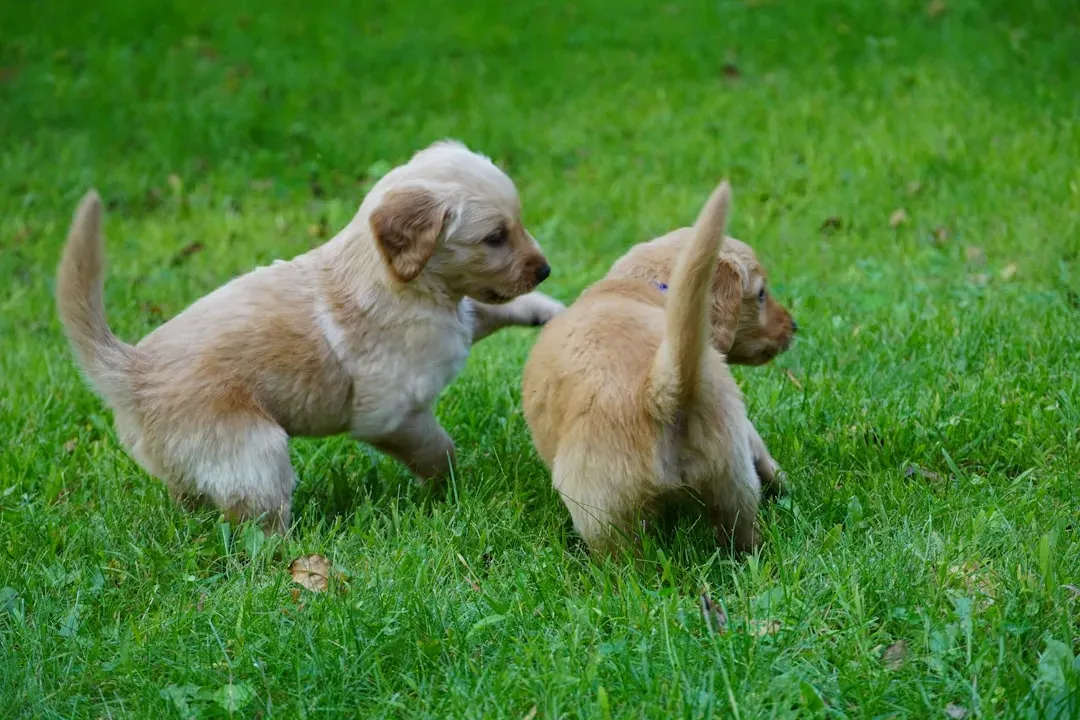
There’s something genuinely charming about watching a puppy discover its own tail for the very first time. Puppies and younger dogs may simply chase their own tails for fun, and some may not yet realize their tails are actually part of their own bodies. In other words, that wagging, wriggling thing back there looks exactly like a toy.
Puppies are still learning about their bodies and how to make them move, and they may chase their tail just for fun or as part of learning what it is. Exploration and play are important parts of healthy puppy development.
Young pups chew their tails as they become aware of their body parts, considering the tail as a toy rather than anatomy. Youthful tail chasing is usually a passing phase that does not require intervention. So if you’ve got a young pup spinning around the living room, take a breath. It’s almost certainly not a cause for alarm.
In puppies, most tail-chasing is harmless fun and often reduces or stops with age. That said, it’s still worth paying attention to how often it’s happening and whether it seems to be escalating rather than fading with time.
#2: Boredom and Not Enough to Do
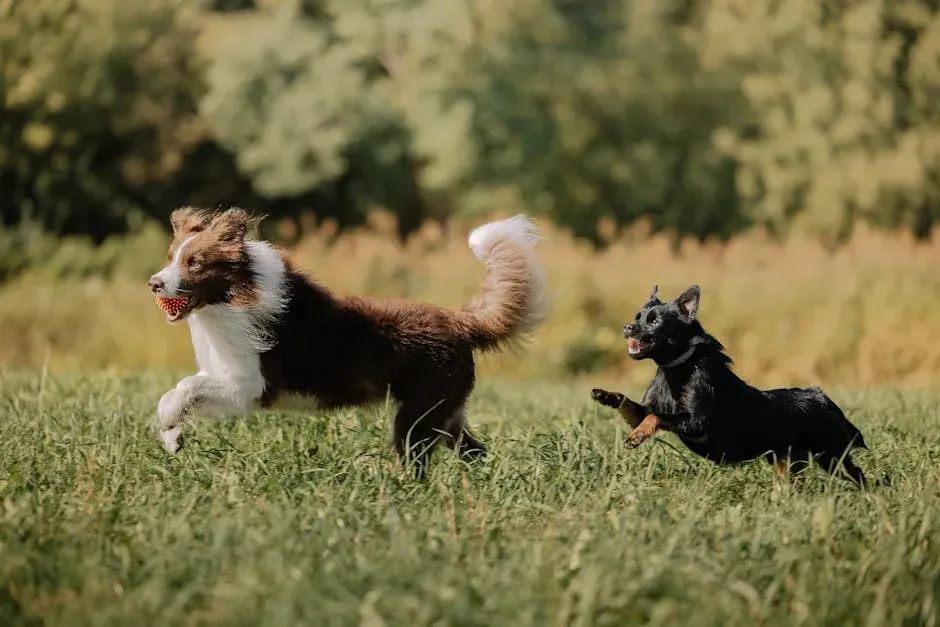
All dogs need adequate activity to meet their physical, mental, and emotional needs. If these needs aren’t met, dogs can become bored and behave in ways that attempt to help them deal with the boredom, and tail-chasing is one example of this. A restless dog will always find something to occupy itself with, and its tail is always right there.
When dogs don’t get enough exercise or mental stimulation, they create their own entertainment. Tail chasing becomes a way to burn energy when they’re stuck inside or haven’t had a good walk. Bored dogs will find something to do, and their tail is always available. The spinning motion and the challenge of trying to catch something that keeps moving away can be engaging for a dog with nothing else to do.
For dogs that are simply bored, owners can supply stimulating food puzzles that require time and brain power to solve. More walks, regular play sessions, and puzzle feeders can make a remarkable difference.
The fix for boredom-driven tail chasing is often refreshingly straightforward. For dogs that run in circles because they are bored, a simple solution may be to play fetch or take a walk. Most dogs will happily drop the tail habit the moment something more interesting comes along.
#3: Attention-Seeking Behavior You May Have Accidentally Created

Most people are amused when a dog chases his tail, so the dog continues the chase to please his owner. If a dog receives positive reinforcement when the chase ensues, he quickly learns to start the race whenever he wants attention. What begins as a cute moment can quietly develop into a trained behavior.
When dogs chase their tail, we often respond with attention, which may reinforce the behavior. Some pet parents encourage the behavior by laughing, giving the dog a treat, or even by showing the dog their tail to encourage them to chase it. The dog isn’t being manipulative. It simply learns what works.
Dogs that crave attention respond to both positive and negative attention. An attention-seeking dog may be satisfied even if you reprimand him. He prefers that you chuckle at his antics, but even scolding qualifies as attention, so a reprimand serves as positive reinforcement of the behavior.
The key to remedying this type of tail chasing is counter-intuitive. Owners should ignore the dog while he is running in circles and praise him when he is not. It takes consistency, but redirecting your attention strategically is one of the most effective tools you have.
#4: Physical Discomfort, Parasites, and Medical Causes
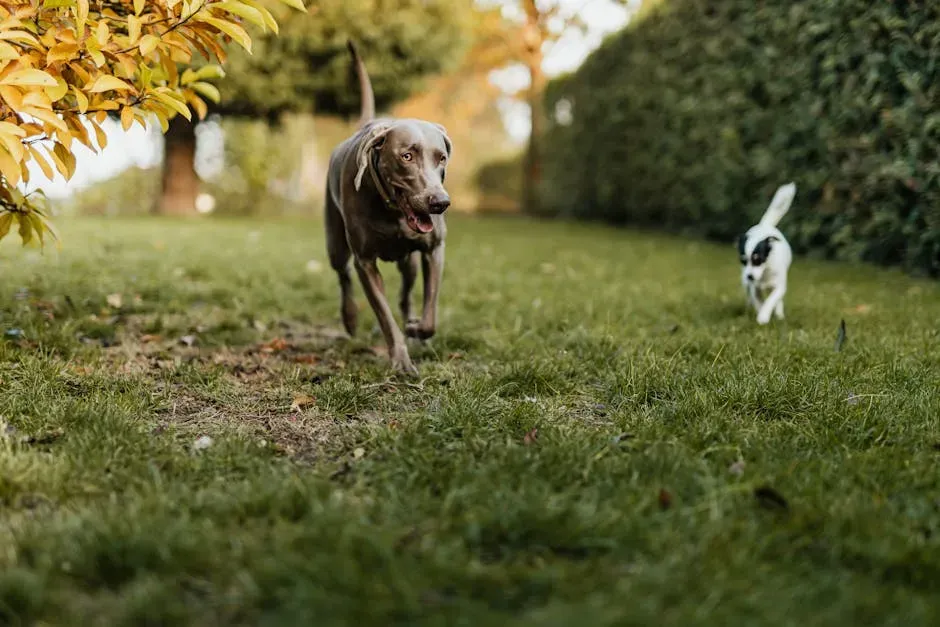
Not every tail chase is behavioral. When dogs are not feeling well, they may engage in behaviors they wouldn’t normally. When dogs chase their tails repetitively, it can be an indicator of a health issue including anal gland issues, nervous system issues, tail damage, allergies or a skin disorder, or a seizure disorder.
A number of physical ailments are linked with tail chasing. An injury to the tail, itching due to intestinal parasites or fleas, impacted anal glands, or food allergies may cause a dog to lick, bite, or chase their tail. These triggers are worth ruling out before assuming the behavior is purely psychological.
All dogs have anal glands, which are two grape-sized sacs on both sides of the anus. These sacs release scent-marking fluid whenever a dog defecates, but they can fill with liquid, causing discomfort and a fishy odor. Tail-chasing may be a dog’s attempt to relieve itself of the discomfort. It’s one of the more common physical triggers that pet owners overlook.
If a dog suddenly starts chasing or biting at his tail, scheduling a veterinary visit is important. Dogs will chew at a painful area much like people rub an arthritic knee to provide relief. For example, dogs that get their tails caught in a closing door or nick them on a sharp object will chase and chew at their tails to soothe the injury. Sudden onset tail chasing, especially in an adult dog, should always prompt a vet check.
#5: Anxiety, Compulsive Disorder, and When to Get Help

Chronic stress and anxiety are underlying causes of dogs chasing their tail, especially if tail-chasing helps the dog avoid frightening situations or provides a feeling of relief. Repetitive behaviors such as tail-chasing that are triggered by environmental conditions are known as stereotypic behaviors, and they happen in predictable patterns or rhythms.
Stress, anxiety, and even obsessive-compulsive tendencies may manifest as this behavior. Dogs experiencing separation anxiety or major life changes, such as moving homes or the addition of a new family member, might chase their tails as a coping mechanism. Think of it similarly to how people develop nervous habits under pressure.
What we might consider “normal” dog behavior becomes compulsive when it starts to interfere with the dog’s quality of life. If a dog is chasing and biting their tail so frequently that it is happening almost nonstop, it could be cause for concern. Just like people, dogs can develop compulsive habits that are hard for them to control.
Certain high-drive, energetic, sensitive breeds appear over-represented in cases of abnormal or compulsive tail chasing, including bull terriers, German shepherds, Staffordshire bull terriers, Dobermans, cattle dogs, and Shiba Inus. In a 2012 study, researchers investigated 368 dogs from four breeds known for tail chasing, finding the behavior typically began at 3 to 6 months of age, with nearly half of the tail-chasing dogs displaying other types of compulsions as well. When in doubt, a veterinary behaviorist can assess what’s really going on and guide you toward the right treatment path.
Conclusion: A Spin Is Never Just a Spin
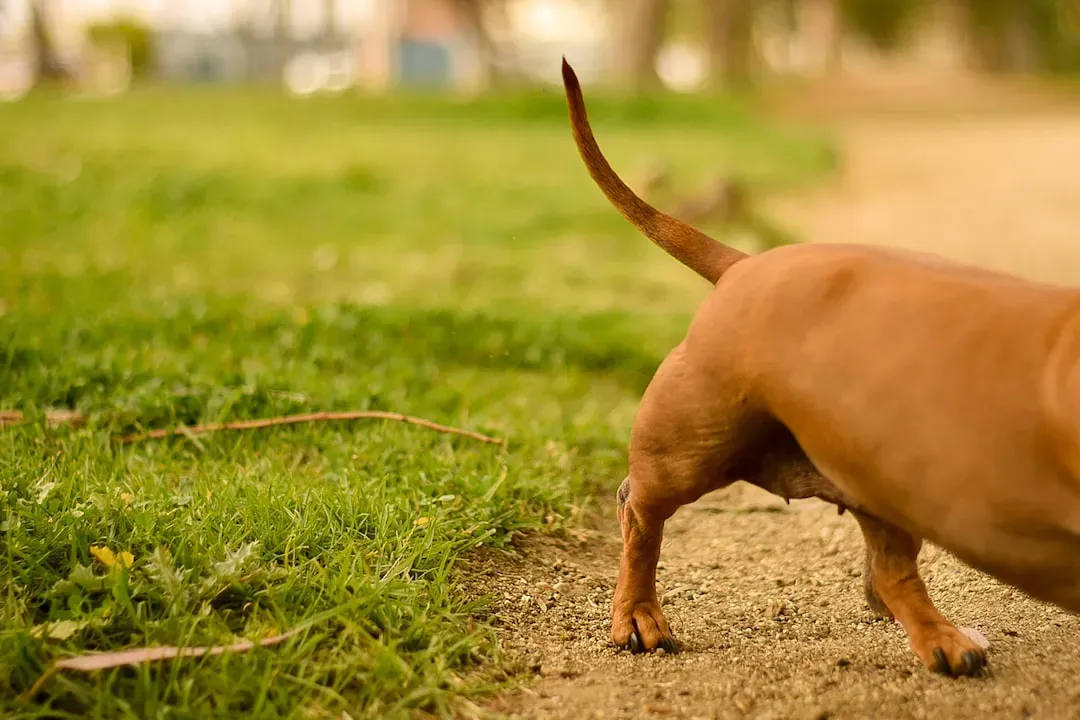
Tail chasing sits in a fascinating gray zone between harmless quirk and genuine health signal. The playful puppy spinning in your kitchen is a world apart from an anxious adult dog compulsively chasing to cope with stress or pain. The behavior looks the same on the surface, but the roots can be completely different.
Honestly, this is one of those cases where knowing your dog matters more than any general rule. You know what’s normal for them, how often it’s happening, and whether something feels off. Trust that instinct. Getting to the root of the problem is the fastest route to success and will stop the tail chasing before it becomes a conditioned response or habit. Next time you see your dog in pursuit of his own tail, it’s alright to laugh, but do not ignore any potential problems.
Your dog can’t tell you when something hurts or when they’re struggling emotionally. Sometimes a spinning circle is the closest thing to words they’ve got.


