
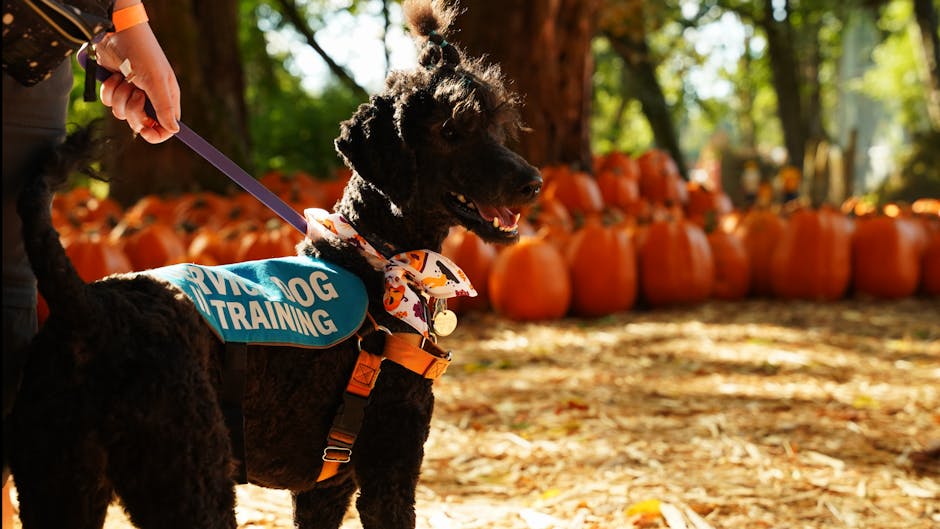
#1. Labrador Retriever
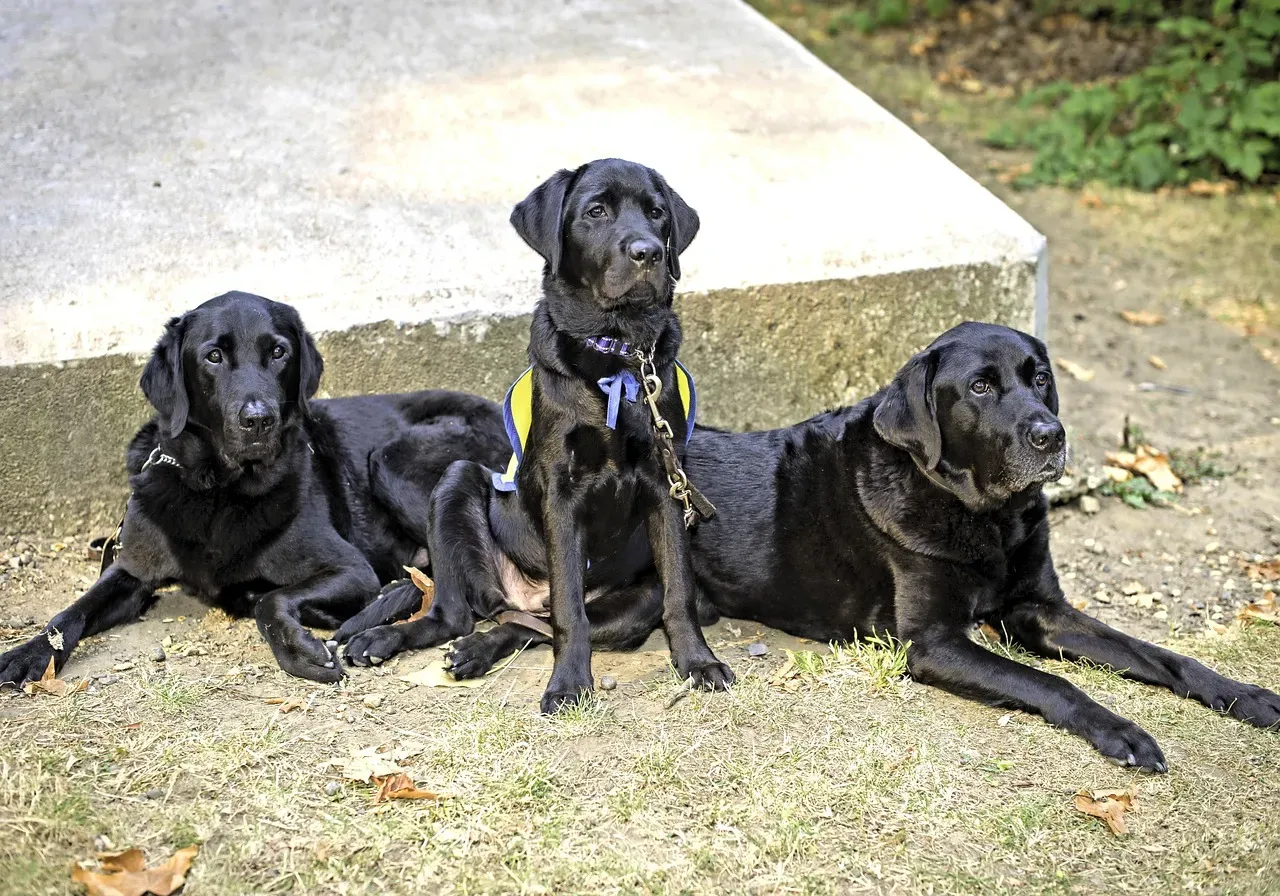
Labrador Retrievers are often hailed as the ultimate service dogs, and for good reason. Their exceptional sense of smell, trainability, and calm demeanor make them ideal for detecting medical conditions like diabetes and epilepsy. There’s a steadiness to a well-trained Lab that feels almost deliberate. They don’t startle easily, they don’t abandon the task, and in moments of crisis, that composure becomes everything.
Labs have been trained to detect changes in blood sugar levels by sensing the subtle shifts in body odor accompanying hypoglycemia or hyperglycemia. Their friendly nature and intelligence make Labs a popular choice for detecting seizures, providing emotional support, and acting as a reliable safety net for those in need. It’s no coincidence that the Labrador consistently tops the list of medically trained service dogs worldwide. The combination of nose, loyalty, and emotional attunement is nearly unmatched.
#2. Golden Retriever

Golden Retrievers are beloved for their kind temperament and eagerness to please, but they’re also highly skilled at detecting medical conditions. These dogs are very smart, very motivated to work, and they are easy to train. Many Golden Retriever owners are amazed by their intelligence and how quickly they pick up skills. That combination of raw ability and a genuine desire to help makes the Golden a natural guardian.
This breed is sensitive and intelligent enough to be good at just about any type of job, and they are typically the first choice in any kind of service work. Due to their amazing ability to sense your feelings and needs, the Golden Retriever consistently ranks at the top of medical service breed lists. Golden Retrievers possess the ideal combination of intelligence, loyalty, and gentle disposition, making them excellent candidates for service work. When something goes wrong, a Golden doesn’t just react. It stays present, focused, and close.
#3. German Shepherd

German Shepherds are known for their sharp senses and incredible trainability. Often used as police and military dogs, they’re also brilliant at detecting medical conditions such as epilepsy and low blood sugar. Their loyalty and protective instincts mean they don’t just alert their owners to a medical issue – they stay by their side until help arrives. That last part matters more than most people appreciate. Alerting is one thing. Staying is another entirely.
This breed’s heightened sense of smell allows them to detect minute changes in body chemistry, making them ideal for people who suffer from unpredictable medical conditions. These dogs are commonly used as police and military dogs because of how well they can sense and smell things, and trained medical service dogs of this breed are able to let you know when you are about to have a seizure due to a chemical change in the body that occurs right before. For owners who need a dog that will both detect and defend their wellbeing, the German Shepherd delivers on both counts.
#4. Poodle
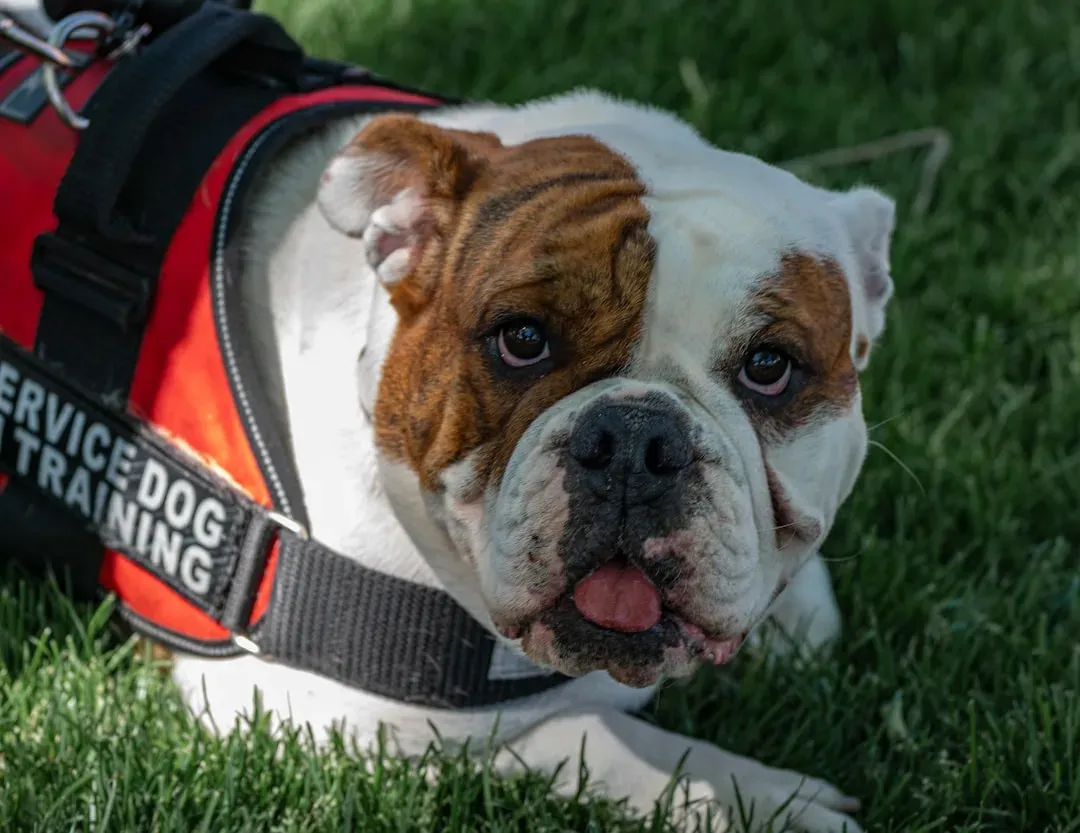
Poodles, especially the Standard and Miniature varieties, are incredibly intelligent and rank among the top breeds for detecting medical conditions. Their hypoallergenic coat makes them a great option for people with allergies, but their trainability and keen sense of smell set them apart in the medical detection field. Poodles can be trained to alert their owners to everything from diabetic episodes to oncoming seizures. What’s often underestimated about this breed is its physical capability. The Standard Poodle isn’t just clever; it’s strong.
The Poodle breed is favored for its high intelligence, excellent sense of smell, and eagerness to please. Dog trainers recommend this breed to anyone looking for a loving companion with a strong body. Standard Poodles are active animals with strong builds that can carry medium-sized pouches with medicine if required. Poodles’ sharp intelligence allows them to consistently detect subtle changes in their owners, often before symptoms even present themselves. That ability to act before the crisis peaks is precisely what makes them so valuable.
#5. Border Collie

Border Collies are known for their intelligence, energy, and strong work ethic, and these traits extend to their ability to detect medical conditions. As one of the smartest dog breeds, Border Collies can be trained to alert their owners to seizures, diabetes, and even early signs of illness. Border Collies are highly attuned to their environment and can pick up on changes in human behavior and body language, alerting their owners before a medical event occurs. That attunement goes beyond training. It’s woven into the breed’s very DNA.
In some situations, Border Collies have even saved their owners’ lives by getting help in an emergency, making them excellent medical alert dogs. Border Collies are especially suited to tasks such as providing mobility support and they can easily be taught to retrieve important items such as medications, phones, and water. This breed is also very vocal, and they will have no problem barking to alert owners of a problem or to gain the attention of others when needed. They’re not a low-maintenance breed by any measure, but for people who need a highly vigilant companion, the trade-off is more than worth it.
#6. Great Dane

Dogs like trained Great Danes are able to detect medical episodes minutes before they happen by relying on their highly advanced senses. Their sense of smell is especially powerful, capable of detecting chemical changes in the body released through sweat and breath. They can also pick up subtle shifts in heart rhythm through sound and are highly attuned to changes in body language, such as breathing patterns or posture. For a dog of this size, the combination of perceptiveness and physical presence is almost startling.
Great Danes, in particular, are often chosen for conditions like POTS because of their size and strength. Their large frame provides not only medical alert support but also essential physical stability. Great Danes can be excellent service dogs, especially for those with mobility and balance issues. Their size and strength allow them to provide support and assistance, and their calm demeanor makes them great companions. There’s something quietly reassuring about a dog that can both sense what’s coming and physically help you through it.
#7. Newfoundland

Empathetic and intelligent, the Newfoundland excels at lifesaving thanks to its caring nature and strength. Originally bred along the rugged coasts of Newfoundland, Canada, Newfoundlands hauled heavy loads, pulled ship lines, and rescued swimmers from icy waters, showcasing their protective instincts. Today, they remain deeply devoted, incredibly loyal, and loving companions. The instinct to protect and remain present in a crisis isn’t trained into this breed from scratch. It was born there.
Newfoundlands are known for their nurturing nature and sweet disposition, often referred to as “nanny dogs” because of how well they get along with children. They are calm and loyal dogs, eager to please. Cardiac response dogs of this type are generally large with a strong build so they can brace the fall of their owner. In a medical emergency, the Newfoundland’s mass is not a liability. It’s a lifeline. Few things offer more comfort in a frightening moment than a 130-pound dog that refuses to move an inch from your side.
Why These Breeds Stand Apart

While humans have about five million scent receptors, dogs have anywhere from 100 to 220 million, depending on their breed. A significant portion of their brain is devoted to analyzing scent, with the olfactory bulb and related structures being much larger than in humans. That biological advantage is the foundation everything else is built on. Training refines it. The right breed channels it into something precise and purposeful.
Not every dog is suited for medical assistance work. The best candidates possess a heightened ability to detect changes in smell, movement, or behavior, the ability to stay attentive and responsive to their handler’s needs, and a composed temperament in high-stress or emergency situations. The breeds on this list share those qualities in different proportions. Medical service dogs are carefully trained to support people with various physical and mental health conditions. They help promote safety and independence by assisting with daily tasks, responding to emergencies, and alerting their owners to subtle physiologic changes that warrant medical attention.
Training a medical assistance dog is an intensive and specialized process, often taking up to two years. Trained service dogs are not easy to come by and you will likely have to join a waiting list. That means you may have to wait between one and three years, and the pricing can range from ten thousand to thirty thousand dollars depending on the breed and the tasks the dog is trained to perform. The investment is significant, but for people whose health depends on early warning, it’s rarely framed as optional.
Conclusion
There is something deeply moving about the idea that a dog, through a combination of biology, training, and sheer devotion, can stand between a person and a medical catastrophe. These seven breeds don’t do it out of obligation. They do it because the bond between dog and human, at its best, is one of the most functional relationships in the natural world.
If anything, these animals quietly challenge our assumption that the most advanced medical safety systems are always the ones with screens and batteries. Sometimes the most reliable one has four legs, a wet nose, and absolutely no intention of leaving your side. That’s not sentiment. That’s just science dressed in fur.


