
#1 The Oxytocin Connection: Your Dog Is Literally Bonding With You
The most well-supported explanation for your dog’s bedtime gaze begins at the hormonal level. Oxytocin, also known as the “love hormone,” plays a role in the bond between dogs and their owners, and when dogs stare at their owners, it can trigger the release of oxytocin in both the dog and the owner, strengthening that bond and making the dog more affectionate. This isn’t anecdotal warmth. It’s measurable biology.
A study published in Science, led by animal behaviorist Takefumi Kikusui at Azabu University in Japan, carried out a series of experiments examining the impact of gaze in dogs and their owners, with findings suggesting that owner-dog bonding is comparable to human parent-infant bonding, specifically an oxytocin-mediated eye-gaze bond. The implications of that comparison are striking. Your dog staring at you before sleep isn’t trivial. It’s the same neurochemical loop that keeps parents and infants emotionally tethered to each other.
The researchers found that when owners and their dogs gazed into one another’s eyes during a 30-minute period, levels of oxytocin measured in their urine increased in both the humans and the dogs. So that pre-sleep stare? Your dog isn’t just watching you. They’re actively, biologically bonding with you as they drift off.
#2 Pack Instinct: Your Dog Is Standing Guard
Dogs have a long genetic lineage of living and thriving in packs, and as their owner, you are generally viewed as the pack leader. Dogs in packs will instinctively look out for and protect each other, and one of these methods of protection is standing guard while the rest of the pack is asleep. That instinct didn’t disappear when dogs moved into our homes. It simply redirected itself toward us.
In the wild, pack members take turns sleeping, with one member always awake. In your home, you are the pack leader, and while you are sleeping, your dog is essentially on duty, watching the door, the windows, and you, to make sure there is no danger. The stare before sleep is part of that transition. Your dog is making a visual check, confirming your presence and your safety, before allowing themselves to relax.
Your dog’s nighttime vigilance could stem from their inherent role as guardians. Throughout history, dogs have been valued for their protective instincts, and watching over their sleeping family members is one way they express this innate behavior. Their attentive gaze is both a sign of their devotion and their commitment to keeping you safe. It’s an old instinct, and it runs deep.
#3 Emotional Security: You Are Their Safe Place
One of the main reasons why dogs stare at their owners while falling asleep is because they feel safe and secure in their presence. As pack animals by nature, dogs often look to their owners for comfort and security, and staring at you while falling asleep may be their way of seeking reassurance and feeling safe. Think of it less as surveillance and more as emotional anchoring.
Dogs are pack animals by nature and often seek comfort and security from their human companions. Staring at you while falling asleep may be a way for your dog to strengthen the bond between you and provide a sense of security. Dogs view their owners as trusted and beloved members of their pack, and by staring at you while drifting off to sleep, your dog may be expressing their love, trust, and affection towards you. In a dog’s world, being able to look at you is itself a form of safety.
Animal behavior author Zazie Todd suggests dogs use gazes to communicate with us, particularly when content to be in their masters’ presence, noting that context and body language matter. If a dog is staring because they are happy and comfortable in your presence, their eyes will be soft and they will be displaying relaxed body language including a relaxed, open mouth. The soft, heavy-lidded pre-sleep stare is almost always this kind. It’s contentment, not anxiety.
#4 Learned Communication: Your Dog Has Figured Out That Staring Works
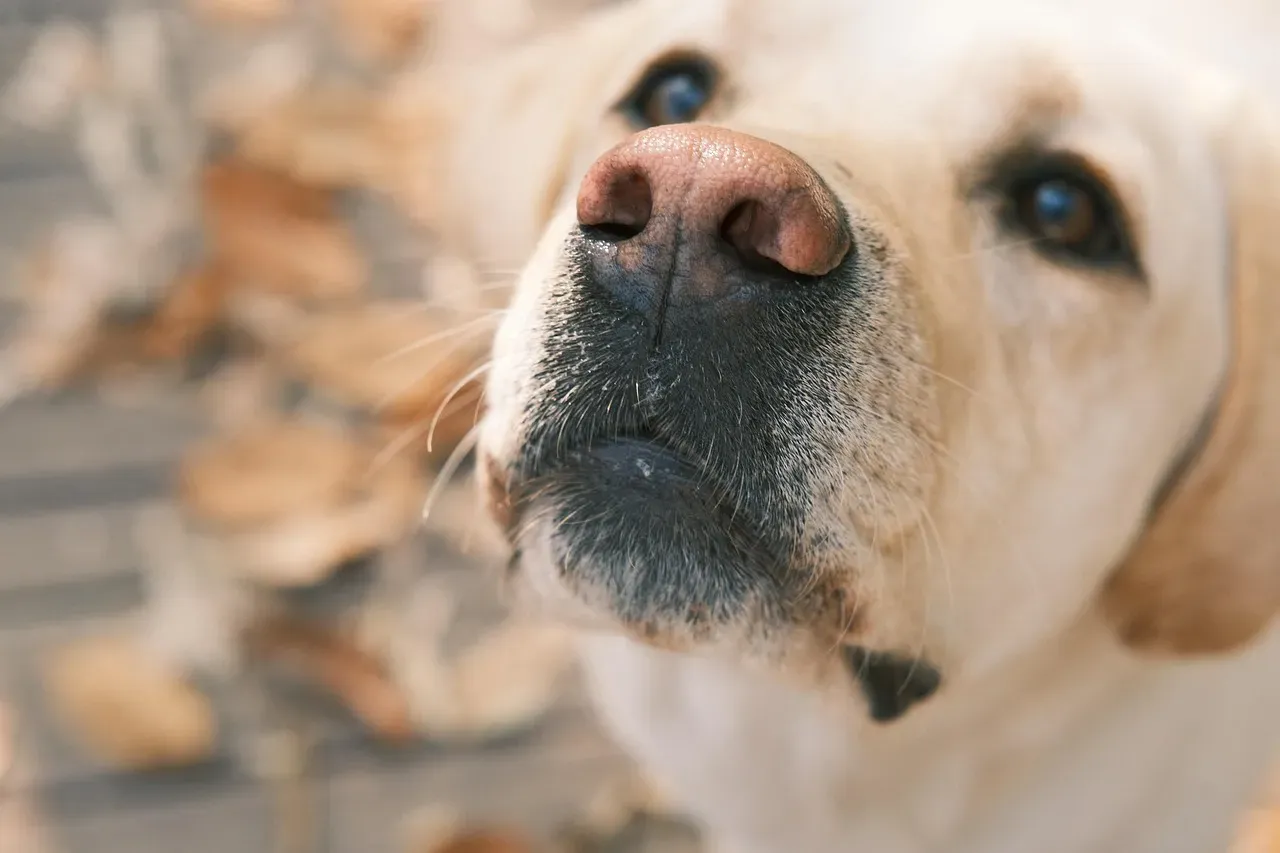
When dogs stare at their owners, they’re engaging in a form of communication. As faithful companions, dogs rely on us to meet their basic needs and wants, and this behavior could indicate they need a potty break, want to play, or are ready for their next meal. Dogs have learned that maintaining eye contact is an effective and polite way to communicate, and since this behavior typically results in getting what they want without the negative reactions that come from barking or whining, it becomes a preferred method of communication.
Dogs use something called gaze alternation when they want something from you. Before sleep, this could be a request to go outside one last time, a reminder that the water bowl is empty, or simply a gentle push for a final goodnight scratch behind the ears. Dogs have been bred for thousands of years to understand human behavior and to become part of their human family, and a dog staring while receiving attention is often showing affection and appreciation. Over generations, this has made the stare one of their most refined tools.
#5 Separation Anxiety: When the Stare Signals Something Deeper
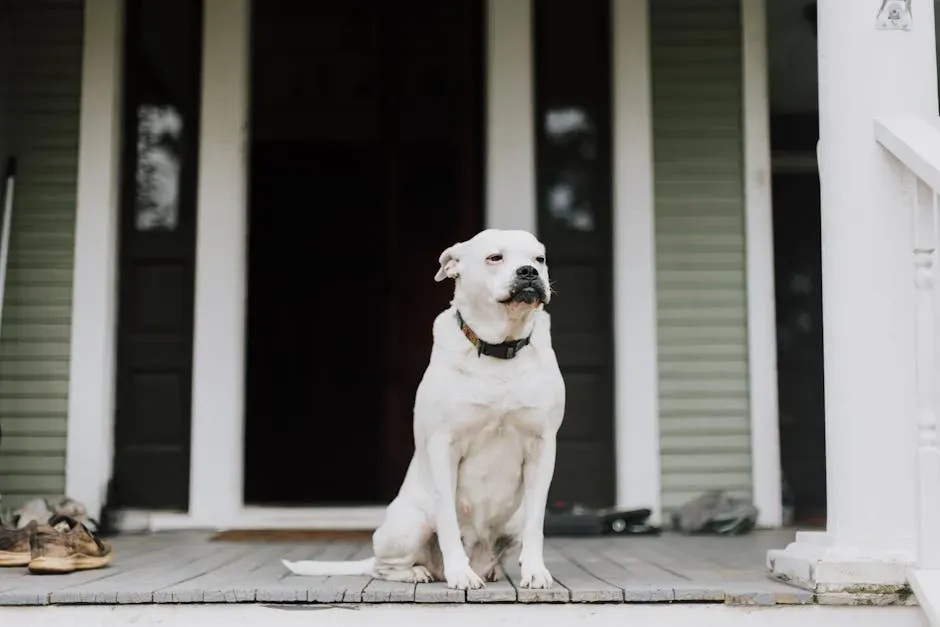
Not every bedtime gaze is simply sweet. For some dogs, the pre-sleep stare carries a heavier emotional weight. Staring at you while falling asleep can be a sign of separation anxiety in some dogs, and if your dog exhibits other clingy behaviors and shows signs of distress when left alone, it may be worth consulting a veterinarian or animal behaviorist for guidance. The difference often lies in the rest of the dog’s behavior, not just the stare itself.
Separation anxiety describes dogs that are overly attached or dependent on family members. They become extremely anxious and show distress behaviors such as vocalization, destruction, or house soiling when separated from the owners, and most dogs with separation anxiety try to remain close to their owners, follow them from room to room, and rarely spend time outdoors alone. A dog with true separation anxiety often can’t wind down at all, let alone drift peacefully off to sleep while staring at you.
If your dog becomes restless, vocal, or destructive after bedtime, they may be experiencing separation anxiety. Many pet parents think this only happens when they leave the house, but it can also occur overnight when your dog is apart from you. Knowing the signs and how to address them can make a big difference in your dog’s comfort and your peace of mind. If the stare feels charged rather than calm, it’s worth a closer look.
#6 Cognitive Changes in Senior Dogs: When Staring Means Something Else Entirely
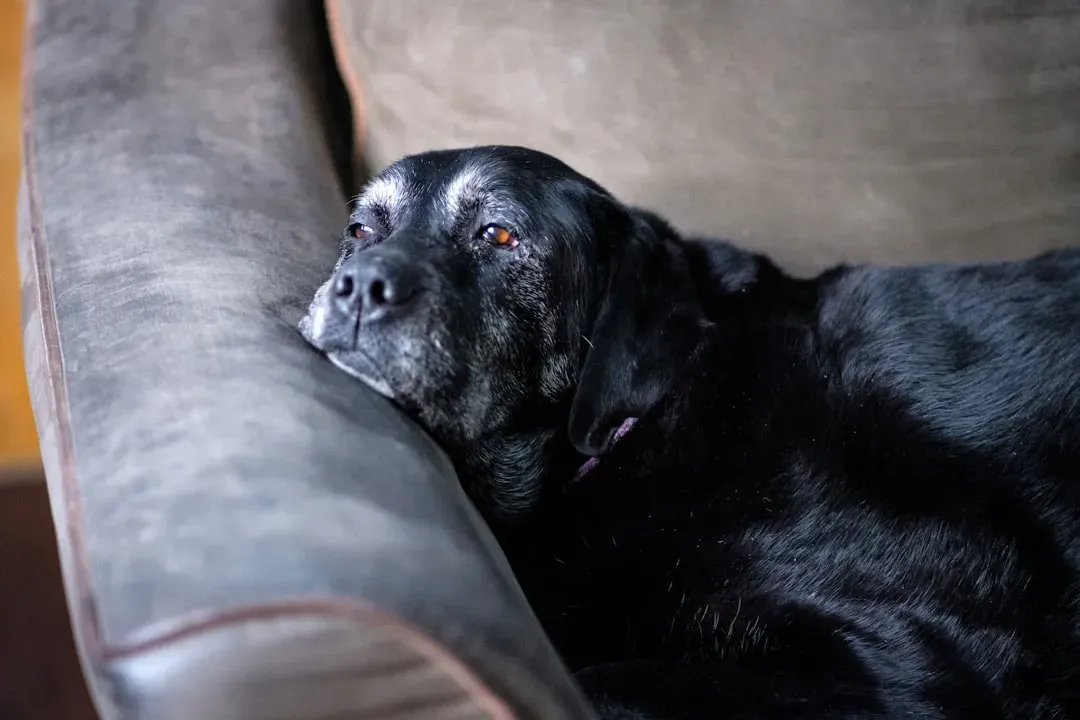
There’s one scenario that deserves particular attention, especially for owners of older dogs. When senior dogs frequently stare at their owners without any obvious reason, it could indicate Cognitive Dysfunction Syndrome (CDS), a condition similar to dementia in humans. Additional symptoms of cognitive decline in older dogs include disorientation in familiar environments, inability to follow previously learned commands, and purposeless wandering. The stare in this case feels qualitatively different. It tends to be vacant rather than warm.
Cognitive Dysfunction Syndrome is a condition similar to dementia in humans that can affect memory, learning, and awareness in older dogs. Although there is no single test for CDS, early recognition and appropriate care can help your dog maintain a good quality of life. Some dogs begin to appear disoriented, getting lost in familiar places or staring blankly at walls, while others may develop sleep disturbances, such as restlessness at night or pacing for long periods, when they would normally be sleeping.
Senior dogs are at the highest risk for developing this condition, with roughly more than a quarter of dogs aged 11 to 12 affected, and nearly seven in ten dogs aged 15 to 16 showing signs of cognitive dysfunction syndrome, according to a study done on prevalence of dementia. If your older dog’s pre-sleep stare has shifted from something that felt connected to something that feels empty or confused, a conversation with your vet is the right next step. It’s not alarmist. It’s attentive ownership.
What It All Means

Here’s what the science and behavioral research actually point to when you put it all together. For most dogs, most of the time, that bedtime stare is a deeply positive thing. It’s love made visible, an ancient bonding mechanism dressed up in the form of a quiet gaze at the end of a day. During dog domestication, neural systems implementing gaze communications evolved that activate the humans’ oxytocin attachment system, as did gaze-mediated oxytocin release, resulting in an interspecies oxytocin-mediated positive loop to facilitate human-dog bonding. Dogs didn’t just become our companions by accident. They evolved toward us, gaze by gaze.
The honest opinion here is that most of us vastly underestimate what’s happening in those quiet moments with our dogs. We call it cute. We laugh about it. We take a photo. Meanwhile, our dogs are doing something genuinely remarkable: maintaining an emotional connection that, by every measurable standard, mirrors the bond between a parent and a child. That deserves more than a passing smile.
Pay attention to how your dog stares. The soft, half-closed eyes drifting toward yours as they settle in for the night are among the more honest expressions of trust you’ll ever witness from another living creature. The least we can do is look back.


