
#1: The Nose Knows More Than We Think

Dogs’ noses contain up to 300 million olfactory receptors, compared to roughly six million in humans, giving them the ability to detect minute chemical changes in the body. That’s not a small difference. It’s the biological equivalent of a person hearing a whisper in a silent room versus hearing nothing at all.
A dog’s sense of smell is roughly 1,000 to 100,000 times more sensitive than a human’s, and research indicates dogs are capable of detecting tiny traces of odors created by different diseases, down to about one part per trillion – the equivalent of one teaspoon of sugar dissolved in two Olympic-sized swimming pools. When you frame it that way, the idea that a dog might notice a body changing long before any doctor runs a test stops being surprising and starts being inevitable.
When a person is ill or nearing death, their metabolism and body chemistry can shift, releasing different compounds through breath, sweat, and skin, and dogs can pick up on these changes long before humans notice any visible symptoms. They aren’t performing some mystical act. They’re simply doing what their biology was built to do.
#2: The Chemistry of Dying – What Bodies Reveal Through Scent

As cells break down, the body releases a variety of chemical compounds, including volatile organic compounds (VOCs) that evaporate easily into the air, becoming detectable through scent and providing insights into the physiological state of an individual. This isn’t a gradual process that only begins in the final days. In many terminal illnesses, these chemical shifts begin months before outward symptoms become obvious.
There is a plausible biological explanation for what some call the “sweet smell of death.” As cells die, carbohydrates are degraded into various oxygenated compounds including types of ketones, chemical mixtures known for their fragrant aroma, and ketones are also detectable in untreated diabetes, which is why doctors are taught to recognize them on a patient’s breath. A terminally ill body is, in a very real sense, producing a shifting scent signature that changes over time.
A dog’s sense of smell is powerful enough to pick up minor chemical changes, and as disease takes effect, the body produces volatile organic compounds too minute for us to notice but easy for dogs to sense. Combine that with a deep emotional bond with their owner, and you have an animal that is both biologically wired and emotionally motivated to pay close attention to every subtle shift.
#3: What Dogs Actually Do When They Sense Decline

If a dog is sensing illness or death in a person, they will pay that person more attention, with lots of sniffing and licking as a kind of instinctive attempt at healing. There may also be increased barking, howling, and vocalizations as the dog tries to communicate something is wrong, along with increased following, extra attention, and a noticeably melancholy demeanor. These aren’t random behavioral quirks. They form a recognizable pattern that many families in hospice situations have reported independently.
A study from Goldsmiths College’s Department of Psychology examined dog reactions to both owners and strangers. When individuals either hummed happily or pretended to cry, dogs consistently oriented themselves toward people who were crying, regardless of whether they were the dog’s owner or a stranger, nuzzling and licking that person, suggesting empathic-type behavior that could also translate into seeming like they can predict distress or death. Dogs aren’t just reacting to chemical cues. They’re reading emotional states with genuine sensitivity.
Beyond scent, dogs also pick up on the emotional textures around them, including body language, tone of voice, and energy levels, all of which are signals humans unintentionally send when they are unwell or frightened. A dog observing a terminally ill owner is processing a convergence of information that no single sense alone could deliver.
#4: Medical Detection Dogs – Science Closing the Gap
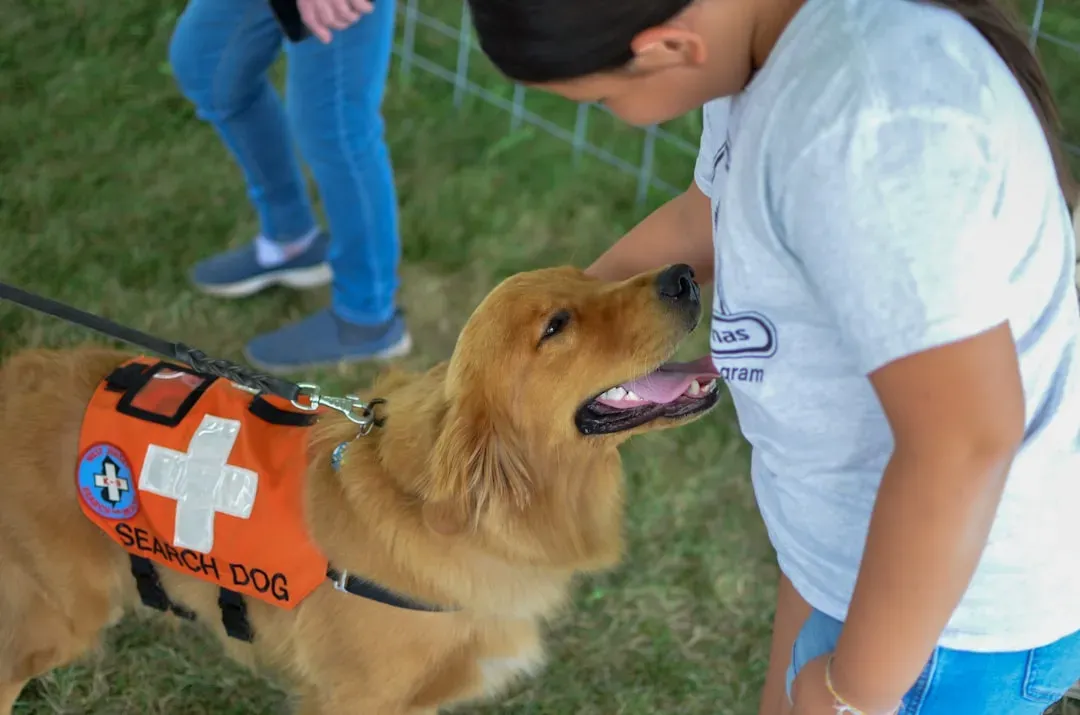
Case reports of dogs detecting cancer in humans via scent were first documented in 1989, and since then, multiple studies have shown that dogs are capable of being trained to detect some cancers in humans by perceiving specific “odor signatures” in samples of urine, sweat, breath, and blood serum. This is no longer a matter of anecdote. It’s a replicable, studied phenomenon with real clinical implications.
This acute olfactory ability may explain why some dogs exhibit unusual behavior around those whose energy is waning near death. Studies have shown that trained dogs could identify patients with advanced cancer, suggesting they can effectively answer the question of whether someone is terminally ill through scent alone. The gap between a dog “knowing something is wrong” and a dog detecting a terminal illness is perhaps narrower than we once assumed.
Medical Detection Dogs and MIT’s Center for Bits and Atoms are working together to develop ways that dogs can teach artificial-intelligence technology to recognize the smell of prostate cancer, while at the University of Pennsylvania’s Working Dog Center, trained dogs have been able to detect minute quantities of odorants given off by ovarian cancer tumors. The dog’s nose has essentially become a research model for building the next generation of medical diagnostics.
#5: The Emotional Bond That Amplifies Everything

Whether cats or dogs, our pets are more in tune with end of life than we generally assume, as their sense of smell is extremely heightened and their deep attachment to their owner enables them to detect slight changes in odors emitted from the owner’s body. Bonding matters here in a measurable way. A dog that has lived alongside someone for years has built an extraordinarily detailed scent and behavioral baseline for that person. Any deviation registers immediately.
People’s smells change based on their mood, and dogs’ noses can detect those changes. Research has even exposed dogs to chemosignals, the human pheromones that communicate information to others, including signals of fear, and when exposed to the fear chemosignal, dogs stayed closer to their owners than to strangers. A person receiving a terminal diagnosis, living with quiet fear and grief, is broadcasting chemical signals of deep emotional stress that their dog is almost certainly picking up.
A dog’s blend of acute senses and emotional intelligence drives them to respond with compassion to the subtle signs of life’s final transition, and this gives rise to the impression that dogs can foresee death, when in reality they are perceiving those signs in real time. There’s no mysticism required. The loyalty and attentiveness so many families observe in these moments is a function of biology meeting love.
Conclusion: They’re Not Predicting. They’re Witnessing.

It would be easy to romanticize this into something magical, and plenty of people do. The truth, though, is actually more interesting. Dogs don’t possess a supernatural death-sense. What they have is a staggering biological precision combined with an emotional attunement that most humans simply cannot match.
Dogs may not foresee death in a supernatural way, but their heightened senses and deep empathy make them remarkably attuned to human changes that often accompany serious illness or the end of life. That distinction matters. It means their behavior is real, grounded, and worth paying attention to.
Science has not outright confirmed that dogs can sense death, but it has not been ruled out either, and researchers continue to explore what animals can actually perceive. The honest position isn’t certainty in either direction. It’s respectful curiosity.
What feels undeniable, for anyone who has watched a dog press close to a person who was quietly fading, is that something real was happening. Not a performance. Not a coincidence. A creature, wired over thousands of years of living beside us, doing the only thing it knows how to do when the person it loves most begins to slip away. Staying.


