
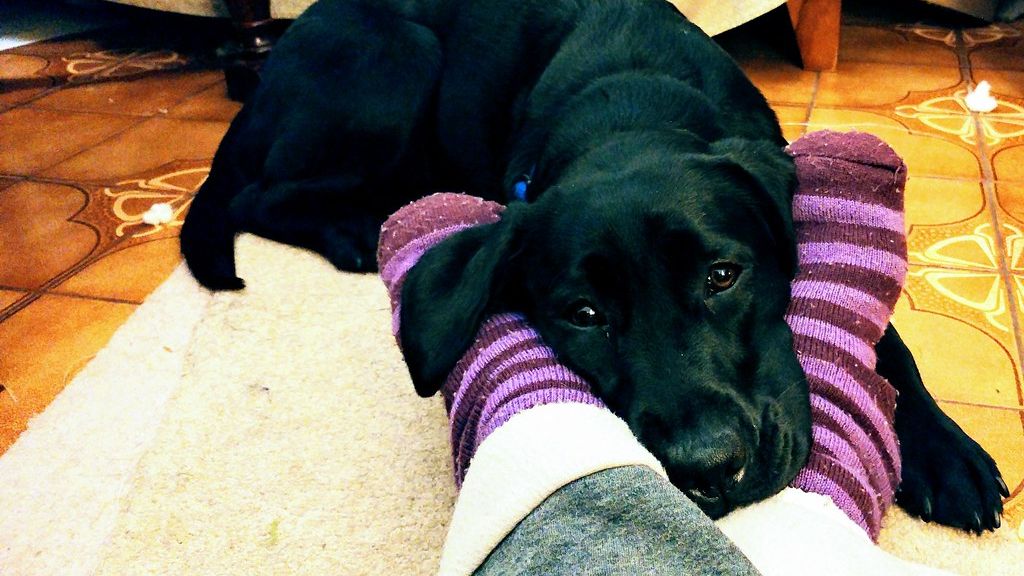
Watch your dog settle in for the night and you might notice a familiar pattern. Instead of curling up near your head, they often tuck themselves down by your feet. That choice feels deliberate, almost thoughtful, and it leaves many owners wondering what draws them there.
The reasons run deeper than simple habit. They touch on instinct, comfort, and the quiet ways dogs read the world around them. Understanding those layers turns a small bedtime ritual into something more meaningful.
Evolutionary Roots in Pack Behavior

Dogs descend from wolves that lived in tight social groups. In those packs, lower ranking members often positioned themselves at the edges of the sleeping circle. This placement let them stay close to the group while keeping an eye on the surroundings.
Modern dogs carry echoes of that arrangement. Sleeping at your feet mirrors the outer ring position, where they can monitor movement without crowding the center. The habit persists even in homes where no real threat exists.
Seeking Optimal Temperature Zones
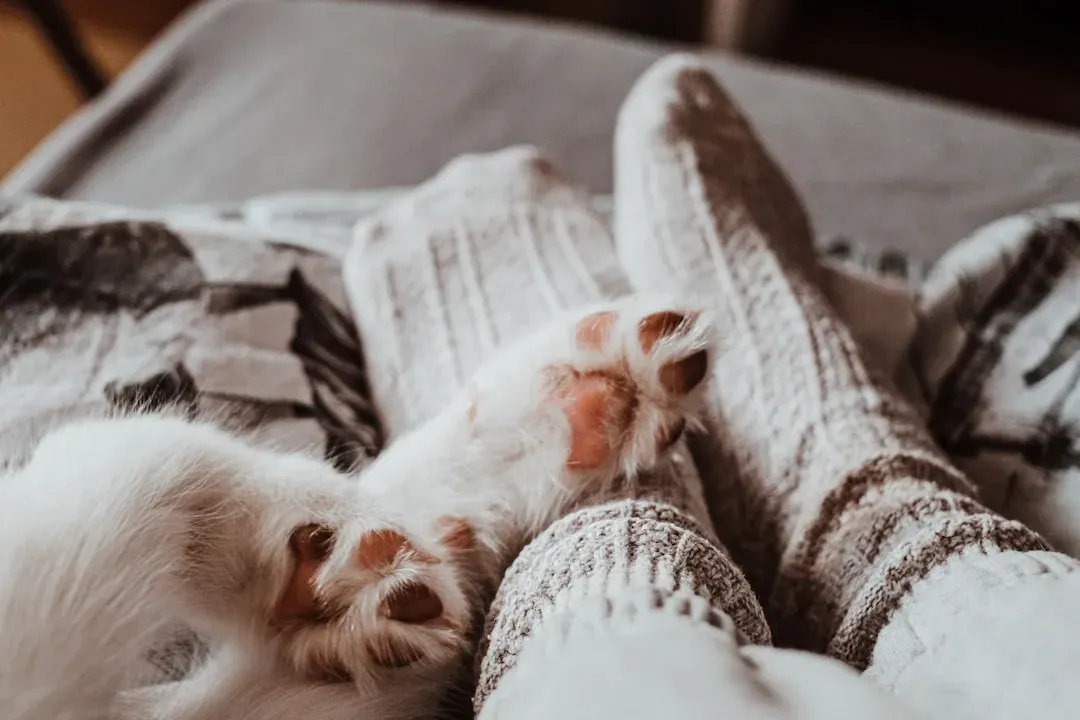
Body heat rises toward the head and upper body during sleep. Your feet tend to stay cooler, offering a steady, moderate warmth that suits a dog’s thicker coat. Many dogs shift position throughout the night to find that balance.
Breeds with heavy fur especially favor this spot. They avoid the warmer air near your face and instead enjoy the gentle heat radiating from your lower legs. The choice keeps them comfortable without overheating.
The Role of Scent Marking

Dogs gather information through smell far more than sight. Your feet carry a steady mix of scents from the day, including traces of where you walked and what you touched. That familiar odor creates a reassuring anchor.
By resting there, a dog reinforces a shared territory in the simplest way. The location feels safe because it carries your daily story without the stronger, sometimes overwhelming smells near your face or mouth. It becomes their chosen corner of the shared space.
Providing a Sense of Security

Feet offer a solid, predictable presence during the night. A dog can feel the slight shifts in your position and know you remain nearby. This subtle contact reduces restlessness for both of you.
The placement also lets them react quickly if something unusual happens in the room. They stay connected without blocking your movement or breathing space. Many owners notice their dog relaxes more deeply once settled in that spot.
Avoiding Overstimulation
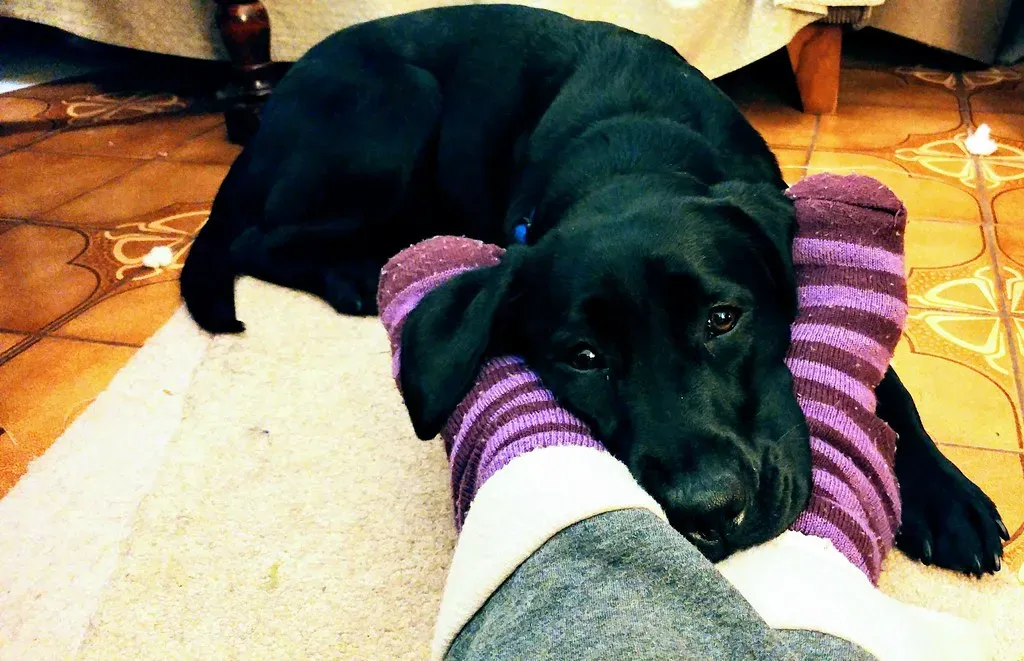
Faces carry constant motion and sound, from breathing to occasional talking in sleep. Dogs often prefer quieter zones where they can rest without constant sensory input. Your feet provide that calmer environment.
The lower position also reduces accidental disturbances. A twitch or stretch from you is less likely to wake them when they lie farther away. This practical distance supports longer, uninterrupted sleep cycles.
Reading Your Body Language
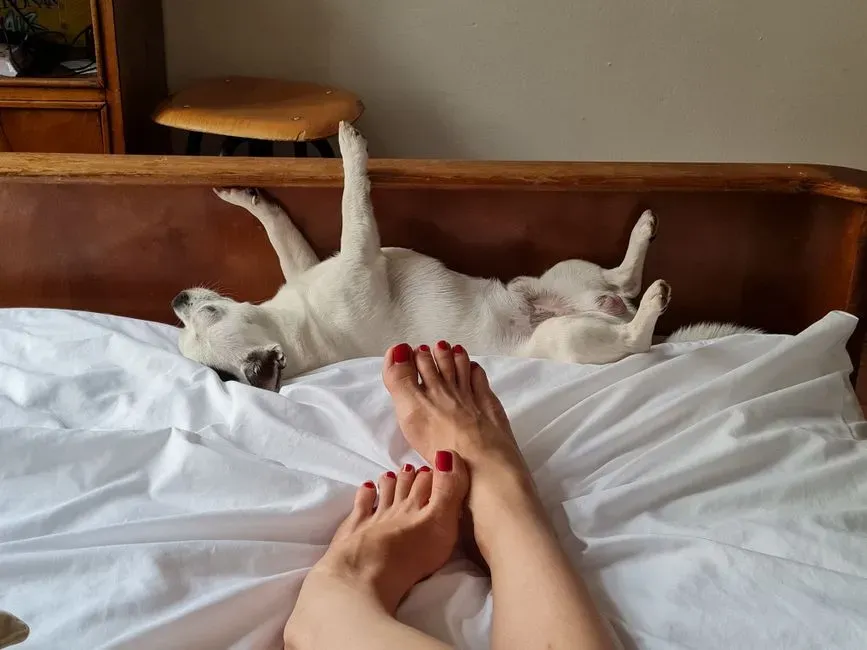
Dogs notice how people settle into bed and adjust accordingly. If you tend to move your arms or turn your head often, they learn to give that area space. Your feet become the reliable, less active zone.
Over time this becomes a learned preference passed between generations of pets in the same household. Puppies watch older dogs and copy the pattern. The choice reflects careful observation rather than random chance.
The Quiet Message Behind the Habit

Choosing the feet speaks to a steady, understated loyalty. It shows trust without demanding attention or closeness that might feel overwhelming. The decision honors both your rest and theirs in equal measure.
In the end, that small nightly ritual reminds us how dogs shape their world around the people they live with. Their preference for your feet turns an ordinary bed into a shared landscape of comfort and quiet understanding. It is a simple act that deepens the connection every time the lights go out.


