

Ever wondered how your dog seems to know exactly when you’re feeling down or bursting with joy? It’s not just your imagination. Recent scientific studies reveal that dogs possess an extraordinary ability to read human emotions almost instantly, making them unparalleled companions in our lives.
The Evolutionary Bond Between Humans and Dogs

Over thousands of years, dogs have evolved alongside humans, developing a unique sensitivity to our emotional states. This deep-rooted bond has enabled them to interpret subtle cues in our behavior, allowing for seamless communication between species.
Unlike other animals, dogs have become adept at understanding human gestures, tones, and even facial expressions. This evolutionary partnership has fostered a mutual understanding that goes beyond basic commands, delving into the realm of emotional intelligence.
Decoding Facial Expressions

Studies have shown that dogs can distinguish between different human facial expressions. In controlled experiments, dogs were able to identify happy and angry faces, indicating their capacity to process human emotions visually.
Interestingly, dogs tend to focus on the eye region, much like humans do when reading emotions. This suggests that they are not merely reacting to broad cues but are attuned to specific facial features that convey emotional states.
Responding to Vocal Cues

Beyond visual signals, dogs are also sensitive to the tone and pitch of human voices. Research indicates that dogs can differentiate between positive and negative vocalizations, responding accordingly to the emotional content conveyed.
This auditory sensitivity allows dogs to gauge our moods even when visual cues are absent, showcasing their multifaceted approach to understanding human emotions.
The Role of Scent in Emotional Detection

Dogs’ olfactory senses are incredibly powerful, enabling them to detect chemical changes in human bodies associated with different emotions. For instance, they can sense the hormonal changes that occur when a person is stressed or anxious.
This ability to “smell” emotions adds another layer to their emotional intelligence, allowing them to respond appropriately to our internal states, even without overt behavioral cues.
Behavioral Responses to Human Emotions

When dogs perceive human emotions, they often adjust their behavior accordingly. A happy owner might be met with an excited wagging tail, while a sad owner might find their dog offering comfort by staying close or nuzzling.
These behavioral adaptations demonstrate not only recognition but also a desire to respond to human emotional needs, further solidifying the bond between dogs and their owners.
Implications for Training and Therapy
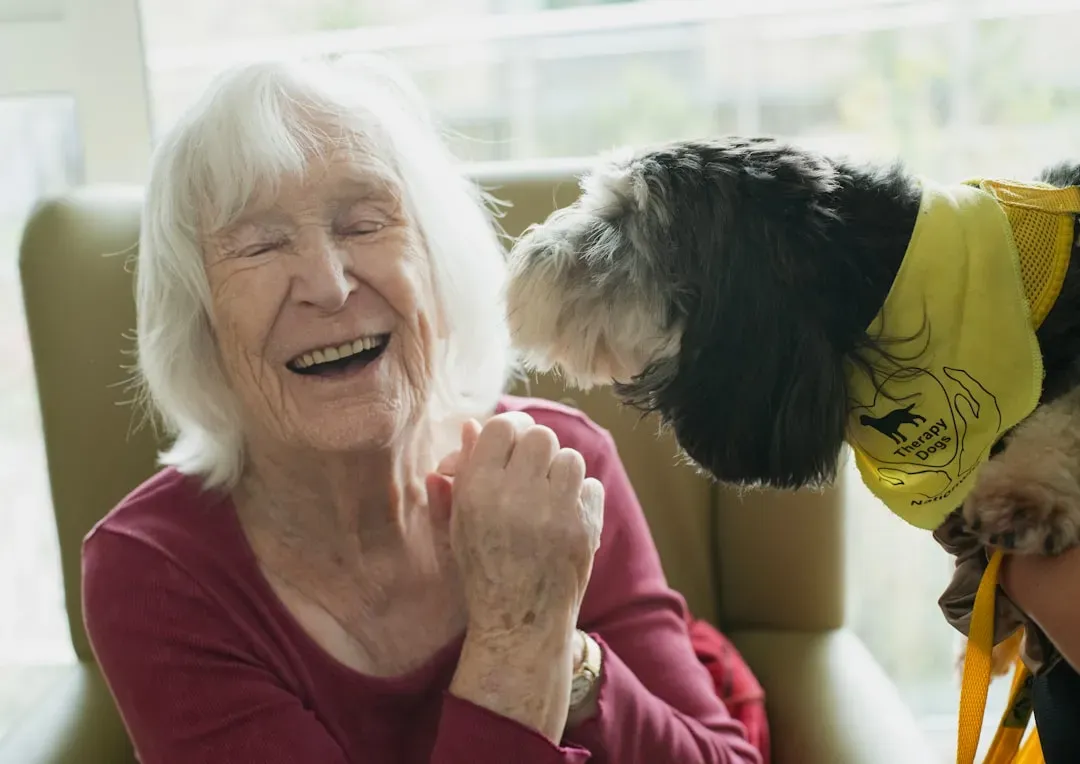
Understanding dogs’ ability to read human emotions has significant implications for training and therapy. Trainers can leverage this sensitivity to reinforce positive behaviors, while therapy dogs can be more effectively utilized to provide emotional support.
By acknowledging and harnessing this innate skill, we can enhance the roles dogs play in various therapeutic and support settings, benefiting both humans and canines alike.
Conclusion

The evidence is clear: dogs possess an innate ability to read and respond to human emotions with remarkable accuracy. This skill is not just a byproduct of domestication but a testament to the deep, evolutionary bond shared between our species. As we continue to uncover the depths of canine emotional intelligence, it becomes evident that our four-legged friends are not just pets but empathetic companions attuned to our innermost feelings. Isn’t it time we appreciated the full extent of their emotional insight?


