
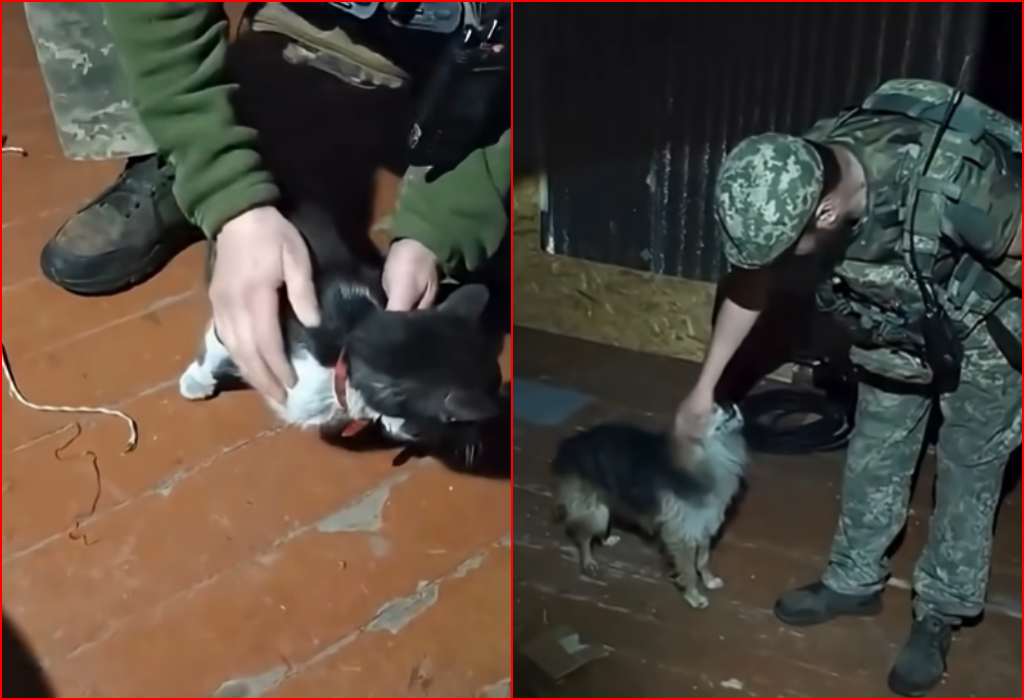
Ukraine’s Sumy region – Soldiers on the front lines faced a tough choice when two longtime animal companions found themselves trapped in a dangerous dugout amid intensifying combat. Members of the 14th Separate Mechanized Brigade refused to abandon the stray cat and dog, turning to drone technology for a high-stakes rescue. The operation highlighted the deep bonds formed between troops and animals during prolonged conflict.[1][2]
A Daring Drone Extraction
The brigade had grown accustomed to the presence of Barsik the cat and Zagybluk the dog over two years at their position. These animals provided companionship and morale boosts in the harsh conditions of trenches and checkpoints. When fighting escalated, the dugout became too risky for human access, stranding the pair.[1]
A drone, fresh from delivering food supplies to the troops, became the solution. Soldiers carefully placed the animals into special breathable pouches and secured them to the aircraft. The pilot then flew them approximately 10 kilometers to safety, executing a gentle landing to minimize stress. Nadiya Zamryga, the brigade’s press officer, described the process: “The guys put them in special breathable pouches, carefully tied them to a drone, and evacuated them.”[1][2]
Bonds Forged in Battle
Barsik held special significance as the pet of a wounded soldier, known affectionately as his “cat dad,” who now recovered in hospital. Fellow troops stepped in to ensure the cat’s safety, planning a future reunion. Zagybluk, meanwhile, settled quickly into life at the brigade’s rear base after the flight’s initial tension faded.[1]
Zamryga noted the animals’ resilience: “The stress from the drone flight passed very quickly. These animals have been with the guys for two years and they’re not willing to give up their comrade.” Such attachments underscore how pets offer emotional support to soldiers enduring the war’s fifth year.[2]
Part of a Larger Effort
This rescue formed one chapter in Ukraine’s widespread animal welfare initiatives during the invasion. The group UAnimals reported evacuating over 10,000 animals since February 2022, spanning cats, dogs, and exotic species like tigers, camels, and bees. Their veterinary teams conduct missions twice monthly, treating up to 600 animals per trip from dawn until late evening.[1]
Inga Sakada, UAnimals’ director of operations, explained the scale: “Twice a month, our team of vets travels to the frontline zone and works non-stop, sometimes from 7 a.m. until 10 p.m., treating, vaccinating and neutering all the animals brought to us.” Challenges persist, however, with peak periods bringing 100 daily requests they cannot always fulfill.[1]
- A cow named Lypka moved from a frontline village to a shelter, complete with a detailed letter from her owner outlining her habits.
- Thirteen beehives rescued from a mined eastern village reached Lviv, reuniting a Holocaust survivor’s grandson with his bees.
- A kitten dubbed Andriuliks-Plush traveled from Kupiansk to a Kharkiv family, where the 10-year-old adopter calls it a “combat cat” unafraid of drones.
Drones Beyond Combat
The mission showcased drones’ versatility in the conflict. Originally for supplies – the brigade once moved 200 metric tons monthly – these devices now handle evacuations when ground risks prove too high. UAnimals affirmed the necessity: “Risky? Yes, but leaving them there was even more dangerous.”[3][4]
Similar ingenuity appeared in other cases, such as the 429th Brigade freeing an owl from enemy nets. Yet tragedies remind of vulnerabilities: drone strikes claimed racehorses and thousands of pigs on farms.[1]
As the war grinds on, these stories of compassion reveal soldiers’ humanity amid devastation. For the 14th Brigade, Barsik and Zagybluk’s safe passage offered a small victory, a reminder that even in chaos, loyalty to companions endures. Their tale may inspire further efforts to protect the vulnerable caught in the crossfire.[5]


