
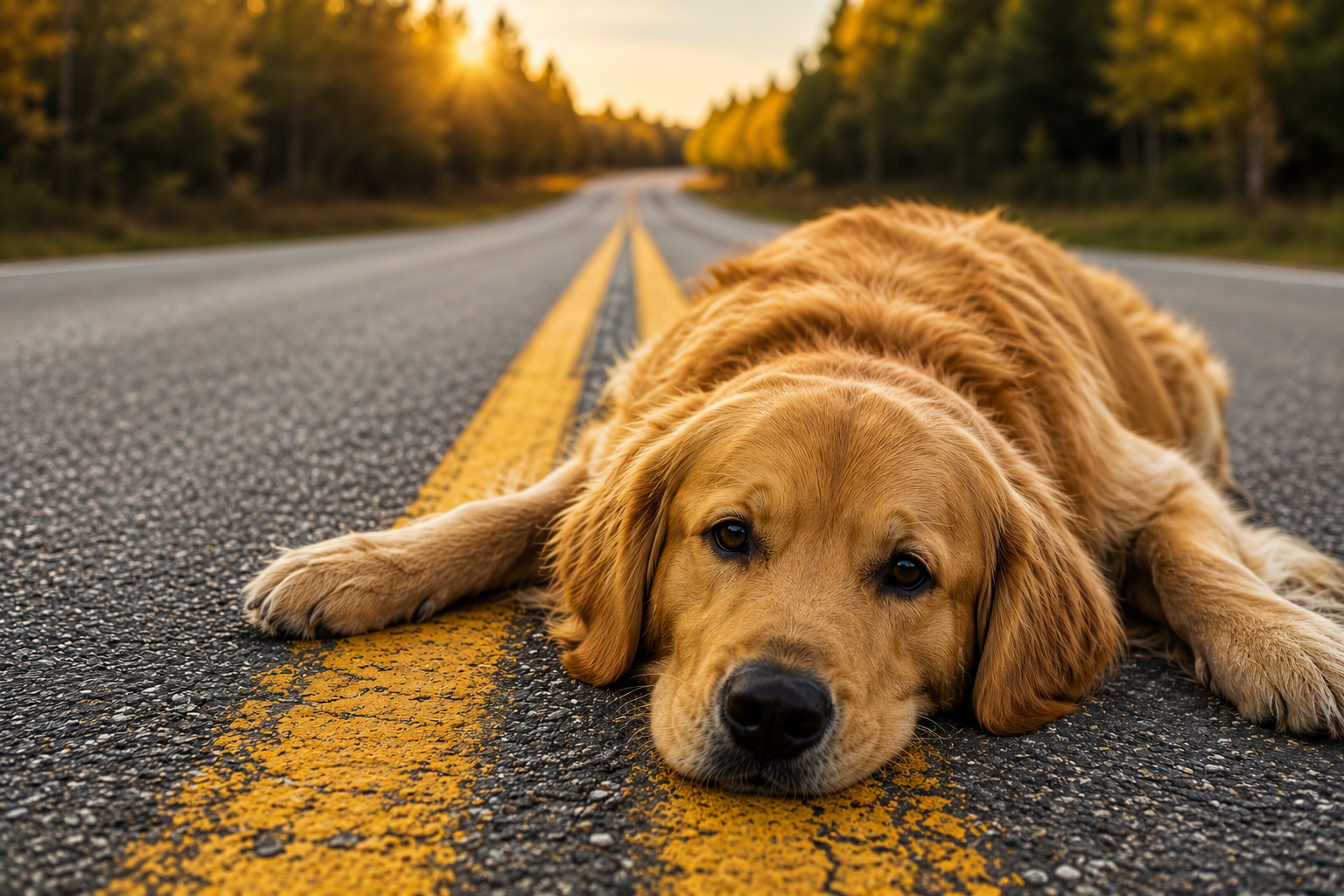
On February 12 a dog lay motionless on a busy roadway after a vehicle struck it during an accident. The animal drew on its remaining strength to raise its head toward the first motorist who chose to stop instead of continuing past. This single decision set in motion a chain of events that brought professional help to the scene before the dog’s condition worsened further.
Swift Action Changes the Outcome for an Injured Animal
Passersby often assume someone else will handle roadside emergencies involving animals. In this instance one motorist broke that pattern by pulling over and assessing the situation directly. His choice allowed emergency responders to arrive while the dog still had a viable chance at survival. Studies from animal welfare organizations indicate that prompt human intervention increases survival rates for injured strays by more than 60 percent. Delays of even fifteen minutes can lead to irreversible organ damage or fatal blood loss. The February 12 rescue shows how one person’s decision can shift those odds dramatically in favor of the animal.
Medical Care Begins Immediately After Rescue
Emergency responders confirmed the dog had sustained multiple fractures and internal trauma. Initial assessments revealed dehydration and shock that required urgent attention. Local animal control officers transported the dog to a nearby veterinary clinic for stabilization. Veterinarians performed surgery to repair broken bones and address internal bleeding. Pain management and fluid therapy were administered around the clock during the first forty-eight hours. Staff reported the dog began responding to treatment within days showing improved alertness and appetite.
Recovery Efforts Highlight Community Support Networks
Rehabilitation will include physical therapy to restore mobility once the dog stabilizes. Shelters and rescue groups are already coordinating long-term placement after medical clearance. Such coordinated efforts between private citizens clinics and nonprofits have become standard in many regions facing high volumes of traffic-related animal injuries. Highways and secondary roads remain hazardous environments for stray and free-roaming dogs. Data collected by transportation departments show thousands of such incidents occur annually yet only a fraction receive immediate attention. Public awareness campaigns now encourage drivers to report injured animals rather than assume the situation will resolve itself.
Final Thought
Everyday choices on the road carry life-or-death consequences for vulnerable animals.
Source: Original YouTube Video


