
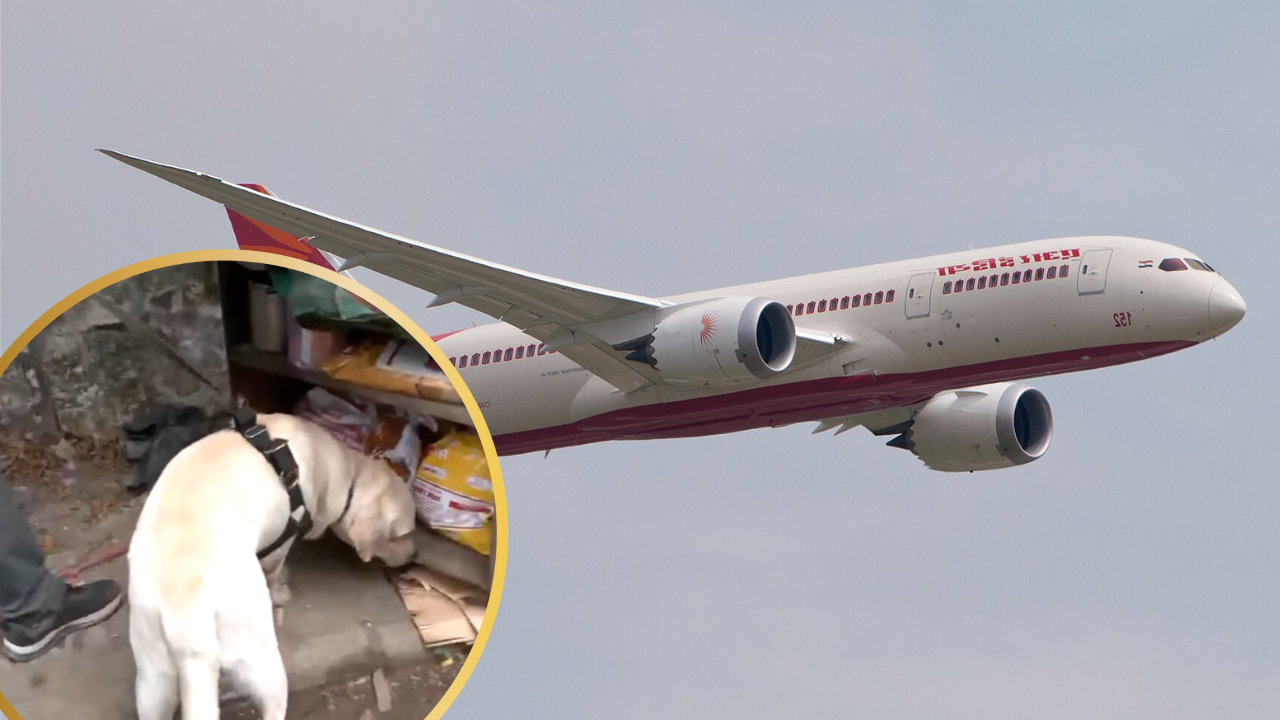
DD Dog News: 13 June, 2025: In the wake of the catastrophic crash of Air India Flight AI 171 on June 12, 2025, rescue teams have intensified their efforts at the crash site in Ahmedabad by deploying highly trained sniffer dogs. These dogs are playing a vital role in helping locate victims’ remains, personal belongings, and even components of the aircraft essential for the investigation. The flight, a Boeing 787-8 Dreamliner registered as VT-ANB, took off from Ahmedabad at 13:38 IST bound for London Gatwick, but crashed just 30 seconds later into a densely populated area near the B.J. Medical College hostel, killing 241 of the 242 people onboard and at least 28 people on the ground.
The Crash: What We Know So Far
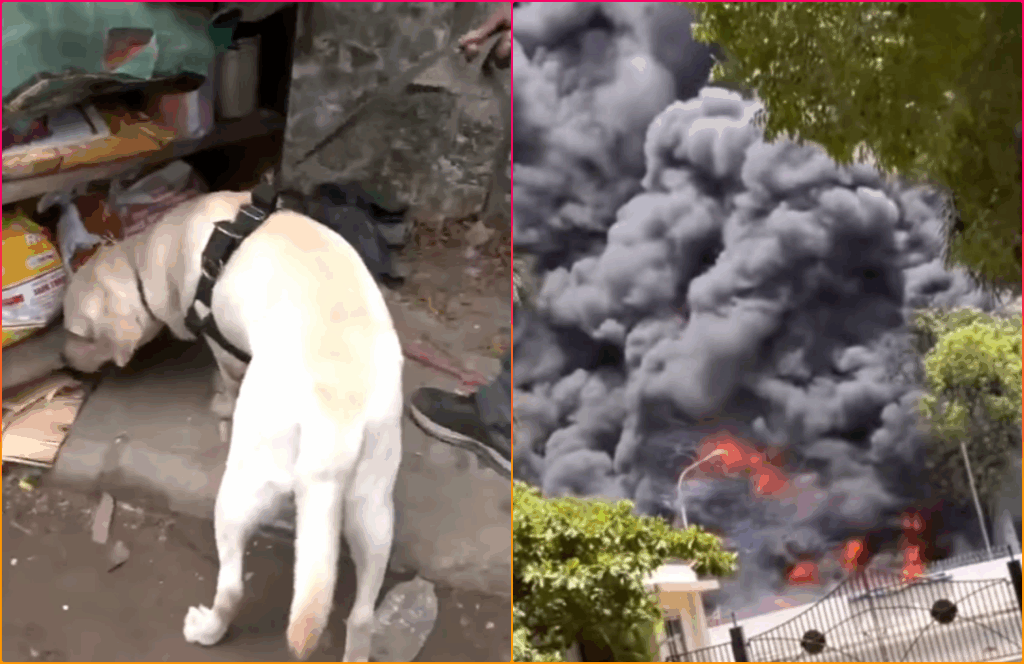
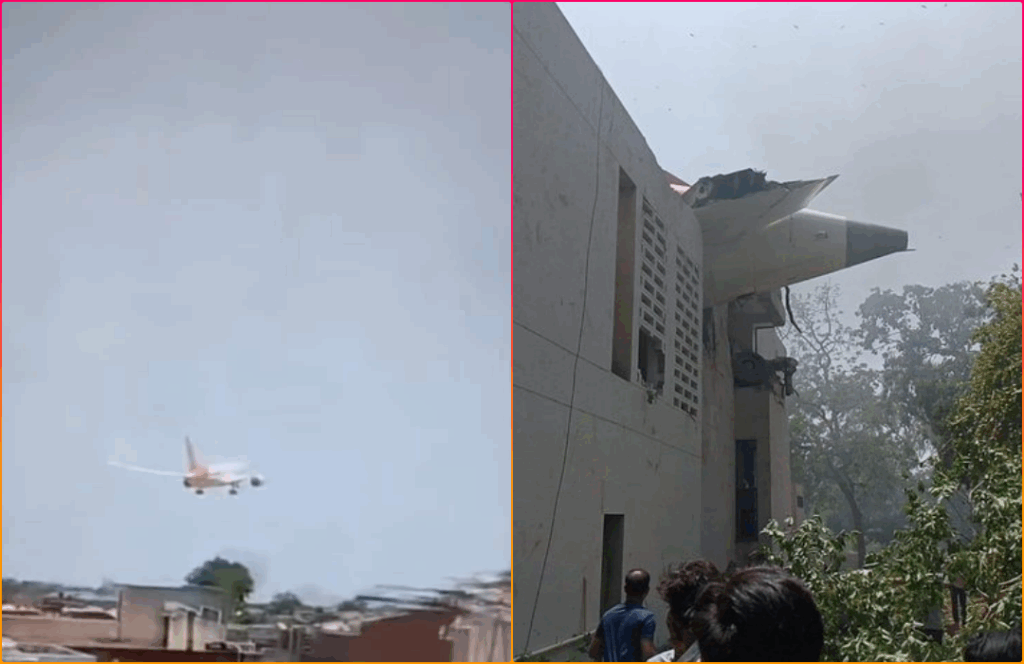
On the day of the incident, Flight AI 171 lifted off as scheduled, but what followed was a rapid and unexplained descent that ended in devastation. Barely half a minute into its ascent, the aircraft slammed into a cluster of buildings adjacent to B.J. Medical College in Ahmedabad’s Meghani Nagar, striking a student hostel and nearby canteen. The impact triggered a massive fireball, and first responders described the scene as “complete destruction.” Early radar data and eyewitness accounts suggest the aircraft may have experienced a sudden loss of lift or engine power during initial climbout, though the exact cause remains under investigation. The crash is now being probed by India’s Aircraft Accident Investigation Bureau (AAIB) in coordination with the U.S. National Transportation Safety Board (NTSB), the U.K.’s Air Accidents Investigation Branch (AAIB), Boeing, and engine manufacturer General Electric.
Black Boxes and Technical Recovery Underway
So far, one flight data recorder (FDR) or black box has been recovered intact from the rooftop of the hostel complex. The device contains critical performance data—engine thrust levels, airspeed, flap and gear settings—that may shed light on the aircraft’s final moments. However, the cockpit voice recorder (CVR), which captures communications inside the flight deck, remains missing. Sniffer dogs, now aiding search and recovery crews, are playing a pivotal role in tracking down the CVR and other small but vital components. Investigators are currently exploring several lines of inquiry: a potential dual engine failure, a malfunction in the aircraft’s wing flaps or landing gear, and the possibility of a high-impact bird strike. With the Boeing 787-8 known for its advanced avionics and reliability, any mechanical anomaly will be scrutinized in light of both design and maintenance protocols.
Dogs Lead Search Through Wreckage and Rubble
Specially trained canine units have been brought in to assist first responders and forensic teams as they sift through the charred remains of the plane and nearby structures. The dogs have been working methodically across collapsed areas and ash-covered ruins, using their acute sense of smell to locate human remains, electronics, and personal effects. Their role has proven invaluable, particularly in a disaster zone where traditional equipment often struggles to detect buried evidence. With ongoing fires and debris posing safety risks to human searchers, the dogs have entered areas inaccessible to personnel, flagging potential sites for forensic inspection and recovery.
How Canine Teams Support Aviation Disasters
Sniffer dogs have long been instrumental in the aftermath of aviation disasters, trained to detect the faintest traces of biological material and electronic devices under layers of debris, smoke, and chemical residue. Their unmatched olfactory skills allow them to distinguish between scents even in the most contaminated conditions. In the case of Flight AI 171, their presence has accelerated both the search for bodies and the hunt for the cockpit voice recorder, which may still be lodged within a destroyed section of the fuselage. Canines are not only enhancing efficiency but also preserving dignity, helping ensure victims are found and identified as quickly and respectfully as possible.
DNA Identification Aided by Dog-Led Discoveries
More than 140 bodies have already been recovered from the site, many of them disfigured or severely burned. Identification has relied heavily on DNA testing at Ahmedabad Civil Hospital. Sniffer dogs have been essential in locating these remains quickly, sometimes uncovering body parts that would otherwise have gone unnoticed. Once marked by the dogs, human recovery teams delicately retrieve and transport the remains to forensic labs. Officials, including India’s Home Minister Amit Shah, have confirmed that DNA sampling and verification are in full swing, and that the goal is to complete identifications as rapidly as possible.
A Tragedy Unfolding, One Clue at a Time
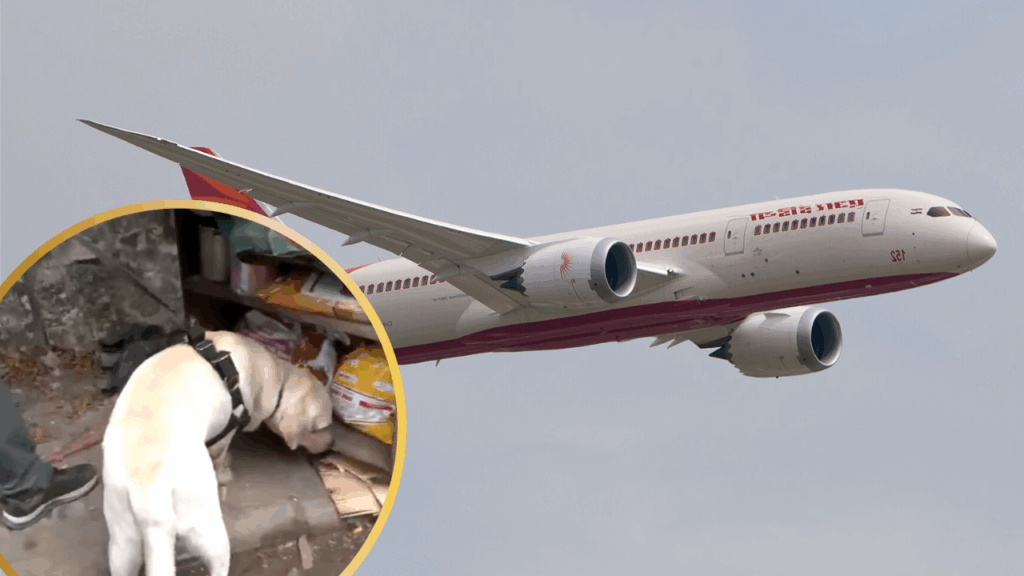
With rescue efforts now transitioned into a full-scale recovery and investigation operation, canine units remain embedded with disaster teams. Their work complements that of forensic specialists, engineers, and international aviation experts who are piecing together the final moments of Flight AI 171. Among the victims were nationals from India, the U.K., Portugal, and Canada. The sole survivor, British national Vishwashkumar Ramesh, escaped through a side exit with severe burns and remains in hospital care. Former Gujarat Chief Minister Vijay Rupani was confirmed among the deceased. As India mourns its worst aviation disaster in over two decades—and the first fatal crash involving a Boeing 787—the search for answers continues, powered by the dedication of both human and canine heroes on the ground.
The Role of Sniffer dogs have proved invaluable in crash sites the world over. During 9/11, over 300 were deployed in search and rescue contributing several hours of tireless searches across ground zero.


