
The 15 Habits That Separate a Settled Dog From One Still on Edge
Here’s an uncomfortable little secret trainers rarely say out loud in front of clients: most dogs that look “relaxed” on the couch are actually running a low-grade stress program in the background. The tail wag, the flop, the quiet stretch on the rug – none of it guarantees peace. Behaviorists say the real tell isn’t one dramatic moment, it’s a stack of tiny, boring, everyday habits that most owners never think to watch for.
That’s exactly why so many dogs seem fine for months and then “randomly” explode at the door, the window, or another dog on a walk. It was never random. Once you know what a truly settled nervous system actually looks like, you’ll start spotting the difference in your own living room within minutes – and some of it might sting a little.
#15 – They Can Actually Switch Off at Home

A genuinely settled dog doesn’t collapse from exhaustion – they choose to relax even when nothing is forcing them to. They’ll wander, sniff a little, then drop into a favorite spot without being nagged, bribed, or crated. Watch their body: breathing slows, muscles loosen, ears rest in neutral instead of swiveling like little satellite dishes.
A dog still on edge hovers. They pace, trail you room to room, flop down and pop right back up at the smallest creak or footstep, as if standing by for orders. The real test isn’t whether your dog can be still – it’s whether they can do nothing while nothing is happening. A lot of owners mistake that constant motion for “happy energy” when it’s often quiet anxiety wearing a wagging tail.
Quick Compare
- Settled: wanders, sniffs, and settles into a spot on their own – On edge: paces from room to room without ever fully landing
- Settled: breathing and muscles visibly loosen at rest – On edge: body stays tense even while lying down
- Settled: ears rest in neutral – On edge: ears keep swiveling toward every small sound
- Settled: naps through the average household noise – On edge: pops back up at the smallest creak or footstep
#14 – Their Startle Response Is Mild, Not Meltdown-Level

Every dog startles – that part’s normal. What separates a calm dog from a wired one is what happens in the next three seconds. A secure dog flinches at a dropped pan, glances toward the noise, mentally shrugs, and goes back to their bone.
A dog still living on edge reacts like the house is under attack: bolting, shaking, barking in a loop, or needing several long minutes to come back down. Watch how your dog handles a slammed door, a blender, or an umbrella snapping open. If they stay wired long after the noise is gone, that’s not “protective” instinct – that’s a nervous system that never got the all-clear signal.
#13 – They Can Be Alone Without Falling Apart

Separation isn’t a personality quirk, it’s a stress test with a pass/fail grade. A settled dog can handle you leaving the room, showering, running errands, even a full workday – needs met – without treating it like abandonment. They might watch you go, sniff the door once, then pick a bed and nap.
A dog still on edge treats every departure like a five-alarm fire: whining, scratching, pacing, or destroying things out of panic, not spite. Contrary to what a lot of owners want to believe, “he screams because he loves me” isn’t love – it’s an anxious attachment. Calm dogs have simply learned that alone time is safe, boring, and temporary, and their body never has to spike just because you picked up your keys.
#12 – They Eat and Drink Like It’s No Big Deal

Food and water are basic, but how a dog approaches the bowl is a surprisingly honest stress barometer. A genuinely settled dog eats at a steady pace, walks away when full without obsessing, and drinks throughout the day without gulping like it’s their last chance.
- Some anxious dogs pick at meals, skipping food entirely when something “feels off”
- Others inhale their food like it might vanish, then guard the bowl or hover for more
- Some barely touch water until they’re parched, then guzzle it urgently
Most owners blame the kibble brand or call it “picky.” In reality, sudden appetite swings and tension around the bowl are your dog’s nervous system showing its cards in real time. Calm dogs treat mealtime as routine and safe, not a small daily crisis.
#11 – They Can Ignore Everyday Triggers Without a Show
The real flex isn’t a perfect “sit” – it’s a dog who looks straight at a trigger and decides not to care. A settled dog watches the mail carrier, a dog across the street, or a skateboard rolling by, and simply stays on the couch. Maybe an ear flicks. Then they opt out entirely.
An on-edge dog reacts first and thinks later, if at all – barking, lunging at the window, scrambling to the door every single time a car passes. We love to romanticize the “good guard dog,” but constant hyper-vigilance isn’t protection, it’s burnout in slow motion. A calm dog trusts that not everything requires their intervention; a stressed one behaves like a neighborhood security camera on legs, never really standing down.
#10 – Their Play Has Clear Starts, Stops, and Boundaries
Play looks like fun, but trainers read it like a diagnostic chart. A settled dog can ramp up and ramp back down – zoom, wrestle, tug, then respond when you say “that’s enough” or the other dog checks out. Their body stays loose and bouncy, with plenty of pauses to shake off or sniff the ground.
A dog still on edge plays like a runaway train, too rough and too intense to stop without being physically pulled apart. Watch whether they respect a “no thanks” from another dog, or whether they can drop the toy without a meltdown. Edgy dogs often blur the line between excitement and aggression – not out of malice, but because their internal brakes are just weak. When play always ends in chaos or guarding, you’re not looking at a “high-drive” dog, you’re looking at a stress cup that’s already overflowing.
#9 – Their Body Language Matches the Situation, Not Just One Mood
A settled dog has range. Soft eyes at home, focused eyes on a walk, briefly wide eyes at a surprise, then a smooth return to baseline. Their tail isn’t stuck at one default height and speed – it actually shifts with context, the way a relaxed person’s posture shifts throughout the day.
A dog still on edge often has one dominant setting no matter what’s happening: stiff tail, tight mouth, constant panting, frozen posture. Trainers watch the small stuff – blinking versus hard staring, a loose jaw versus a clenched one, fluid movement versus choppy movement. If your dog always looks “wired,” even in supposedly calm moments, that’s not personality. That’s physiology stuck in the on position.
#8 – They Sleep Deeply and in More Than One Place

Sleep is where the truth leaks out, whether we’re paying attention or not. A settled dog sleeps because they feel safe, not just because they’re worn out – snoring belly-up on the couch, sprawled on their side, curled in a bed nowhere near the door. Healthy adult dogs typically log 12 to 14 hours of sleep in a 24-hour stretch, and a calm dog moves between spots through the day, trusting that every one of them is safe enough for real rest.
A dog still on edge sleeps light and close to exits, waking at the smallest sound, napping in short shallow bursts instead of true rest. Even when they look asleep, their muscles stay half-engaged and their ears keep flicking. Over time, that sleep debt quietly worsens reactivity and mood, the same way it does in an overtired person. If your dog has never once truly sprawled out belly-up and vulnerable, that’s not dignity – that’s a dog who’s never fully stood down.
Fast Facts
- Healthy adult dogs generally need 12 to 14 hours of sleep per day
- Puppies and senior dogs often sleep even more, sometimes 18 hours or beyond
- Twitching paws, soft snoring, and muscle relaxation during sleep are normal signs of deep rest
- A dog who rotates naps between several rooms is showing trust in the whole house, not just one “safe” corner
#7 – They Don’t Need to Control Every Human in the Room
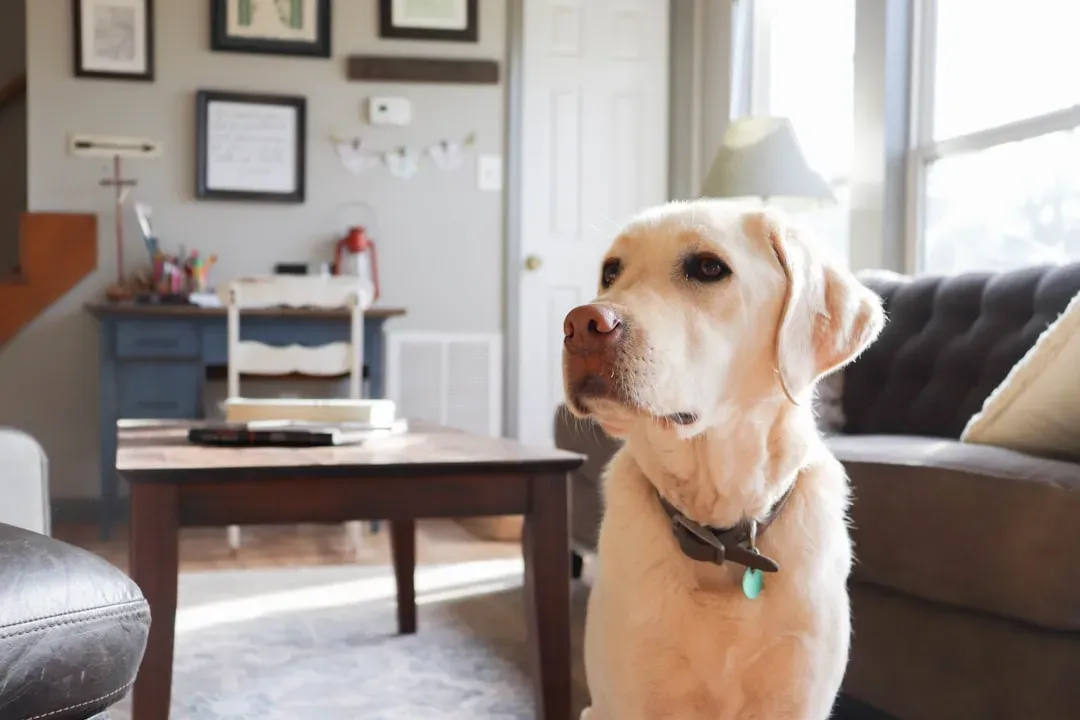
There’s a myth that a well-bonded dog has to be involved in everything – supervising guests, squeezing between hugs, demanding to be petted nonstop. In reality, a genuinely settled dog can coexist without micromanaging the room. They nap while you host friends, lie on their bed while the kids play, and exist quietly in the background without needing constant contact.
On-edge dogs shadow you from room to room, insert themselves into hugs and conversations, and get agitated when someone else shows you affection. People call this loyalty or jealousy. More often, it’s insecurity – the dog doesn’t trust that things are okay unless they’re physically in the middle of it. If your dog can’t relax unless they’re glued to your leg, that’s not always the sweet thing it looks like on camera.
#6 – They Handle Routine Changes Without a Total System Crash
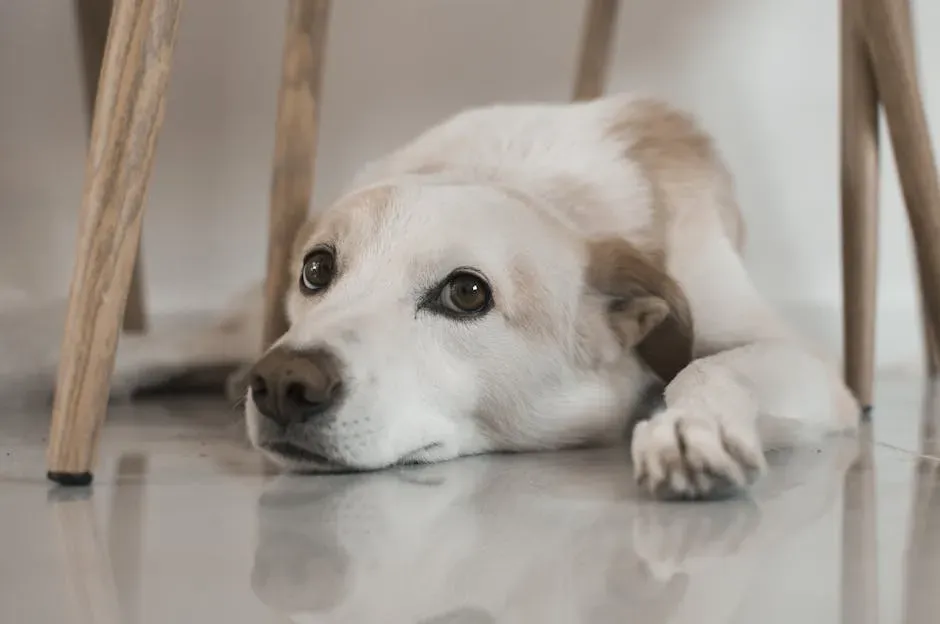
Change is stressful for everyone, but settled dogs bend instead of breaking. Move the furniture, shift the walk schedule, host a weekend guest – they might be a bit more alert or clingy at first, but they adapt. Eating, sleeping, and bathroom habits stay more or less normal within a short window.
A dog still on edge treats every change like a disaster: appetite dips, stomach issues, sudden whining, or “new” misbehaviors that seem to appear out of nowhere. Life is never perfectly predictable, and a truly stable dog doesn’t need it to be – they lean on trust in you and their own coping skills, not a fragile, rigid routine. Dogs stuck in anxiety cling to sameness because they have no internal buffer, so a rearranged living room can feel like an attack on their entire safety net.
#5 – They Can Walk Past Other Dogs and People Without Drama
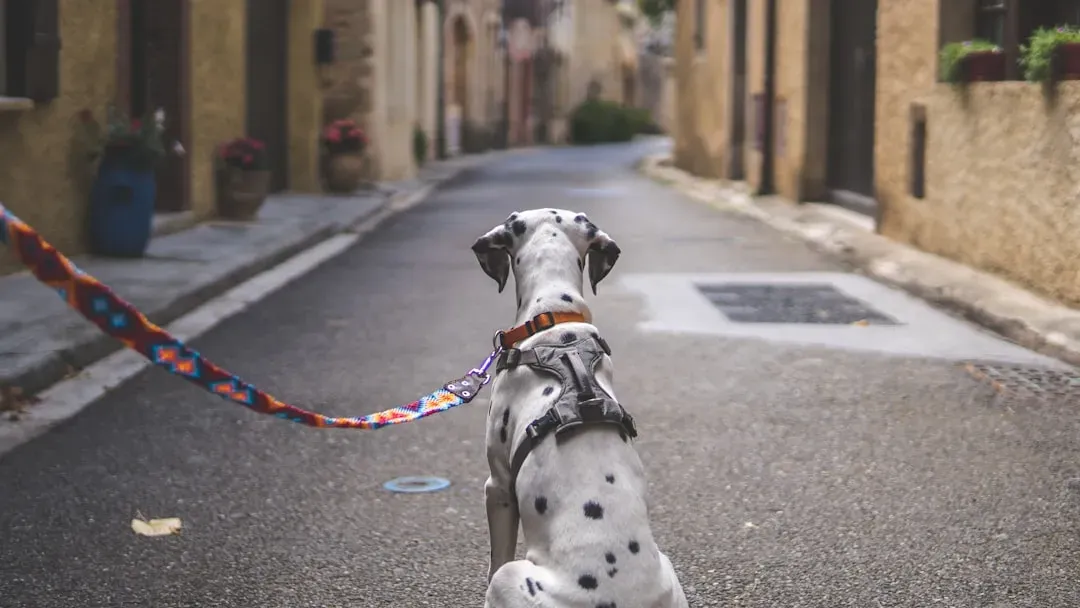
This is the one that starts arguments at the dog park. Owners insist “he just loves everyone” while their dog is straining the leash, whining, lunging, or barking at every passerby. That’s not friendliness – that’s over-arousal, which is stress wearing a party hat. A settled dog can pass another dog at a reasonable distance, maybe glance, sniff if invited, then move on without any kind of scene, good or bad.
Whether the reaction comes from fear (“get away from me”) or frustration (“I have to say hi right now”), the underlying problem is the same: the nervous system can’t stay inside a healthy window around triggers. Calm dogs don’t need to greet every stranger or correct every dog on the block – they trust you to steer. If every single walk feels like an event, your dog isn’t nearly as settled as the smiling leash photos suggest.
Worth Knowing
- A tight, straining leash before a trigger even fully appears is an early warning sign, not excitement
- Fixated staring or a stiff, frozen posture usually means the dog is loading up a reaction
- Whining or barking that doesn’t fade once the trigger passes points to over-arousal, not friendliness
- Swinging fast between excited and frustrated in the same walk is a classic sign of a leaky stress window
#4 – They Take Redirection as Information, Not as an Attack
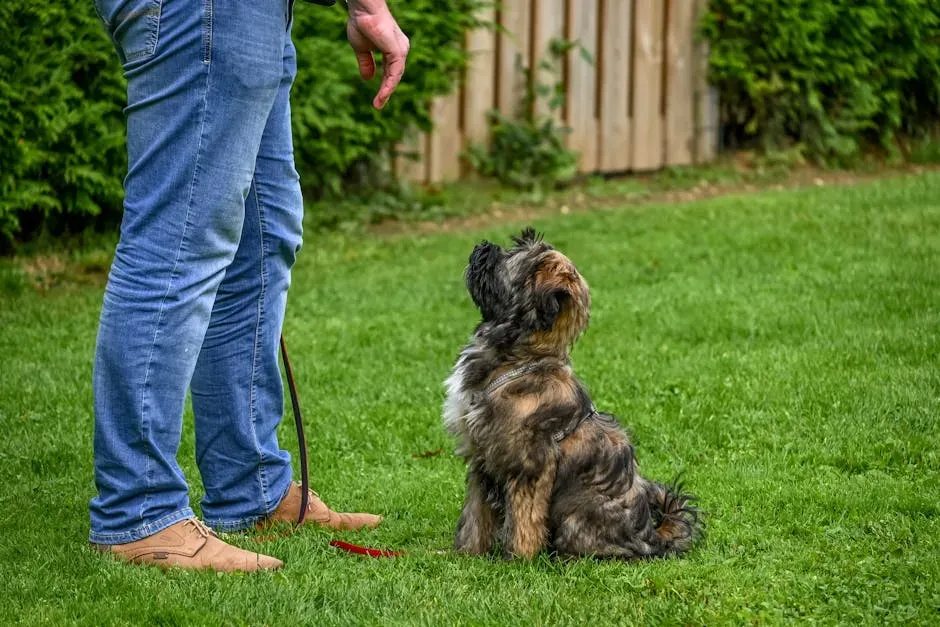
Correcting a settled dog doesn’t shatter them. You say “leave it” or “this way,” they might show mild disappointment, and then they move on. No hour-long sulking, no dramatic ear-pinning, no spiral into defiance or panic. A dog still on edge treats even gentle guidance like a major emotional event – shutting down, getting frustrated, or doubling down on the exact behavior you were trying to stop.
This matters more than most owners realize. Emotionally stable dogs have the resilience to hear “no” without feeling unsafe, while insecure dogs read almost every boundary as rejection or threat. That’s where you see dogs crumble at a scolding, or swing the other way and get naughtier when challenged. It’s not stubbornness – it’s dysregulation. A dog who can take feedback calmly is showing you deep trust, not just good training.
#3 – They Show Curiosity More Than Suspicion
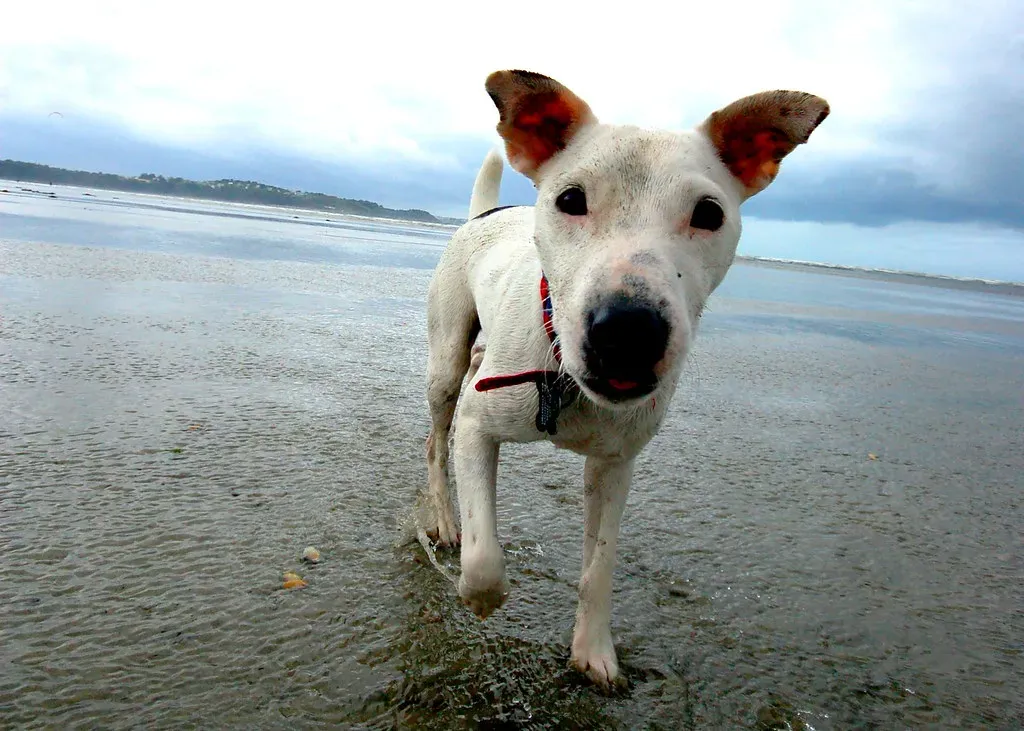
Watch what happens when your dog meets something new – a stroller, a plastic bag skittering in the wind, a person in a hat. A settled dog hangs back a second, then approaches in a curious, investigative way: sniff, circle, decide it’s boring, walk off. An on-edge dog either freezes in place, glued down with tension, or charges in barking, betting that a loud offense is the best defense.
Curiosity is basically the opposite of chronic fear. A dog who explores with their nose and eyes instead of only their bark is telling you their baseline is secure enough to handle a little uncertainty. A constantly suspicious dog isn’t “street smart” – they’re living in a smaller and smaller world where anything unfamiliar automatically means danger.
#2 – They Recover Quickly After Stressful Moments
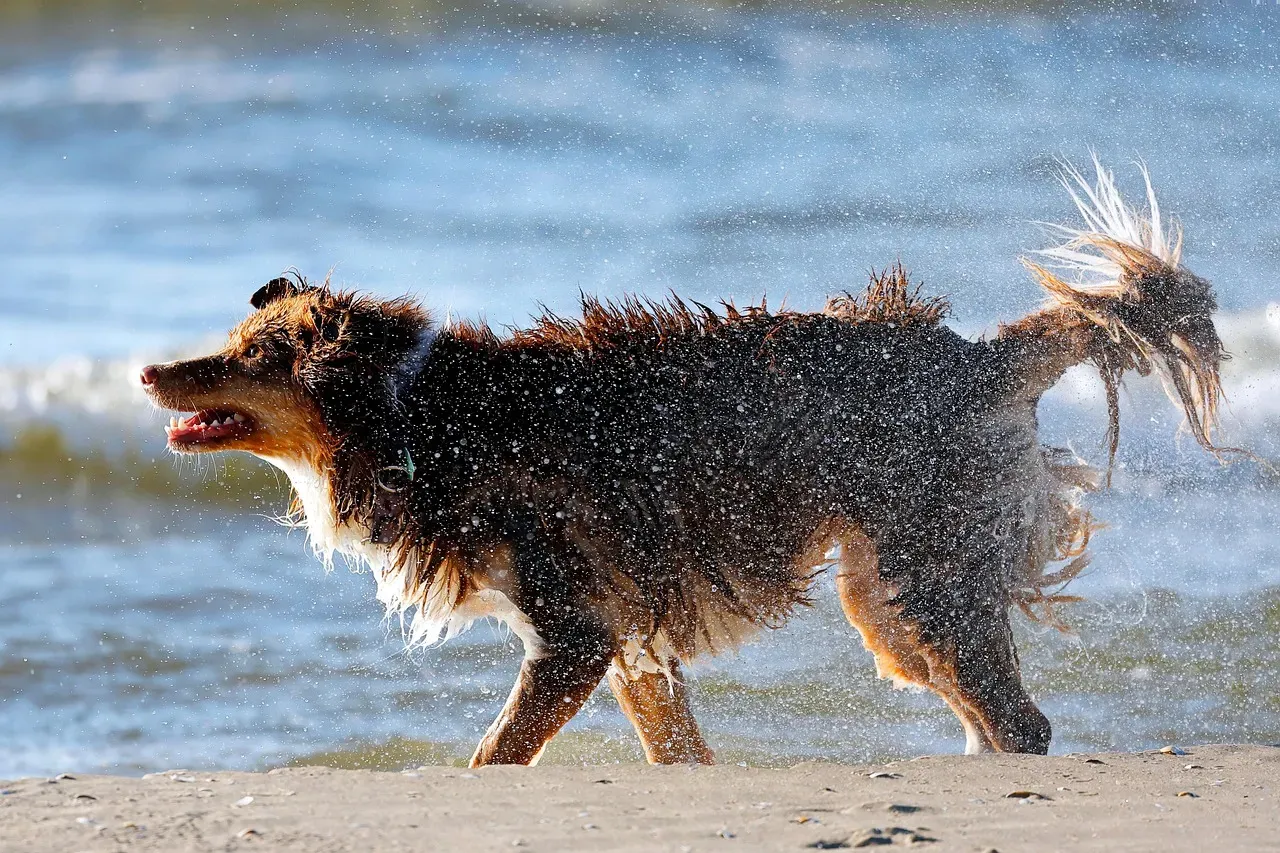
Even the calmest dog has bad moments – another dog charges them, a kid drops something near their head, a vet visit gets intense. The difference that actually matters is recovery time. A settled dog shakes off, yawns, stretches, and is mostly back to baseline within a reasonable window, maybe a little clingy afterward but not stuck.
A dog still on edge stays flooded, carrying the incident in their body long after it’s technically over – panting that won’t quit, jumpiness at every small noise, sudden Velcro behavior or a full shutdown. Recovery speed is one of the clearest markers of nervous system health there is. A dog who can’t come down from stress is quietly telling you their baseline was already too high before anything even happened.
Why It Stands Out
- A full-body shake-off right after the stressor ends is one of the clearest reset signals a dog can give
- A big yawn or a lip lick often shows up as the nervous system downshifts
- Loose, wiggly movement returning quickly means the body has left “alert mode”
- Taking a treat or rejoining play soon after a scare shows the brain has already moved on
#1 – They Trust Their World Enough to Be Themselves

At the deepest level, a truly settled dog looks almost boring, in the best way. They have their own little routines and quirks, and they feel safe enough to actually express them – trotting over with a favorite toy, sunbathing in a patch of light, rolling onto their back for a goofy wiggle, quietly removing themselves from chaos without being forced. They aren’t performing for you, defending you, or anxiously checking in every few minutes.
That trust shows up in small, easy-to-miss ways: greeting you without frantic desperation, choosing rest over hyper-vigilance, being able to say “no thanks” to attention by simply walking away. A dog still on edge is always “on” – monitoring, managing, overreacting, or shrinking. The settled dog has room inside to just be, and that quiet, earned belief that the world is mostly safe is the habit underneath every other habit on this list.
The Bottom Line

Strip away the cute videos and the “he’s just being a dog” excuses, and the line between a truly settled dog and one still on edge is almost embarrassingly simple: calm dogs can let go. They switch off at home, move through the world without needing to control it, absorb surprises without falling apart, and bounce back after stress instead of living inside it indefinitely.
Here’s the part I’ll say plainly, even if it’s unpopular: a lot of the behaviors we praise as “protective” or “loyal” or “just his personality” are actually coping mechanisms for a dog who never got to fully relax. That’s not an insult to your dog, and it’s definitely not a failure on your part. It’s a roadmap. If your dog showed up in three or four of these habits and it stung a little, good – that sting is useful. It means you can start moving them from edge to ease, one boring, uneventful, wonderfully settled afternoon at a time.