

There’s a dog sitting in a shelter right now. Muscular, broad-chested, wiggling with excitement every time someone walks past the kennel door. It’s been waiting months. Most people don’t stop. They see the breed and keep moving. That dog is almost certainly a pitbull, and that quiet, painful moment plays out thousands of times a day across the United States.
Few animals in modern history have been wrapped in as much fear, misrepresentation, and outright myth as the pitbull. It’s rare to find a middle-of-the-road opinion on them. One side believes them to be ruthless killers, while the other views them as sweet, misunderstood animals more likely to be victims of violence than perpetrators of it. The truth, as it tends to be with complicated things, is far more nuanced than either extreme. What follows is an honest look at one of the most controversial animals in America.
The Identity Problem: “Pitbull” Isn’t Even a Real Breed

This is where the confusion starts and, in many ways, never ends. The term “pit bull” isn’t actually a singular type of dog breed. It’s an umbrella term that encompasses multiple dog breeds with similar physical features like big heads and wide chests. That distinction matters enormously, because almost everything downstream from it, the statistics, the legislation, the shelter decisions, is built on shaky ground.
Several breeds are commonly grouped together under the umbrella of “pit bull,” including American Staffordshire Terriers, American Bully, and Staffordshire Bull Terrier. The American Pit Bull Terrier is recognized by the United Kennel Club and American Dog Breeders Association, but not by the AKC, which is generally considered the final word on dog breeds in America. Beyond that, comprehensive studies on canine DNA and visual breed identification have found that, on average, roughly six in ten dogs labeled as “pitbulls” have no genetic ancestry from pitbull-type breeds at all. Think about that for a second. The very category we’re debating may not accurately describe the dogs we think we’re talking about.
What the Science Actually Says About Their Temperament

There is no scientifically validated study that has linked dog aggression and breed to support laws like breed-specific legislation. In fact, a study published in April 2022 concluded the opposite. Using the DNA sequencing of thousands of dogs across the country and survey results of over 18,000 dog owners, researchers found that breed has little to do with a dog’s behavior or personality. That finding alone should shift how people think about this debate, yet it barely makes a dent in public perception.
More recently, a 2025 study that evaluated behavior and genetic variants in dogs found that only appearance could be predicted, not behavior. Aggression is not a breed characteristic, and environmental influences are often the cause of aggression in dogs. In fact, the American Temperament Test Society found that pit bull-type dogs generally scored higher on the temperament test compared to other dogs. That’s not anecdote. That’s a measurable result from a standardized, widely respected test of canine behavior.
How Humans Created the Monster They Fear

For centuries, humans have bred dogs for temperament rather than looks. Dogs serve a functional purpose. The pit bull gained a reputation for being an aggressive animal, not because of its nature, but because humans wanted to cultivate that persona for the particular breed. The brutal history of dogfighting is inseparable from this story. Many pit bull owners chose the breed for guard duties. Owners purposefully mistreat their pit bulls and starve them of affection in order to trigger aggressive behavior. The extent of pit bull abuse also contributes to the common myth that they are ferocious dogs.
The media compounded the damage. In August 2007, there were four dog bite incidents involving different dogs in four days. One involved a pit bull; the others were other breeds. The three attacks that did not involve a pit bull were covered by no more than one local paper. The pit bull bite was covered by 230 different national and international news agencies in some form. That kind of lopsided coverage doesn’t inform the public. It shapes public fear in a way that has nothing to do with actual risk. Pit bulls are abused more than any other dog breed, yet somehow, the conversation stays fixated on the damage they might do rather than the damage routinely done to them.
The Shelter Crisis Nobody Talks About Enough

Pitbull-type dogs account for approximately four in ten of all dogs euthanized in shelters yearly. Close to one million pit bulls are killed each year, as many people do not want to rehome these animals. These are not abstract numbers. This means roughly 2,800 pit bulls are euthanized daily, mainly due to misinformation surrounding the breed. Three quarters of municipal shelters euthanize pit bulls immediately upon intake, without them ever having a chance for adoption.
Even the dogs that survive intake face an uphill battle. According to a study done by Arizona State University, the stigma surrounding the term “pit bull” is so intense that even just referring to a dog as a pit may prolong the process of them finding a home. One of the most significant hurdles in finding homes for pit bulls is combating the breed bias that permeates public perception. Despite evidence and countless stories showcasing the breed’s loyalty, affection, and intelligence, pit bulls are often unfairly labeled as aggressive. This stigma influences adoption rates and legislative policies, further endangering these animals. They wait longer, get fewer chances, and die more often, not because of what they’ve done, but because of what people assume they might do.
Breed-Specific Legislation: Well-Intentioned, Poorly Executed
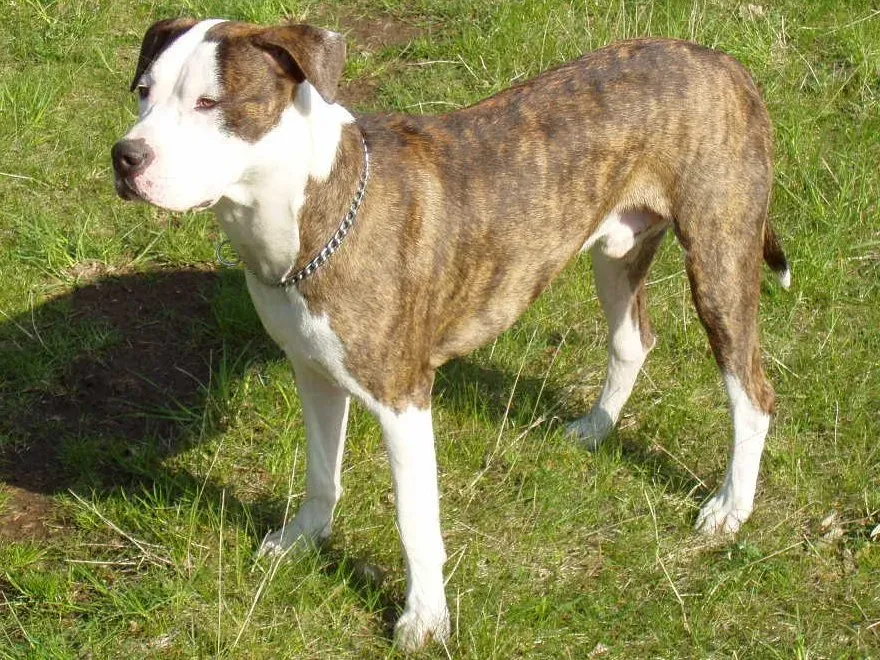
Breed-specific legislation, or BSL, is a law that either bans or restricts ownership of certain dogs based on their appearance. This type of legislation usually operates under the presumption that certain physical characteristics make some breeds of dogs more dangerous than others. The problem is that this presumption isn’t supported by the weight of evidence. It is extremely difficult to determine a dog’s breed or breed mix simply by looking at it. A study conducted by Maddie’s Fund showed that even people very familiar with dog breeds cannot reliably determine the primary breed of a mutt, and dogs are often incorrectly classified as “pit bulls.” Because identification of a dog’s breed with certainty is prohibitively difficult, breed-specific laws are inherently vague and very difficult to enforce. By generalizing the behaviors of dogs that look a certain way, innocent dogs and pet owners suffer.
Growing public awareness has helped overturn over 300 discriminatory laws against these dogs since 2012. That shift reflects something real. Multiple peer-reviewed studies have found that breed-discriminatory legislation does not improve public safety. Multiple cities in the United States enacted it in the 1980s and 1990s in a misguided attempt to address dog bites. Decades of data from these cities tell us that it does not reduce dog bites or make communities safer. Dangerous animal legislation should focus on people’s responsibility for their dogs’ behavior, including measures that hold owners of all breeds accountable for properly housing, supervising, and controlling their dogs. Breed-neutral “dangerous dog” laws and “leash laws” that prohibit dogs from running loose off their owners’ property can control the behavior of individual dogs and individual owners. That’s the direction the evidence points, and more communities are starting to listen.
A Verdict That Should Matter to All of Us

The pitbull’s story is, in many ways, a story about what happens when fear replaces facts in how a society makes decisions. These dogs didn’t choose their history. They didn’t choose to be bred for fighting rings, exploited by abusive owners, or misidentified on news reports. Pit bulls and bully breeds are neither devils nor saints – they’re just dogs, albeit ones that carry a vicious social stigma. What separates a loving family dog from an aggressive one is almost always what happened to them between birth and the moment you met them.
There’s a meaningful body of science now pointing toward the same conclusion: using the DNA sequencing of thousands of dogs and survey results of tens of thousands of owners, researchers found that breed has little to do with a dog’s behavior or personality. Dog personalities were found to be influenced by their environment more than anything else. We owe it to these animals, and honestly to ourselves, to let that evidence change how we see them.
The pitbull doesn’t need to be romanticized or defended with false sentimentality. It needs something far simpler: a fair chance, evaluated as an individual rather than sentenced as a type. We’ve already decided that judging people by appearance alone is wrong. It’s not a stretch to apply a little of that same logic to the dog wagging its tail at the shelter door.


