

#1. Chronic Anxiety and Restlessness

If your dog paces the floor, can’t seem to settle, and treats every small noise like an incoming threat, pause for a moment before blaming the dog. Dogs mirror stress. When owners show anxiety, dogs’ cortisol levels often rise as well. This isn’t coincidence. It’s biology playing out in real time inside your home.
Dog owners experiencing long bouts of stress can transfer it to their dogs, scientists report in a study published in Scientific Reports. The researchers examined hair from dog owners and their dogs, looking at the concentrations of cortisol, a chemical released into the bloodstream and absorbed by hair follicles in response to stress. If you’ve been quietly white-knuckling your way through life for months or years, your dog has been feeling every bit of it.
#2. Separation Anxiety That Seems Out of Proportion
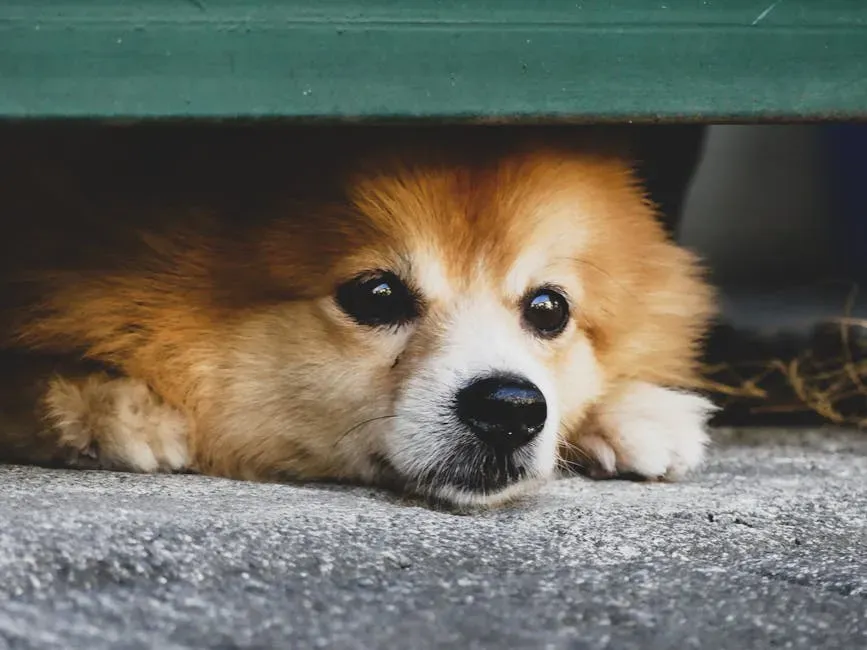
Most people assume separation anxiety is purely about the dog missing them, which is sweet and flattering and also only part of the story. Owner attachment style appears to play a larger role than expected in whether a dog develops separation anxiety, with owner attachment style likely related to an owner’s perception of their dog’s behavior. An owner who struggles with their own abandonment fears, or who has unresolved anxiety around separation, can inadvertently transmit that same nervous energy into the relationship.
Research found that with owners’ higher score on attachment avoidance, the occurrence of separation-related disorder in the dog increases. While most dogs are emotionally attached to their owners, anxious dogs exhibit more attachment behaviors than dogs that are less anxious. That dog refusing to let you out of sight might be holding up a mirror to a wound you haven’t fully looked at yet.
#3. Hypervigilance and Startling Easily
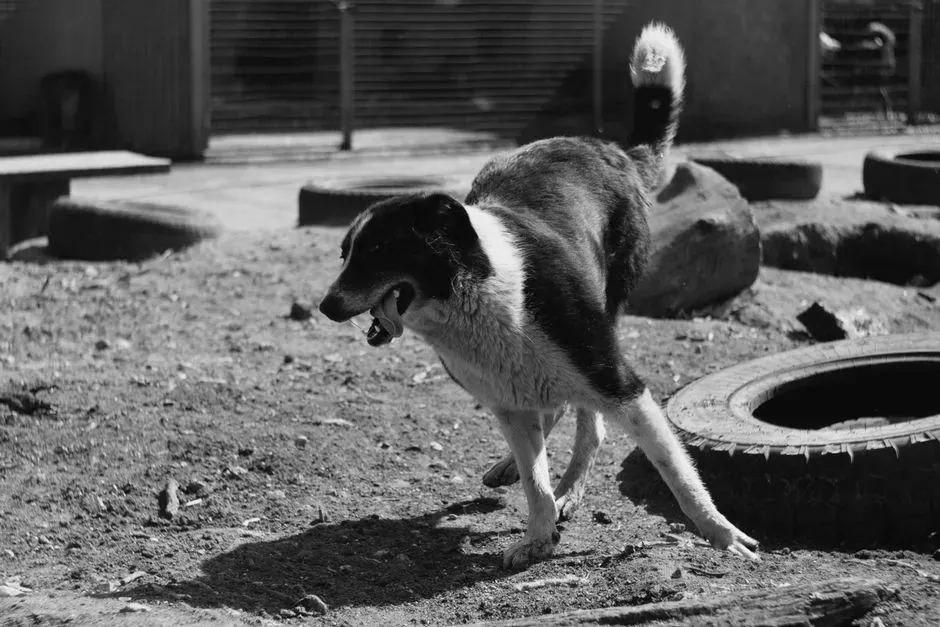
Some dogs seem permanently on guard. They startle at ordinary sounds, scan rooms obsessively, and never fully relax even in safe environments. Fear responses that occur in many contexts can be characterized as global fear. Generalized anxiety in dogs is persistent anticipatory fear, difficulty settling, and hypervigilance. When an owner lives in a state of chronic alertness, often the result of unresolved trauma or prolonged stress, this “always-on” nervous system state gets communicated to the dog daily.
Dogs have been shown to detect and respond to human emotions through various channels, including visual, auditory, and chemical signals. A dog picking up on an owner’s perpetual tension isn’t malfunctioning. It’s doing exactly what thousands of years of co-evolution designed it to do. The trouble is, a dog living in that state of alert has no way to understand why it feels that way, and it can’t choose to put the worry down.
#4. Aggression Toward Strangers
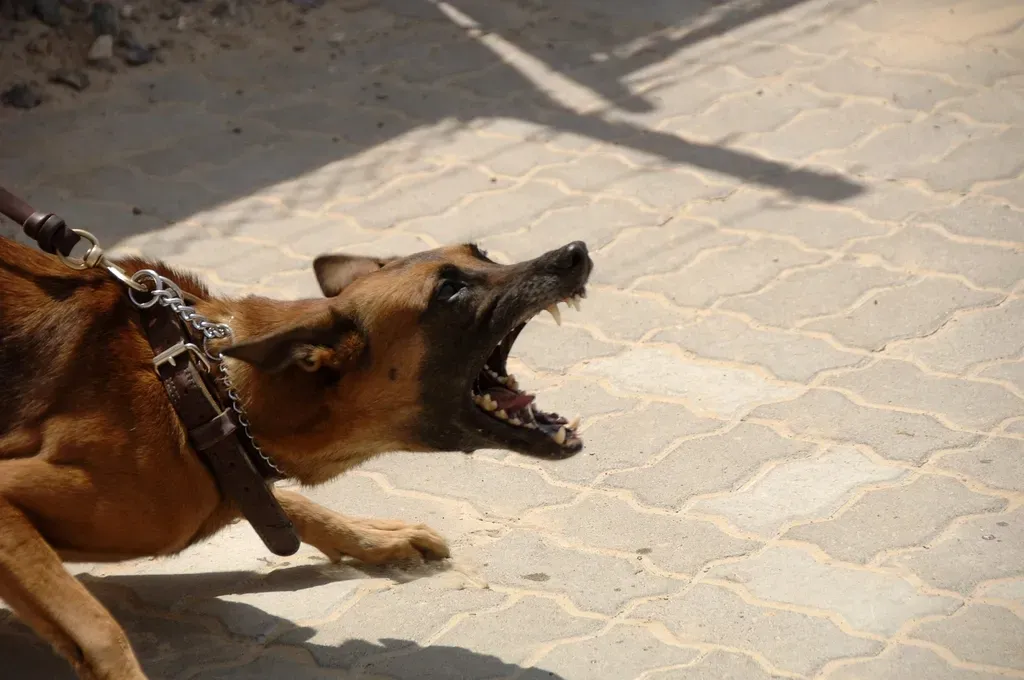
A dog that growls, lunges, or positions itself threateningly toward unfamiliar people is often labeled “poorly socialized” or “dominant.” Sometimes that’s true. But there’s another dimension worth considering. Research identified modest, positive associations between owners’ use of aversive or confrontational training methods and the prevalence of stranger-directed aggression, and also detected associations between owners’ low scores on emotional stability and their dogs’ tendency to display higher rates of stranger-directed fear.
People who carry deep distrust of others, perhaps rooted in betrayal, social trauma, or a history of being hurt by those they let in, can project a low-level wariness into their environment every single day. Dogs are naturally very social and cooperative animals. When they behave aggressively, it’s usually because they feel that they, or something they value, is under direct threat. If you’ve been unconsciously treating the world as a threatening place, your dog may simply have taken the memo.
#5. Compulsive Licking or Self-Soothing Behaviors

Compulsive licking, whether of paws, surfaces, or the air, is one of those behaviors owners often dismiss or find mildly endearing. It’s worth taking seriously. When licking becomes excessive, it is usually a sign that something is wrong, as it can indicate anxiety, stress, boredom, pain, or an underlying health condition. The act of licking can release hormones that help a dog relax, like dopamine and endorphins, making it a self-soothing mechanism similar to a nervous person twirling their hair.
This is essentially a coping mechanism, and coping mechanisms in dogs don’t emerge in a vacuum. In some cases, excessive licking can be a sign of a behavioral disorder, and like obsessive-compulsive disorders in humans, this requires a combination of behavioral and medical intervention. Owners managing their own emotional suppression or unresolved anxiety may find their dog develops its own version of self-regulation, quietly and persistently, in the corner of the room.
#6. Inability to Play or Relax

Play is supposed to come naturally to dogs. When a dog seems incapable of loosening up, refusing toys, showing no interest in games, or appearing flat even during walks, it’s worth paying attention. Dogs that live in emotionally heavy households can absorb that heaviness and carry it in their body language and behavior. These insights underscore the significant impact of owners’ emotional states and behaviors on their dogs. The dynamic between a dog and its owner significantly shapes the canine’s emotional and behavioral development.
Depression, grief, and emotional shutdown in humans create an environment of low stimulation and subdued energy. Dogs are exquisitely sensitive to that atmospheric shift. This ability likely developed through domestication. Over thousands of years, dogs that could better interpret human emotional states were more likely to survive and bond with people. A dog that can’t play may not be broken. It may be stuck in the emotional weather of the home it lives in.
#7. Excessive Clinginess and Attention-Seeking
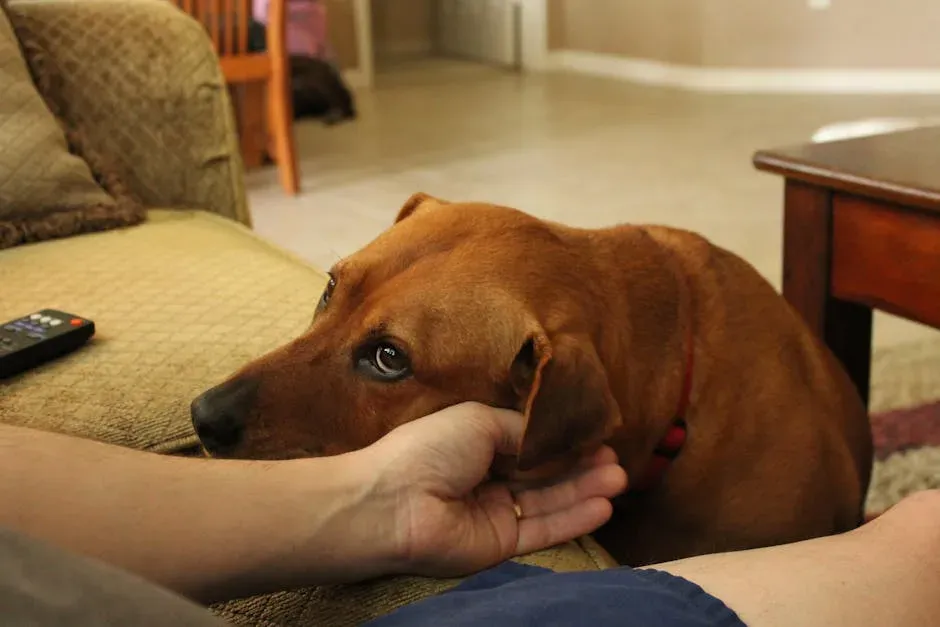
There’s a difference between a dog who loves your company and a dog who cannot function without constant reassurance from you. Extreme clinginess, following from room to room, pawing relentlessly, or escalating into visible distress the moment you look away, often has a relational origin. If an anxious individual adopts a dog with a similarly nervous demeanor, the relationship dynamics can create a feedback loop, wherein each party amplifies the other’s emotional state.
Research found a significant positive relationship between owner-dog anxious attachment and dogs’ fear and anxiety, separation issues, and aggression scores. Owners who struggle with their own needs for constant validation or reassurance, sometimes a wound left by inconsistent early relationships, can unconsciously reinforce this dynamic with their dog. It becomes a shared language between two beings, neither of whom may fully recognize what they’re communicating.
#8. Fear Responses to Specific Triggers

When a dog reacts with disproportionate fear to something specific, whether it’s raised voices, certain types of people, particular sounds, or sudden movements, it’s easy to attribute this to a past trauma the dog experienced directly. That’s sometimes accurate. But there’s another explanation that deserves consideration. Understanding that dogs read human emotions has practical implications. If you’re anxious during thunderstorms, your dog may become more fearful, too.
Dogs are sensitive enough to read the micro-tension in an owner’s body when something specific triggers that owner’s own old wounds. Dogs likely pick up on subtle changes such as differences in their owner’s body odor and behaviors such as pacing, nail biting, and irritability. If your body tightens up around a particular kind of situation or person, your dog notices before you’ve even consciously registered the reaction yourself. That’s not projection on your part. That’s your dog being a remarkably accurate emotional instrument.
#9. Difficulty Trusting New People or Environments
Some dogs take weeks or months to warm up to anyone new, and even then, they maintain a cautious distance. In unfamiliar spaces, they may freeze, refuse to explore, or stay glued to their owner’s legs. Dogs who were bred for herding are used to looking at environmental changes and being sensitive to them, and they seem to be a little more responsive to human cues, so they tend to have higher correlations with their cortisol levels with their owners compared to some more ancient breeds. Breed sensitivity matters, but it doesn’t tell the whole story.
Research indicates that the quality of the owner-dog relationship can influence a dog’s long-term stress-coping mechanisms. Interestingly, the impact of this relationship on a dog’s emotional regulation also depends on the dog’s inherent personality traits. Owners who themselves struggle to trust new environments or new people, carrying a quiet wariness that’s never fully explained but always present, often end up with dogs who reflect that same guarded approach to the world. The dog isn’t being stubborn. It’s been paying close attention.
#10. Stress That Spills Over from Work or Routine Rumination
This one is easy to miss because it doesn’t look like an emotional wound at all. It looks like a long week. Job stress can have well-being consequences for an employee’s loved ones through crossover. Pet dogs, who most Americans view as family members, may also be susceptible to crossover. Given prior support for dogs’ abilities to perceive and absorb a human’s emotions via emotional contagion, researchers expected that pet dogs of owners with higher job stress would themselves be more stressed.
Work-related rumination, or the tendency to continue thinking about work during leisure time, was found to explain this relationship. Controlling for home stress, the research found that job stress related to behaviorally indicated stress in dogs. In other words, it’s not just the big traumas that pass through the leash. The habit of mentally staying at the office while physically sitting on the couch is enough. Your dog can feel you not being present, and it responds accordingly.
What This All Really Means
There’s a temptation to read an article like this and feel guilty. That would be missing the point entirely. As research suggests, behavioral changes can start with owners. So, if you’re stressed out, think about the impact it can have on your dog and take steps to remedy the situation. That’s not a punishment. It’s an invitation.
The truth is that your dog is one of the most honest relationships you’ll ever have. It won’t tell you what you want to hear. It won’t dress up its reactions to spare your feelings. Dogs that mirror their owners’ behaviors reflect their circumstances, lifestyles, and emotions. That’s not a flaw in the bond. That’s the bond at its most truthful.
If your dog is struggling, the most courageous thing you can do isn’t to find a better trainer or a new behavioral protocol, though those things have their place. It’s to ask the harder question: what is my dog seeing in me that I’m not quite ready to see in myself? The answer might be the beginning of healing for both of you.


