
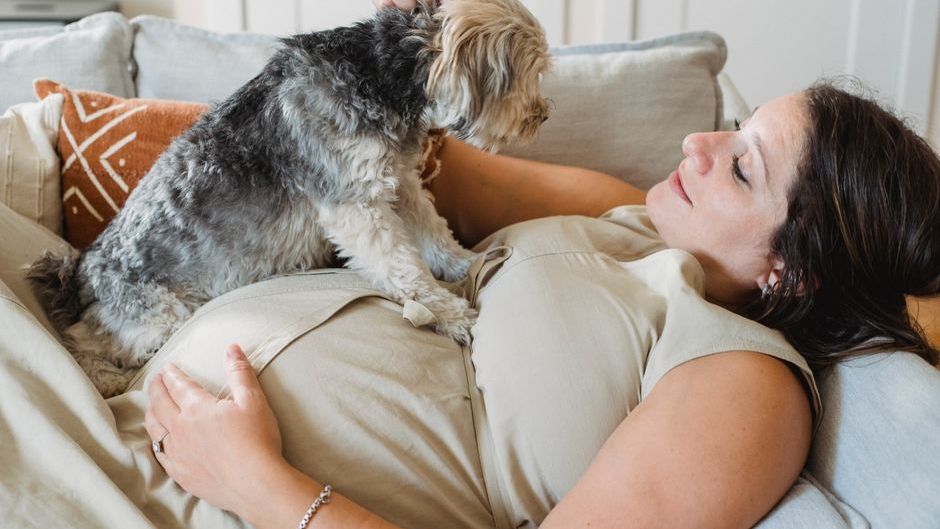
Many expectant parents notice their dogs acting differently in the months leading up to delivery. These shifts often feel subtle at first, yet they add up to something noticeable over time. Dogs pick up on changes in routine, scent, and even the way a household prepares for a new arrival.
The behaviors vary from one dog to the next, but certain patterns appear again and again in homes getting ready for a baby. Here are ten common signs that stand out to owners who pay close attention.
They Spend More Time Sniffing Your Belly
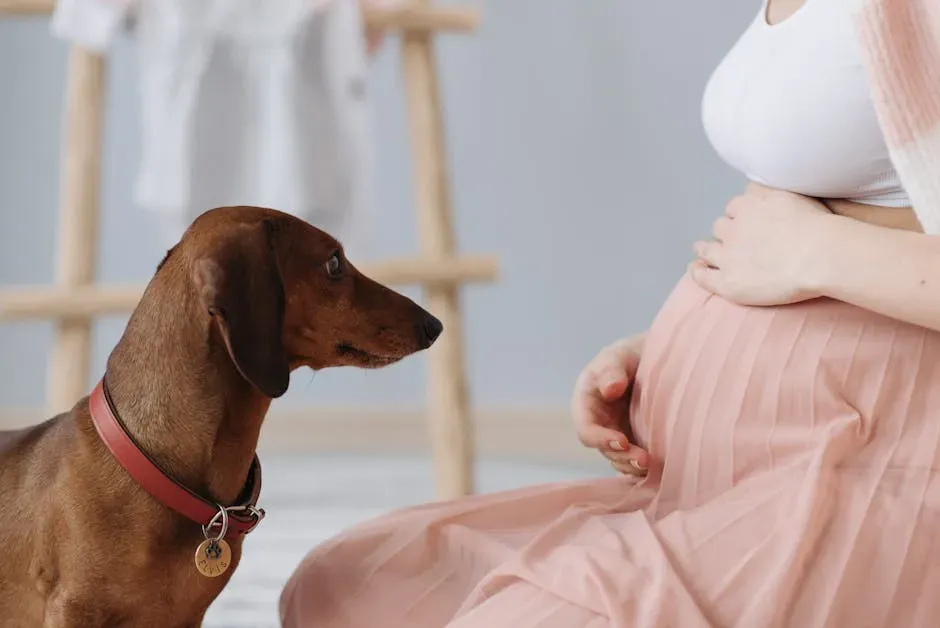
Dogs rely heavily on their sense of smell, and pregnancy brings a steady shift in hormones that alters body chemistry. Your dog may linger near your midsection, taking longer sniffs than usual during quiet moments on the couch. This interest often grows stronger as the due date approaches.
Owners sometimes report the behavior starting in the second trimester and becoming more persistent later on. The dog might pause during walks or while you are seated to investigate the area again. It is a quiet way of gathering information that humans cannot detect.
Protective Instincts Kick In Around Visitors

A dog that once greeted guests with enthusiasm may now stand between you and newcomers. The change shows up as extra barking at the door or a reluctance to let strangers approach too closely. This guarding often feels tied to the growing awareness that the household is expanding.
Some dogs position themselves near your chair or bed when company arrives. They watch interactions more closely than before without becoming aggressive. The shift reflects an instinct to keep the familiar environment stable.
They Follow You From Room to Room
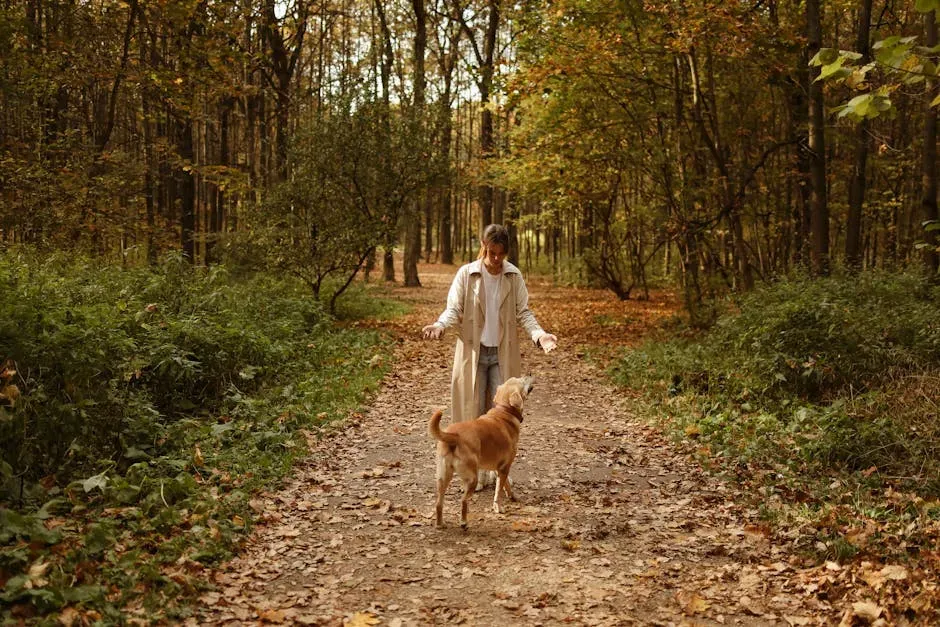
Constant shadowing becomes common once a dog senses upcoming changes. Your pet may trail you into the kitchen, the nursery, or even the bathroom where it never used to go. The pattern can feel endearing at first and then slightly overwhelming as mobility decreases later in pregnancy.
This closeness often replaces earlier independence. The dog seems content simply to stay within sight rather than seeking its usual spots. It serves as a low-key form of companionship during a time of transition.
Sleeping Arrangements Shift Noticeably
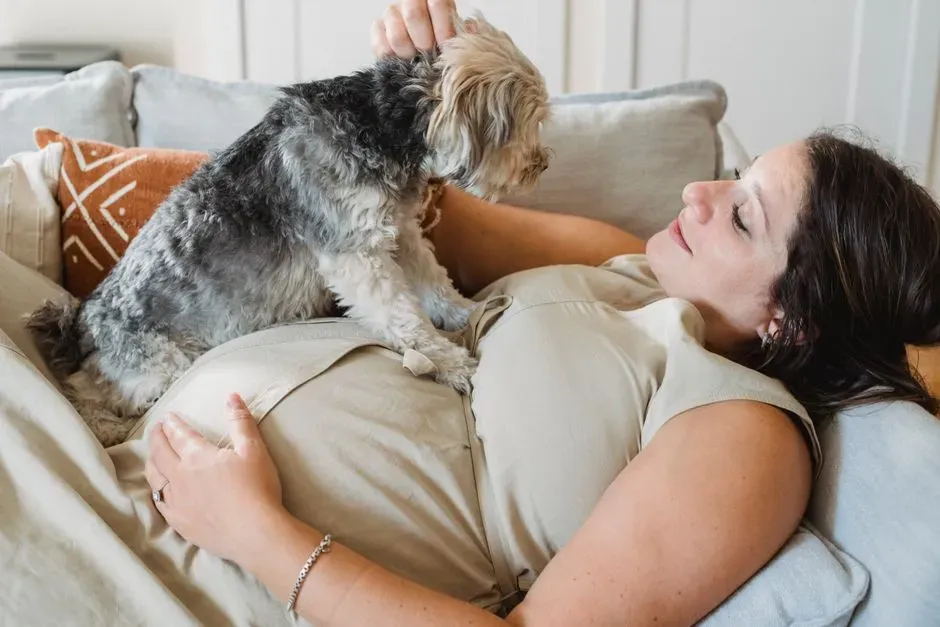
Many dogs begin choosing new resting places closer to the expectant parent. They might curl up at the foot of the bed instead of their own crate or move from the living room to the bedroom doorway. The adjustment tends to happen gradually over several weeks.
Some pets also wake more easily at night, perhaps responding to movements or sounds they associate with the baby. The change in sleep location can signal a desire to stay near the person whose routine feels most altered. It is one of the quieter adjustments owners observe.
Interest in Baby Items Grows Over Time
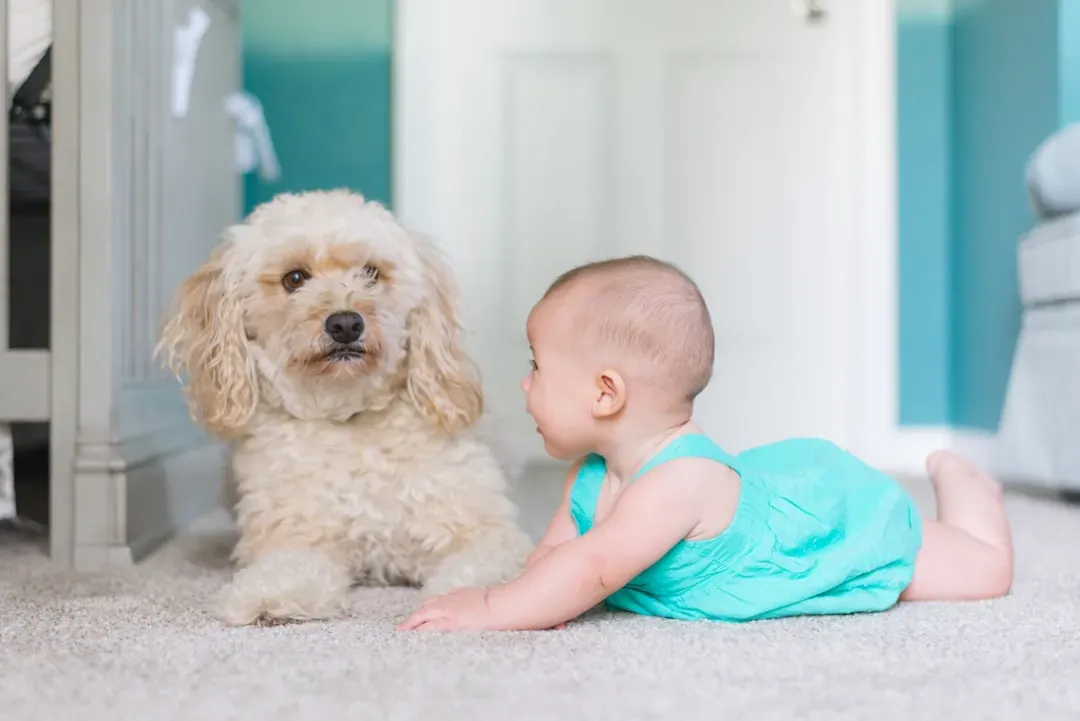
Dogs sometimes investigate new furniture, clothing, or equipment brought into the home. They may sniff a crib, paw at a stack of onesies, or linger near a changing table that was not there before. The curiosity appears tied to the unfamiliar scents and objects.
This exploration usually stays calm rather than destructive. A dog might simply sit nearby while the items are arranged. The behavior gives the pet a chance to become familiar with the new additions before the baby arrives.
Affection Levels Increase in Small Ways
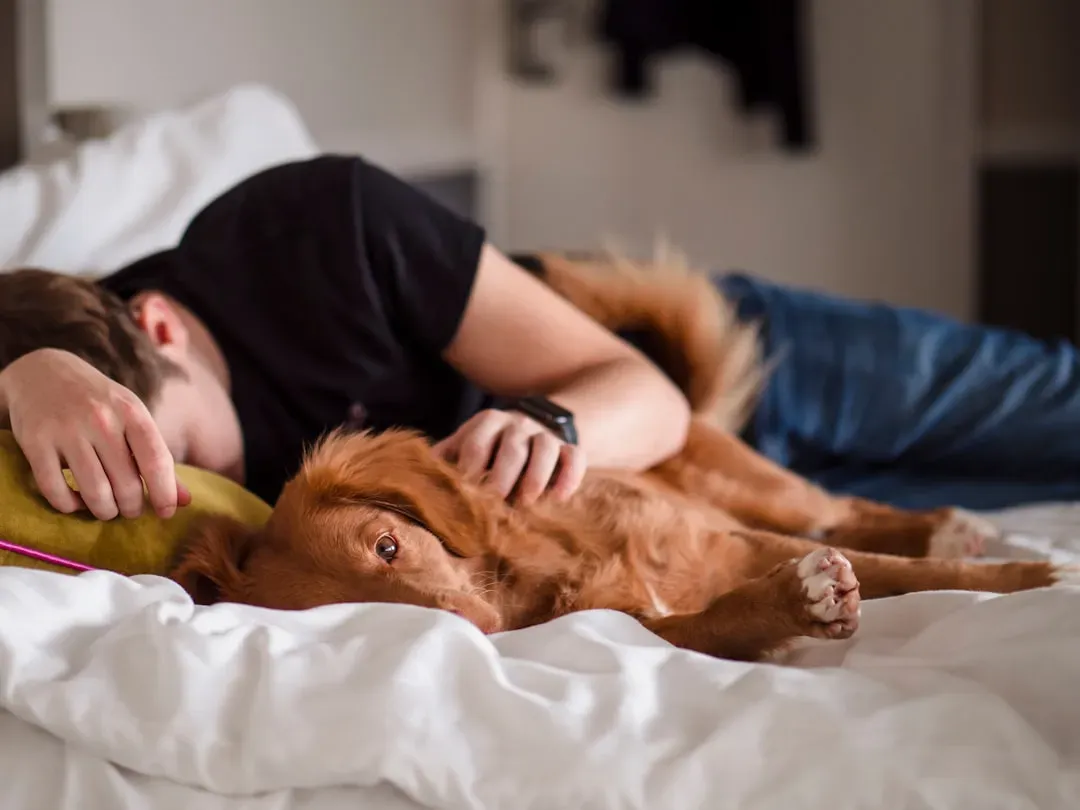
Extra leaning against your legs or gentle nudges with the nose show up more often. The dog may rest its head on your lap during evening hours or seek out brief moments of contact throughout the day. These gestures feel like quiet reassurance rather than demands for attention.
Owners notice the affection feels steady instead of the usual bursts of energy. It can provide a sense of calm during an otherwise busy period of preparation. The pattern often continues after the baby comes home as well.
Reactions to Household Sounds Become Sharper
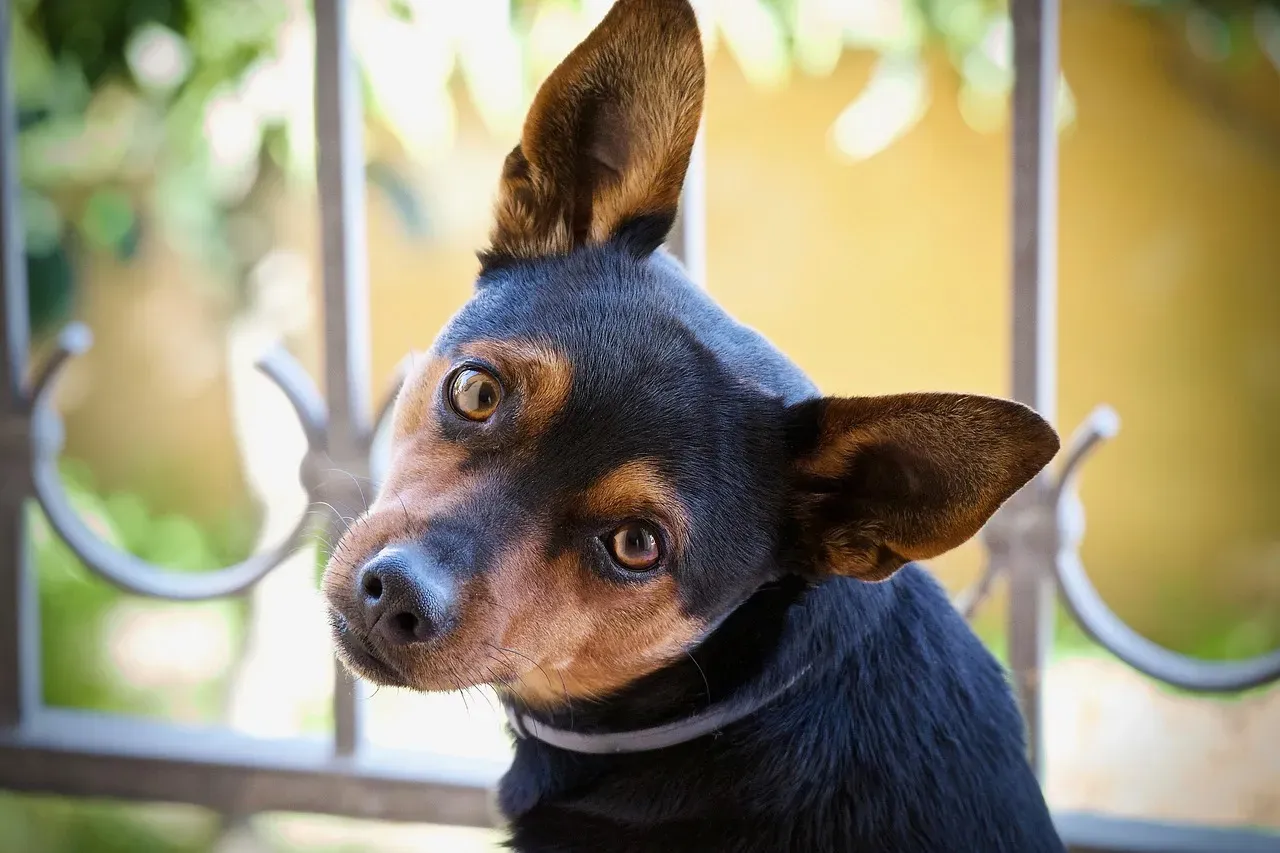
Everyday noises such as the vacuum or a ringing phone may draw quicker responses than before. The dog might tilt its head or move toward the source with more focus. This heightened awareness can extend to softer sounds like fabric rustling or distant voices.
The change reflects an overall alertness that seems connected to the shifting environment. Some dogs also pause during play to listen when they hear movement from another room. It is a subtle sign that routines feel different.
Energy and Play Styles Adjust
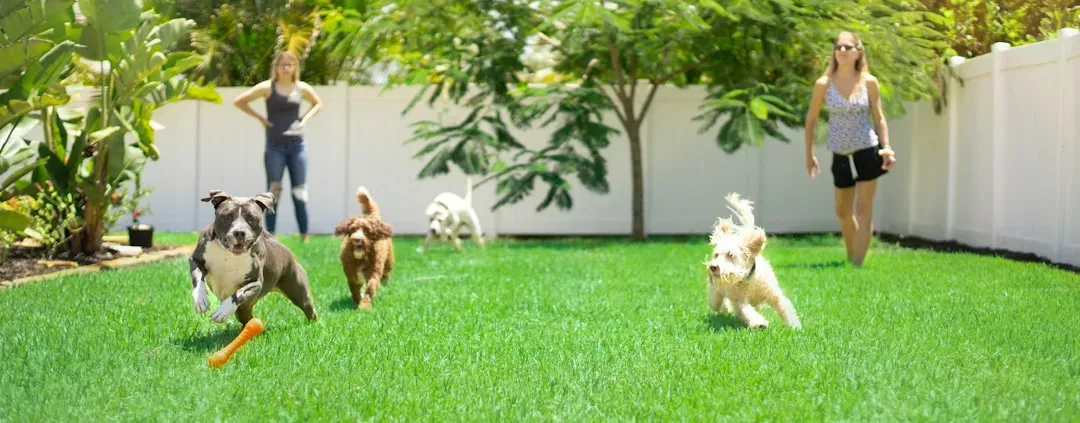
A once energetic dog may settle into calmer play sessions or shorter walks. The shift often matches the slower pace of the household as preparations intensify. Conversely, some dogs become more restless and seek extra activity to burn off tension.
Owners adapt by offering gentler games or shorter outings that still meet the dog’s needs. The adjustment helps maintain balance while everyone gets ready for the new arrival. It shows how the pet reads the overall mood of the home.
Nesting Behaviors Appear in Unexpected Places
Dogs sometimes gather blankets or toys and move them to new locations around the house. The activity can look like simple rearranging at first. Over time it becomes clear the pet is creating small comfort zones in several rooms.
This nesting often happens during quiet hours when the household is still. The dog may return to the same spots repeatedly to adjust the items. It serves as a visible sign that the environment is being prepared in the dog’s own way.
They Show Extra Patience With Routine Changes

Appointments, baby showers, and late nights can disrupt normal feeding or walk times. Many dogs accept these interruptions with less protest than usual. The tolerance appears linked to an understanding that things are in flux.
Some pets even wait quietly by the door when schedules run late. This flexibility helps reduce stress for everyone involved in the preparations. It is one of the more helpful adjustments owners appreciate during the final weeks.
Reflecting on These Quiet Signals
These behaviors remind us that dogs remain deeply connected to the rhythms of the people they live with. Paying attention to small shifts can strengthen the bond during a major life change. The observations also encourage owners to keep the dog’s needs in mind while planning for the baby.
Every dog expresses awareness differently, yet the underlying sensitivity stays consistent across many households. Noticing these signs early allows families to include their pet in the transition rather than leaving it on the sidelines. In the end, the extra attentiveness from a dog often becomes one more steady presence in a home that is about to grow.


