
13 Country Beliefs About Dogs, Read as Folklore Rather Than Fact

Across the world, people talk about dogs as if they’re half-guardian, half-ghost detector, part healer, part bad omen. Some of these beliefs are tender and heart‑warming, others are a bit unsettling, and a few are just flat‑out strange. What they all have in common is this: they say as much about human hopes and fears as they do about dogs.
In this article we’ll wander through 13 different country beliefs about dogs that should be enjoyed as stories and cultural color, not as scientific fact or health advice. These are legends, superstitions, and folk interpretations layered over centuries. Sometimes they line up loosely with reality; very often, they don’t. Treat them like campfire stories, not instruction manuals.
As a dog person, I love hearing how different cultures place dogs somewhere between the everyday and the supernatural. But I also cringe a bit when a belief could harm a dog or a person if taken literally. So we’ll walk a careful line: appreciating the stories, respecting the cultures, and still being clear about what modern science actually supports.
#1 Japan: The Lucky Dog That Predicts Earthquakes

One popular belief in Japan is that dogs can sense earthquakes before humans do. Stories describe dogs barking, whining, or trying desperately to get outside minutes or even hours before the ground starts to shake. For many people, that behavior has turned into a kind of folk early‑warning system.
There is a grain of plausibility: dogs have sharper hearing and may feel subtle vibrations that we miss. Some studies have looked for patterns in animal behavior before earthquakes, but the evidence is patchy and inconsistent. Everyday coincidences, selective memory, and stress can easily turn a random bark into what looks like a prediction.
In modern Japan, where high‑tech seismic monitoring systems exist, relying on a pet’s anxiety as an alarm is more emotional comfort than safety strategy. It makes sense that in a country shaped by frequent earthquakes, people would look for signs anywhere, including their dogs. But as far as science is concerned, your dog is not a reliable seismologist – just an understandably sensitive roommate.
- Dogs may react to vibrations or changes in environment before us.
- Evidence that they systematically “predict” quakes is weak and inconsistent.
- Use real early‑warning systems, not pets, for safety decisions.
#2 United Kingdom: The Black Dog as Death’s Silent Messenger

In British folklore, especially in England and parts of Scotland, the black dog is sometimes seen as an omen of death or misfortune. Tales describe a huge, shadowy dog with glowing eyes appearing on lonely roads, churchyards, or coastal paths, silently watching a traveler who later suffers some tragic event. The image is so powerful it has even seeped into literature and pop culture.
Historically, night travel was dangerous, and seeing any large dog in the dark would have been unnerving. Over time, fear wrapped itself around the image of a black dog, turning a perfectly ordinary animal into a supernatural sign. People remembered the dramatic coincidences and quietly forgot all the times they saw a black dog and nothing bad happened at all.
Modern psychology would call this pattern‑seeking and confirmation bias. Today, black dogs in shelters are more likely to be overlooked, partly due to these old stories and partly because they’re harder to photograph well. That’s one place where folklore starts to bite back: when superstition makes certain dogs less likely to find homes. The only “curse” they carry is human prejudice.
#3 Turkey: Street Dogs as Guardians With a Spiritual Job

In many Turkish cities, street dogs are treated with a mix of practical concern and almost spiritual respect. There is a traditional belief that caring for stray dogs – feeding them, giving them water, not harming them – brings blessings, while cruelty invites misfortune. In some neighborhoods, dogs are almost seen as unofficial watchmen placed there for a reason.
This belief intersects with religious and cultural ideas about compassion toward animals. People may not invite dogs into their homes, but they leave out food and build small shelters. Some residents talk about “their” street dogs as if they are part of the moral fabric of the neighborhood, silently judging how kind or selfish people are.
From a scientific and social point of view, leaving street dogs completely unmanaged can cause real welfare and health problems – for the dogs and for people. Modern animal welfare groups in Turkey increasingly push for vaccination, sterilization, and adoption programs. The kindest path is not to romanticize street life as a noble destiny, but to recognize that a belief in their spiritual role should translate into responsible care, not neglect.
- Folklore frames kindness to dogs as morally and spiritually rewarded.
- Unmanaged street populations can suffer disease, injuries, and hunger.
- Modern welfare efforts aim to combine compassion with practical solutions.
#4 Mexico: Xoloitzcuintli and the Dog That Guides Souls

In Mexican tradition with deep Indigenous roots, especially from pre‑Hispanic cultures, a hairless dog known as the Xoloitzcuintli is believed to guide souls safely to the afterlife. Ancient art and burial sites show dogs buried alongside humans, as if they were spiritual ferrymen. That belief still colors how people talk about this breed and about dogs in general.
The idea that a loyal dog would walk with you even after death is emotionally powerful. It fits with what many dog owners already feel: that bond feels bigger than one lifetime. Taken literally, though, the myth suggests dogs have a specific supernatural job assignment, which is not something science can confirm or deny. It lives in the realm of meaning rather than measurable fact.
What we can say with confidence is that having a dog can influence how people handle grief and loneliness. Studies show that companion animals can ease anxiety and offer emotional support in difficult times. The ancient story of the soul‑guiding dog is a poetic echo of something very real: dogs help us navigate some of the darkest stretches of our lives, even if not an actual river between worlds.
#5 China: The Fortune‑Bringing Dog of the Zodiac

In Chinese cultural tradition, the Year of the Dog is associated with loyalty, honesty, and good fortune in relationships. People born under the Dog sign are thought to be faithful, brave, and protective of loved ones. Families sometimes say that having a dog in the home brings safety and prosperity, especially when the animal is treated well.
This belief blends astrology, symbolism, and everyday experience. Dogs do protect homes, at least in the practical sense of barking at strangers and making thieves think twice. But when predictions get as specific as promising success or failure based on birth year or pet ownership, we leave evidence behind and walk into pure tradition and entertainment territory.
Modern behavioral science sees dog behavior as the product of genetics, training, and environment, not cosmic alignment. Still, treating a dog as a symbol of loyalty often becomes a self‑fulfilling loop. If you expect reliability and invest time and care, you’re more likely to get a calm, bonded companion – good luck that you and the dog worked hard together to create.
- Dog zodiac symbolism reflects admired traits: courage, loyalty, protection.
- Astrological “predictions” are cultural, not scientific forecasts.
- Real‑world luck with dogs comes from training, care, and responsible ownership.
#6 India: Feeding Stray Dogs to Cleanse Karma

In parts of India, especially within certain Hindu traditions, feeding stray dogs is believed to help cleanse bad karma and bring blessings. Some people offer food to dogs during religious observances or on specific days of the week, not just out of pity, but as a spiritual practice. The dog becomes a quiet witness to human intentions.
This belief can be deeply compassionate: you help a hungry animal, and in return you hope the universe sees that kindness. On the other hand, when it stops at occasional feeding and never reaches vaccination, sterilization, or adoption, it can unintentionally keep large populations of vulnerable street dogs in a difficult cycle of survival and suffering.
Public health experts also point out that unmanaged dog populations can increase the risk of bites and rabies, which is still a serious threat in many regions. So while feeding dogs as an act of mercy has emotional and spiritual value, modern, evidence‑based care would also include medical treatment, population control, and education about safe interactions. True good karma, you could argue, is doing what actually improves life for both dogs and humans.
#7 Russia: The Howling Dog That Foretells Death

In Russian and other Slavic folk traditions, a dog howling at night – especially near a house – is sometimes said to predict a death in the family or in the neighborhood. People might rush to shoo the dog away, cover mirrors, or say prayers, all to block the imagined misfortune the sound is supposed to bring.
From an animal behavior perspective, dogs howl for many mundane reasons: responding to other sounds, expressing separation distress, or just because certain breeds are more vocal. But when you are already anxious, a drawn‑out howl in the middle of the night can feel eerie and meaningful. Our brains are wired to link emotionally intense events together, even when there is no real connection.
The danger here is not that the belief is “wrong” in a moral sense, but that it can lead to fear or mistreatment of a perfectly innocent dog. Instead of asking why the animal is distressed or howling – maybe it is in pain, lonely, or reacting to sirens – people might only see it as a bad sign. Folklore turns a communication signal into a curse, and the real message gets lost.
- Howling is a normal canine behavior, not a supernatural forecast.
- Fear of “omens” can distract from addressing a dog’s actual needs.
- Listening to the behavior as communication is more helpful than fearing it.
#8 Egypt: Echoes of Sacred Dogs and Modern Myths

Ancient Egyptian culture famously elevated some animals to sacred status, including jackals and dog‑like figures connected to deities of death and mummification. That legacy still feeds modern myths that Egyptian dogs, or dogs with certain markings, carry special spiritual protection or insight into the afterlife. The line between actual ancient belief and modern romantic retellings is often blurred.
In reality, most ancient Egyptians kept dogs for very practical reasons: hunting, guarding, and companionship. Some were indeed honored and buried with care, but that did not make every dog a walking holy symbol. Today, some people project mystical qualities onto particular breeds thought to resemble ancient dogs, as if history has given them secret powers.
From a scientific angle, a dog’s value is not encoded in its breed’s ancient job description. A modern Egyptian street dog and a pampered European toy breed are equally capable of love, learning, and emotional bonding. The spiritual weight we place on one or the other says more about us than about them. Reverence is fine, as long as it does not overshadow the basic responsibilities of feeding, vaccinating, and protecting the real animal in front of us.
#9 Philippines: The Dog as a Shape‑Shifter’s Warning Sign

In some Filipino folk stories, dogs are sharp‑eyed guardians against supernatural beings, including shape‑shifters and malevolent spirits. If a dog barks at “nothing” or seems especially agitated at night, people might interpret it as a sign that something unseen and dangerous is lurking nearby. The dog is cast as a kind of paranormal alarm system.
When you live in a small community where stories are passed down around fires and family gatherings, that idea can feel very real. It turns unexplained noises or dog behavior into narrative: the world is not random; your loyal dog is protecting you from threats beyond your perception. Over time, that narrative can become a habit of thought: weird bark equals spiritual danger.
Modern understanding of dog senses tells a simpler story. Dogs hear and smell much more acutely than humans, so they react to things we cannot detect: distant animals, faint footsteps, even electrical hums or subtle movement. There is nothing wrong with appreciating the story, but it is healthier to respond with curiosity – what is really there? – rather than pure fear of invisible monsters.
- Folklore uses dogs to bridge the gap between seen and unseen worlds.
- Real triggers for barking are usually physical, not supernatural.
- Reading behavior as information, not only as an omen, empowers people.
#10 Ireland: The Fairy‑Dog at the Edge of the Otherworld

Irish folklore is rich with tales of dogs that roam between this world and the Otherworld, sometimes as guardians of fairy mounds, sometimes as companions to supernatural hunters. A roaming dog seen on a lonely road at night might be imagined as a fairy hound, not quite living, not quite ghost, hinting that the boundaries between worlds are thin.
These stories probably came from very human experiences: walking home in the dark, hearing a dog pad along the path, feeling watched and slightly spooked. Instead of brushing it off as just a curious animal, the encounter became a story worth retelling. Over centuries, those repeated stories added layers until the simple presence of a dog at night turned into a possible sign of something “other.”
There is something beautiful in the idea that dogs accompany humans even at the edges of reality. Taken literally, though, it encourages people to interpret ordinary, explainable encounters as paranormal events. That can be harmless fun, or it can feed anxiety in people already prone to fear. Enjoy the tales by all means, but keep one foot firmly in the world of leashes, microchips, and regular vet visits.
#11 United States: Pit Bulls as Innately “Good” or “Evil”

In the United States, beliefs about pit bulls have taken on a near‑mythical intensity. In some circles, pit bulls are portrayed as inherently dangerous, unpredictable, and almost supernaturally violent. In others, they are idealized as angelic “nanny dogs” who are naturally gentle with children and unfairly maligned. Both extremes function more like folklore than fact.
Modern behavior science is blunt: no breed is born a monster or a saint. Genetics, early socialization, training, and environment all interact to shape individual behavior. Certain physical traits – like strong jaws and muscular bodies – can make incidents more serious when they happen, but they do not magically create aggression out of nothing. Breed stereotypes distort risk perception in both directions.
When laws and policies are built on myth instead of data, dogs suffer. Breed‑specific bans can lead to mass euthanasia of well‑behaved dogs, while rose‑tinted stories can encourage people to ignore warning signs in individual animals. A healthier approach is boring but solid: judge dogs by their actual behavior, invest in training and education, and recognize that any large dog can be dangerous if neglected or abused.
- Myths paint pit bulls as either inherently evil or automatically saintly.
- Science points to individual history and environment as key factors.
- Policy based on folklore can harm both public safety and animal welfare.
#12 Romania: Cemetery Dogs and the Spirits of the Restless

In parts of Romania and neighboring countries, stray dogs that linger around cemeteries or abandoned buildings sometimes get wrapped into ghost stories. People may say these dogs see spirits, carry pieces of wandering souls, or absorb bad energy from troubled places. A pack hovering near a graveyard gate can feel like something right out of a horror film.
The more mundane explanation is straightforward: cemeteries and ruins are quiet, often have hiding places, and may even offer food scraps from visitors. Dogs go where there is shelter and opportunity. But as humans, we are strongly drawn to gothic narratives, so it is easier and more emotionally satisfying to imagine those dogs as companions to the dead rather than just survivors on the edges of human settlements.
The risk is that this eerie framing can reduce people’s willingness to help those animals. A dog seen as haunted or unlucky is less likely to be adopted or treated kindly. In reality, it is not cursed; it is just cold, hungry, and perhaps sick. Turning off the ghost lens and turning on the empathy lens changes everything: suddenly the “spirit dog” is simply a vulnerable animal that needs real‑world help.
#13 Nigeria: Dogs as Witchcraft Tools and Truth‑Tellers
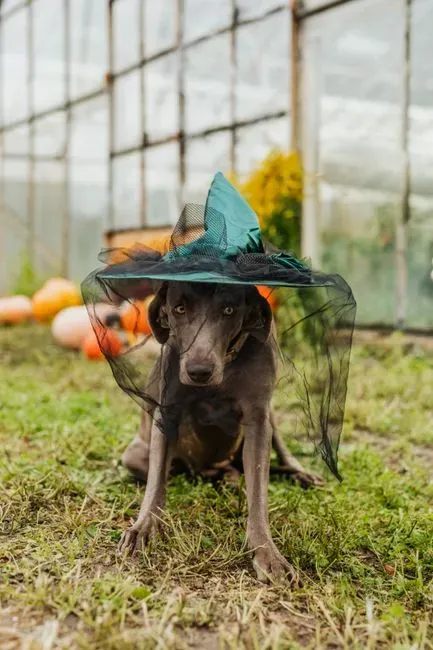
In some Nigerian communities and in other parts of West Africa, beliefs tie dogs to witchcraft and spiritual detection. A dog that refuses food from a stranger, or that seems unusually hostile toward a particular person, can be taken as a sign that something is spiritually wrong. In extreme cases, dogs are thought to be used by witches, or to expose hidden wrongdoing simply by who they bark at.
Here again, normal dog behavior gets reinterpreted through a supernatural lens. Dogs may refuse food because it smells unfamiliar, or they may bark at people whose body language they find threatening. That does not mean the person is secretly evil; it means the dog’s past experiences and instincts are shaping its response. But in a culture primed for spiritual explanations, those reactions can escalate rumors and fear very quickly.
More troubling is when such beliefs lead to cruelty or vigilante action. If a dog is seen as a tool of dark forces, harming it can feel like a righteous act instead of abuse. Evidence‑based education about animal behavior, combined with community leaders willing to challenge harmful narratives, can slowly shift the story. The dog’s role moves from accused accomplice to valued companion, and that is a change worth fighting for.
- Dogs are sometimes viewed as lie‑detectors or tools of witchcraft.
- Ordinary behavior can be misread as spiritual evidence.
- Challenging harmful myths is crucial for both animal and human safety.
Conclusion: Why These Dog Myths Say More About Us Than About Them

Looking across these 13 beliefs, from Japanese quake‑dog tales to Nigerian witchcraft suspicions, a pattern jumps out: whenever humans feel vulnerable – to nature, to death, to the unknown – we draft dogs into the story. We turn them into omens, guardians, villains, spirit guides, and furry lie‑detectors. It is strangely flattering and deeply unfair at the same time.
On one hand, these stories show how central dogs are to human imagination. We trust them so much in daily life that it feels natural to trust them with our fears about the afterlife, earthquakes, curses, and ghosts. On the other hand, myth can easily tip into harm when it justifies neglect, fear, or violence against real dogs who did nothing except bark or howl at the wrong moment.
My own view is blunt: enjoy the folklore, tell the stories, decorate your shelves with fairy‑dog art if you want – but base your actual decisions on evidence and empathy. Dogs are not spiritual tools or convenient symbols; they are social, emotional animals whose well‑being depends entirely on how we treat them. If these tales push us toward more kindness and curiosity, they are worth keeping. If they excuse cruelty or panic, they belong in the same place as any bad superstition: the past. After reading all this, which belief surprised you the most, and which one would you have guessed was out there?