
13 Signs Your Aging Dog Is Genuinely Happy These Days
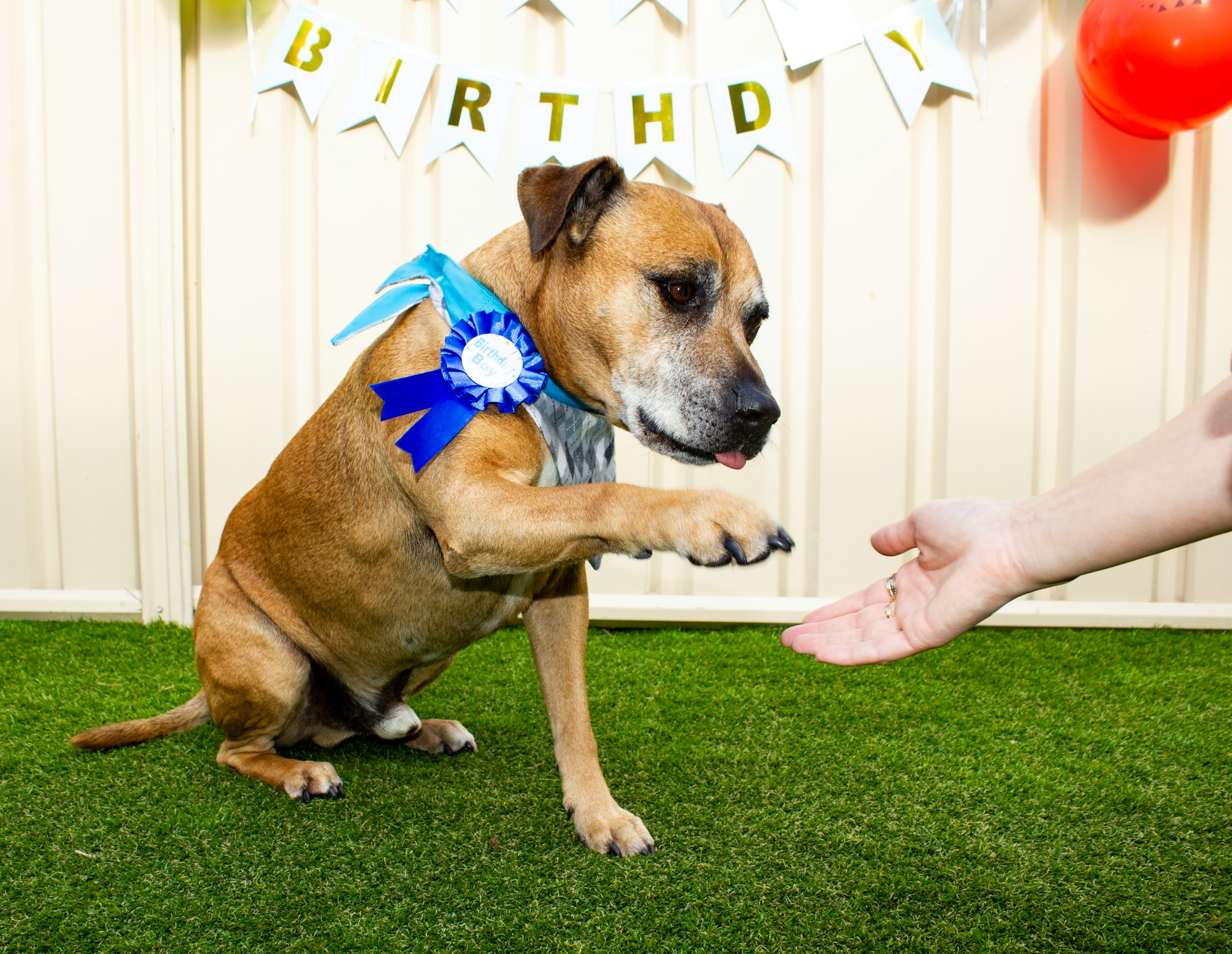
Most people assume a happy senior dog should look like a happy puppy – bouncing off walls, sprinting for the ball, living at full volume. Vets and behaviorists will tell you that’s one of the most common misreadings they see, and it quietly breaks owners’ hearts for no reason. As dogs age, happiness doesn’t disappear. It just gets quieter, slower, and a lot easier to miss.
Some owners even start to panic, convinced their gray-muzzled dog is depressed, when the truth is the opposite: this may be the most content chapter of that dog’s whole life. If you’ve got an old dog snoring on the rug right now, there’s a good chance you’re already watching real happiness and just don’t know what you’re looking at yet.
#1 – They Still Choose You Over Their Bed
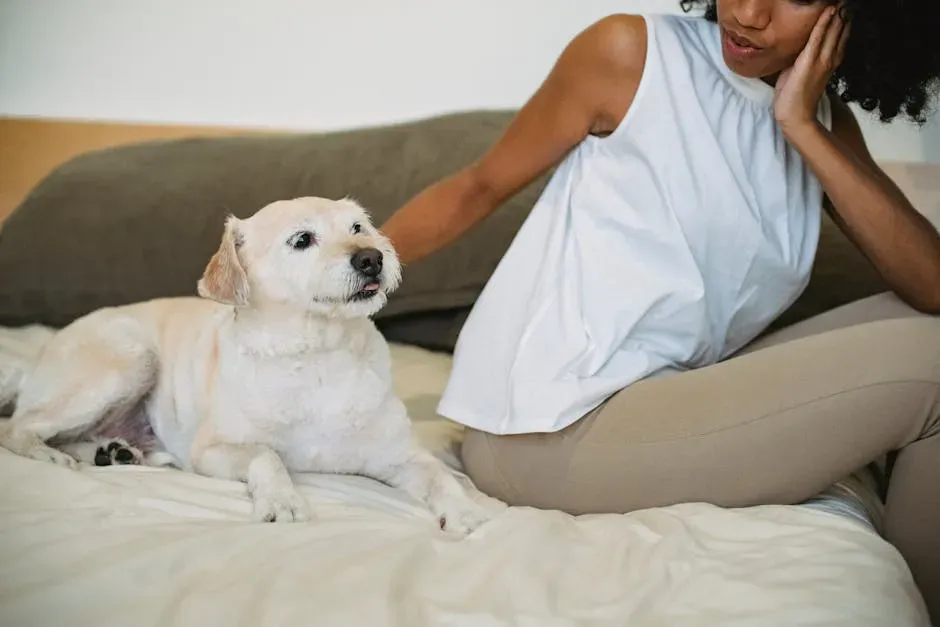
A truly happy old dog doesn’t just tolerate you being around – they still go out of their way to be near you. You’ll catch them getting up slowly, joints a little stiff, just to follow you into the kitchen or the bathroom for no obvious reason.
That’s not clinginess and it’s not anxiety. Aging dogs who feel safe and bonded will shadow their person because you are, quite literally, their favorite place on earth. Watching them pick the hard floor next to you over the softest bed in the house tells you everything you need to know.
- They reposition themselves so they’re touching your feet or leg.
- They settle faster and heavier the moment you sit down nearby.
#2 – Their Eyes “Soften” the Second You Walk In
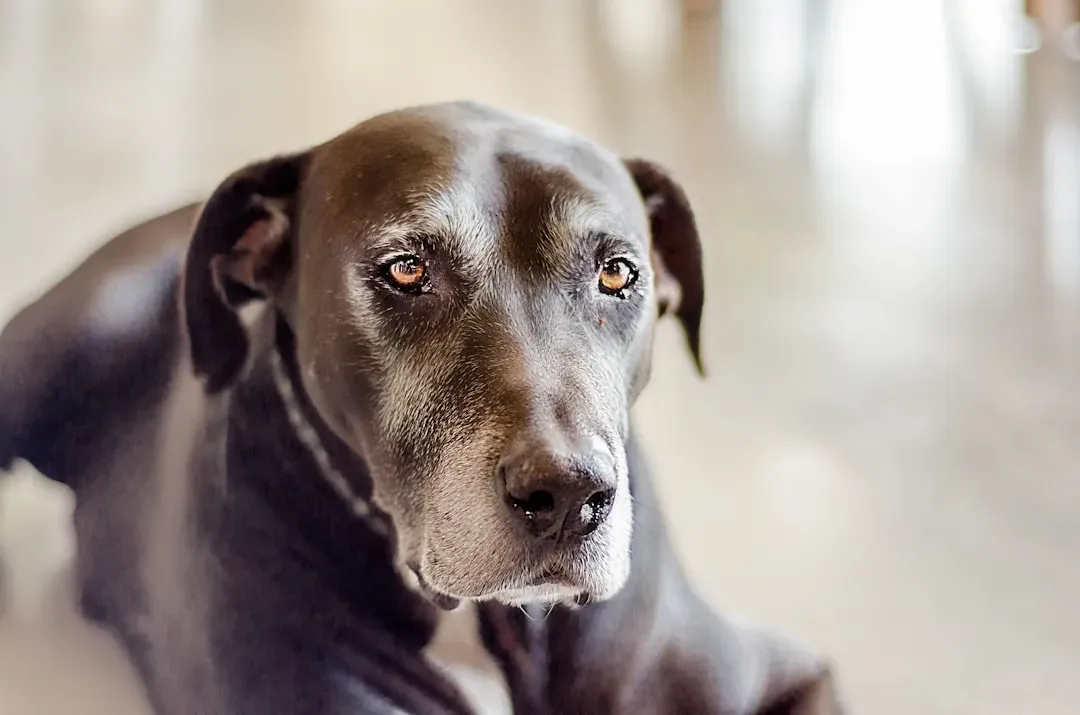
Happy senior dogs rarely explode into zoomies anymore, but their eyes will tell on them every time. Watch their face carefully the next time you walk into a room they’re already in.
Genuinely content older dogs get that soft, squinty look – relaxed brow, slow blink, a gaze that actually lingers on you instead of darting away. That’s the canine version of a smile, and it’s tied to a real rise in oxytocin, the same bonding hormone that spikes in new parents. Owners often mistake the lack of wild tail-thrashing for indifference, when really, the dog is just expressing joy the energy-efficient way.
Fast Facts
- Mutual eye contact between dogs and their people can trigger a real oxytocin response on both ends of the leash.
- A soft, half-closed eye reads as calm trust – a wide, fixed stare usually signals stress instead.
- Slow blinking is often a dog’s way of saying “I feel safe with you.”
- Tail looseness and height matter more than wag speed when reading a senior dog’s true mood.
- A slow tail wag that starts the second they hear your voice.
- Their whole face relaxes – mouth slightly open, no tight lips.
#3 – They Still Break Into Puppy Bursts, Just in Short Sprints
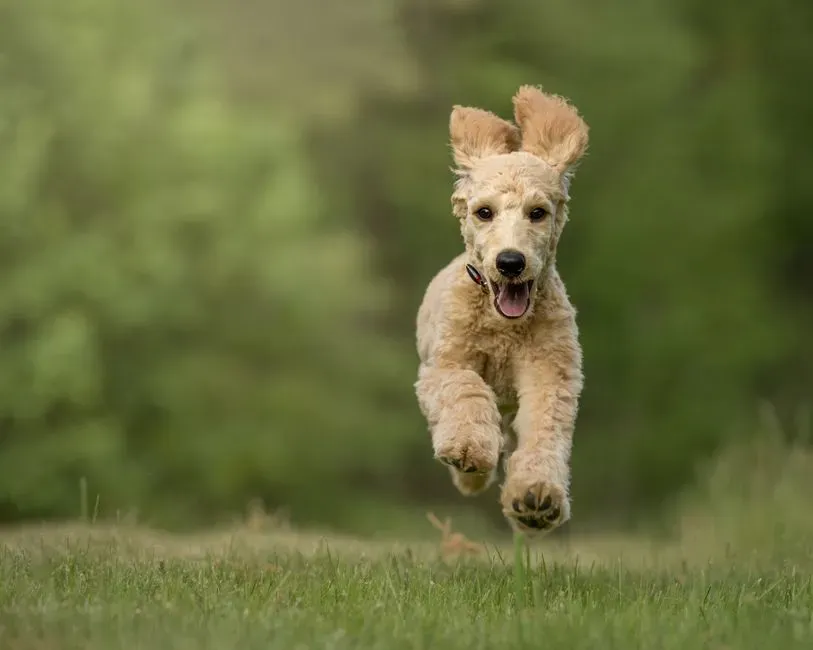
Here’s the twist nobody warns you about: a happy senior doesn’t need constant energy, just honest bursts of it. Out of nowhere, your twelve-year-old does a silly trot to the door, a goofy play bow, or a quick spin the second you pick up the leash.
These mini zoomies are one of the clearest signs their brain still links life with fun, not just survival. They can’t sustain it and shouldn’t be pushed to, but those flashes of silliness prove they still feel safe, loved, and curious about what’s coming next.
- A brief game of tug or chase, followed by a satisfied flop.
- A waggy “wiggle butt” when guests arrive, even if they settle fast.
#4 – They Eat With Interest, Not Desperation
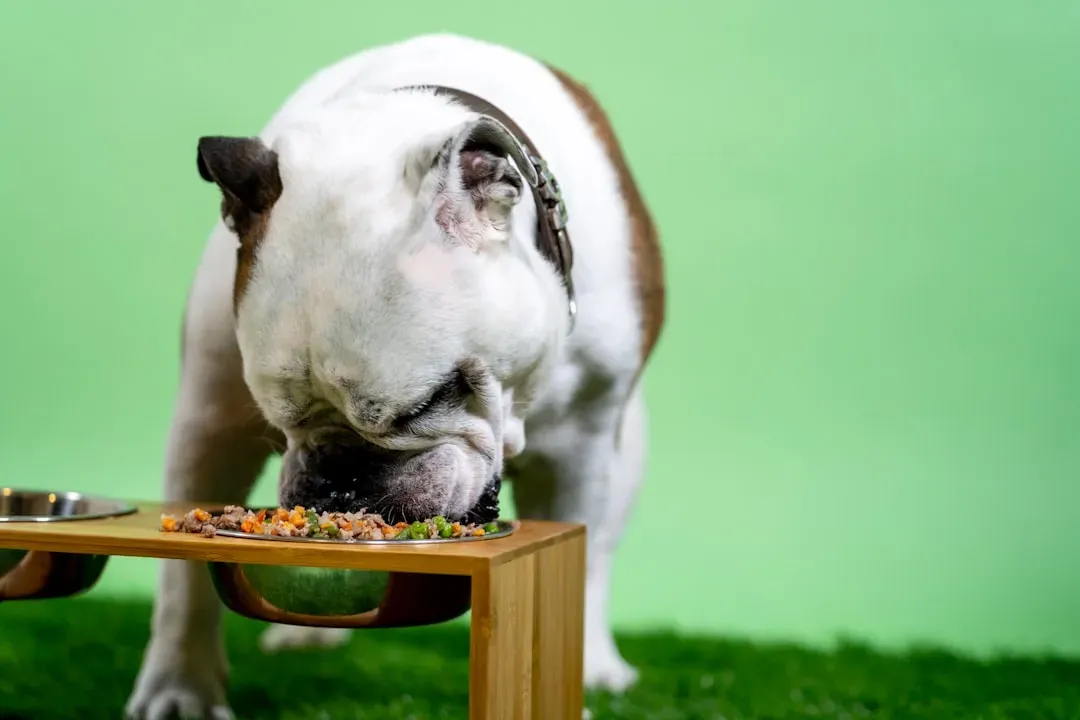
Food is one of the easiest happiness barometers in an older dog, but most people only ask the wrong question. “Is my dog eating?” is too basic. What matters is how they eat.
A genuinely happy senior comes when called to the bowl, sniffs with interest, and eats at a steady pace – not frantic gulping, not total disinterest. They may be slower now, or need softer food, but that little flicker of excitement at mealtime means their brain still anticipates pleasure. A dog who eats purely out of habit, tail still, no enthusiasm at all, may be telling you something is off.
- They perk up at the sound of the food bin or treat bag.
- They take treats gently but eagerly, then relax instead of pacing.
#5 – Their Sleep Is Deep and Relaxed, Not Just Constant
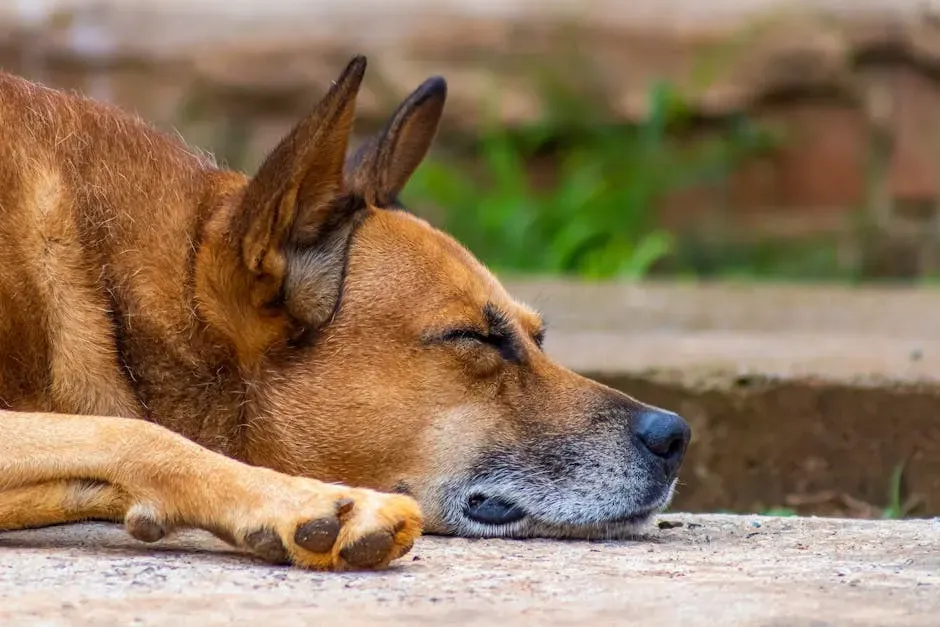
Most people see an old dog sleeping eighteen hours a day and assume the worst. That’s usually backwards. Healthy seniors sleep more – the quality of that sleep is what actually tells the story.
A content old dog sprawls out, sighs deeply, and drops into twitchy dream-sleep, paws paddling, whiskers flicking. That’s a nervous system that feels safe enough to fully power down. A dog who only dozes lightly, always half on guard, jerking awake at every creak in the house, may be anxious or in pain. Deep, goofy, unbothered sleep is basically the senior-dog version of a big laugh.
- Sleeping in different positions – side, back, curled – not just frozen, tense loafing.
- Gentle snoring, soft grumbles, a relaxed jaw and loose lips.
#6 – They Still Show Up for Their Old Routines, Just at Half Speed
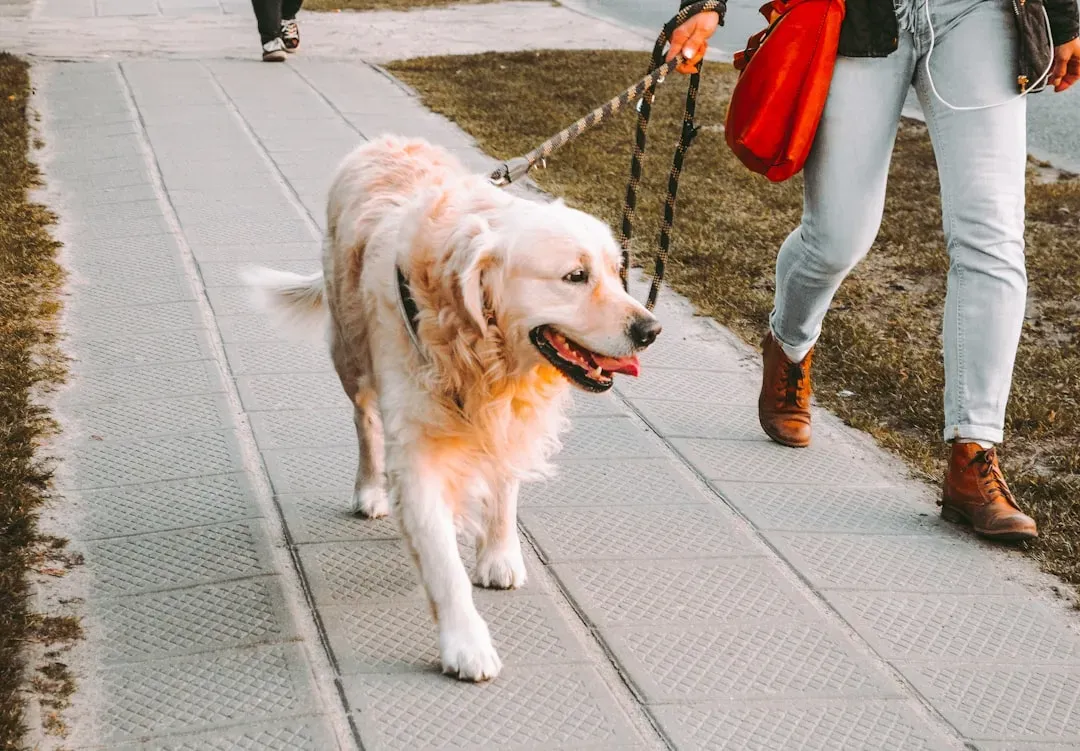
Happy aging dogs cling to their rituals – they just do them slower. If your dog used to sprint for the door at walk time and now ambles over with a wag instead, that’s not sadness. That’s adaptation.
When an old dog still shows clear anticipation for walk time, car rides, or evening cuddles, it means their life still has structure and meaning. The intensity shrinks, but the interest doesn’t. If they still mentally clock “this is our thing” and show up for it, their emotional health is in better shape than most owners assume.
- They trot to their usual window-patrol spot at certain times of day.
- They still bring you a toy, even if they don’t wrestle for it anymore.
#7 – They Shrug Off Small Annoyances Instead of Melting Down
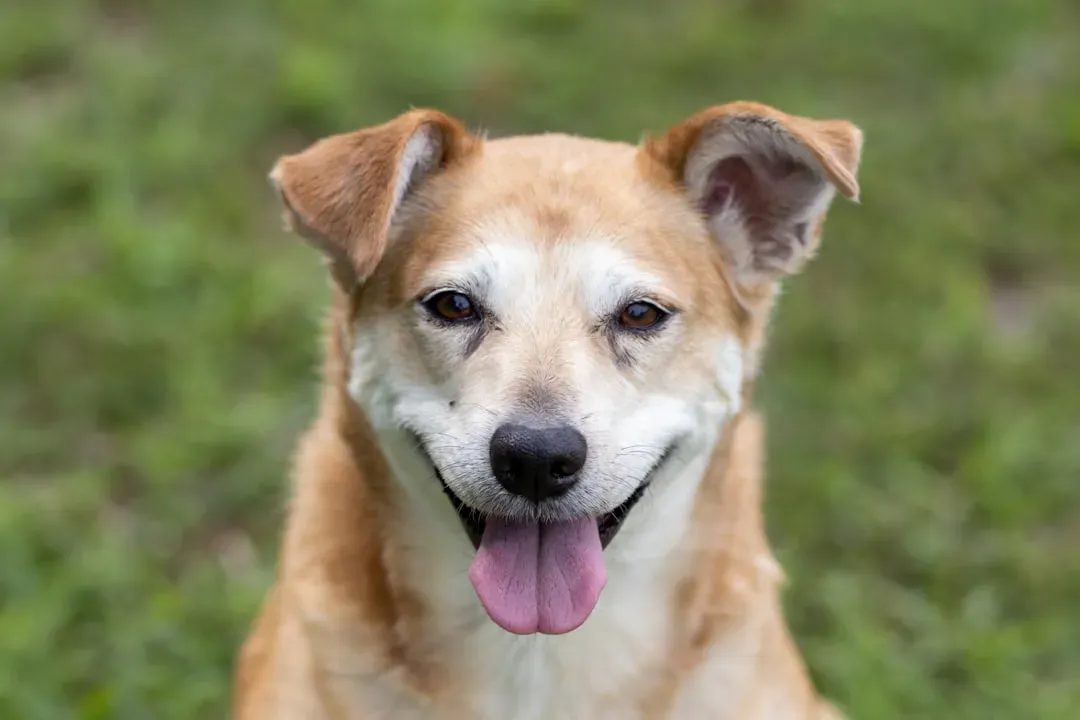
Here’s a sign most owners never think to look for: emotional resilience. A dog who’s truly miserable or in pain often becomes snappy, withdrawn, or hyper-reactive to everything.
A happy senior, by contrast, might grumble a little when you clean their ears or nudge them off the couch – then recover fast, lean back into you, and move on with their day. That tolerance is trust in action. If they can bounce back from small stress without spiraling, they’re telling you their baseline mood is solid.
Quick Compare
- Content senior: Grumbles at a nail trim, then leans back in for affection minutes later.
- Stressed senior: Growls, snaps, or stays tense long after the trigger has passed.
- Content senior: Walks away calmly when something bothers them.
- Stressed senior: Freezes, hides, or avoids the same space over and over.
- They may walk away from something they dislike instead of growling.
- After a vet visit or nail trim, they still take treats and affection.
#8 – They Seek Out Gentle Touch, on Their Own Terms
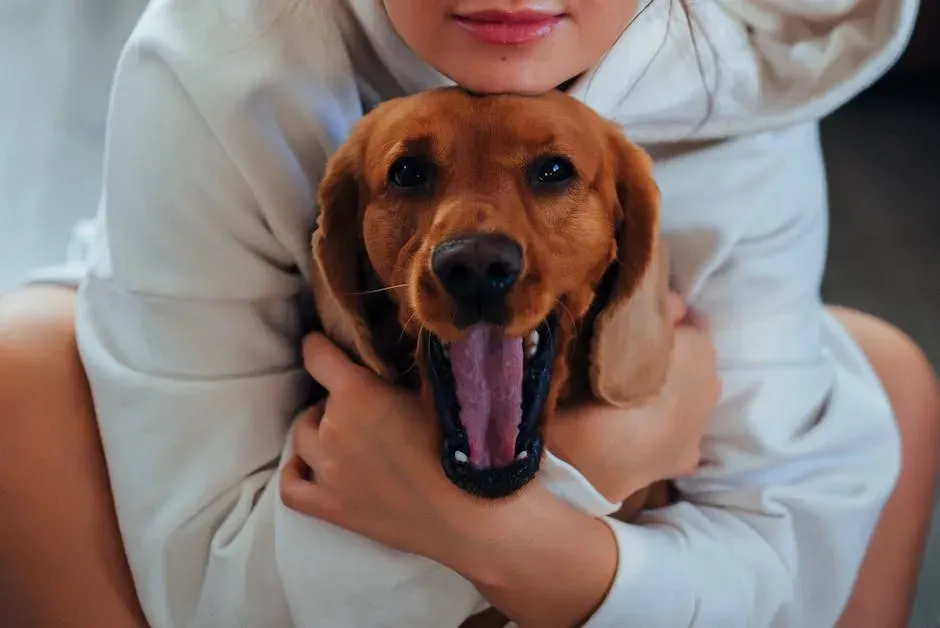
Old, happy dogs often get more affectionate, not less – just in a quieter way. Instead of wild wrestling, they lean. They nudge. They quietly wedge themselves against your hip on the couch.
When a senior dog actively chooses contact – resting their head on your lap, pressing lightly into your leg – that’s a strong sign of emotional security. Dogs in constant pain or fear tend to avoid touch or flinch away from it. Aging dogs often become more affectionate simply because they’ve finally figured out what matters most: you.
- A slow, relaxed lean into your legs when you’re just standing still.
- A soft paw placed on your arm, followed by a sigh and stillness.
#9 – They’re Still Curious About Smells, Even if They Ignore the Ball
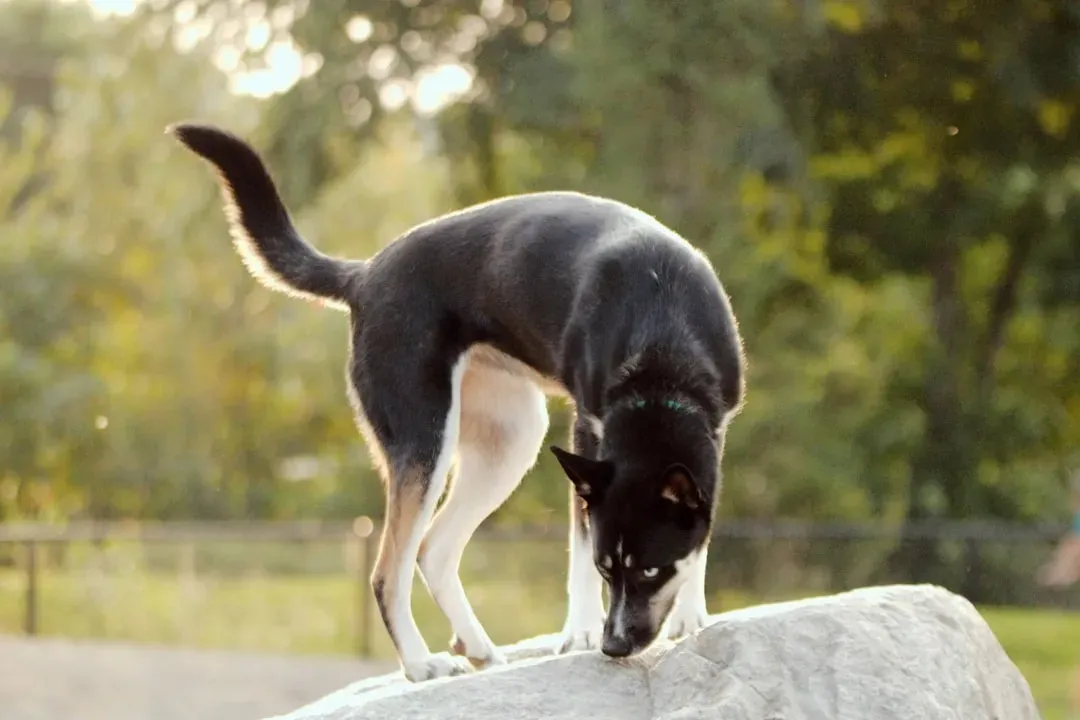
Most owners obsess over fetch. Behavior experts obsess over sniffing. A content senior dog might completely ignore the ball they once lived for, and that scares people more than it should.
But if they’re still stopping to investigate new smells on walks, checking who’s been at the fire hydrant, or giving a delivery box a proper once-over, their curiosity is still very much alive. For dogs, smell is the primary channel for experiencing joy. Losing interest in everything – toys, walks, food, and smells all at once – is the real red flag, not simply retiring from fetch.
- They linger on interesting scents instead of just trudging past.
- They give a new object – a bag, a box, a visitor’s shoes – a thorough sniff.
#10 – Their Homecoming Greeting Still Exists, Just Shrunk Down
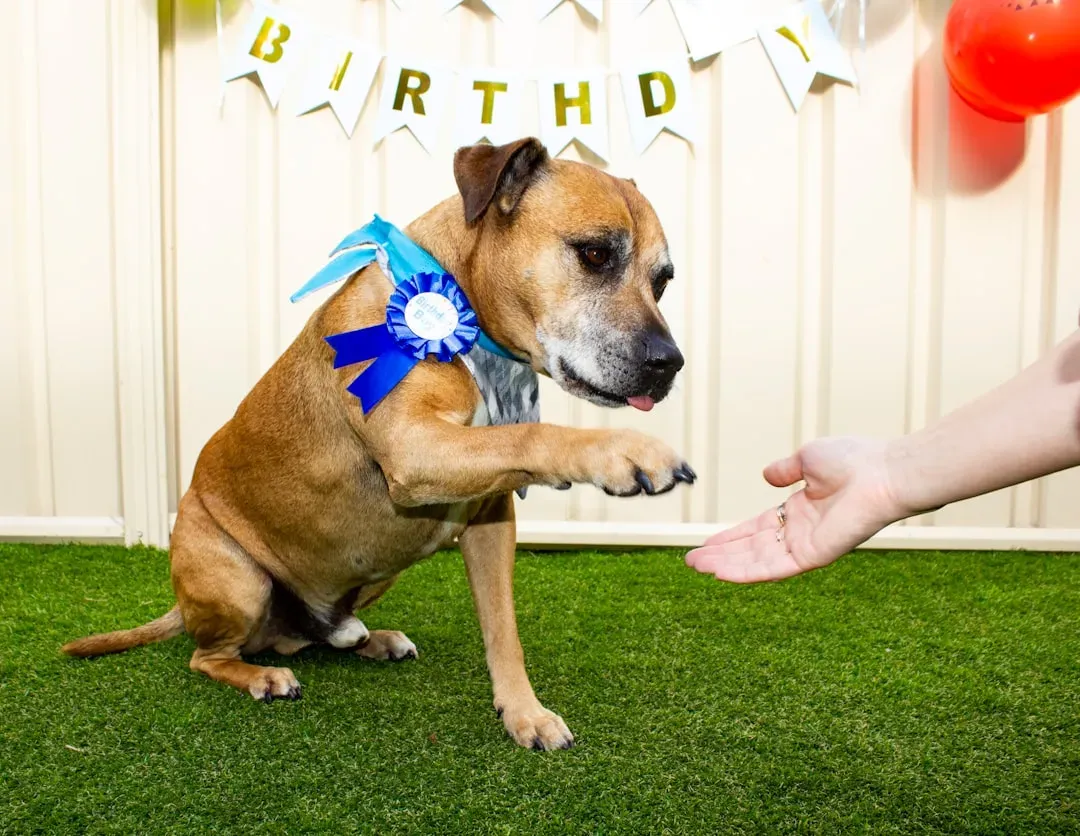
The way an old dog greets you at the door might be the single clearest happiness test there is. A happy senior may not launch themselves at you anymore, but they’ll usually still have some version of the ritual.
Getting up to meet you, tail wagging, ears perked, maybe a soft little vocalization – the script is shorter now, but the emotional content is identical: “You’re back. Life is right again.” A dog who barely lifts their head and shows zero reaction to you coming home may be dealing with pain, illness, or emotional shutdown. A tiny celebration still counts as a big one.
- They stretch and yawn, then trot over with a slow-wagging tail.
- They bring a favorite toy over, even if they just hold it instead of playing.
#11 – Their Good Days Consistently Outnumber the Bad Ones
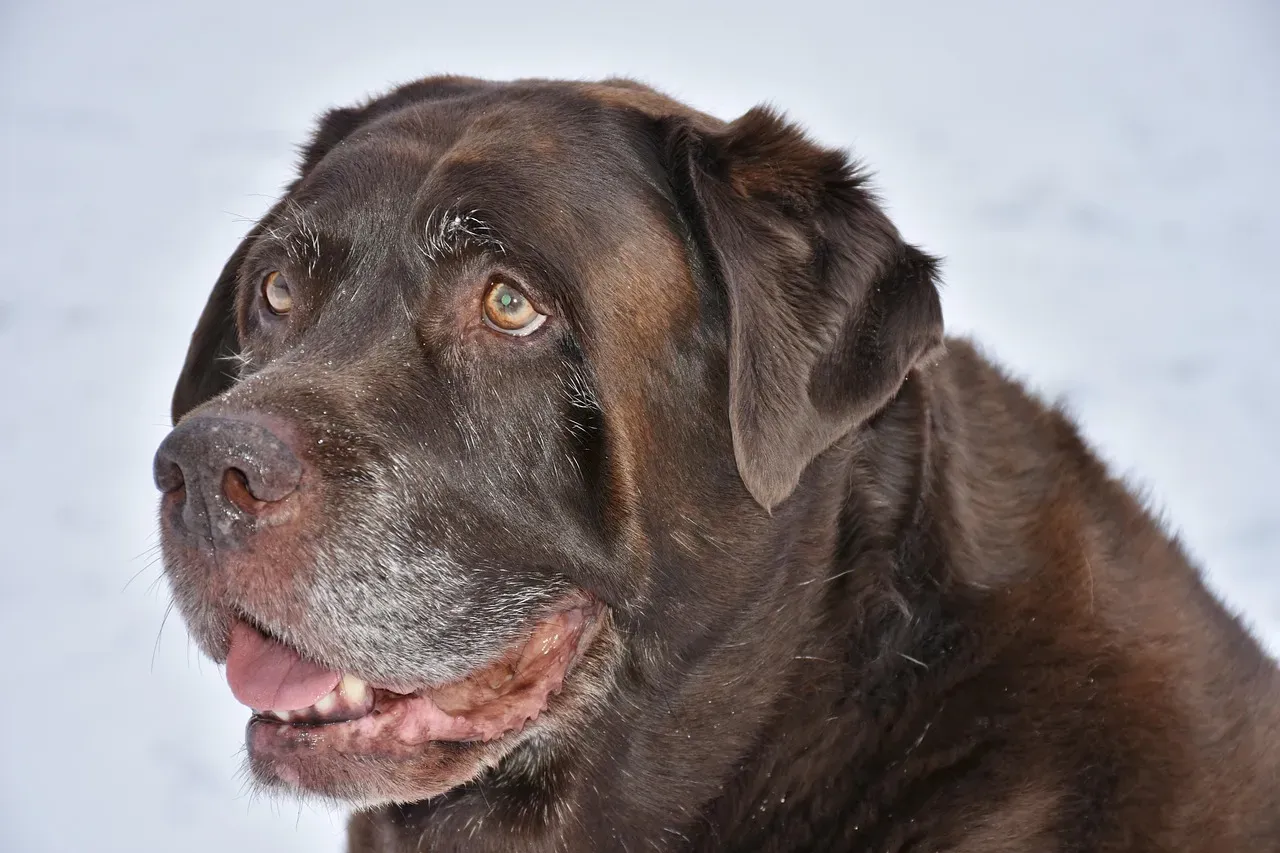
Happiness in an older dog isn’t about perfection – it’s about the overall pattern. Most seniors have off days: slower mornings, a bit of stiffness, less interest in playing. That alone doesn’t mean unhappiness.
What actually matters is whether the majority of their days include some tail wags, some interest in food, a bit of curiosity, and at least one clear moment of enjoyment. That “net positive” life is exactly what vets look for when assessing quality of life. As long as your dog’s personality is still visible more often than not, they are likely experiencing real, if quieter, happiness.
At a Glance: Quiet Quality-of-Life Signs
- Eating and drinking on a fairly normal, predictable schedule.
- At least one stretch of deep, fully relaxed sleep each day.
- Some form of tail wag, ear perk, or soft vocal greeting daily.
- Willingness to move toward you, even slowly, rather than away.
- On most days, they eat, interact, and rest comfortably.
- Their bad days don’t completely erase their personality.
#12 – They Still “Ask” for Things, Just More Politely
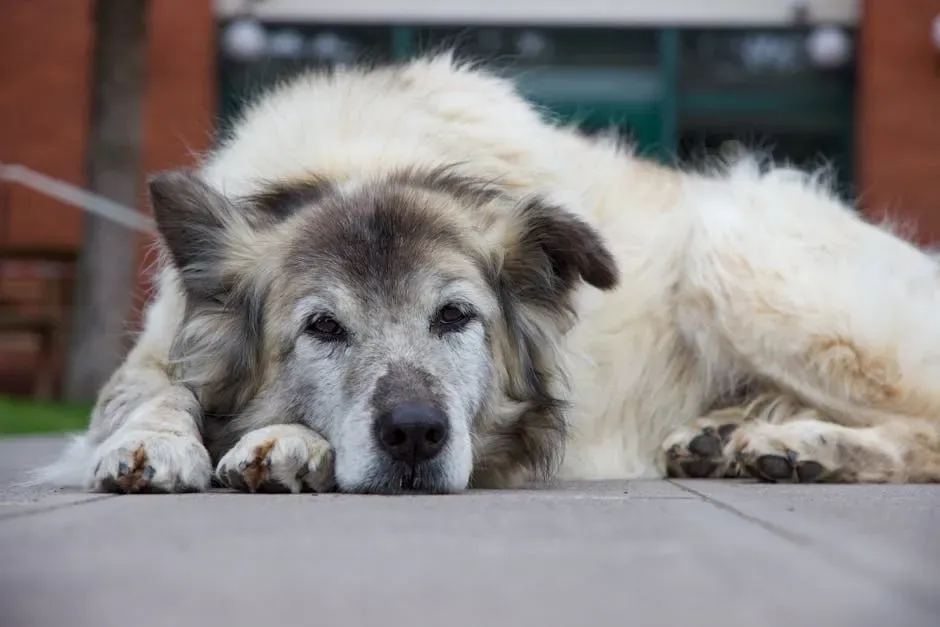
A dog who never asks for anything isn’t automatically an “easy” dog – sometimes they’ve simply checked out. A happy older dog, on the other hand, still has opinions.
They stare at the treat cupboard, paw gently at the door, nudge you when it’s cuddle time, or huff softly when you’ve stolen their spot on the couch. They’ve just swapped demand-barking for polite old-dog negotiation. That sense of control and communication is a major pillar of emotional well-being – a dog who still advocates for themselves hasn’t lost their spark, they’ve just learned better manners.
- The classic stare-then-look-at-you-then-stare-again routine.
- A gentle whine or head tilt in front of the leash, toy, or bed.
#13 – They Can Fully Let Go in Their Favorite Safe Spot
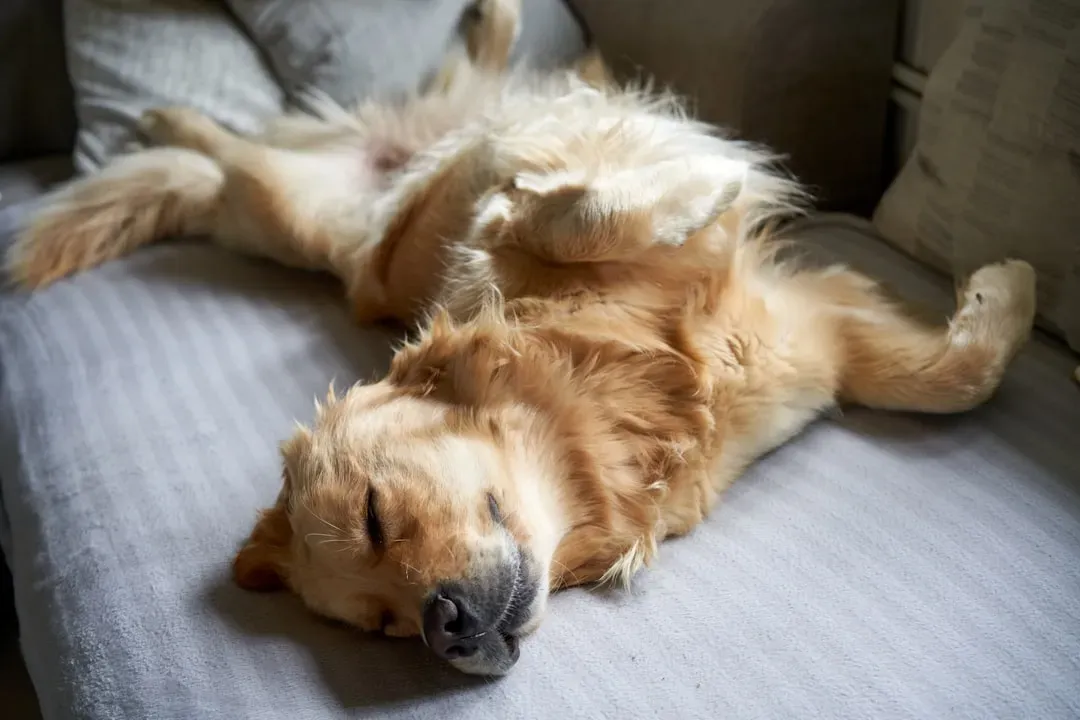
This is the big one, and almost nobody talks about it properly. A genuinely happy senior dog has at least one place where they can fully surrender: a bed, a couch corner, a sun puddle by the window.
When they’re there, their body goes loose – breathing slow, legs relaxed, sometimes even flipped upside down with their belly exposed. That’s a complete trust pose, not laziness. Dogs in chronic distress stay hypervigilant even while lying down, ears twitching at every sound. A dog who can roll onto their back and fall asleep hard is telling you, in the clearest way they know, that their internal alarm system has finally gone quiet.
Worth Knowing
- A dog resting with an exposed belly and loose legs is showing one of the clearest trust postures in canine body language.
- Chronic pain or anxiety tends to keep the ears mobile and alert even during “rest.”
- Returning to the same safe spot again and again signals genuine security, not habit alone.
- They choose that same spot regularly, without being told to.
- They stay unbothered by normal household sounds while resting there.
The Bottom Line
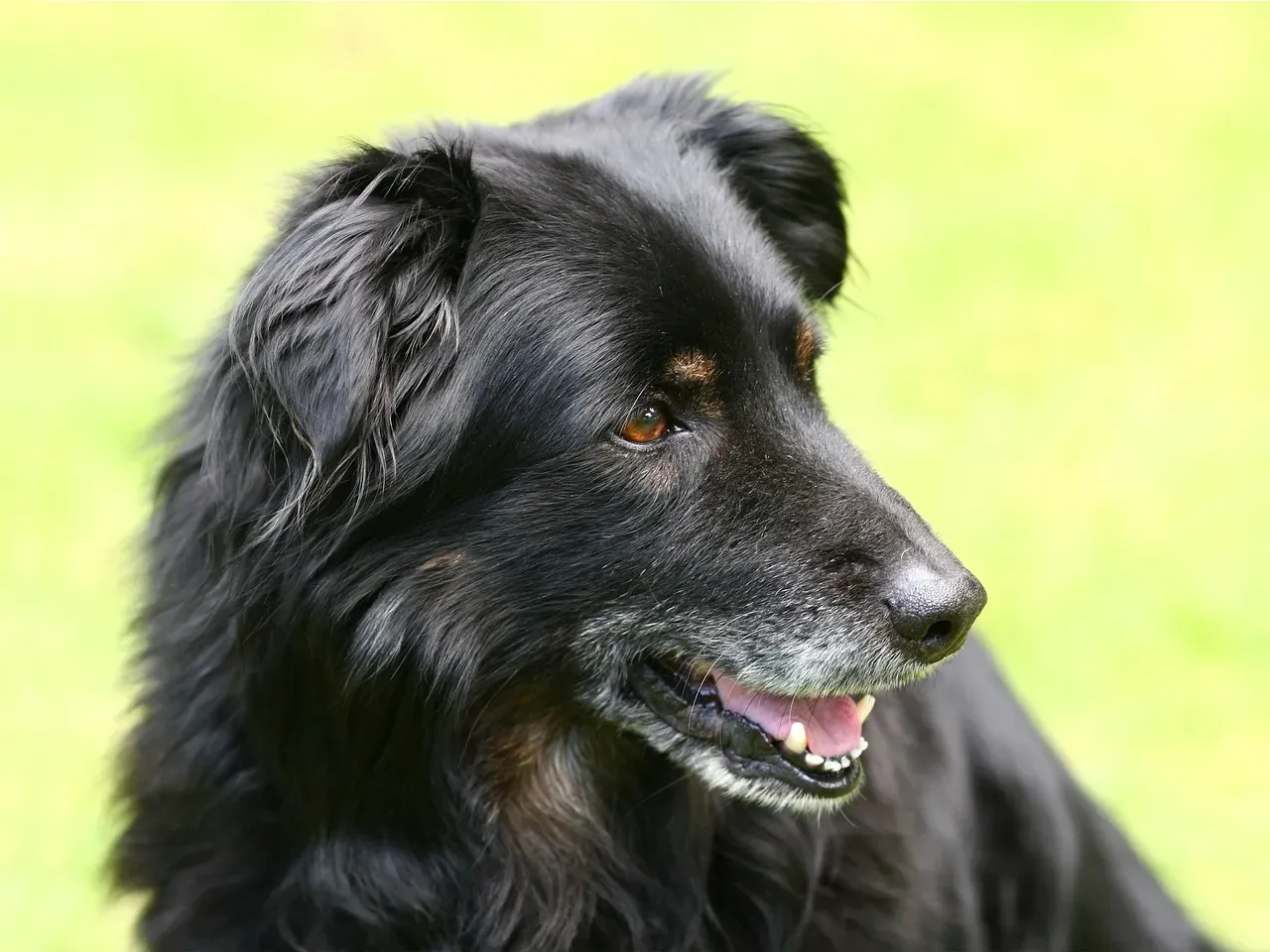
Here’s the part most people don’t want to hear: a happy old dog rarely looks anything like a happy young one. Soft eyes instead of wild zoomies. Deep sleep instead of constant motion. A gentle lean instead of a body-slamming hug. These are senior dog love letters, written in a language most of us were never taught to read.
If your aging dog still seeks you out, still asks for little things, still sniffs the world with curiosity, and has more good days than bad, there’s a real chance they’re not “just hanging on.” They’re content. Some people will insist happiness only counts if it’s loud – but watch your dog instead of your own nostalgia, and you might realize they’ve been telling you something different all along.
So which sign hit closest to home – and did we miss the one only you would notice about your dog?