
14 Things a Dog Sorts Out in Its First Hour in a New House
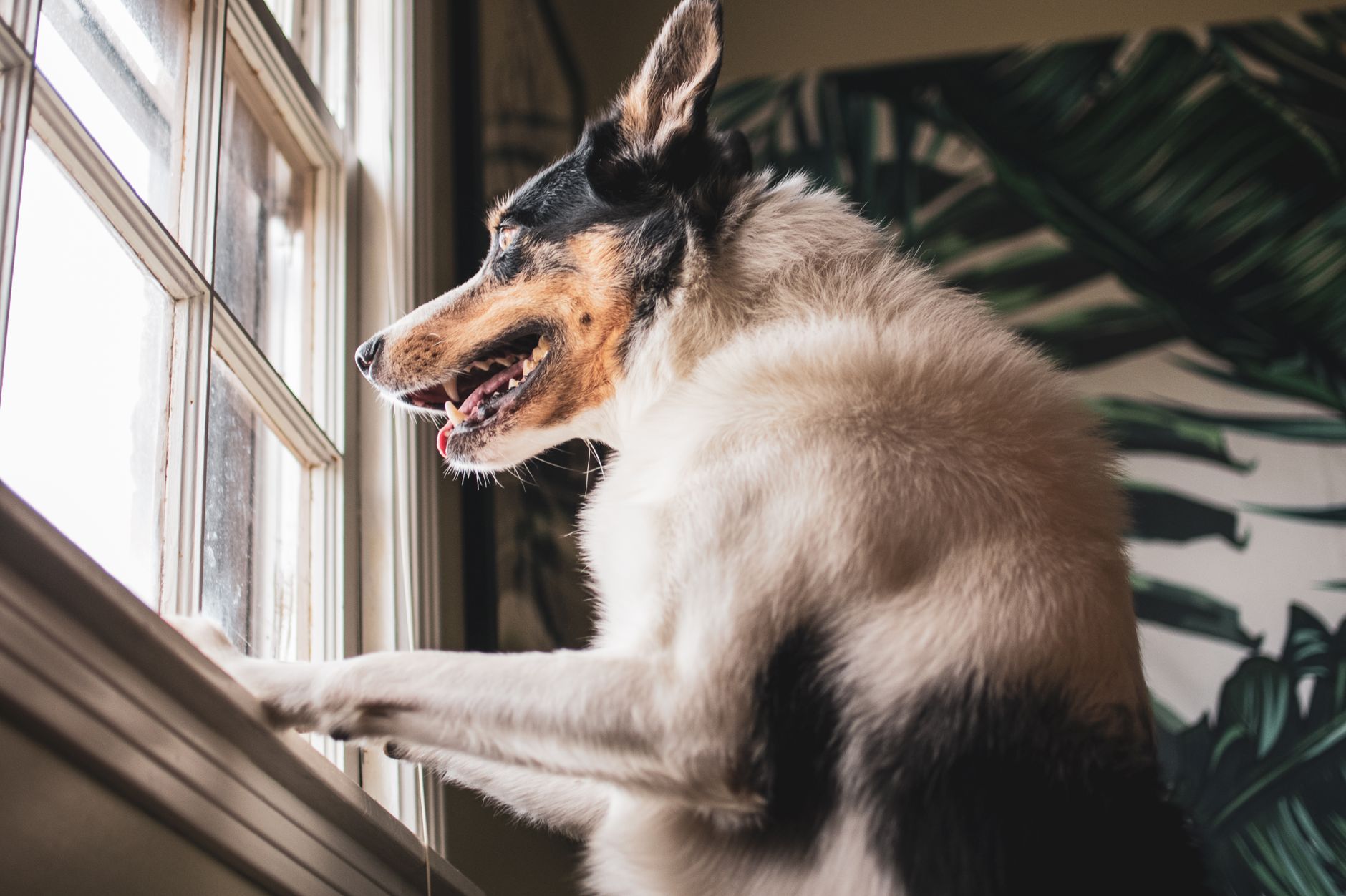
Bringing a dog into a new home is one of the most exciting moments for any pet owner. But while you’re unpacking and showing off the yard, your dog is running an invisible checklist that determines whether this strange new territory feels safe, interesting, or downright stressful.
Most of what happens in that first critical hour doesn’t involve you at all. It’s a rapid-fire assessment driven by instinct, scent, and survival logic that’s been hardwired over thousands of years.
Here’s what actually goes through your dog’s mind the moment the front door opens.
#14 — Where the Exit Points Are
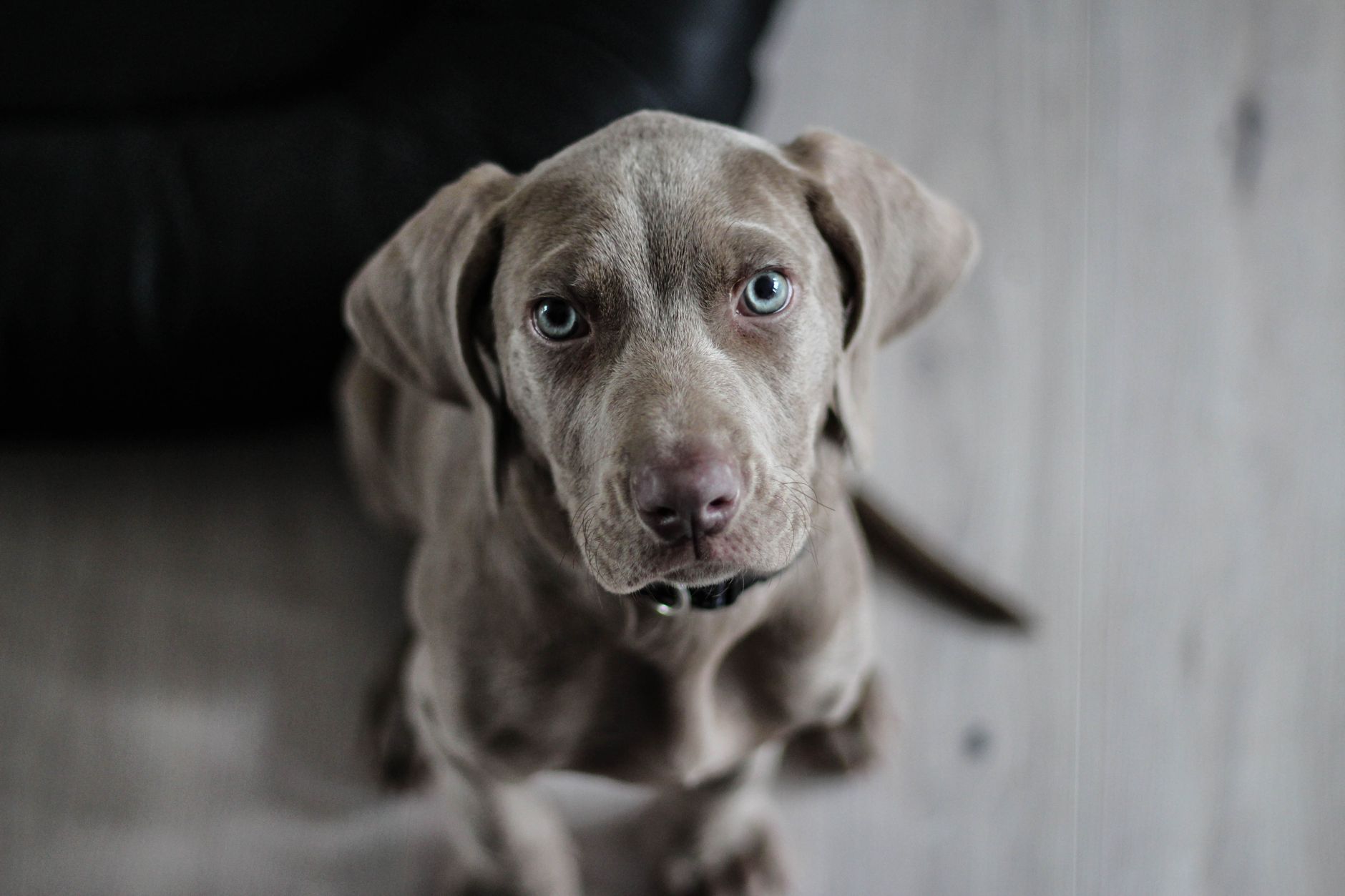
Your dog registers every door, window, and possible escape route within minutes of arrival.
This isn’t paranoia. It’s textbook canine spatial awareness.
Dogs are descended from animals that needed to know how to leave a den quickly if threatened. That instinct doesn’t vanish just because the den now has Wi-Fi.
Watch closely during the first walkthrough. Your dog will pause at doorways, sniff thresholds, and glance back toward the main entrance repeatedly.
They’re not planning to run away. They’re building a mental map of safety options.
If a dog can’t locate clear pathways in and out, anxiety spikes. That’s why some dogs pace near the front door for the first few days.
Fast fact: A dog’s spatial memory can store dozens of exit routes and recall them months later.
But figuring out how to leave is only half the equation. Up next: what they’re protecting.
#13 — What Belongs to Them Now
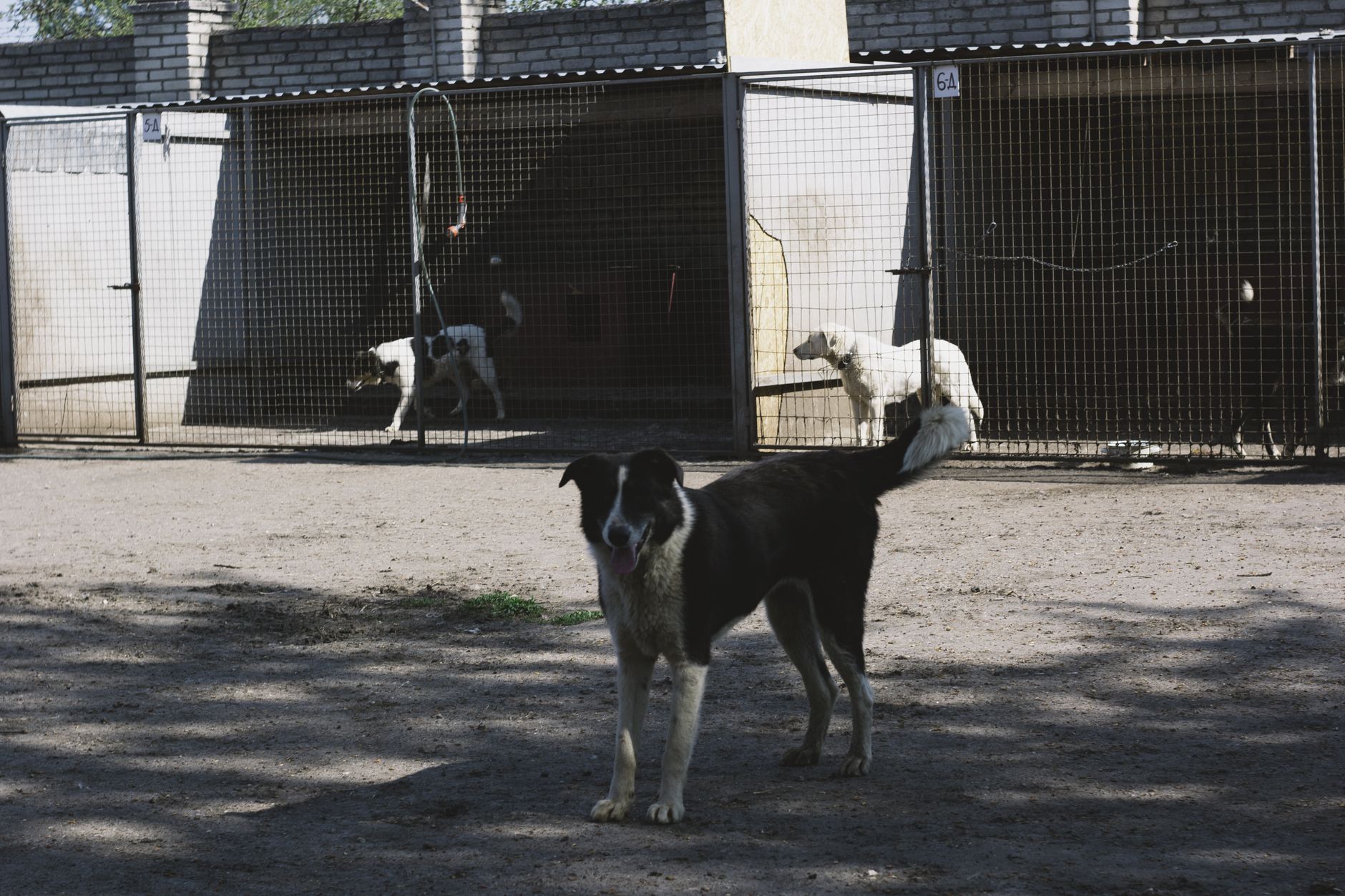
Dogs begin claiming resources almost immediately—and it’s not always what you expect.
The food bowl? Sure. But also: that corner near the heating vent, the shadow under the coffee table, the spot where sunlight hits the floor at 3 p.m.
This is resource assessment, and it happens fast. Your dog is cataloging anything that might offer food, warmth, comfort, or tactical advantage.
In multi-dog households, this phase can look like gentle jockeying. One dog lingers near the water dish. Another sprawls across the hallway.
You’ll see the same behavior in adult dogs that you’d see in puppies exploring a new litter area. It’s deeply embedded.
Some dogs are subtle. Others are shameless about it.
Either way, the resource map is being drawn in real time, and it’ll dictate behavior for weeks.
But while they’re claiming space, they’re also hunting for invisible information you can’t see.
#12 — Who Lived Here Before
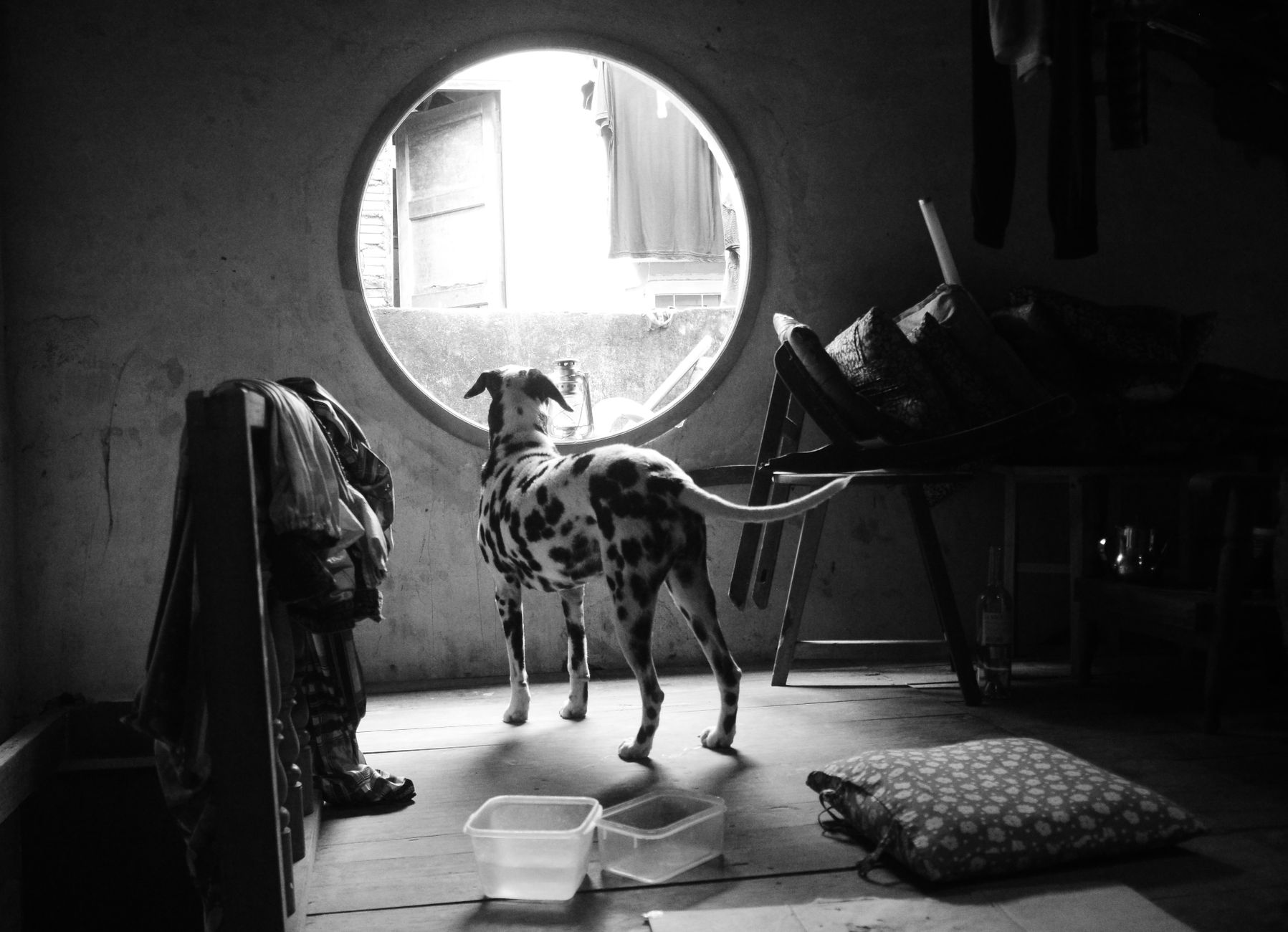
Your dog knows within minutes whether another animal has been in this house.
Scent molecules linger on baseboards, carpet fibers, and furniture legs long after the previous occupant has moved out. To a dog’s nose, the history of a home is an open book.
If a cat lived here? Your dog knows. Another dog? Definitely logged.
Even wild animals that may have briefly entered during vacancy leave olfactory signatures. A mouse in the wall, a bird that flew in through an open window—it’s all recorded.
This isn’t just curiosity. It’s threat assessment.
A dog that detects the scent of a much larger, unfamiliar dog may behave more cautiously for days. One that smells a smaller animal might become more territorial.
You can’t speed this up. Let them sniff.
Fast fact: Some dogs will mark over previous scent trails within the first 24 hours to “overwrite” the old occupant.
And while they’re reading the past, they’re also scanning for present-tense danger.
#11 — Whether Anything Smells Dangerous
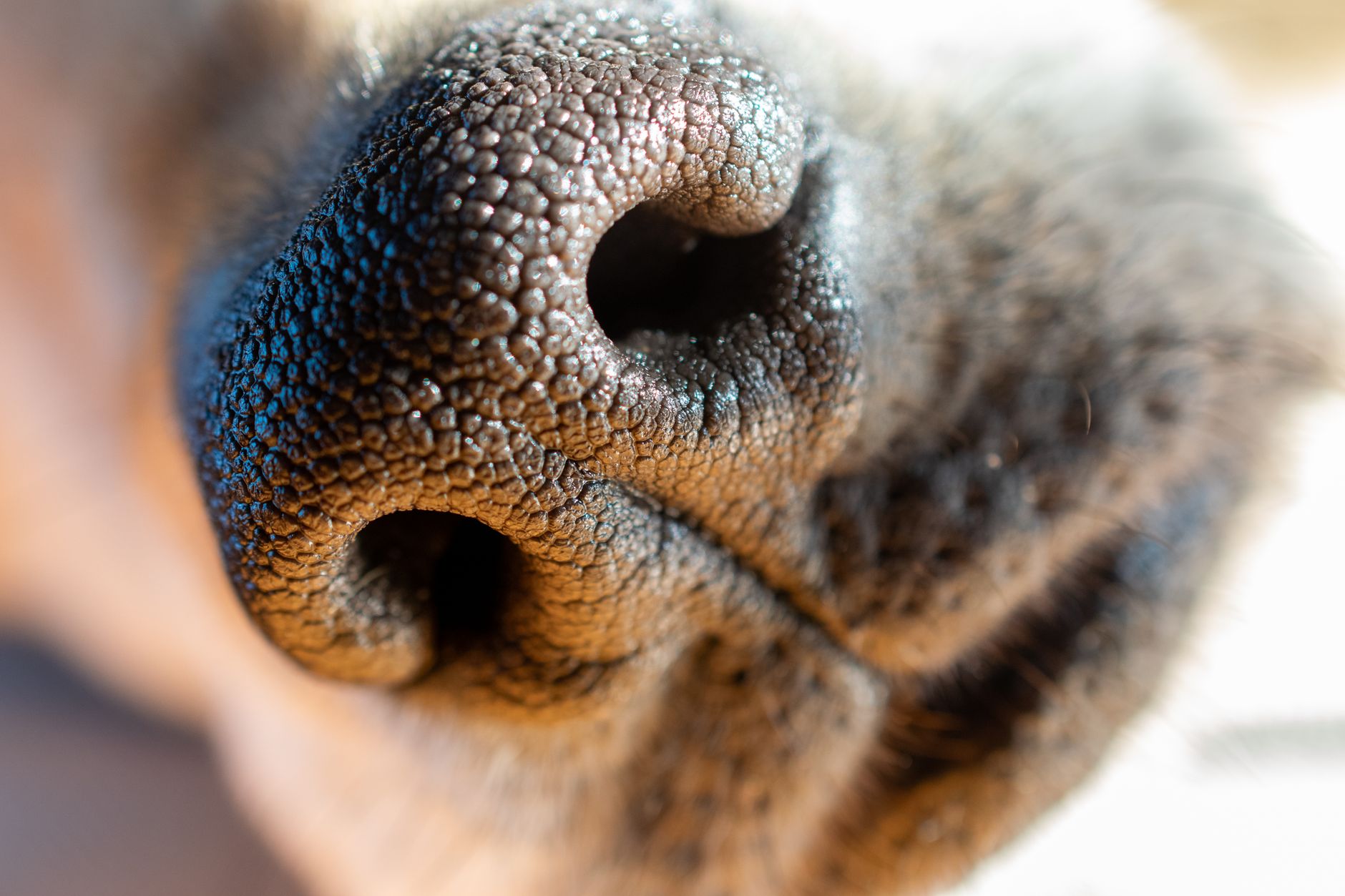
Not all scents are neutral. Some trigger immediate caution.
Dogs can detect chemical traces of cleaning products, pesticides, rodent poison, and even certain plants that are toxic to them. If something smells “wrong,” they’ll avoid that area.
This is why a dog might refuse to walk into a freshly cleaned bathroom or steer clear of a corner where you recently sprayed for bugs.
Their noses are wired to flag anything that could be harmful. It’s a survival filter.
You might not notice anything unusual. Your dog absolutely does.
Some dogs will sneeze repeatedly in rooms with strong chemical residue. Others will simply refuse to settle.
If your dog avoids a specific spot for no obvious reason, trust the nose. There’s likely a scent-based explanation.
This invisible chemistry lesson happens in parallel with something far more emotional.
#10 — Where You Spend the Most Time

Dogs are intensely social animals, and they want to know where their people are going to be.
Within the first hour, your dog will have identified your “anchor points”—the kitchen, the couch, the desk, the bedroom. These become their anchor points too.
If you sit down in the living room for ten minutes, don’t be surprised if your dog starts gravitating toward that area even when you’re not there.
They’re not clingy. They’re strategic.
Fast fact: Studies show dogs spend up to 60% of their resting time within visual range of their primary caregiver.
This is why some dogs seem to “follow you everywhere” in a new house. They’re not being needy—they’re updating their map of where the pack convenes.
Once they’ve locked in your patterns, they relax. Until then, expect a shadow.
But they’re not just watching you. They’re listening to everything.
#9 — What the Baseline Noise Level Is
A new house has a completely different acoustic signature than the old one.
The hum of the refrigerator. Traffic patterns outside. The creak of settling floorboards. The whoosh of the HVAC kicking on.
Your dog is cataloging all of it.
This isn’t passive hearing—it’s active threat monitoring. Once a dog knows what’s “normal,” anything abnormal stands out.
Dogs that seem “on edge” in the first few days are often just recalibrating their auditory baseline. Every sound is still being sorted into “safe” or “investigate.”
Some breeds are more noise-sensitive than others, but every dog does this sorting. It’s non-negotiable.
You can help by keeping the environment relatively calm during the first few hours. Let them build the baseline before introducing chaos.
And while they’re sorting sounds, they’re also reading the light.
#8 — How the Light Moves Through the Day
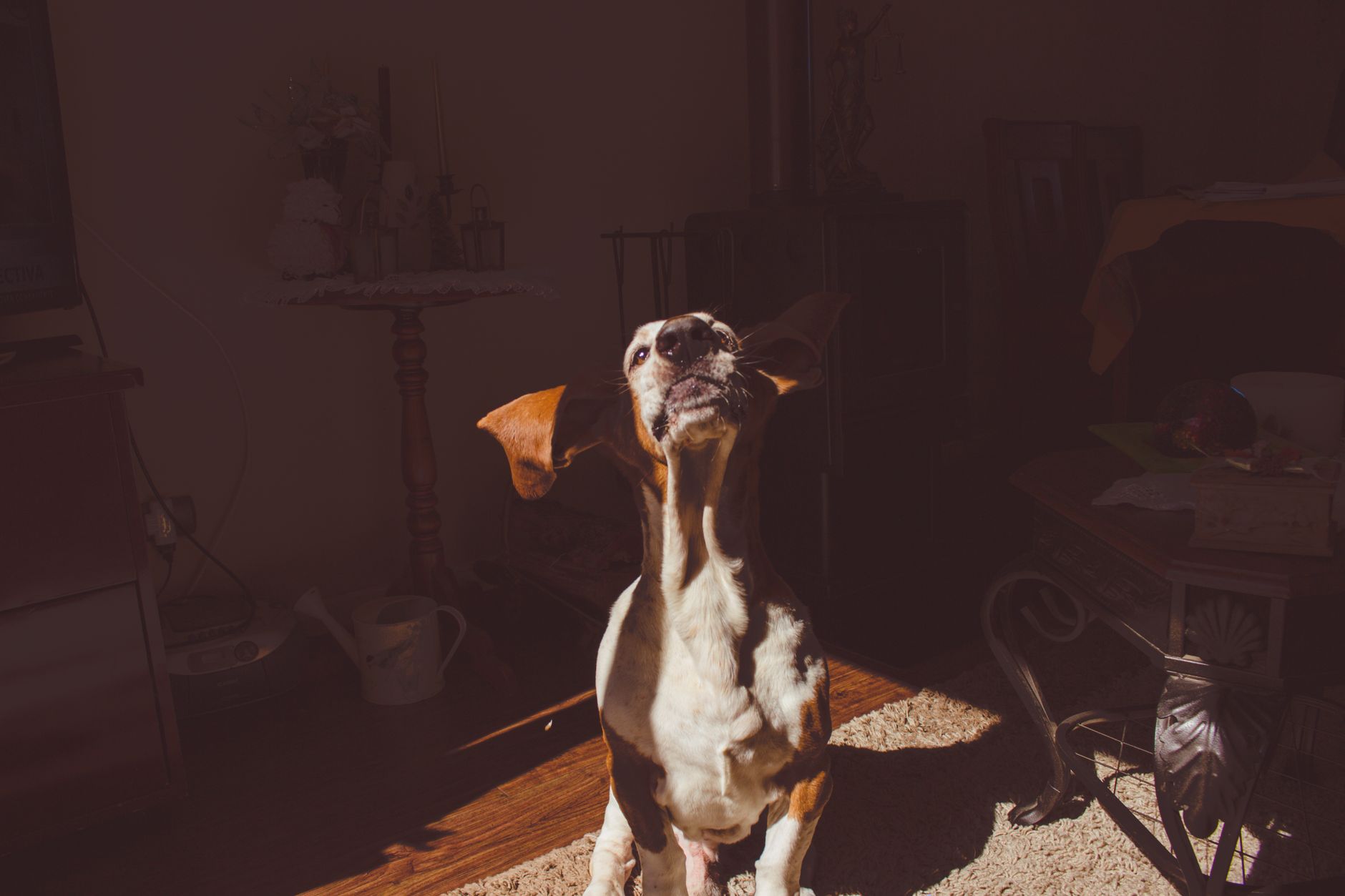
Dogs are more sensitive to light changes than most people realize.
They notice which rooms get morning sun, where shadows fall in the afternoon, and how darkness settles in the evening. This information shapes where they choose to rest.
A dog that loves warmth will remember that sunny patch by the sliding door. A dog that prefers dim, cool spaces will gravitate toward the interior hallway.
This is instinctive den behavior. Wild canines choose resting spots based on temperature, light exposure, and visibility.
Fast fact: Dogs see fewer colors than humans but are better at detecting motion and changes in light intensity.
You’ll often see a dog return to the exact same spot at the same time of day once they’ve mapped the light patterns.
It’s not random. It’s calculated comfort.
But comfort isn’t just about light and temperature—it’s also about height.
#7 — The High Ground and Low Cover
Dogs instinctively evaluate vertical space.
Raised areas—like a landing at the top of the stairs or a platform near a window—offer visibility and tactical advantage. Low, enclosed spaces—like the gap under a bed or behind a couch—offer security and cover.
Your dog is noting both.
Some dogs are “high ground” animals. They want to see what’s coming. Others are “cover” animals. They want to hide and observe.
This is why some dogs immediately jump on furniture in a new house, even if they never did it before. They’re testing whether elevated positions are allowed—and whether they’re useful.
Others will wedge themselves into the smallest, darkest corner they can find. Both are normal.
Neither behavior is about dominance or fear. It’s about strategy.
And strategy includes knowing what’s outside the walls.
#6 — What’s Happening Outside the Windows
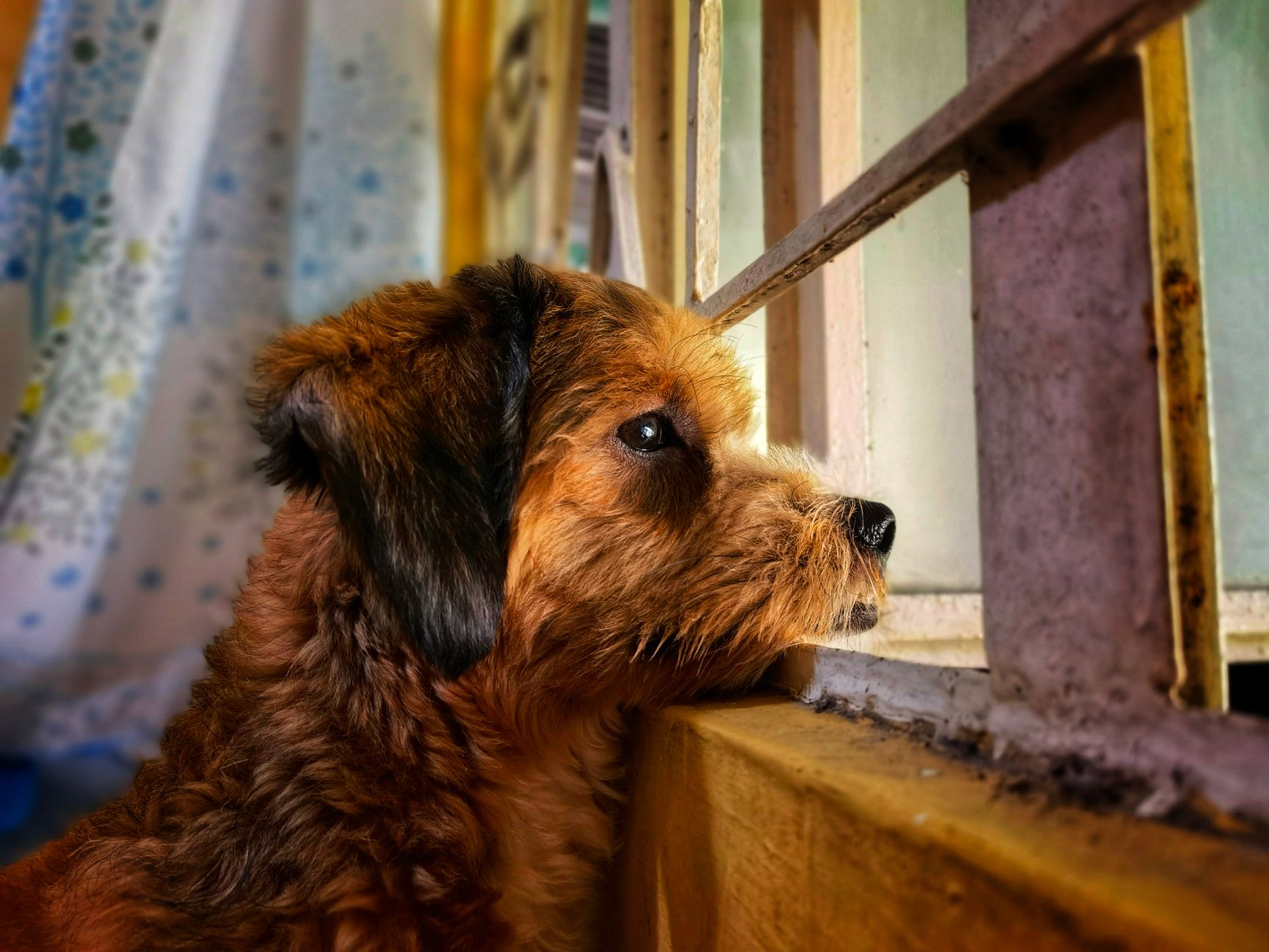
Windows are information portals, and dogs use them constantly.
In the first hour, your dog will likely check every accessible window to see what’s out there. Foot traffic. Other animals. Moving cars. Yard boundaries.
This is perimeter reconnaissance.
A dog that stares out the window isn’t bored—they’re gathering intel. What moves past this house? How often? Is it predictable or random?
If there’s a busy sidewalk or a neighbor’s dog that’s visible, expect your dog to return to that window repeatedly. It’s the canine equivalent of checking the news.
Fast fact: Some dogs will “guard” a specific window for weeks if they perceive it as a high-traffic entry point.
This surveillance behavior often intensifies at dusk, when visibility drops and unfamiliar sounds increase.
But the outside world isn’t the only thing they’re monitoring.
#5 — Whether the Household Has a Routine Yet
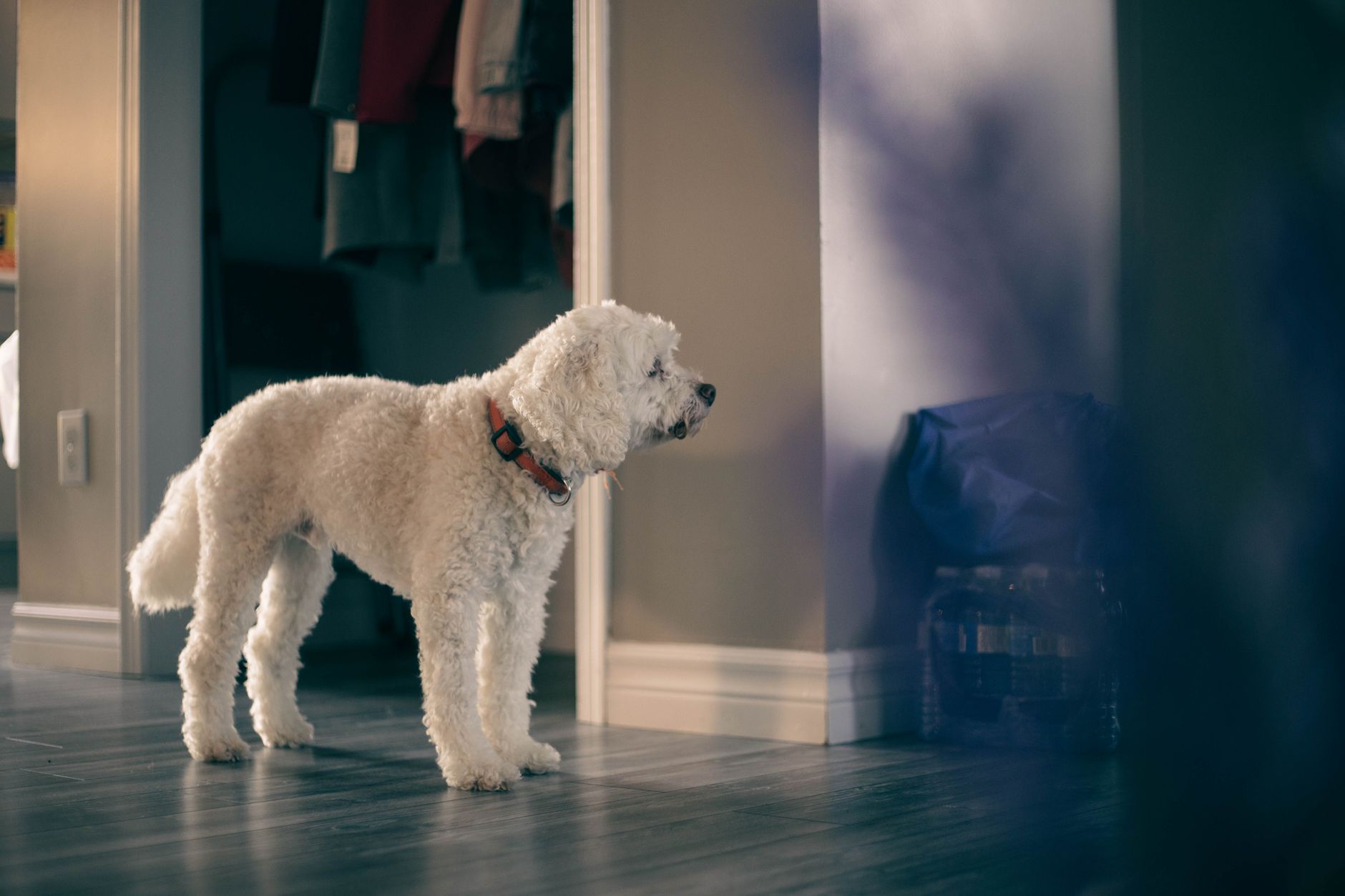
Dogs are pattern-recognition machines, and they start searching for structure immediately.
When do you eat? When do you leave? When do doors open and close?
In the first hour, there isn’t enough data to form predictions—but your dog is absolutely collecting it. Every action you take is being logged.
This is why consistency matters so much in the early days. If you feed your dog at 7 a.m. on day one and 10 a.m. on day two, you’re not establishing a routine—you’re creating uncertainty.
A dog that knows the pattern will settle faster. One that can’t find the pattern will stay vigilant longer.
The same applies to where you put their bed, when you let them out, and how you move through the house.
They’re watching everything.
And they’re also making some deeply personal decisions about comfort.
#4 — Where They Feel Safest Sleeping
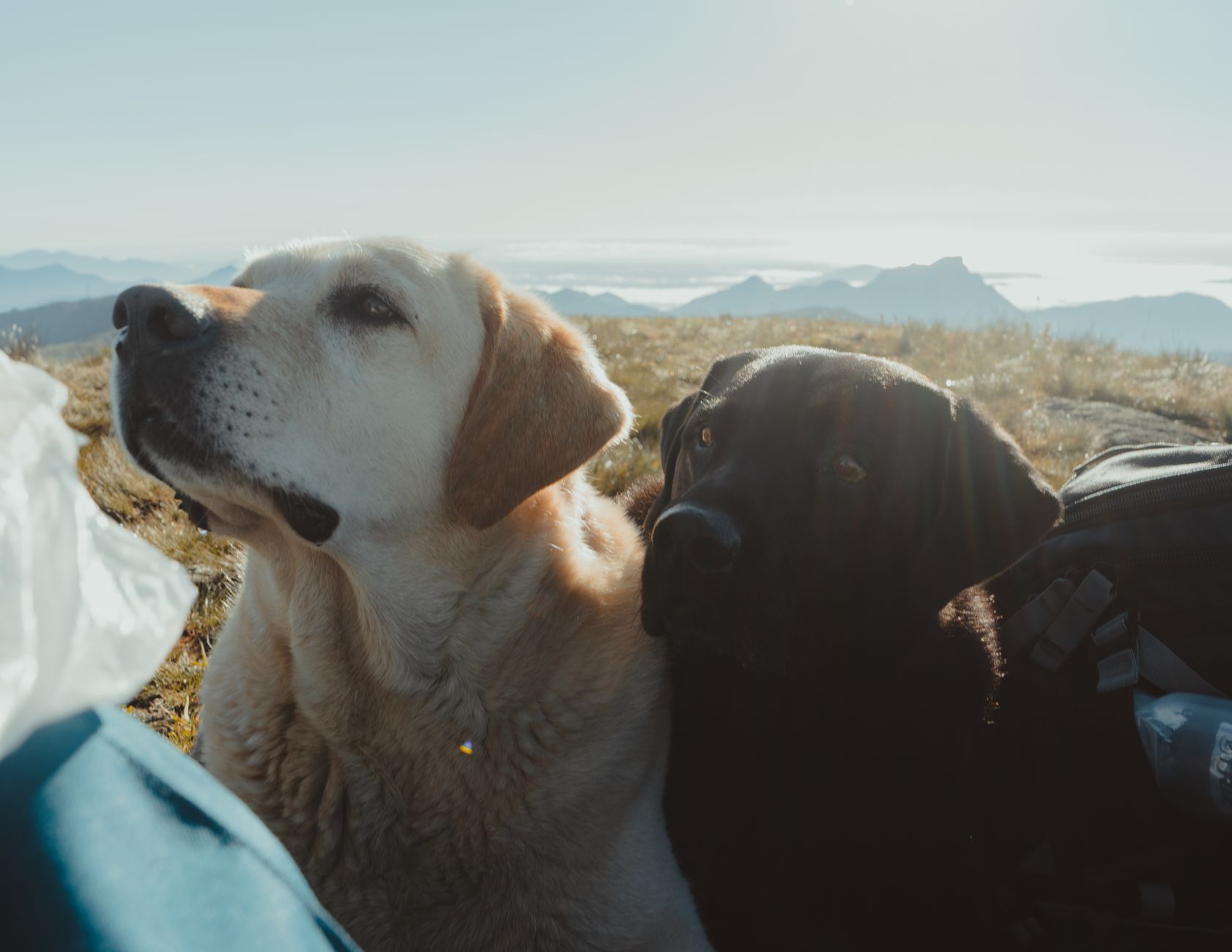
This is one of the most important assessments a dog makes, and it happens quickly.
Some dogs will test three or four sleeping spots in the first hour alone. They’re evaluating temperature, visibility, proximity to you, and how “defended” the position feels.
A corner with walls on two sides feels safer than the middle of a room. A spot near your bedroom door feels more secure than one at the far end of the house.
This is den logic. Dogs are vulnerable when they sleep, so the sleeping spot has to pass multiple safety checks.
You might see your dog circle a spot several times before lying down. That’s not quirky behavior—it’s an ancient ritual of flattening grass and checking for threats.
Fast fact: The circling behavior before lying down is inherited from wolves and serves to create a comfortable, safe depression in the ground.
Don’t be surprised if the “final” sleeping spot changes after a few days. They’re still testing.
But while they’re planning where to sleep, they’re also deciding something more immediate.
#3 — Whether the Water Tastes Different
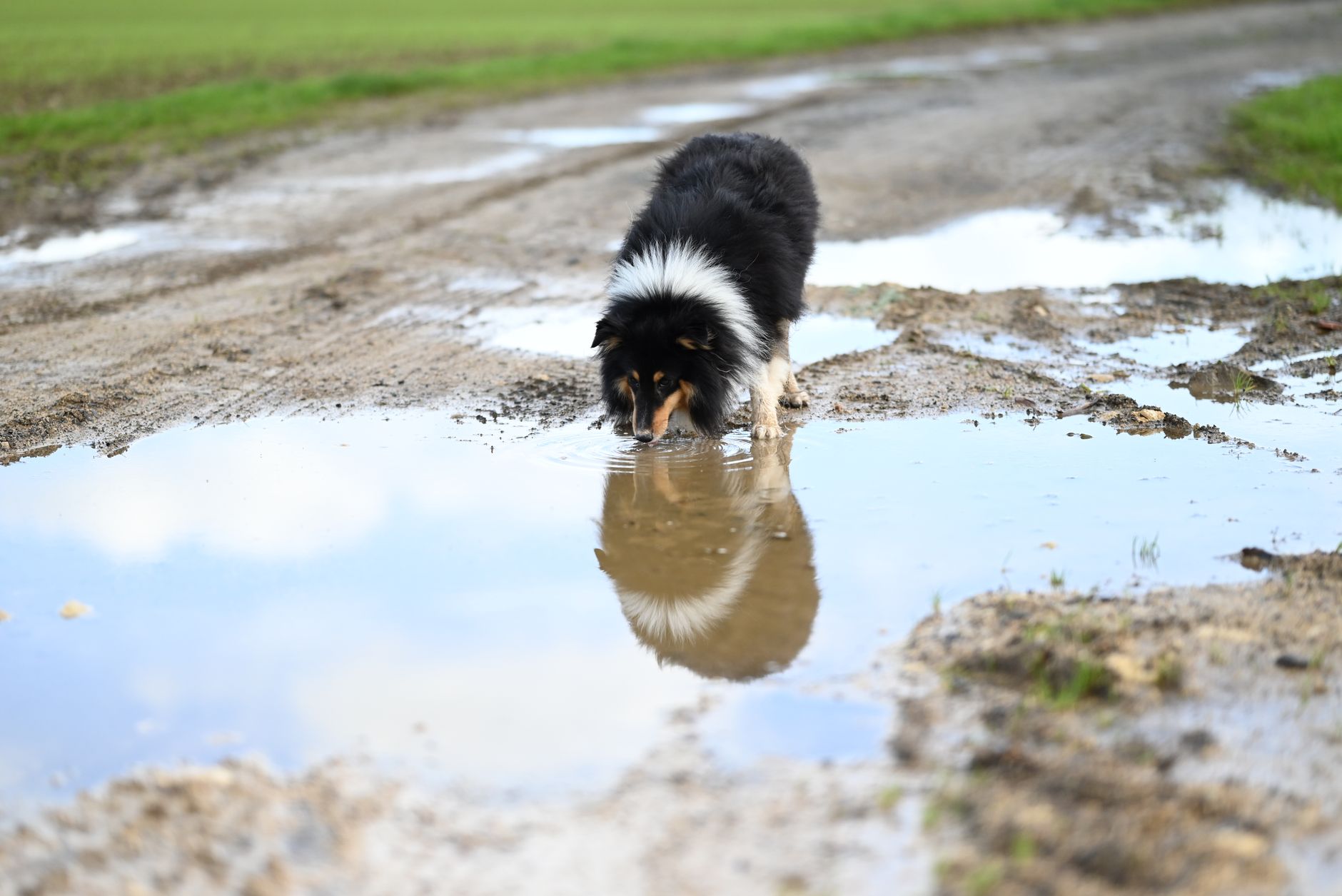
Water chemistry varies by location, and dogs notice.
If you’ve moved to a new city—or even a new neighborhood with a different water source—your dog will detect the change immediately.
Some dogs drink hesitantly at first. Others refuse altogether and wait until they’re desperately thirsty.
This isn’t pickiness. It’s caution.
Dogs that were used to well water may balk at city water. Dogs that drank filtered water may hesitate at tap water.
The solution is simple: let them adjust, or bring water from the old house for the first day or two.
Fast fact: Some dogs will preferentially drink from puddles or other “wild” sources because the taste is more familiar than treated tap water.
It usually takes 24 to 48 hours for a dog to accept the new water as safe. Until then, they might drink less than usual.
And while they’re testing the water, they’re running one final, crucial assessment.
#2 — How You’re Feeling About the Move
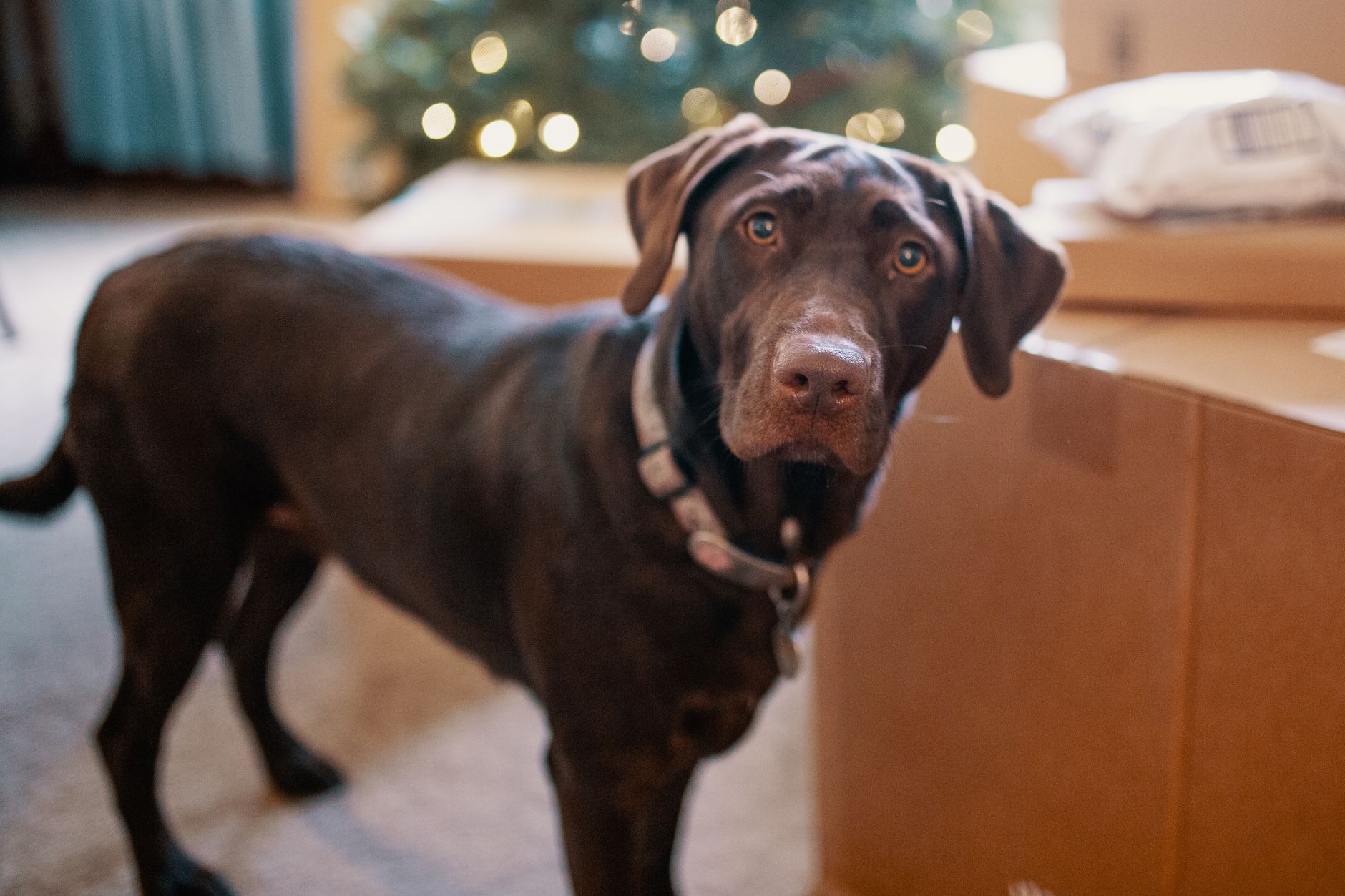
Dogs are extraordinary readers of human emotion, and they’re watching you closely.
If you’re stressed, distracted, or anxious about the move, your dog will pick up on it. They’ll mirror that energy.
If you’re calm and confident, they’ll take that as a signal that the new environment is safe.
This is why some dogs that are normally well-adjusted become clingy or nervous during a move. They’re not reacting to the house—they’re reacting to you.
Handlers of working dogs are trained to manage their own stress specifically because dogs are so sensitive to it.
You can’t fake calm, but you can be intentional. Move slowly. Speak in a normal tone. Don’t rush the settling process.
Fast fact: Research shows dogs can detect changes in human cortisol levels through scent, meaning they may literally smell your stress.
Your dog will settle when you settle. It’s that interconnected.
But all of this—every assessment, every sniff, every cautious step—leads to one final determination.
#1 — Whether This Place Can Become Home
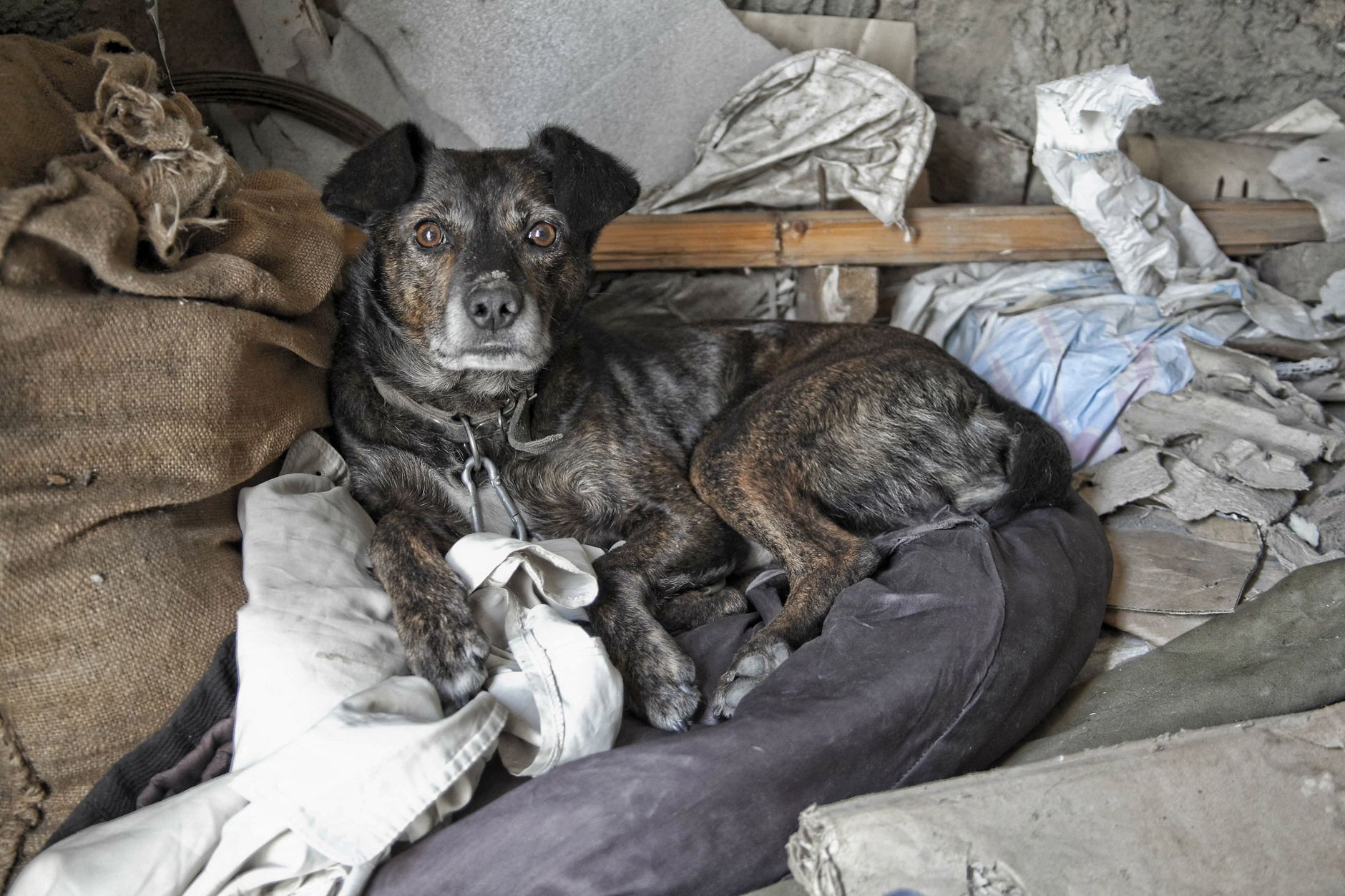
This is the big one. And it’s not decided in the first hour—but the foundation is laid there.
A dog’s concept of “home” isn’t about square footage or hardwood floors. It’s about safety, resources, predictability, and the presence of their people.
In that first hour, your dog is asking: Can I defend this space? Can I find what I need? Will my pack stay here?
If the answers feel like “yes,” the transition begins. If they feel like “no,” the dog remains in a state of low-level vigilance that can last for days.
Some dogs will claim a new house as home within hours. Others take weeks.
Neither timeline is wrong. It’s individual.
Fast fact: A dog’s cortisol levels—a marker of stress—typically return to baseline within 3 to 7 days of moving if the new environment is stable and positive.
The best thing you can do is give them time, maintain routines, and let them work through their invisible checklist.
They’ll tell you when they’re ready.
The Bottom Line
Your dog’s first hour in a new house is a masterclass in instinct, observation, and survival logic. They’re not just sniffing around—they’re building a complete threat-and-resource map that will guide their behavior for weeks.
From exits to sleeping spots, from water quality to your emotional state, every detail matters. The more you understand what they’re sorting out, the better you can support the transition.
Most dogs settle fully within a week if their basic needs for safety, routine, and connection are met. Some take longer. A few make themselves at home in a day.
Did your dog do something unusual in the first hour of a move? Drop it in the comments—we’d love to hear what made their list.