
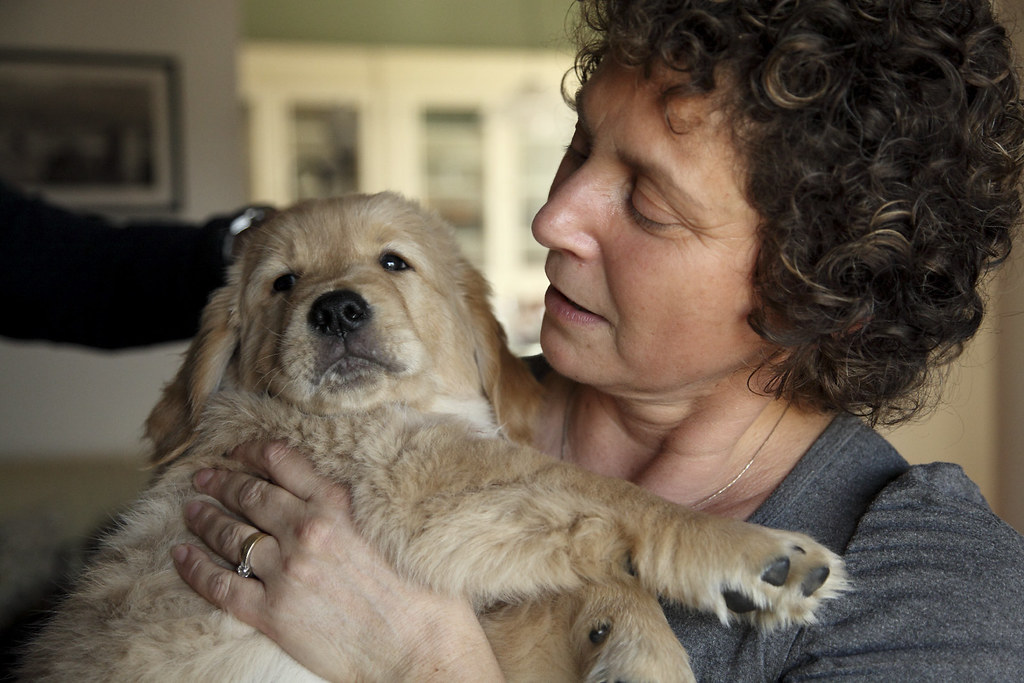
You dropped your dog off at Grandma’s for one innocent afternoon. Twenty-four hours later, you picked up a slightly different animal – and Grandma didn’t do anything you’d ever call “training.” She just fed him bacon, let him nap on the good couch, and melted every time he whined. Behaviorally speaking, that’s basically bootcamp. Just the opposite kind.
Some of what your dog picked up is harmless and genuinely funny. Other habits quietly chip away at boundaries you spent months building, and you won’t notice until you’re three days home and your dog is staring you down at the dinner table like he’s owed something. Here are the 15 habits dogs pick up in a single day at Grandma’s house – starting with the one almost every dog nails within minutes of walking through her door.
#15 – Expecting a Second (and Third) Breakfast
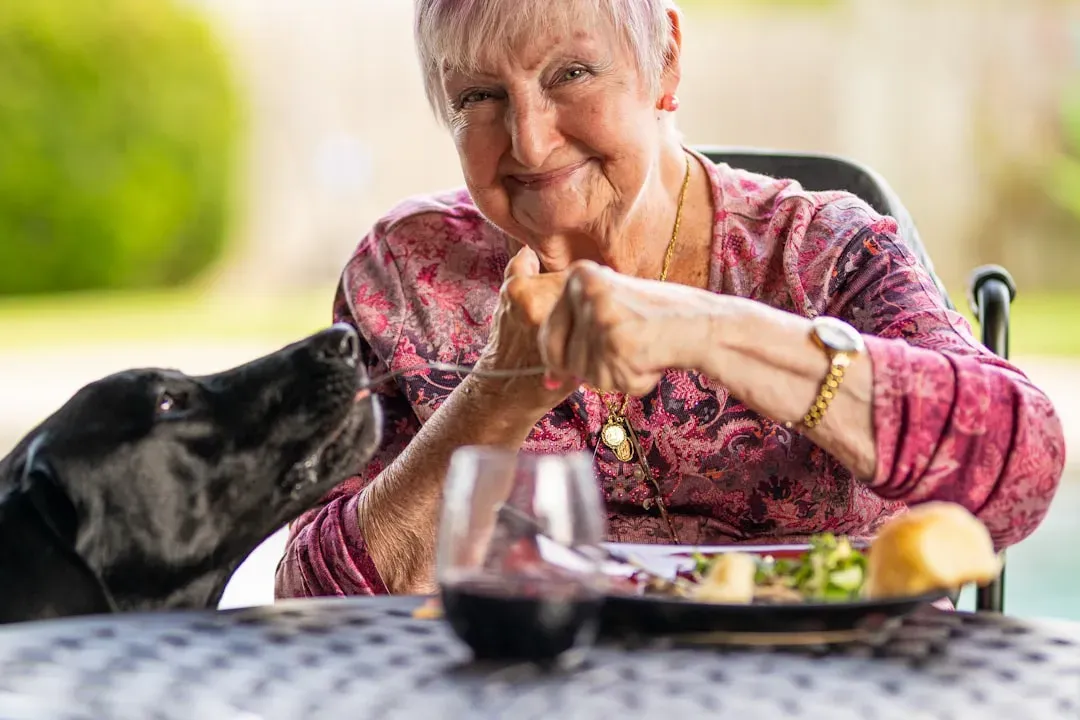
The first habit most dogs pick up at Grandma’s? Learning that breakfast is never really over. At home, it’s one measured bowl. At Grandma’s, breakfast is the kibble, plus toast crusts, a piece of bacon “because he looked at me,” and half a scrambled egg “so he doesn’t feel left out.”
In a single day, a dog learns that hanging around the kitchen long enough makes food reappear, again and again. That’s a problem, because intermittent rewards are the fastest way to cement a behavior in an animal’s brain. Once home, your dog starts staring, pawing, or whining at your table, fully convinced this is just how breakfast works now.
#14 – Sitting by the Fridge Like It’s a Vending Machine
Dogs are sharper pattern-readers than most people give them credit for. It only takes a few repetitions to link “fridge opens” with “good things fall from the sky.” At Grandma’s, that link forms almost instantly – she opens the door slowly, talks to him, lets him lick a spoon, or drops a sliver of cheese because “he’s such a good boy.”
Before long, your dog is parked in front of that fridge like it dispenses tickets. Back home, you open yours and suddenly there’s a furry shadow glued to your ankles, nudging the door or hovering dangerously close. It didn’t come out of nowhere – it started at a kitchen exactly like Grandma’s, where the fridge quietly became a slot machine.
#13 – Demanding Couch Privileges They Never Had
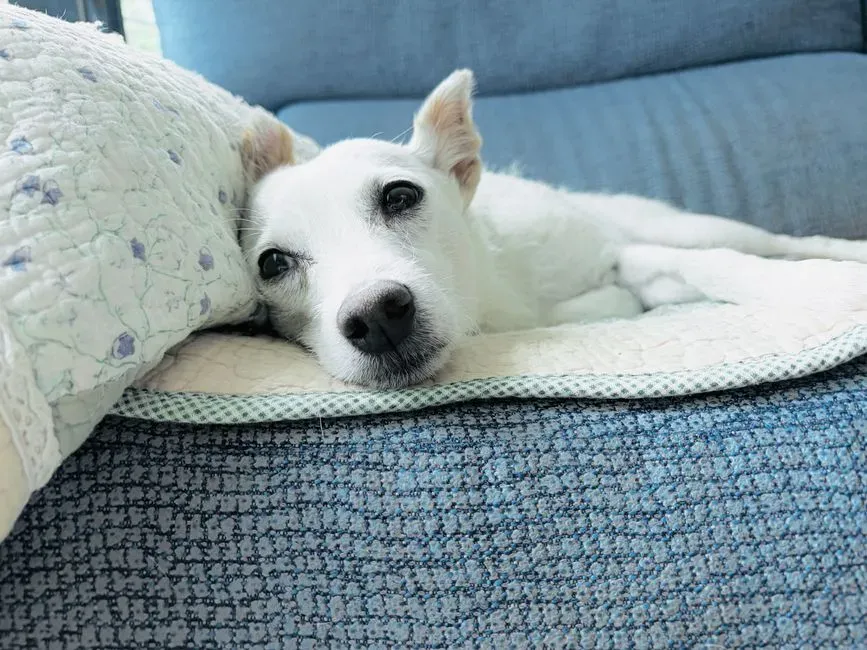
Most people underestimate how fast a dog can renegotiate house rules the moment one person caves. If Grandma pats the cushion and says, “Come cuddle, sweetie,” your dog just received explicit permission to upgrade his seating status. He doesn’t file that as a “special Grandma rule” – he files it as “humans now allow me on soft furniture,” full stop.
Once a dog has felt the comfort of couch cuddles during a long TV session, your old “no dogs on furniture” rule feels arbitrary to him. Back home, he’ll test you: paws up, a full jump, or that slow, guilt-inducing stare from the floor. Families end up in quiet arguments over it, while the dog has already logged a very clear promotion.
Fast Facts
- Dogs respond to consistency, not intention – one exception can feel like a brand-new permanent rule
- Furniture privileges form fast because comfort itself is the reward, no treats required
- Most dogs will test a “no couch” rule again within the first day back home
- A calm, repeated redirect works better than scolding once the habit is already set
#12 – Perfecting the “Grandma Guilt” Face
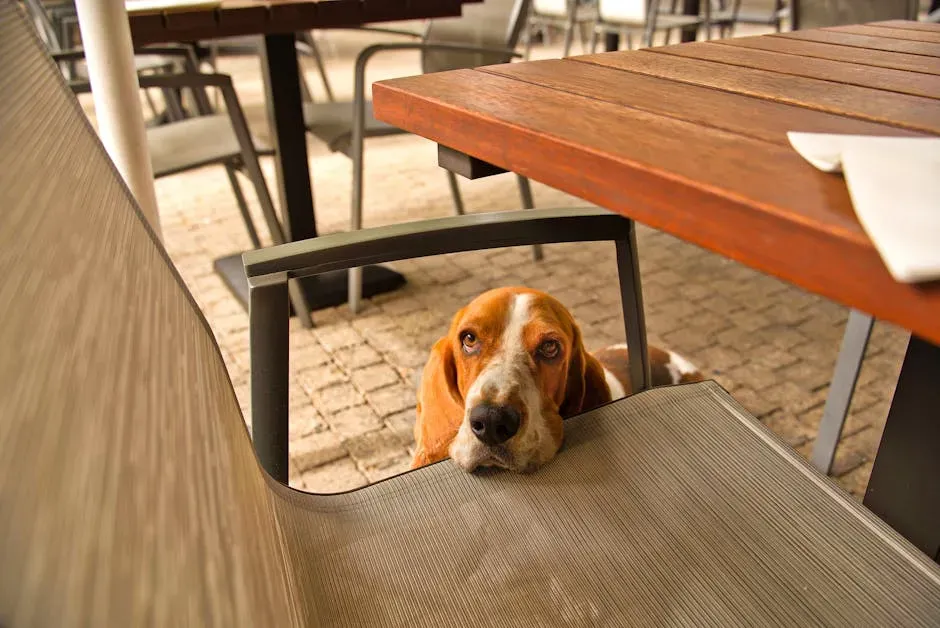
Grandmas love to say, “I just can’t resist that little face.” Behaviorally, what they’re actually doing is training a weapon. Dogs learn fast which expressions unlock food, attention, or broken rules: the big eyes, the slow blink, the tiny head tilt, maybe a soft, theatrical whine.
Grandma rewards it every single time with a cookie, a cuddle, or an “Aww, come here!” – and the dog quietly catalogs that face as a winning strategy. Back home, you’ll catch him deploying it at oddly strategic moments: mid-dinner, right after you say “kennel,” or the second you try to ignore begging. He’s not just being cute. He’s running a tactic Grandma personally helped him refine.
#11 – Barking for Attention Instead of Waiting
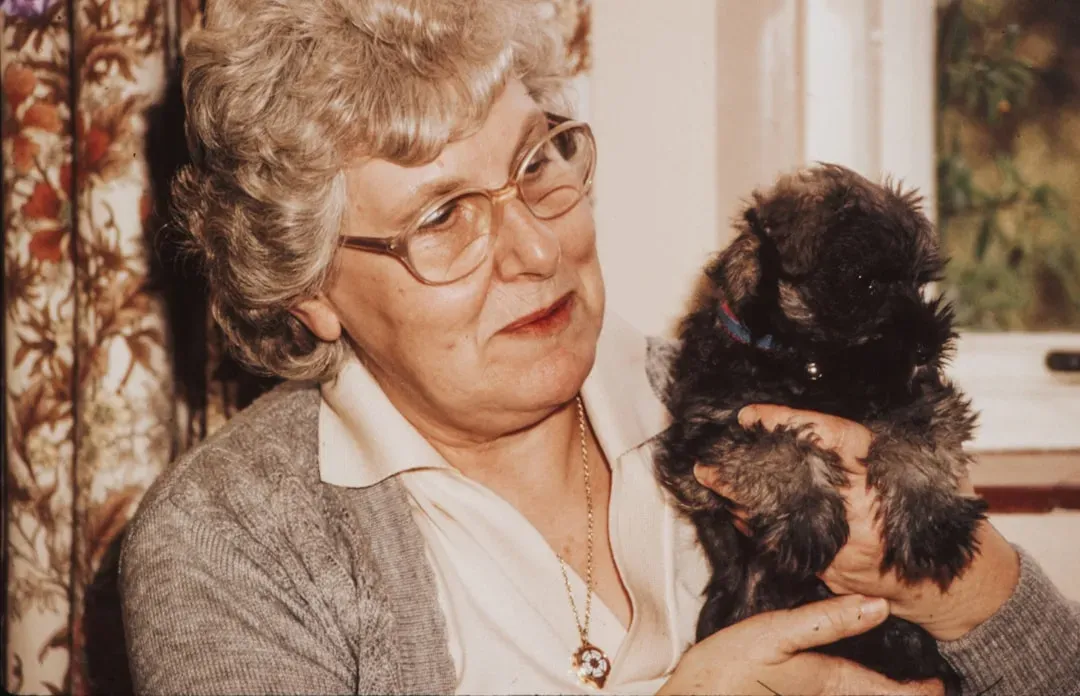
Many owners work hard on one rule: you get attention when you’re calm. Grandma, without meaning to, often flips it completely. One day of “Oh! Who’s barking? Come here, baby!” teaches a dog that noise is the fastest way to make a human engage.
Bark at the window, and Grandma rushes over. Bark at her chair, and she talks, pets, or offers a treat just to quiet him down – textbook reinforcement, learned in a single afternoon. Back home, he may suddenly start barking more when you’re on a call or trying to relax, not because he’s “acting out,” but because he’s testing whether the new system works on you too.
#10 – Getting Hand-Fed Like Royalty
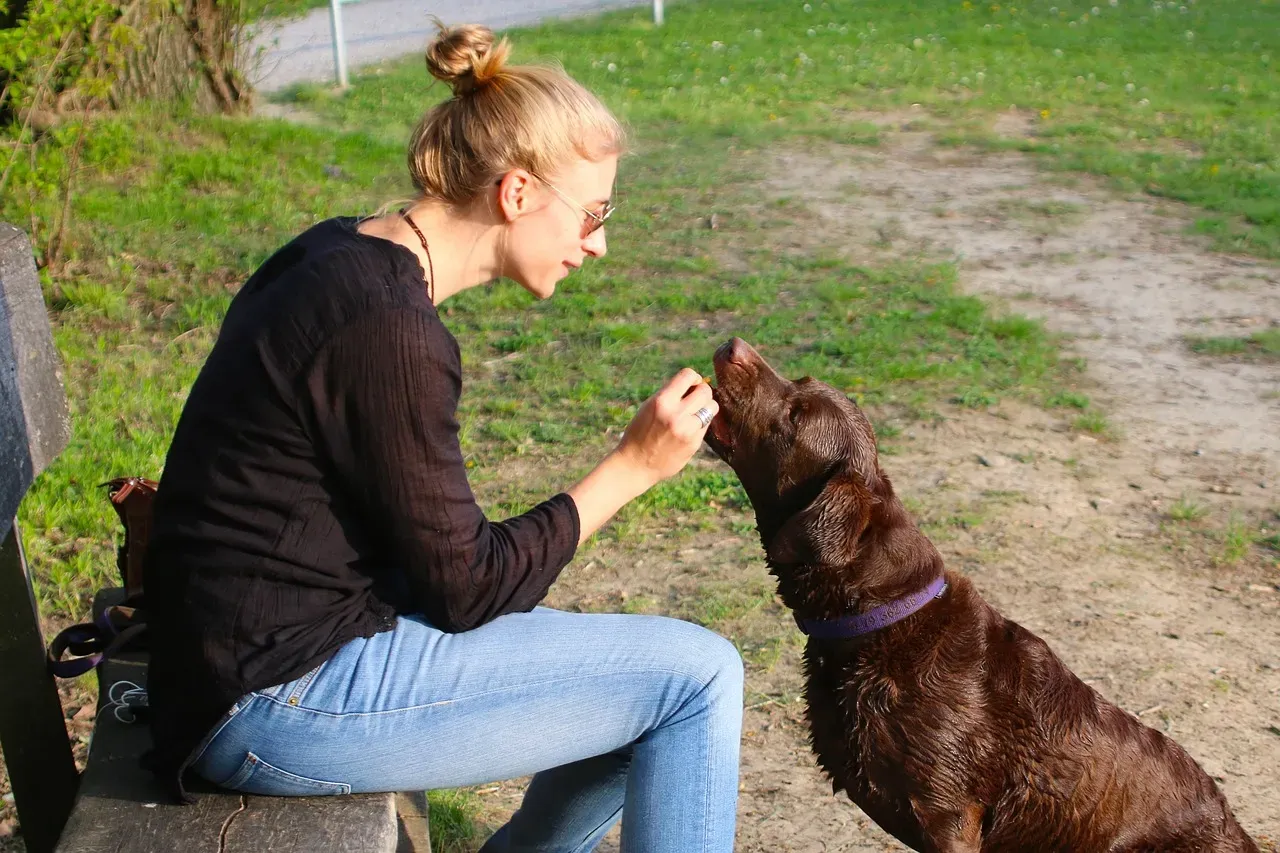
A shockingly common Grandma move: “He wouldn’t eat his kibble, so I fed it to him from my hand, and he loved it!” It feels nurturing. It can also instantly manufacture a picky eater. The dog learns that turning away from the bowl summons a much fancier delivery service.
Instead of letting him get hungry enough to eat on his own, Grandma upgrades the whole experience – mixing in chicken, warming the food, hand-feeding piece by piece while cooing. Within a single day, he’s learned that ignoring dinner makes it more interesting, not less. Some dogs will hold out for Grandma-level service for days afterward, leaving owners convinced something’s wrong when he’s really just waiting for room service to return.
#9 – Sleeping in Human Beds (and Guarding the Spot)
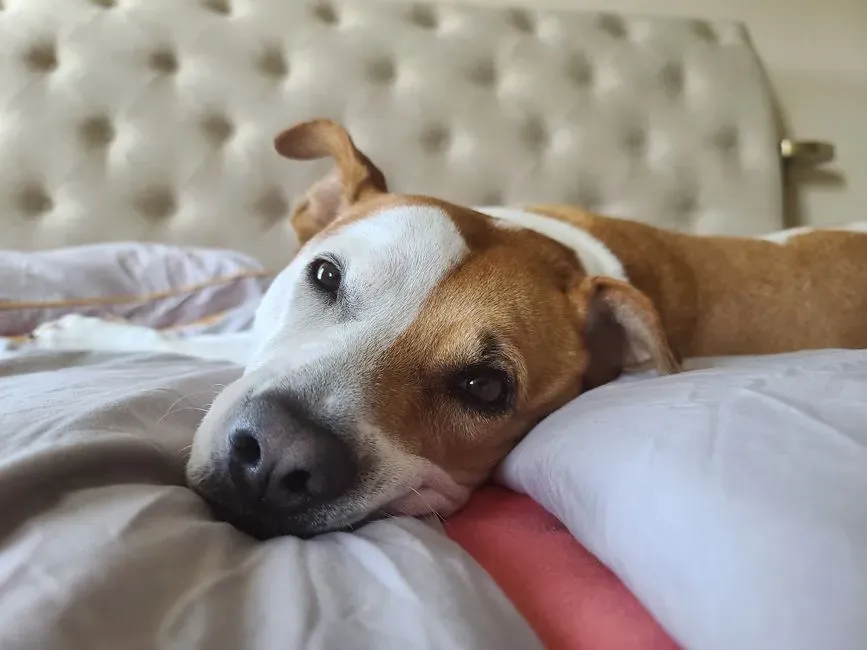
Many families hold a clear line: dogs sleep in their own bed or crate. At Grandma’s, that line tends to dissolve fast. It usually starts small – “He was whining, so I let him up for one night” – but to a dog, there’s no such thing as “just this once.” That’s a promotion to the highest-value real estate in the house.
Once he’s slept somewhere warm, elevated, and smelling like his favorite person, going back to the floor can feel like a demotion. Some dogs scratch at doors, whine, or even guard the bed against other people or pets, because they now consider it partly theirs.
Dogs don’t generalize exceptions. They generalize outcomes.
Common training principle cited by professional dog behaviorists
#8 – Ignoring the Word “No” Completely
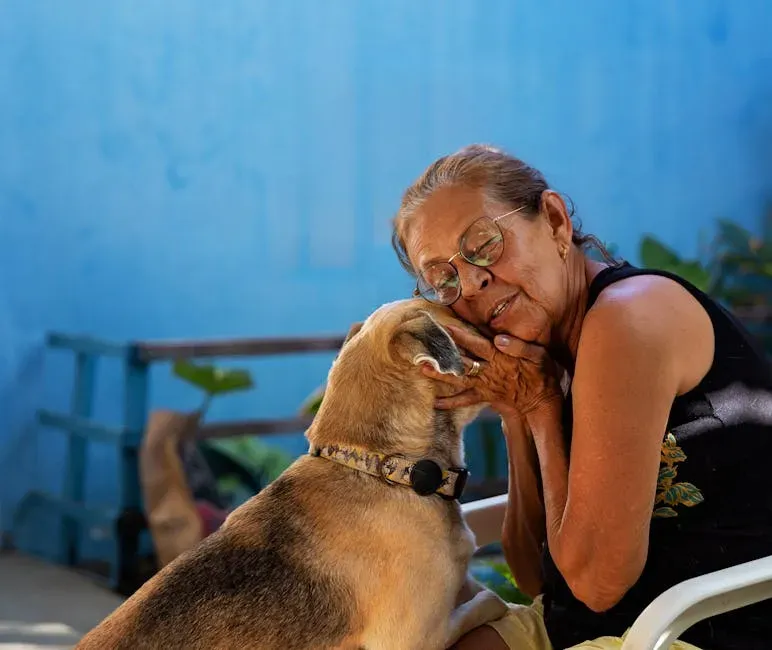
At home, “no” might actually carry weight. At Grandma’s, it’s often just background noise, delivered in a giggly, singsong voice while she’s still petting him. From a training standpoint, that’s worse than saying nothing at all – the dog learns the sound is emotion, not instruction.
If he jumps up or noses the trash and Grandma responds with “No! You silly thing!” plus a rub or a snack, he’s just been rewarded for the exact behavior you’re trying to stop. After 24 hours of this, “no” becomes meaningless again. Owners blame the dog for being “stubborn” when really he’s just collected fresh evidence that the word doesn’t matter unless everyone backs it up.
#7 – Mastering the Art of Door-Dashing

Grandmas are often slower and more distracted at doors – juggling keys, holding bags, mid-story. Dogs notice everything. One successful slip-through is all it takes for a dog to decide that front doors are opportunities, not barriers.
If Grandma squeals and turns the chase into a game of “come back!” with treats, the thrill only gets sweeter. Back home, you’ll catch him hovering near the door, timing his moment. Trainers warn about this constantly, because door-dashing is genuinely how dogs get lost or hit by cars – and it often starts with one relative who thought it was a funny story.
Quick Compare
- At home: The door stays closed until a calm “wait” is given
- At Grandma’s: The door swings open freely, often mid-conversation or while carrying bags
- At home: A slip-through is corrected calmly and treated seriously
- At Grandma’s: A slip-through often turns into a laughing, treat-filled chase
#6 – Begging at the Table Like It’s a Full-Time Job
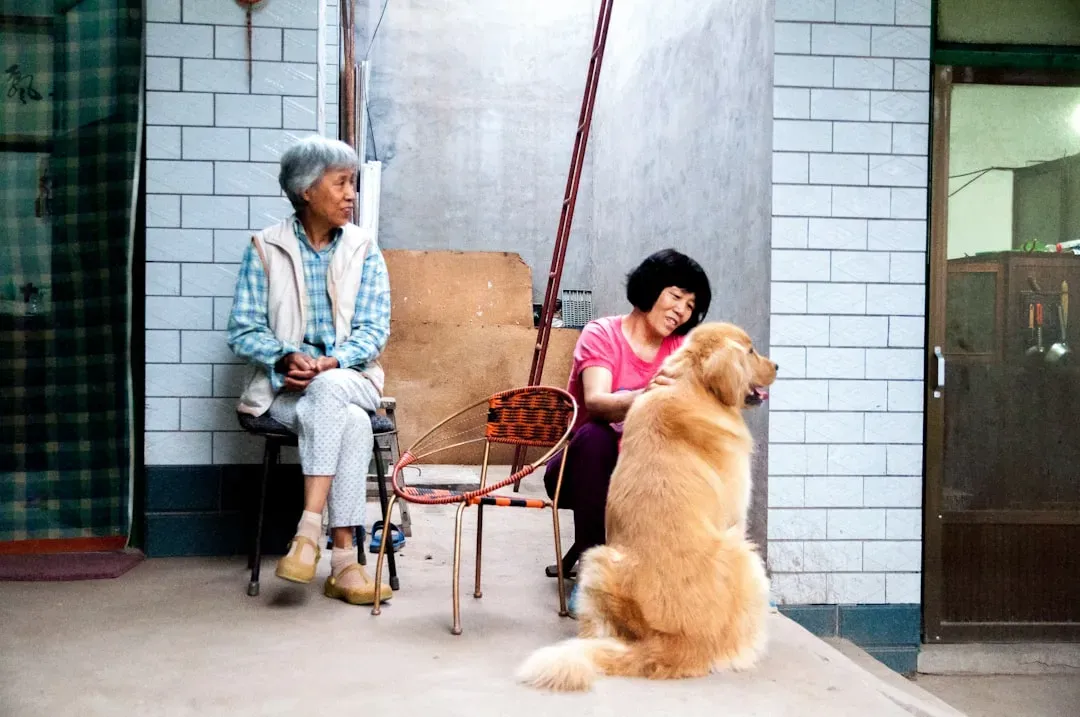
Most people assume begging takes weeks to build. It doesn’t. If your dog sits by Grandma’s chair and she drops one forkful of chicken “by accident” twice in a single meal, the habit is already installed. Her chair is now the jackpot seat, and the dining table is Vegas.
He’ll start nudging knees, resting his chin on laps, locking eyes on her plate with laser focus. Grandma calls it “companionship.” It’s gambling. Back home, the habit spreads to everyone at the table – kids, guests, whoever’s holding food – and one Grandma weekend can genuinely undo months of “go to your place during dinner” training.
#5 – Getting Rewarded for Velcro Behavior
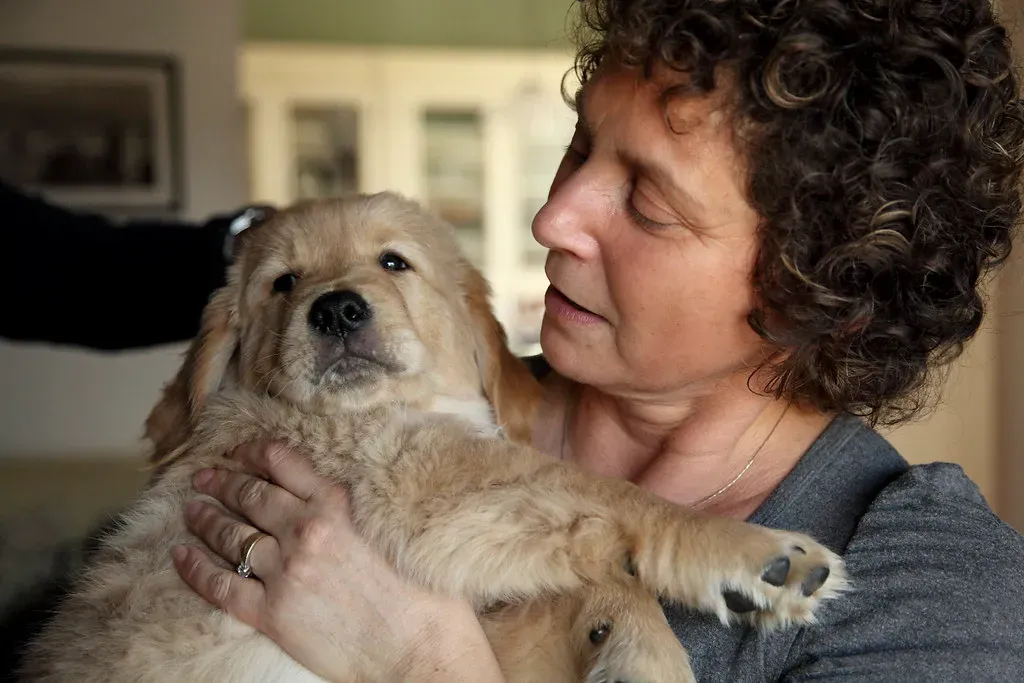
Grandmas love a shadow-dog: “He follows me everywhere, he loves me so much!” What they don’t realize is they’re constantly paying for clinginess. Every time she moves, he follows, and she talks to him or pauses so he can catch up – that’s attention, and attention is currency.
To a dog, this confirms that staying glued to a human is the safest, most rewarding option available. Back home, when he hits a normal routine again – alone time, office hours, a crate – he can suddenly struggle hard. Whining, pacing, scratching, even mild separation anxiety, all intensified by 24 hours of nonstop contact that just got yanked away.
#4 – Learning That Rules Change Depending on the Human
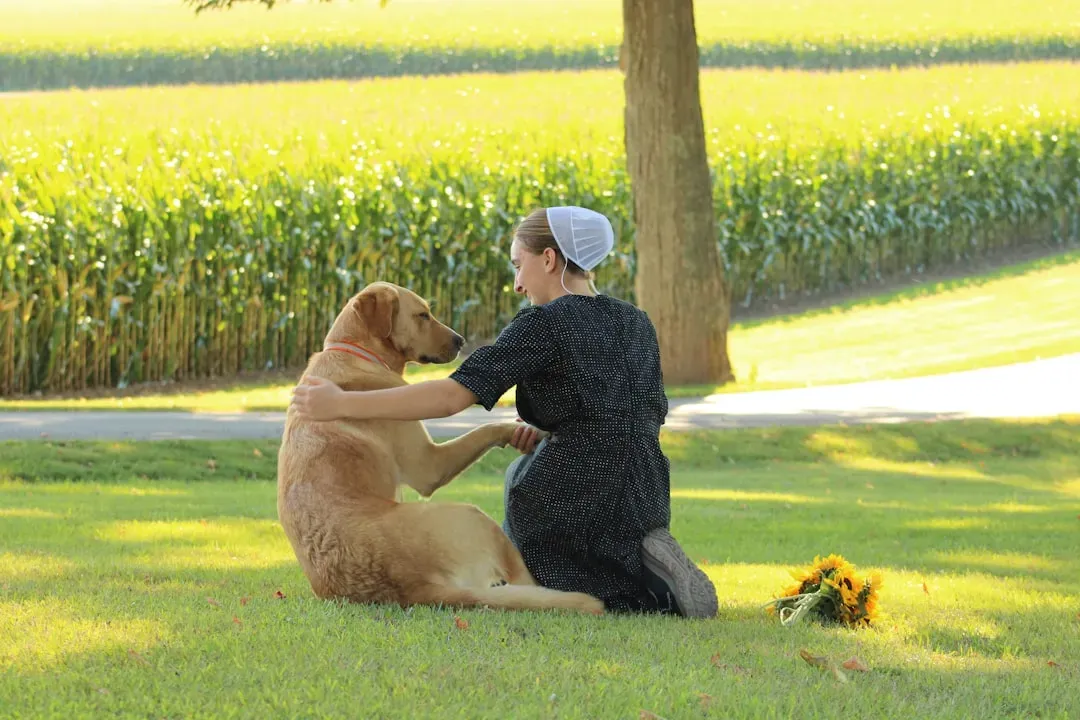
This one’s easy to miss: dogs quickly learn that rules aren’t universal, they’re person-specific. At Grandma’s, countersurfing gets a chuckle, jumping up earns face kisses, and ignoring “sit” still gets him the treat anyway.
Dogs are remarkably good at tracking who enforces what. After a day of this, he comes home less responsive, and you say, “He only listens when he wants to.” What actually happened is more complicated – he’s learned to test the inconsistent humans and repeat whatever worked elsewhere. Inconsistent rules are more stressful for a dog than strict ones, because he never quite knows where the real line is.
#3 – Sniffing Out Every Crinkly Bag as “Snack Time”
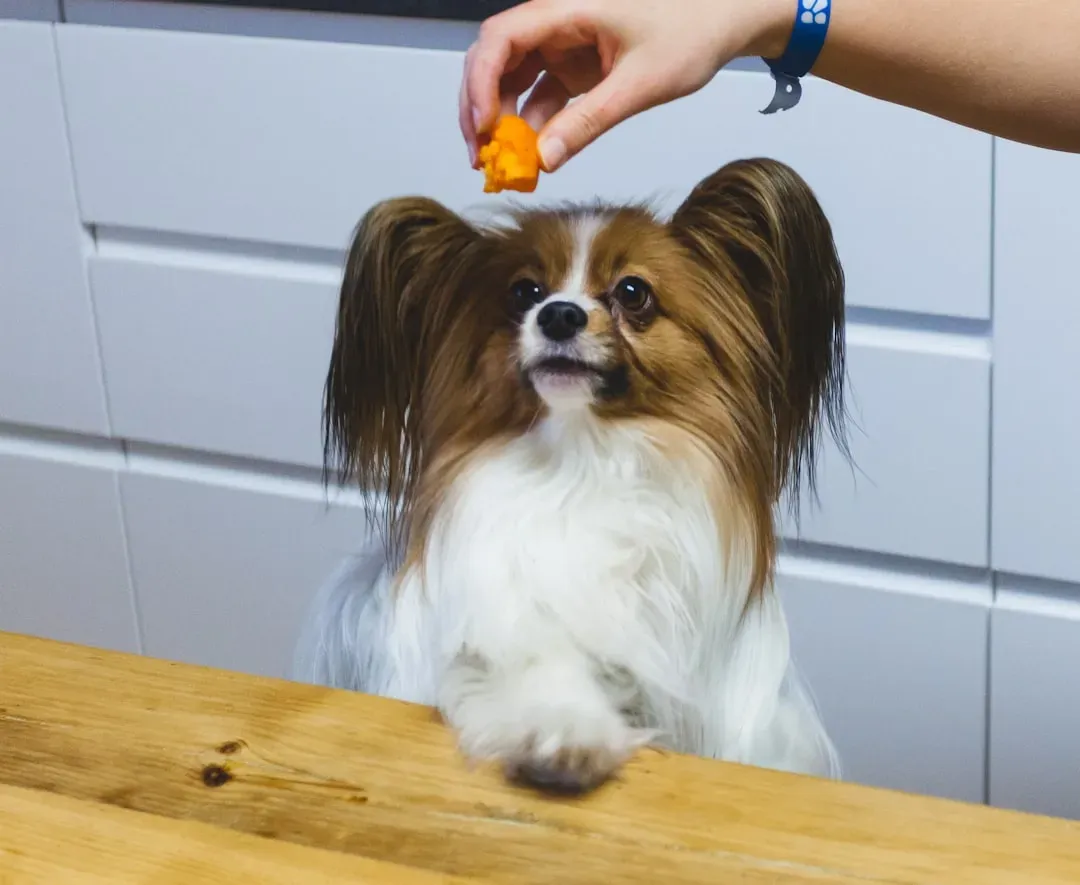
At home, treats might come from one specific jar. At Grandma’s, snacks come from anywhere – chip bags, bread bags, candy wrappers, even pill packets she insists are “not for you, silly!” But the sound is identical: a crinkle means potential food, and dogs attach to sound cues fast.
Within a day, he’s sprinting into the room at the first rustle. Back home, you open a bag of salad and suddenly there’s a dog at your feet, licking his lips. Some behaviorists compare it to a phone notification – once your brain learns the sound, you can’t un-hear it. That neutral rustle is now his favorite ringtone.
#2 – Believing the Yard Is Optional and Potty Pads Are Wherever Grandma Points
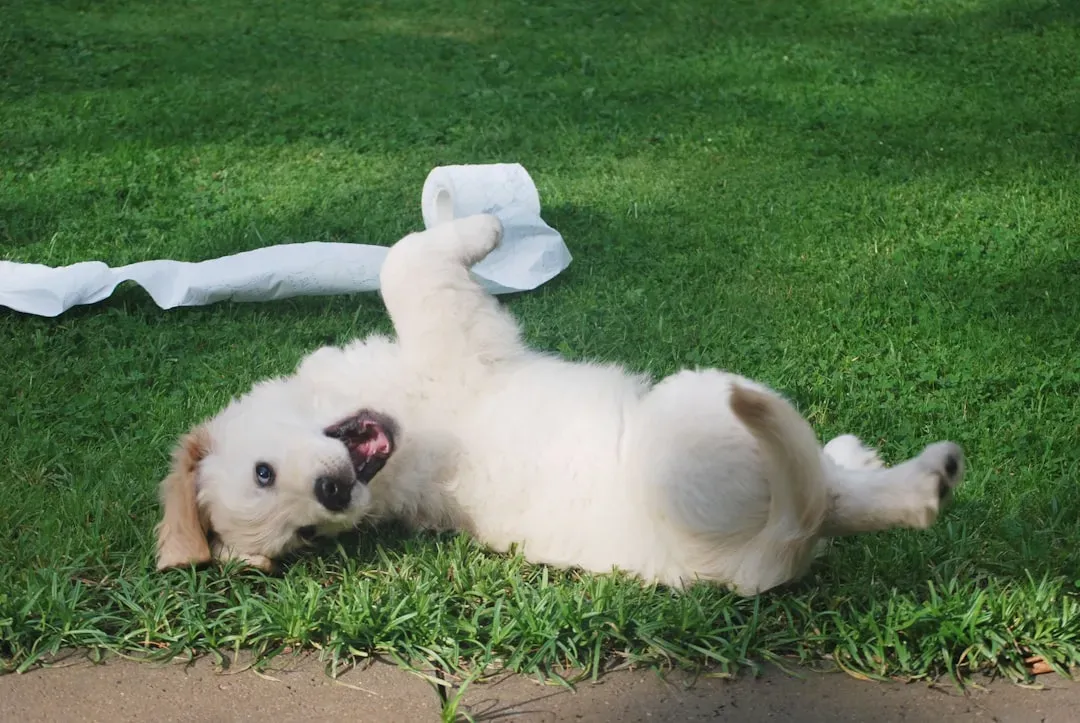
House training runs on consistency. If your dog is used to a scheduled outdoor routine, and Grandma decides “It’s too cold” or “The grass is wet,” she might let him go on a mat, in the garage, or on “just this towel.” To a dog, that’s not a one-time emergency – that’s newly approved territory.
Back home, you may start seeing accidents near the door, in the laundry room, on bath mats – anywhere the surface feels similar. Owners assume the dog “regressed,” but really, Grandma just shifted the criteria: inside became partially okay. Even one day of mixed messages can blur a rule that took weeks to build, especially in puppies or recently trained dogs.
Worth Knowing
- House-training relies on repetition in one consistent spot – changing the surface even once can blur the lesson
- Puppies and recently trained dogs are the most likely to backslide after a single inconsistent day
- An accident after a visit is usually a communication gap, not defiance or true regression
- Going straight back to the normal outdoor schedule helps reset the habit fastest
#1 – Learning That Grandma Is the Soft Spot They Can Work Forever
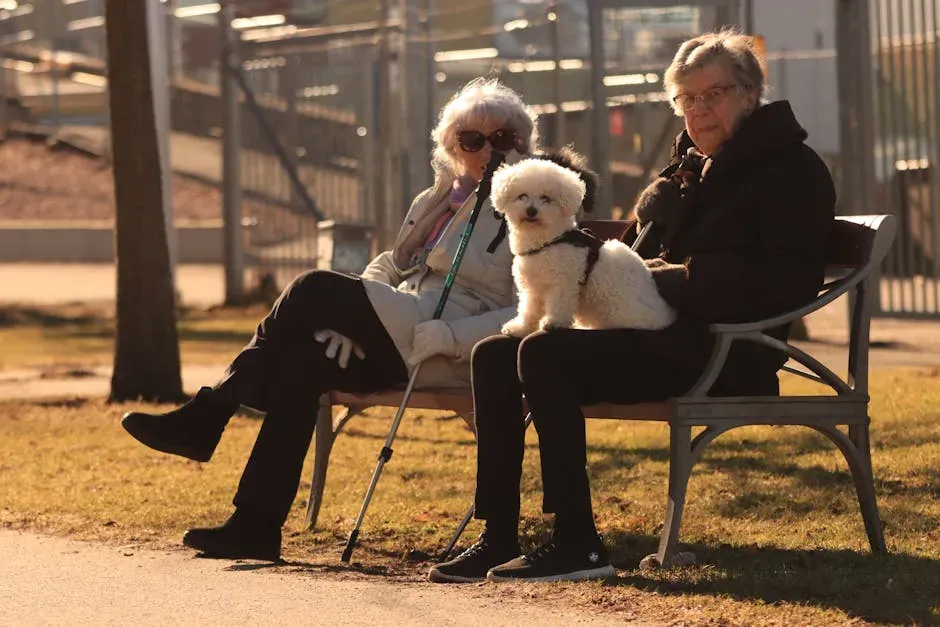
The most powerful habit a dog picks up at Grandma’s isn’t about food or furniture at all – it’s about who he can emotionally manipulate. Dogs clock quickly that Grandma is the softest target in the room: she worries when he looks “sad,” rushes to comfort every whine, and breaks rules the moment he stares long enough.
In a single day, he maps out exactly who he can bend. That doesn’t stay at her house, either – it can shift family dynamics, with your dog ignoring your cues when she’s around or running straight to her the second he gets corrected. It looks adorable – “he loves his grandma!” – but you’re really watching a smart animal quietly reshuffle the household power chart. And once a dog finds one person he can always work, he never really stops trying.
The Bottom Line
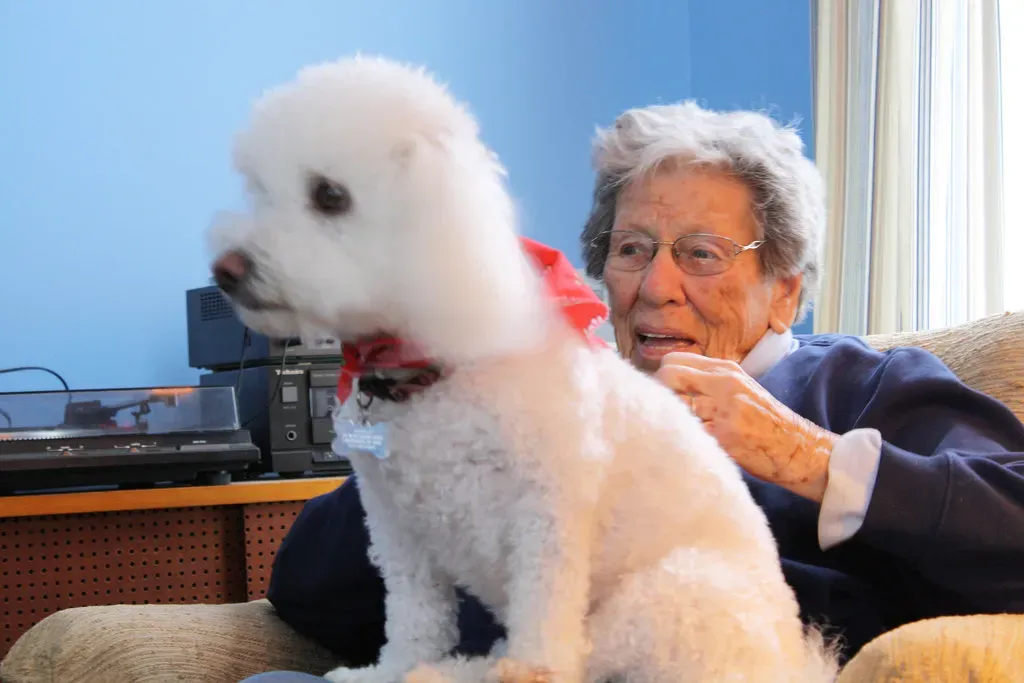
A single day at Grandma’s isn’t “just a visit” to your dog – it’s a crash course in new rules, new rewards, and new loopholes. From begging at the table to door-dashing, from hand-fed meals to casually rewritten house-training, most of these habits aren’t installed over months. They’re installed in a handful of emotional, highly rewarded moments.
None of this makes Grandma the villain. It just makes her inconsistent, and dogs are brutally, impressively fast at exploiting inconsistency. If families don’t agree on the rules before the sleepover, the dog will happily write his own version – and he’ll bring it home with him. So be honest: which of these fifteen habits did your dog smuggle back from Grandma’s house, and which one are you secretly not mad about?


