
Most dog owners already know the drill: daily walks, a bowl of food, maybe a ball tossed across the yard. It checks the boxes. But something quietly important often gets left out of that routine, and your dog probably feels it more than you realize. A tired body doesn’t always mean a settled mind, and dogs that aren’t mentally challenged tend to find their own entertainment, which rarely ends well for your furniture or your nerves.
Dogs are curious and clever, capable of far more than we often give them credit for, and owners who take time to stimulate them with games that encourage brain skills like concentration, memory, and problem solving are doing their pets a genuine service. The good news? You don’t need fancy gear, a huge yard, or hours of free time. These five games are simple enough to start today, and the payoff for both you and your dog is surprisingly big.
#1. The Snuffle Mat: Turning Mealtime Into a Mini Adventure
A snuffle mat is a perfect item for curious dogs. A large, interactive nose work mat with treats hidden all through it can provide lots of mental stimulation and fun for your pet. The concept is beautifully simple: instead of dropping kibble into a bowl and watching your dog inhale it in thirty seconds, you hide the food among the mat’s fabric folds and let your dog work for every single piece.
You can use it as a change of pace for feeding your dog by hiding their mealtime portion of dog kibble, freeze-dried dog food, or air-dried dog food in all the mat’s nooks and crannies, so they get to hunt for their dinner using their sense of smell instead of just eating it from a boring bowl. That act of sniffing and searching is far more tiring than it looks. Sniffing has been shown to not only decrease a dog’s heart rate, decreasing their stress, but it also releases dopamine, the “happy” brain chemical. A calmer, more satisfied dog is often just a snuffle mat away.
#2. Hide and Seek: The Oldest Game That Never Gets Old
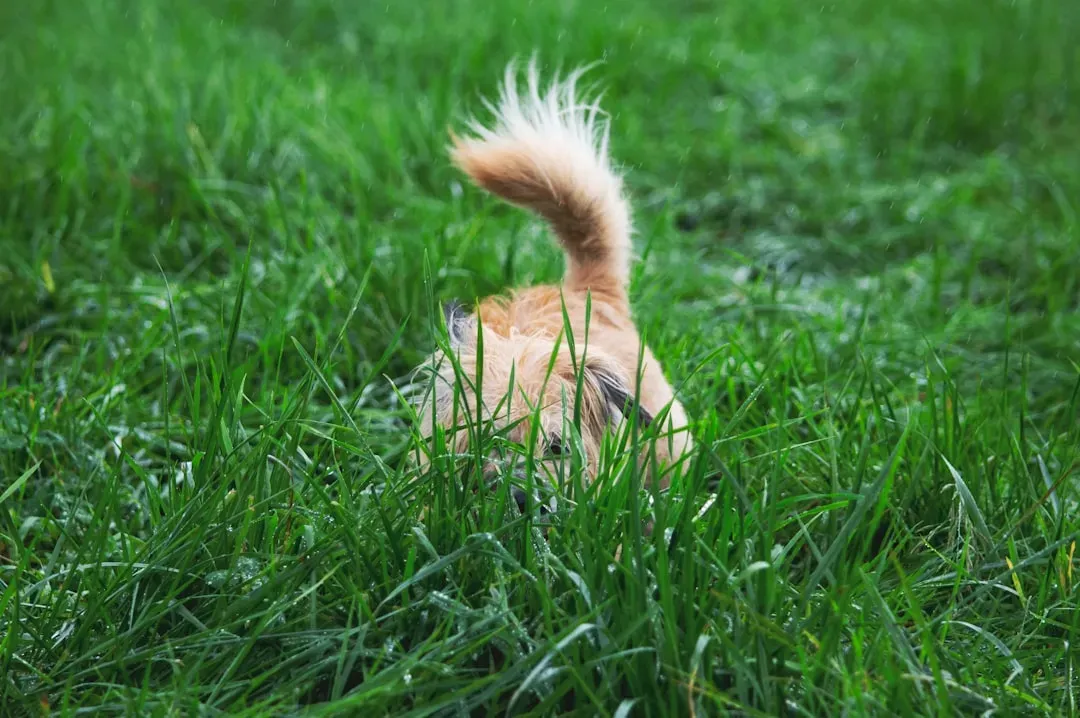
Just like people, dogs can find hide-and-seek to be great fun. It’s easiest to do if your dog knows “stay” or if you have a friend who can help keep the dog in one room while you hide. Once you’re hidden, call your pup to come find you. It sounds almost too simple, but the mental load it places on your dog is real. They have to actively use their nose, their memory of the home’s layout, and their instinct to track, all at once.
Playing hide-and-seek requires two things from your dog: critical thinking skills and a good nose. In a home setting, dogs don’t need to use these skills as often, and having the opportunity to use them is lots of fun for them. When they find you, make sure to use treats, praise, and plenty of excitement to keep your dog engaged and entertained. The best thing about this game is that you can repeat it as many times as you want by changing the hiding spots, or even getting other family members involved. That variety is what keeps it fresh every single time.
#3. The Shell Game: A Three-Cup Challenge That Builds Focus
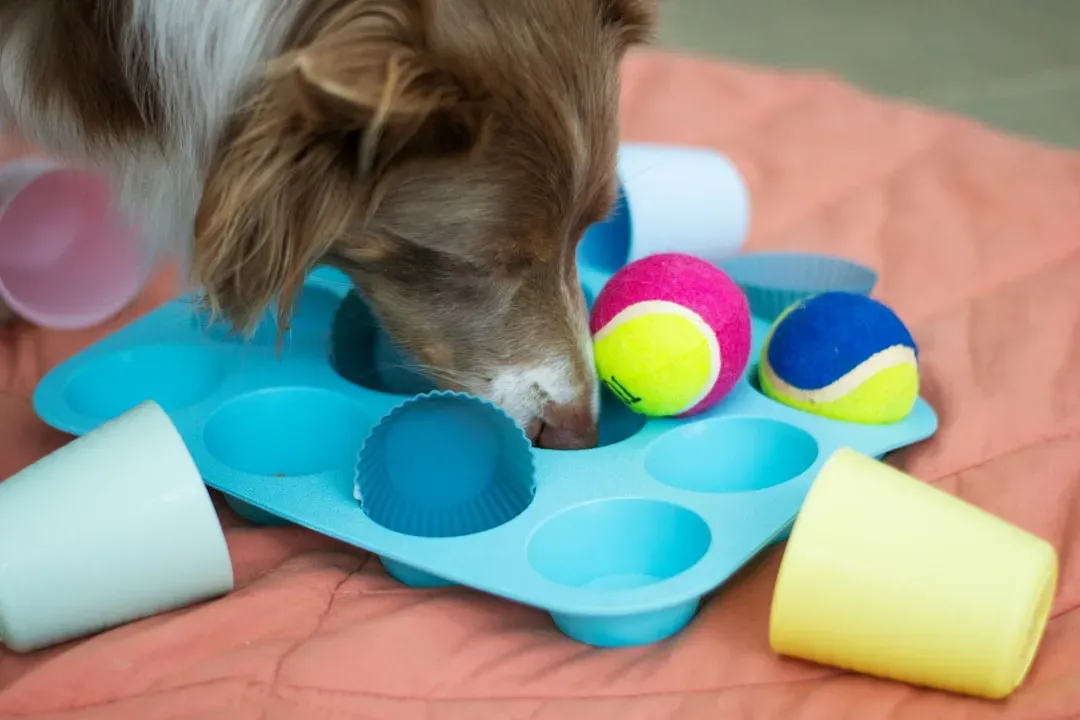
Also known as “the shell game,” this fun dog brain game puts your dog’s concentration to the test. All you need are three cups and either a treat or play toy. Place the treat or toy under one cup and shuffle the cups around while your pup tries to follow which one holds the reward. Once you’re done shuffling, encourage your dog to choose a cup either with their paw or nose. If chosen correctly, they’ll be rewarded with the treat or toy that was under the cup.
What makes this game genuinely clever is how it scales with your dog’s skill level. Start slowly, with just a brief shuffle, and extend the movement as they get sharper. You can also do this without cups: simply show your dog a treat and then pass it from one hand to the other. After a few passes back and forth, challenge your dog to “decide” which hand holds the treat. These interactive activities can improve your dog’s memory, as well as teach them to focus on a specific task for a period of time. That kind of sustained focus is genuinely good for their brain, particularly as they age.
#4. DIY Obstacle Course: Agility Without the Price Tag
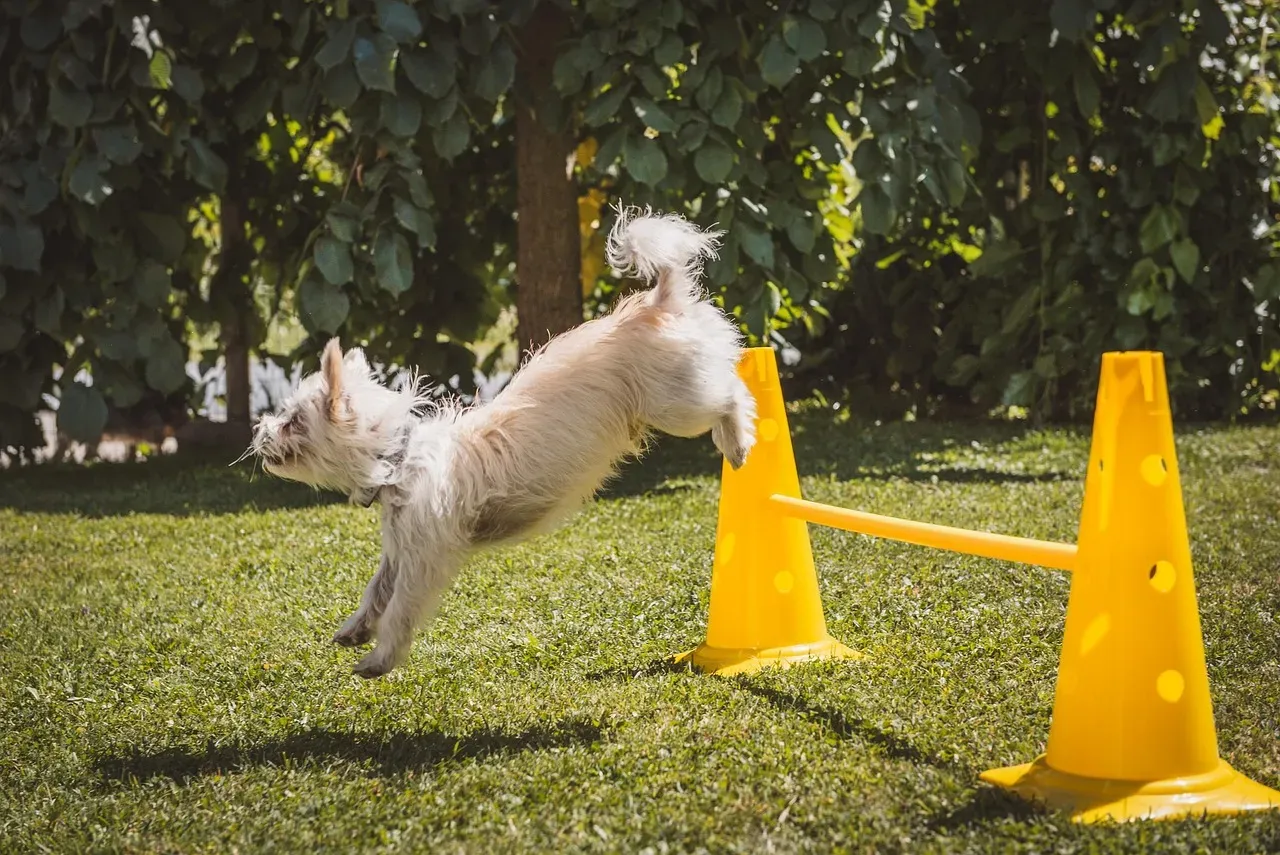
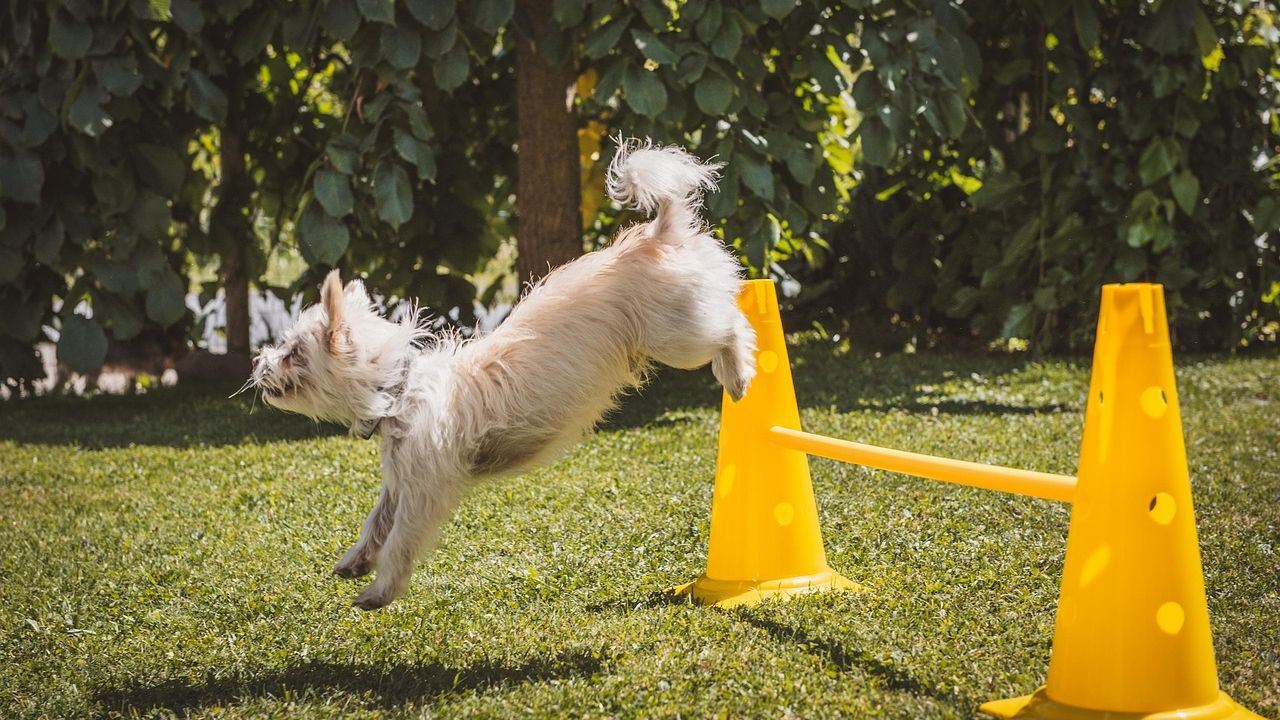
Agility can be a mentally and physically stimulating brain game for your dog. You can easily make an obstacle course out of common household objects that are safe for dogs, or you could go all out and buy a dog agility set. Set up your dining room chairs and have your dog weave through them, or set up a broom or mop to have them jump over. It requires almost nothing in terms of preparation, and the combination of physical movement and having to follow your cues makes it a genuinely full-body and full-brain experience.
There are many benefits of creating obstacle course games for your dog to engage in. Not only do they help to train the mind, they also improve agility and physical fitness. You can utilise household objects like chairs, bed sheets, mops, or brooms to make a fun obstacle course in the house or garden. Your dog will be following your cues to get through the course, but they’ll be having so much fun that they won’t even realize you’re training them. That’s the sweet spot, training disguised as play, and it’s one of the most effective combinations there is.
#5. Trick Training Sessions: Short, Sharp, and Surprisingly Effective
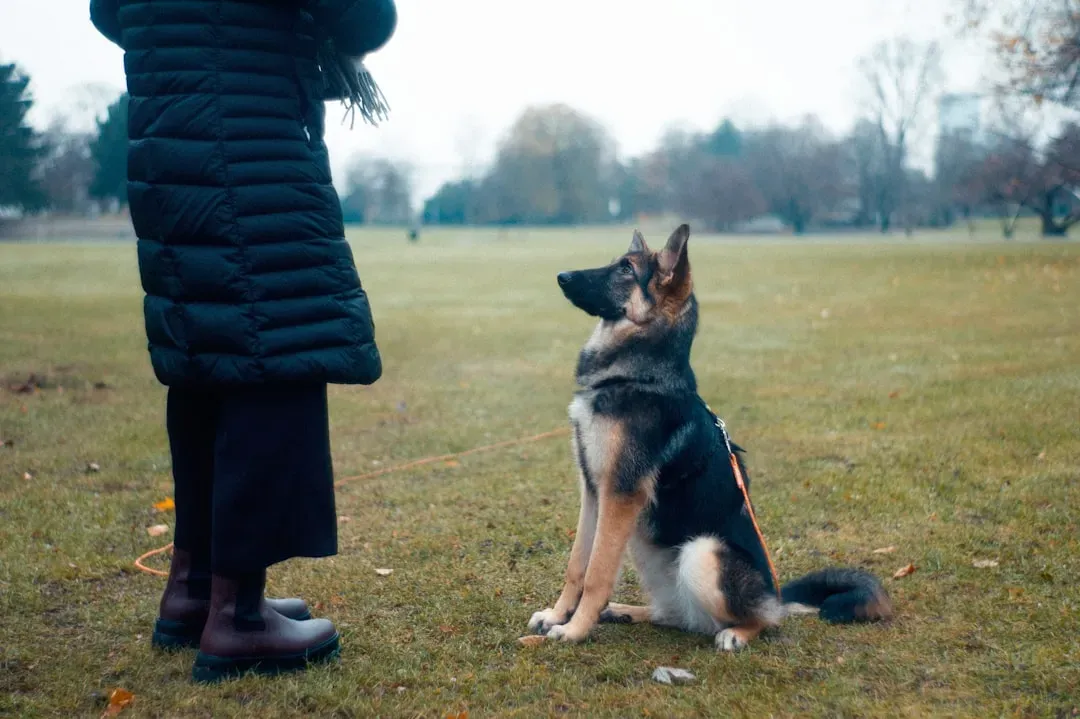
One of the simplest ways to provide mental stimulation for dogs is to do some training on a daily basis. For this purpose, it doesn’t really matter what cues you are teaching your dog. Asking her to pay attention and figure out what you want her to do is what engages her brain and gets her thinking. A ten-minute training session can leave a dog noticeably calmer and more satisfied than a longer walk, simply because it demands a different kind of effort.
Training not only tires out your pup and teaches them new skills, but it’s also one of the best ways to enrich their mind. Most dogs love picking up new tricks and abilities, and the praise and love you give them for succeeding will make them feel even more happy and fulfilled. Even 10 minutes of training a day can provide incredible stimulation for your pup. Always use positive reinforcement such as praise, treats, and affection when training your dog to ensure it always feels fun. The beauty of trick training is that it truly never runs out of content. There’s always something new to learn, and the learning itself is the reward.
Why Any of This Matters More Than You Might Think

Mental stimulation is as important for dogs as any physical activity and has been shown to improve their mood, behaviour, and even sleep. Incorporating games and play into the time you spend with your dog not only creates bonding moments between you, but can provide that all-important mental stimulation and engagement. Without some form of mental engagement, dogs can become easily bored, frustrated, unconfident, and in turn develop bad habits. That chewed sofa leg or the relentless barking at nothing is rarely defiance. It’s usually a cry for something more interesting to do.
Mental enrichment can improve your furry pal’s mood, reduce unwanted behaviors, and even slow cognitive decline as he ages. While vets tend to recommend between 20 and 30 minutes of mental stimulation a day, the amount your dog needs will depend on a number of factors including age, breed, size, and activity level. That’s not a huge ask. A few minutes with a snuffle mat, a quick round of hide and seek, or even a short trick session can genuinely shift the energy in your home for the better.
A Final Thought
There’s a version of dog ownership that stops at the basics and calls it enough. Then there’s the version where you notice your dog perk up the moment you grab those three cups, or watch them tear through the house on a scent trail with absolute, unbridled joy. That version is better for them, but honestly, it’s more fun for you too.
A dog that receives regular mental stimulation is generally happier, healthier, and better behaved. Engaging your dog’s mind helps prevent boredom-related behaviors like chewing, barking, or digging. None of these five games require much. What they do require is a little intention, a few minutes of your time, and the willingness to meet your dog where their curiosity actually lives. Start with just one today. You’ll be surprised how quickly your dog tells you they want more.


