

Most dog owners have a moment, at some point, where they look at their dog and think: “There’s something going on in there.” Maybe it was the time your dog figured out how to open the pantry door, or the quiet way they showed up beside you right when you needed them most. That gut feeling isn’t just wishful thinking.
Dog cognition is one of the fastest-growing areas of animal science. Researchers have been finding, consistently, that dogs process the world in ways that are more complex and nuanced than many of us once assumed. Canine intelligence isn’t just about tricks. It’s about problem-solving, memory, adaptability, and how well a dog reads the humans in their life. The clues are often hiding in plain sight, in the habits you probably see every single day.
#1: Solving Problems Without Being Shown How

One of the clearest markers of a high-functioning canine mind is the ability to figure things out independently. The smartest dogs are able to solve problems without being taught. You’ve likely seen this in action: a dog who works out how to nudge a gate latch, finds a creative way around a barrier, or gets a treat out of a container that was never meant to be opened.
Smart pets are innately great problem solvers. To test a pup’s problem-solving abilities, puzzle toys that must be manipulated in a certain way to get a treat are a useful measure. If they can solve it without your help, that’s a strong signal of above-average intelligence. What’s worth noting is that these dogs don’t just get lucky. They observe, pause, attempt, adjust. That methodical approach to a challenge is exactly what separates a genuinely sharp dog from one that’s simply persistent.
#2: Reading Your Emotions With Uncanny Accuracy

Intelligent dogs are very good at sensing and interpreting your emotions. Had an awful day at work? A fight with your spouse? A smart dog will read your sadness and step up as an emotional support presence by taking steps to comfort you, such as cuddling up or refusing to leave your side until things settle. This isn’t coincidence. It’s emotional attunement built on careful observation over time.
There is evidence that dogs can discriminate the emotional expressions of human faces, and they seem to respond to faces in somewhat the same way as humans do. When a dog consistently adjusts its behavior based on your mood, that’s a form of social intelligence that’s remarkably sophisticated. It’s the kind of perceptiveness that takes real cognitive effort, even if it looks effortless from the outside.
#3: Observing Your Routine and Anticipating What Comes Next

Highly intelligent dogs are able to learn your habits, body language, tone, and micro-signals. They watch you closely, almost as if studying your actions. If your dog starts pacing near the door before you’ve touched your keys, or gets excited the moment you put on a specific pair of shoes, that’s not luck. That’s pattern recognition.
Being highly observant is another characteristic that smart dogs share. When you pull out your suitcase, a sharp dog recognizes that it’s a sign something is about to change, like you’re going on a trip. They may show their understanding by trying to jump into your suitcase, or they might stick unusually close to you. Dogs who consistently pick up on these environmental cues have essentially mapped out your daily life in their minds. That’s memory, inference, and anticipation working together in real time.
#4: Remembering Commands and Skills Learned Long Ago
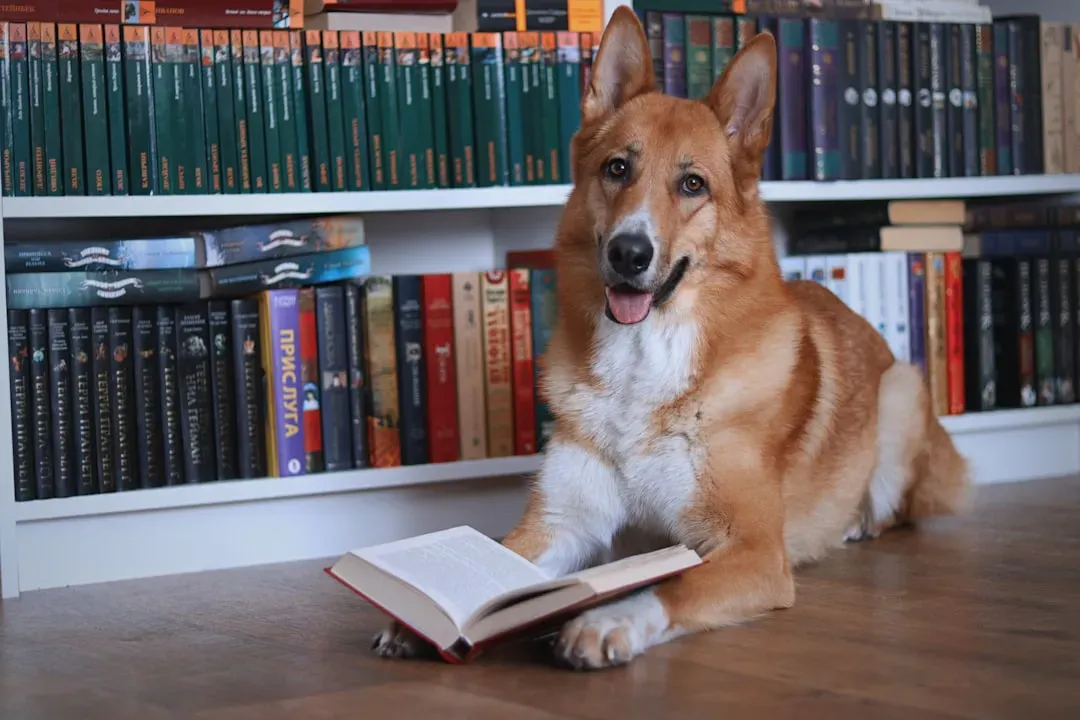
A really smart dog will remember commands over time, even if they haven’t been used in a while. This kind of long-term retention is genuinely impressive. Many dog owners assume their pet forgets skills after weeks without practice, but for cognitively sharp dogs, that’s simply not the case.
When given the “Repeat!” command, even up to an hour after performing a spontaneous action, dogs recalled and reproduced those behaviors. This suggests that their memory involves recalling past experiences rather than simply linking commands to specific actions. That distinction matters. A dog retrieving a real memory is doing something far more complex than muscle-memory repetition. It reflects a depth of mental processing that most people underestimate in their pets.
#5: Using Deliberate Communication to Get What They Want
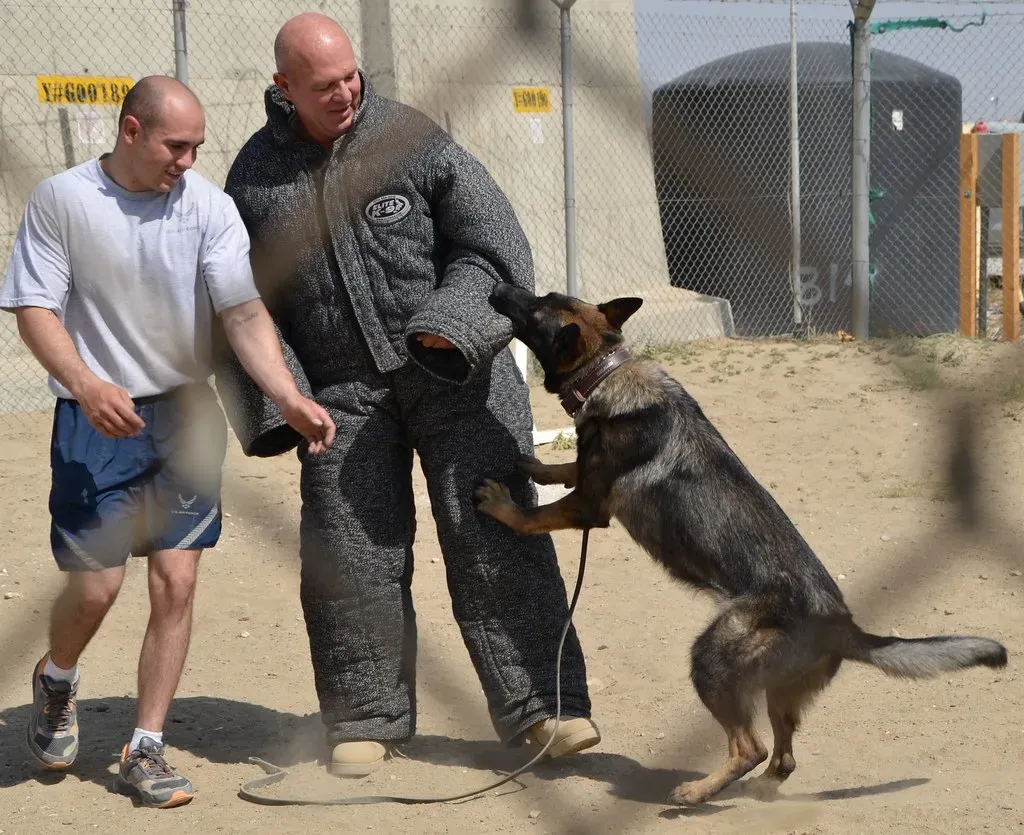
Smart dogs will initiate games by communicating their desires. Does your dog “speak,” pat you, bring you a toy, or spontaneously use another behavior you’ve taught them to get your attention and prompt a specific response? There’s a meaningful difference between a dog that barks wildly at everything and one that selects a specific, learned signal to get a specific result. The second dog is thinking strategically.
Dogs love attention, and smart dogs will know exactly how to get it. Intelligent dogs will place their head under your hand and bump it to prompt a scratch behind the ears, or they may even “pet” you as an example of how they want you to pet them. This intentional, targeted communication shows an understanding of cause and effect that goes well beyond basic instinct. These dogs have essentially figured out that humans respond to specific inputs, and they use that knowledge on purpose.
#6: Showing Impressive Impulse Control

Genius-level dogs exhibit notably better impulse control than average dogs. Inhibitory control may be an essential cognitive building block underlying top-tier canine ability, as it requires dogs to suppress their preference for certain features of objects in favor of completing a task correctly. This is the kind of self-regulation that most people associate with high human intelligence, and it shows up clearly in the most capable dogs.
With adaptive intelligence, a dog’s thought processes change based on the environment. This applies to working dogs, such as service dogs that assist the visually impaired. Even when instructed to cross a street, they may refuse if a car is approaching. Pausing, overriding an impulse, and making the smarter choice under pressure is a genuinely high cognitive act. The next time your dog waits patiently instead of lunging, that restraint might be telling you something.
#7: Learning by Watching Others

Dogs have been shown to learn by making inferences in a similar way to children, and they have the ability to train themselves and learn behaviors through watching and interacting with other dogs. What’s more surprising is that this observational learning extends beyond their own species. Dogs can learn from observing humans as well. Having spent thousands of years interacting with people, dogs are quite adept at understanding human messages even without direct training.
A dog who picks up a new behavior simply by watching you or another dog demonstrates that it’s storing and processing information actively, not just reacting. There is some evidence that dogs demonstrate a theory of mind by engaging in deception. For example, one observer reported that a dog hid a stolen treat by sitting on it until the rightful owner left the room. That kind of behavior requires a dog to model the awareness of another individual, which is a remarkably advanced cognitive feat.
#8: Displaying Curiosity, Focus, and Self-Directed Exploration

A study from the University of Portsmouth focused on “label-learner” dogs and identified that the smartest dogs are curious, focused, and exhibit self-control. Curiosity in dogs looks like sustained interest in new objects, willingness to approach unfamiliar situations, and the drive to investigate rather than retreat. Label-learner dogs spent significantly longer interacting with new objects and looked at them with more frequency, indicating to researchers that these dogs are more curious than their average counterparts.
The label-learner dogs also exhibited targeted interest in specific objects, while the control group dogs interacted more randomly, leading researchers to conclude that highly intelligent pups are especially focused. There’s a difference between a dog that sniffs everything once and moves on, and one that returns to something new, studies it, and seems to process it before deciding what to do. That second dog is engaged in genuine exploratory cognition. Researchers are further investigating why some “gifted dogs” have cognitive abilities that far surpass their peers, and have proposed a canine “g factor,” a score representing a dog’s cognitive abilities that varies between individuals and over the life span. It’s a concept that sounds very familiar to anyone who’s spent time thinking about human intelligence.
A Final Thought Worth Sitting With

Here’s an honest opinion: we’ve spent decades underestimating dogs. We credited them with loyalty and affection, which they have in abundance, but stopped short of giving them credit for real thinking. The evidence doesn’t support that anymore. Studies have found parallels between dog and human brains, offering some of the first evidence of such similarities beyond primates.
These eight habits aren’t quirks or coincidences. They’re consistent cognitive patterns that researchers are now able to measure, repeat, and verify. Every dog shows intelligence differently, but some pups seem to understand the world around them with uncanny accuracy. Maybe your dog opens doors, studies your every move, or knows the exact moment you pull into the driveway.
The most intelligent dogs aren’t just good at following instructions. They’re paying attention to everything. The way you walk when you’re tired, the sound of a specific car in the street, the exact moment before you reach for the leash. They’ve built a working model of your life, and they live inside it with you. That’s not just smart. That’s something closer to understanding.


