
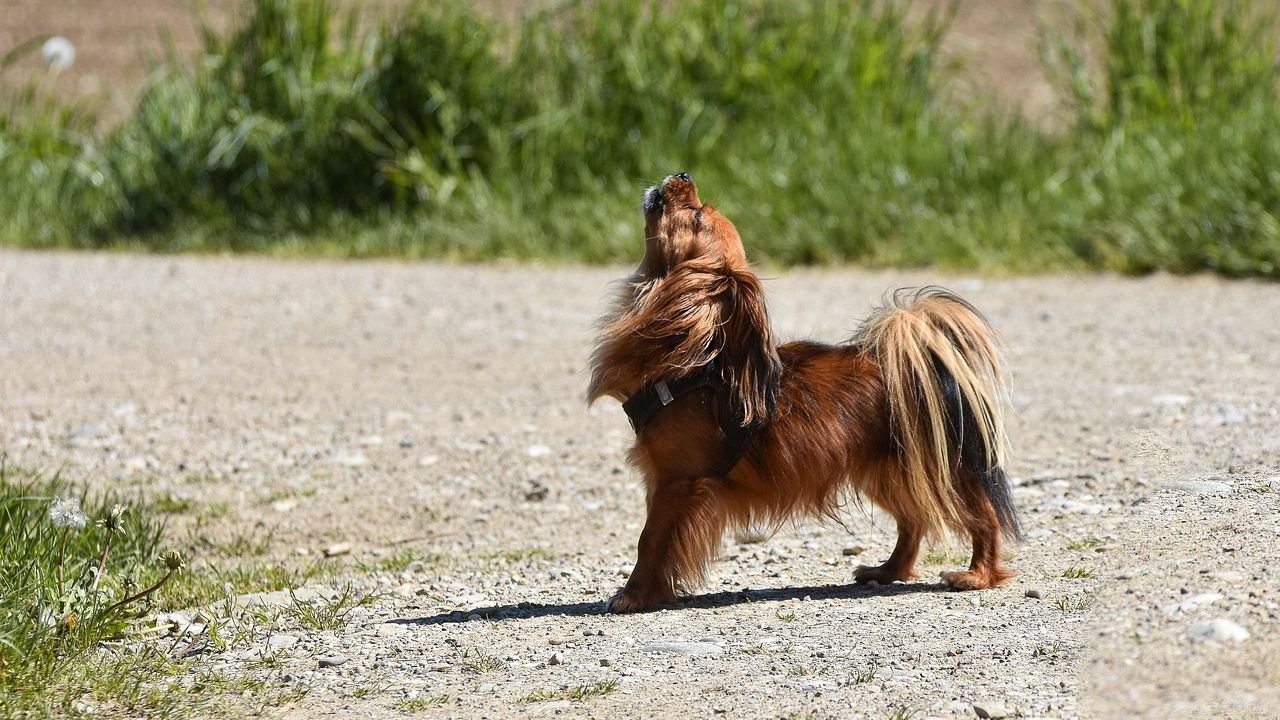
Picture this: you’re sitting in your backyard, watching your dog tilt his head at some faraway sound you can’t hear. His ears swivel like tiny radar dishes, and he’s locked in on something completely invisible to you. It’s one of those breathtaking, slightly humbling reminders that the world your dog experiences is radically different from yours.
The truth is, animals, including your dog, exist inside a rich, layered world of communication that has nothing to do with spoken words. They send messages, receive messages, and stay deeply connected to their world using channels that most humans never even notice. It’s like discovering that everyone around you has been having a full conversation in a language you didn’t even know existed.
So, what exactly is happening out there in that invisible world? Let’s dive in.
The Secret Power of Scent: Your Dog’s Personal Messaging System

Here’s the thing about your dog’s nose. It’s not just a cute, wet button on their face. It’s their primary communication device. Olfactory communication is extremely efficient because odors persist in the environment, allowing animals to acquire information about a signaler without requiring physical proximity or direct interaction. Think of it like leaving a voicemail that anyone can play back for hours, or even days.
Chemical signals are diffused into the environment through anal secretions, pedal glands, urine, and fecal deposits, and this is called scent marking, where individuals leave strong-smelling scents on specific areas to mark their territory. The scent mark contains chemical messages about the sender. Every single lamppost, tree, and fire hydrant on your daily walk is basically a neighborhood bulletin board. Honestly, your dog is reading the local news while you’re just waiting for them to finish.
Dogs use scent marking through urination or defecation to mark their territory and communicate their presence to other animals. Sniffing other dogs’ scent marks can provide information about the other dog’s identity, sex, and reproductive status. So when your dog insists on sniffing that particular patch of grass for what feels like three years, they’re gathering real intelligence. Let them sniff. It matters more than we realize.
The Howl That Travels for Miles: Long-Distance Vocal Communication
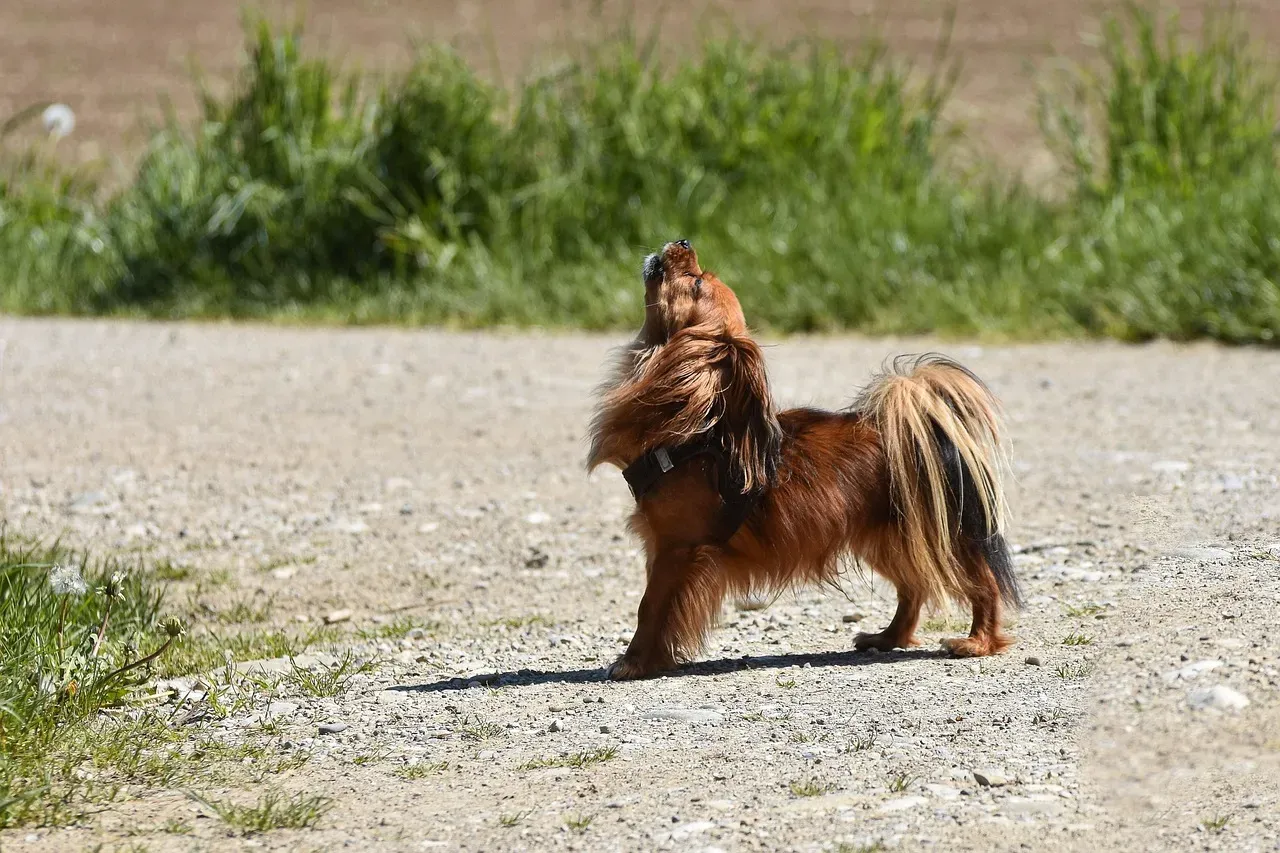
Howling is often used by dogs to communicate over long distances, akin to calling out to locate each other. If you’ve ever heard your dog let out a long, mournful howl when a siren passes by, you’ve witnessed an ancient technology at work. It’s not random. It’s deeply intentional.
Wolves have evolved a much simpler, robust use of acoustics to overcome physical restraints on long-range communication. Howls are adapted to travel and remain detectable and distinct over long distances. Howls fulfill at least three different roles: marking out territory, keeping in touch with other pack members, and expressing the animal’s love of howling. Your dog carries that same ancient wiring.
A yip-howl indicates loneliness and a need for companionship. Howling signals the dog’s presence or marks territory. A bark-howl, consisting of two to three barks followed by a mournful howl, means the dog is relatively isolated and calling for company or a response from another dog. Pay attention to what type of howl your pup produces. Each one is telling you something very specific about how they feel.
Infrasound and Earth Vibrations: The Signals We Can’t Even Feel
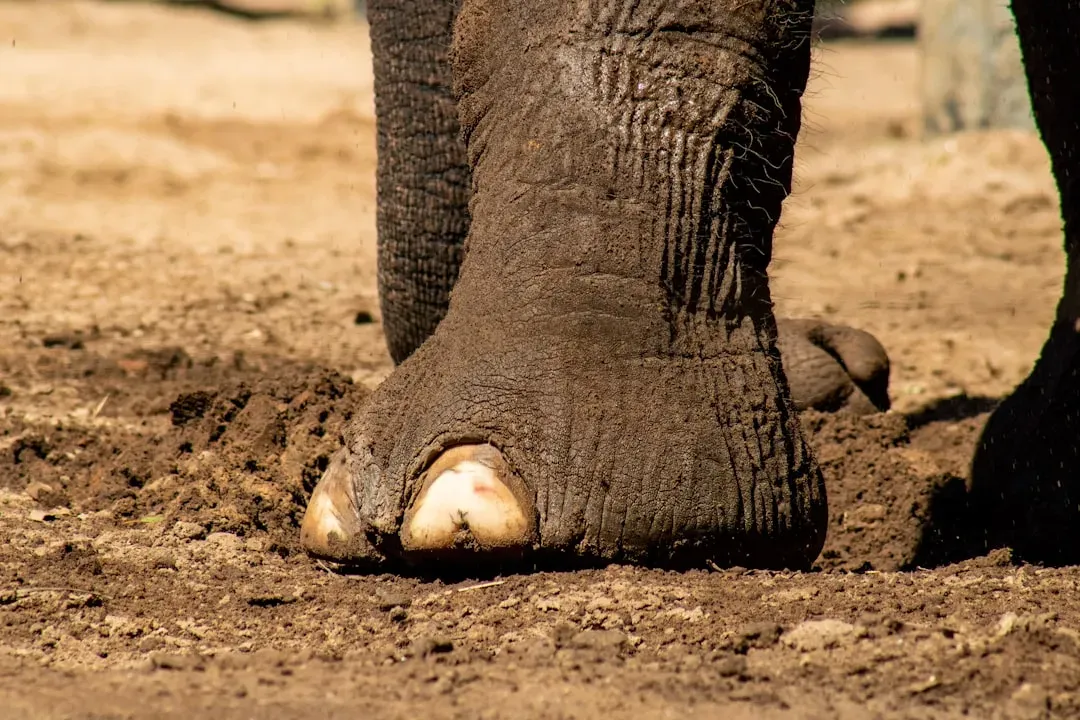
Let’s take a moment to be genuinely astonished by this one. Low-frequency noises, below the frequency that human ears can usually detect, are used by elephants to communicate over long distances. The infrasound frequencies are good for long-distance communication because they travel well through objects instead of being reflected. We’re talking about conversations happening literally under our feet.
Elephants can “listen” through their feet. They are capable of detecting seismic vibrations, which are low-frequency sounds that travel through the ground. When an elephant stomps or trumpets, the sound can travel long distances through the earth. Other elephants, even kilometers away, pick up these signals through sensitive cells in their feet and trunks. It’s hard to say for sure how this must feel to them, but imagine sensing your friend calling you through the ground itself.
A report published in Animals suggests that elephants could hear gathering thunderstorms more than 100 km away and could theoretically make their way toward them. This would be an important survival skill at the end of the dry season in much of sub-Saharan Africa where water is a critical limiting resource. Nature built a GPS system into their bodies. Extraordinary doesn’t begin to cover it.
Reading the Body: How Dogs Speak Without Making a Sound

Unlike in people, canine body postures and olfactory cues are significant components of dog language, while vocal communications are less significant. People are listeners; dogs are watchers. This is such a critical thing to understand as a dog owner. Your dog is constantly watching you, reading you, and responding to the tiniest shifts in your posture and energy.
Tail-wagging seems like an obvious body language signal. If a dog’s tail is wagging, the dog is happy, right? Not exactly. All a wagging tail means is that the dog is emotionally aroused. It could be excitement, but it could also be frustration or something worse. To interpret the dog’s emotions and intentions, look at the speed and direction of the wag, as well as the position of the tail. Let that sink in next time a wagging dog makes you feel instantly safe.
Lip licking when not eating, yawning when not tired, excessive panting when not hot, and sudden scratching when not itchy are all displacement behaviors that indicate rising stress levels. Looking away, turning the head or body away, seeking higher ground, or moving behind their owner all indicate a dog’s desire to increase distance from something stressful. These are the quiet cries for help that too many of us miss every single day.
Chemical Conversations: Pheromones and the Invisible Language of Nature

Perhaps one of the most widespread yet invisible forms of animal communication occurs through chemical signals. Ants leave pheromone trails that guide nestmates to food sources, with a single gram of ant pheromone theoretically capable of leading every ant on Earth along a trail. I know it sounds crazy, but a single gram. Every ant on Earth. Chew on that one.
Mammals like wolves and big cats use scent marking to establish territories, with specialized glands producing distinctive odors that convey information about age, reproductive status, and individual identity. Some female moths can release pheromones that male moths can detect from up to seven miles away, an olfactory feat equivalent to a human smelling a single drop of perfume from across an entire city. Your dog lives in that same chemically rich world, just at a slightly smaller scale.
When a female dog is in estrus, she will urinate more frequently to attract a potential mate. The urine contains information about a female’s reproductive status and also conveys messages to the receiver about the female’s location. Every walk your dog takes is, in a very real sense, a complete social event happening entirely through scent.
The Dance, the Glow, and the Song: Nature’s Most Creative Long-Distance Signals

Honeybees perform the famous “waggle dance” to tell other bees where to find nectar or pollen. The direction of the dance indicates the angle of the food source relative to the sun, and the duration tells how far it is. This complex form of body movement acts like GPS instructions inside a dark beehive. Bees watch and interpret this silent dance to find food over kilometers of distance, all without vocalization. A navigation system built entirely out of movement. No words required.
Whales are the greatest long-distance communicators, with almost all whale species able to communicate over incredibly large distances. One of the most famous species is the humpback whale. The sounds they make are often referred to as “songs” and are considered the longest and most intricate of all in the animal kingdom. The frequency of the humpback whale’s song can reportedly travel thousands of kilometres through the ocean. Songs that cross entire ocean basins. That’s not just survival. That feels like something more.
Humpback whales’ songs can last up to 30 minutes and evolve culturally over time, with new song elements spreading across entire ocean basins through cultural transmission. Think about that: whales share and update their songs like we share music playlists. The animal world is richer, stranger, and more beautiful than we ever give it credit for.
What This Means for You and Your Dog

Here’s the real takeaway for every dog lover reading this. Understanding how animals communicate across distance is not just a fascinating biology lesson. It’s a roadmap to becoming a better, more tuned-in companion for your dog. Because dogs don’t speak human language, the only way to truly comprehend and communicate with them is to learn what they’re telling us through their body and vocal language. Dogs communicate using a complex language of body signals that reflect what they’re thinking and feeling, using these signals to communicate intent and to show their comfort or discomfort.
Dogs don’t just communicate with one body part; they use their entire body as a communication system. A wagging tail combined with a stiff body posture sends a completely different message than the same tail wag with loose, bouncy movement. The same body language signal can mean different things in different contexts. So slow down. Watch your dog. The message is always there if you’re willing to look for it.
Prevention tip worth remembering: if your dog is consistently showing displacement behaviors like yawning, lip licking, or looking away, it’s not stubbornness. It’s a cry for more space or reassurance. Responding with patience rather than frustration changes everything about your relationship.
Conclusion: Learning to Listen Without Words

The world of animal communication is vast, layered, and genuinely awe-inspiring. From the elephant sending seismic rumbles through African soil to your dog quietly leaving their signature scent on every corner of your street, life is crackling with messages we barely detect. We share this planet with creatures who have mastered the art of connection without ever speaking a single word.
For dog lovers, this knowledge is a gift. Your dog is never silent. They are always communicating, always watching, always telling you exactly how they feel in the only language they know. The question is simply whether we are paying close enough attention to hear them.
Next time your dog pauses on a walk, tilts their head, or lets out a long, soulful howl into the evening sky, don’t rush them. They are not wasting time. They are having a full conversation with a world you can’t quite see yet. What would you do if you could understand every word? Tell us in the comments.


