
Why Your Dog Stares at You While Eating: It’s Not Just About the Food
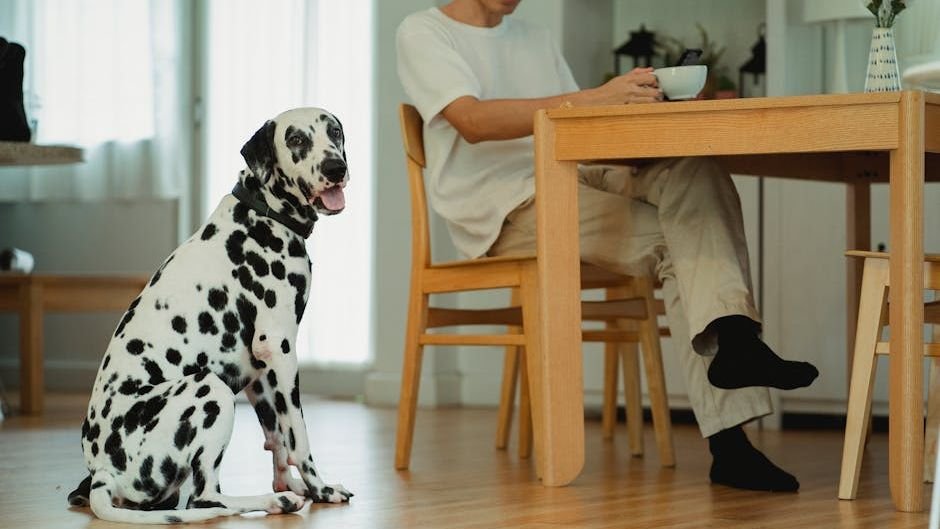
Picture this. You’ve just settled in for a quiet dinner. Fork in hand, meal smelling amazing. Then you feel it – that unmistakable, laser-focused gaze drilling into the side of your face. You look over. There’s your dog, perfectly still, eyes wide, watching your every bite like you’re the most fascinating creature on the planet.
Most of us laugh it off and assume it’s pure hunger. Honestly, that’s the obvious guess. But the real story behind that stare is far more interesting, and once you understand it, you’ll never look at your dog the same way again during mealtime. Let’s dive in.
Your Dog Is Speaking a Language You Might Be Missing
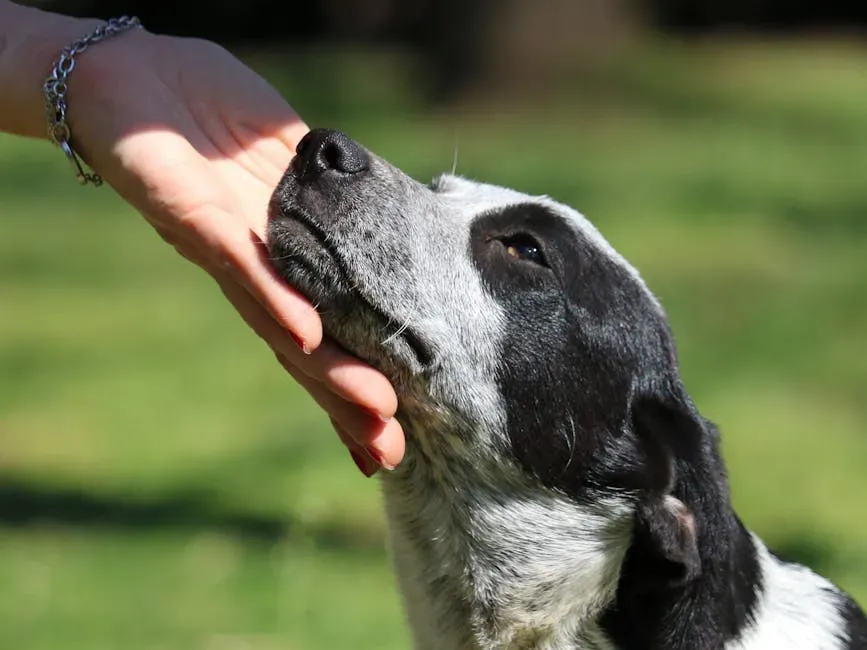
More than almost any other animal on earth, dogs are deeply in tune with humans. They sense our moods, follow our pointing gestures, and constantly read us for information about what’s going to happen next. That mealtime stare? It’s part of that same communication system – not random, not mindless.
When your dog stares at you while eating, they’re not merely looking – they’re communicating. The context of that stare matters greatly. Is your dog relaxed, tail wagging gently, ears neutral? Those accompanying signals tell you everything about what the stare actually means.
A dog with a relaxed body, a gently wagging tail, and soft eyes is communicating something very different from one that is tense, whining, or pacing. Learning to read those accompanying signals gives owners a far more accurate window into what their dog is actually expressing. Think of it like learning a new dialect – once you get it, conversations get a whole lot clearer.
The Science of the Stare: It’s Actually a Love Hormone Loop
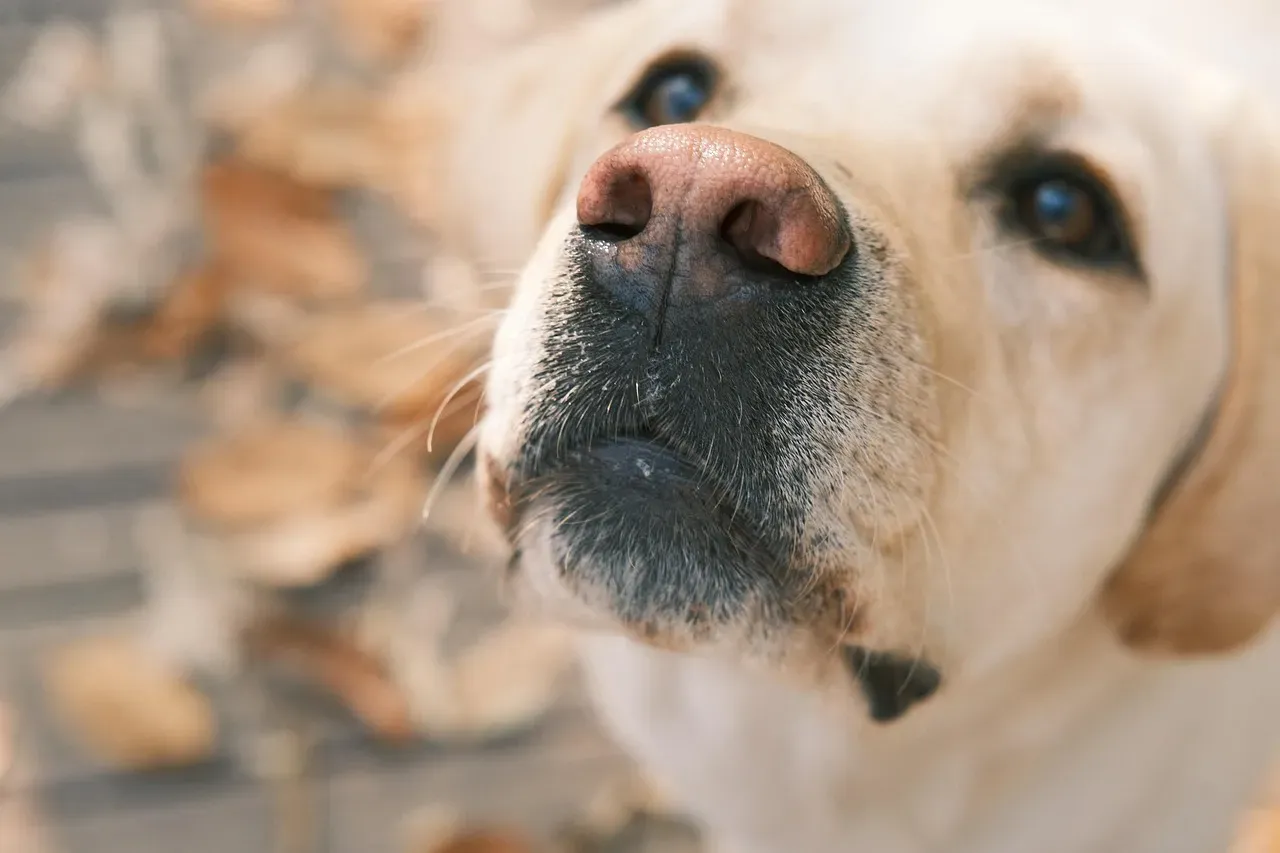
Here’s the thing – there is hard science behind that soulful gaze your dog fixes on you over dinner. Human-like modes of communication, including mutual gaze, in dogs may have been acquired during domestication with humans. Research shows that gazing behavior from dogs increased oxytocin concentrations in owners, which consequently facilitated owners’ affiliation and increased oxytocin concentration in dogs.
Scientists have found that the connections between humans and their dogs have the same biochemical basis as the mother-child bond, and it’s strengthened by the same thing: a loving gaze. A study in Science examined the impact of the gaze in dogs and their owners and found that those puppy dog eyes are even more meaningful than we thought.
Researchers found that when owners and their canine companions gazed into one another’s eyes during a 30-minute period, levels of oxytocin increased in both the humans and the dogs. So when your dog stares at you at dinner, you’re both getting a genuine biochemical hit of love. I know that sounds almost too sweet to be true – but it really is.
Instinct, Pack History, and Why Mealtimes Are Sacred
Your dog’s ancestors didn’t eat alone in a quiet corner. This behavior has roots in wild ancestry. Dogs evolved from wolves, who hunted in packs and followed a social hierarchy. Dominant pack members typically ate first while lower-ranking wolves had to wait for their turn. Staring was a passive way to show interest – essentially a polite request for leftovers. In your home, your dog sees you as the pack leader and may be doing the same thing: quietly waiting and hoping for leftovers.
In ethological circles, the term “affiliative food begging” describes this kind of behavior – not just “feed me” but “I’m with you.” The dog is saying, I trust you, I’m part of your circle. That’s a deeply different thing from simple begging, and it deserves a different kind of response from us.
When the Stare Is a Learned Habit (And What to Do About It)
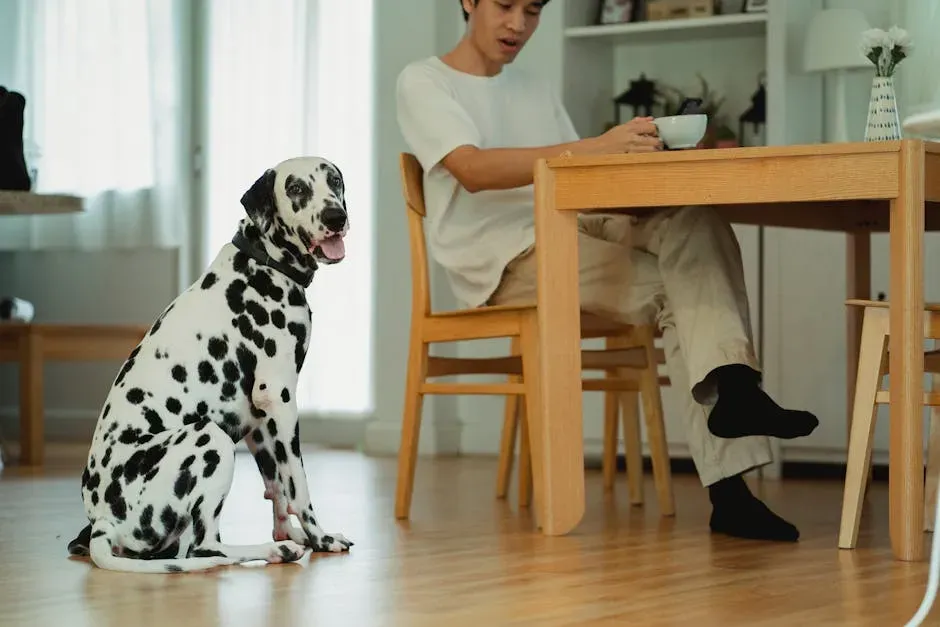
Let’s be real – not every mealtime stare is a love poem. Sometimes, we accidentally train our dogs to stare at us. If you’ve ever given your dog a bit of your food – crumbs, leftovers, or a little taste – then you’ve, without meaning to, taught them that staring at you equals getting food. Every time you reward the stare with a treat, it strengthens that habit.
Whether you should stop your dog from staring depends on your pup’s behavior, your household rules, and whether it’s interfering with your mealtime peace. If your dog quietly watches from a distance without whining, pawing, or jumping, the behavior is usually harmless. They’re just curious and hopeful. But if the staring turns into vocal begging, table-surfing, or nose-in-your-plate behavior, it’s time to set some boundaries.
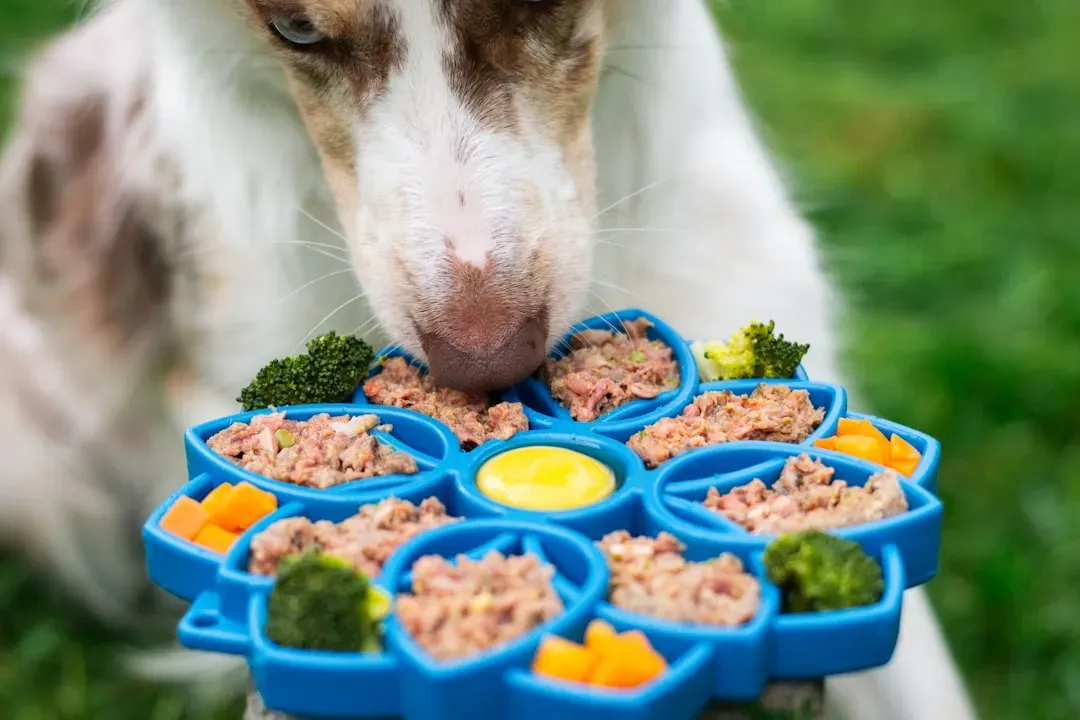
Offering a long-lasting chew, puzzle toy, or stuffed treat can keep your dog busy while you eat. These distractions can help shift their focus and make mealtimes more peaceful for both of you. It can be tempting to sneak your dog a bite while you eat, but even a one-time treat from your plate reinforces the idea that staring works. If you’d like to share a bit of dog-safe human food, place it in their bowl, away from the dining area.
When to Take the Stare More Seriously
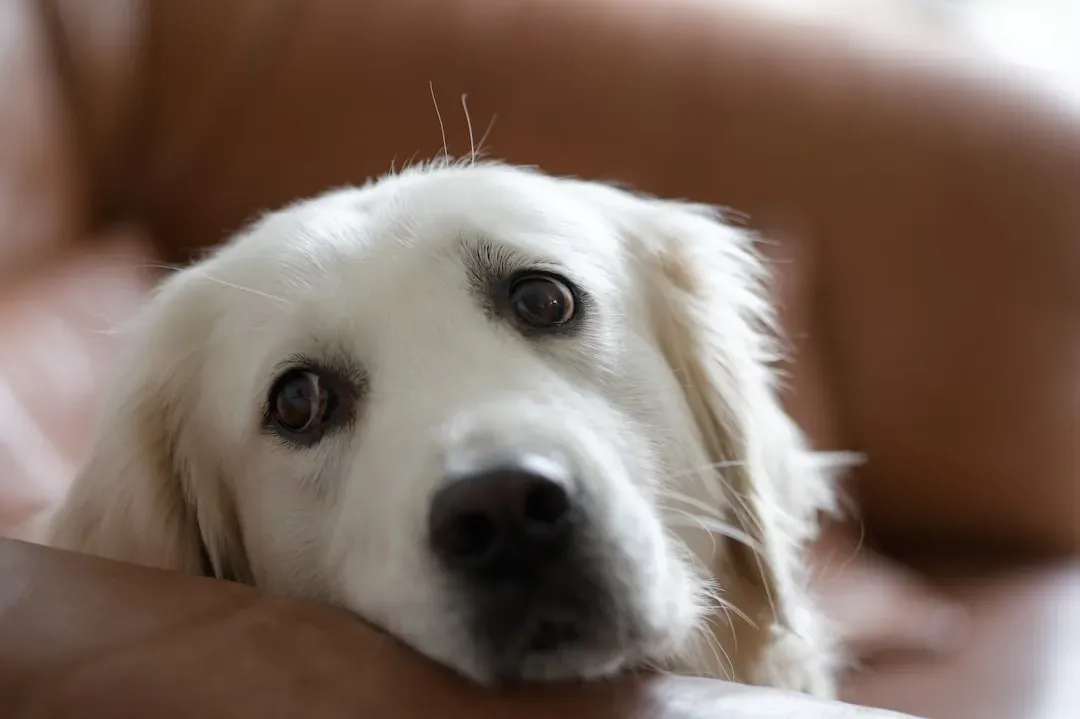
Most of the time, the mealtime stare is completely harmless – even endearing. But occasionally, it can be a signal worth paying closer attention to. In some cases, staring is part of food guarding – a behavior where a dog becomes protective of their meal. Signs include rigid posture, low growling, tense facial muscles, and slow backing away while maintaining eye contact. This isn’t necessarily aggression, but rather an instinctual attempt to protect a valuable resource.
Sometimes, particularly in older dogs, a dog that is regularly staring at their owner, or is staring into space, could be a sign of a form of dementia. If they seem confused, keep having accidents inside the house, or show signs of memory loss or changes in their behaviour, activity, or feeding and sleeping patterns, you should speak to your vet for advice.
Never punish a dog for staring, especially around food. This can increase anxiety and worsen guarding tendencies. It’s worth pausing and asking yourself: is my dog relaxed and soft, or tense and watchful? That one distinction changes everything about how you should respond.
A Final Thought Worth Sitting With
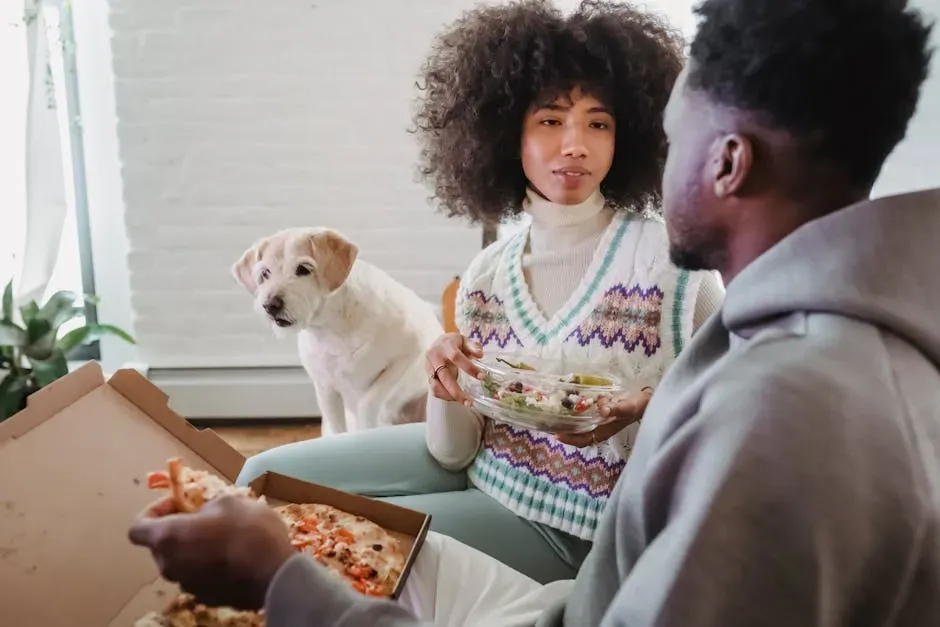
The next time your dog locks eyes with you over your plate of pasta, resist the urge to just look away. Dogs are deeply social animals that have spent thousands of years co-evolving alongside humans, developing a remarkable ability to read our cues, expressions, and body language. During a shared mealtime, a dog may be watching you not out of hunger, but as an expression of social bonding. The act of looking at you during a communal activity can be a form of checking in, confirming that the family unit is present and that everything is okay.
There’s something quietly remarkable about an animal that looks at you, trusts you, and chooses to be near you – not because it has to, but because you are its whole world. That oxytocin release is real. The human-dog relationship becomes more than feeding and walking – it becomes an emotional partnership.
So the next time those big eyes find yours across the dinner table, maybe don’t shoo them away too quickly. Look back. Hold the gaze for a moment. You might just be deepening one of the most ancient bonds on earth – one quiet, loving stare at a time. What would you have guessed was behind those eyes? Tell us in the comments.