
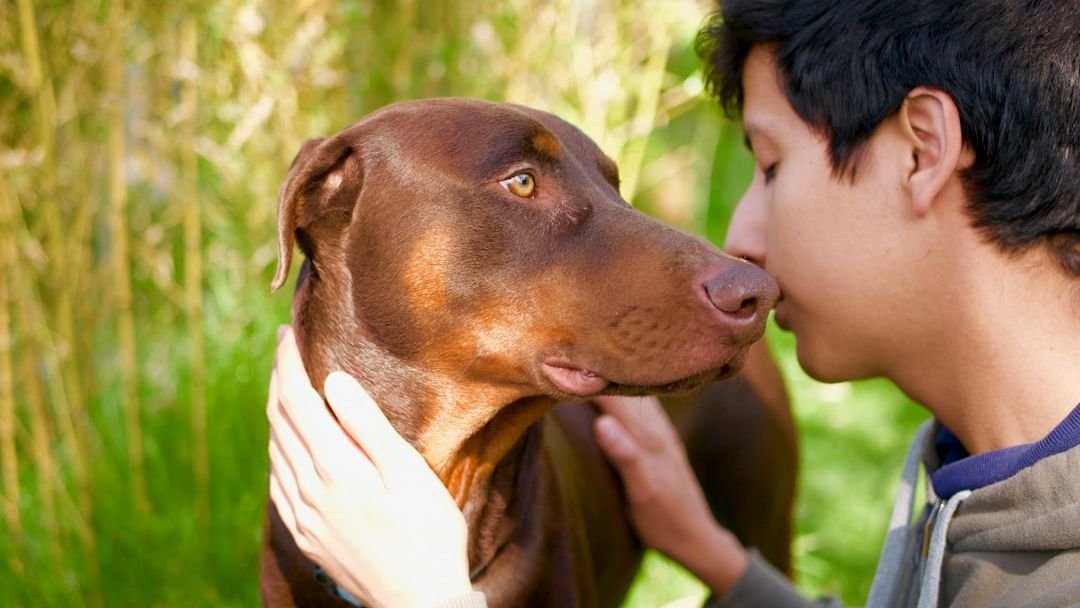
You’re sitting still. Maybe you’re reading, watching something mindless, or just staring out the window collecting your thoughts. Then, without any invitation, your dog pads over and settles in right beside you, shoulder to shoulder, warm and completely unbothered by personal space. It happens so reliably that most dog owners barely notice it anymore. It’s just what dogs do.
Except it isn’t random at all. Dogs don’t sit on people randomly. This behavior is intentional, even if your companion doesn’t consciously plan it. What looks like a simple moment of cosiness is actually a window into how deeply your dog reads you, trusts you, and responds to the emotional frequency you’re putting out. Quiet moments, it turns out, say a lot to a dog.
Your Dog Is Reading Your Silence Like a Second Language
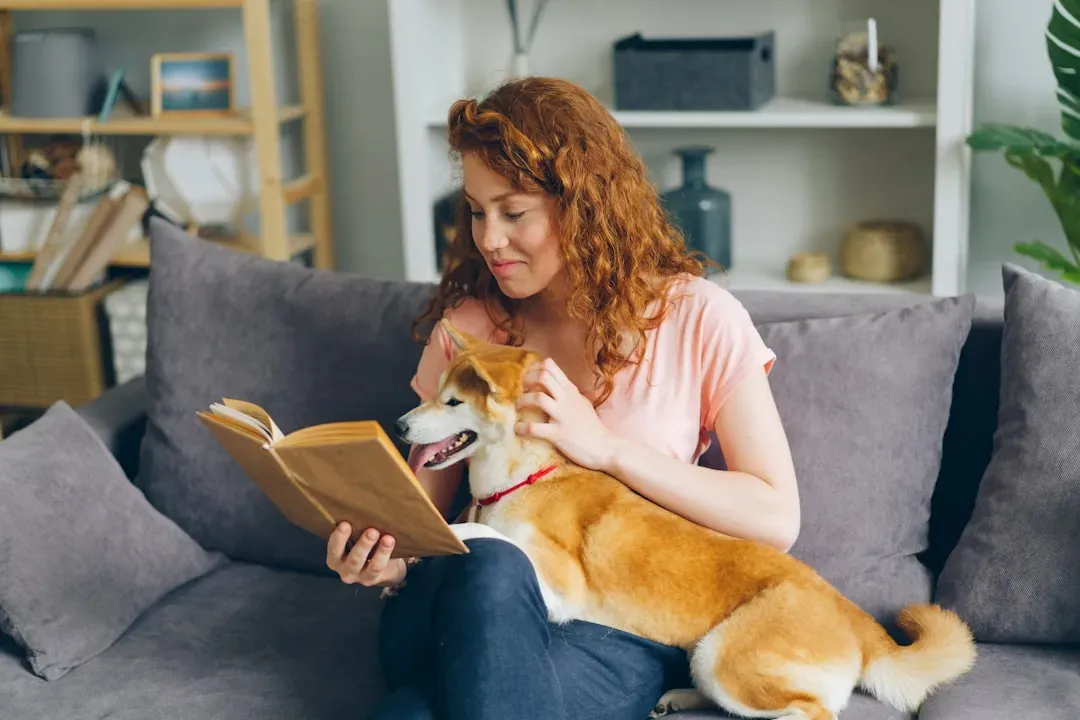
When you go quiet, you might think you’re giving your dog nothing to go on. The opposite is true. Dogs have been empirically shown to be particularly sensitive to human emotions. They discriminate and show differential responses to emotional cues expressed through body postures, facial expressions, vocalizations, and odors. Silence removes the noise, and your dog tunes into everything else that’s left.
Numerous studies have found that dogs use three main senses, sight, smell, and hearing, to determine human emotions. Dogs can recognize six basic emotions including anger, fear, happiness, sadness, surprise, and disgust, and process these in ways similar to humans, with changes to heart rate and gaze. So when you sink into the couch quietly, your dog isn’t confused. They’re scanning your face, your posture, and yes, even the way you smell.
Dogs are masters of nonverbal communication. They may rely on body language more than words. Crossed arms and rigid posture may signal stress or defensiveness. A relaxed stance communicates safety. When you’re calm and still, your dog picks up on that openness and often moves in to meet it.
The Science of Smell: How They Know You’re Calm Before You Do
What makes a dog’s emotional radar genuinely remarkable isn’t just their eyes. Their nose is doing work you can’t even comprehend. Due to their elevated sense of smell, dogs are highly sensitive to changes in our body odor that are undetectable to other humans. Dogs can smell the chemical changes that occur when we feel different emotions, such as happiness or anger. Studies found that when dogs are exposed to the scent of fear, they exhibit more stressful behaviors and higher heart rates than when they were exposed to happy scents.
Researchers from Italy had dog owners watch a scary film and a happy film and collected sweat samples from them both times. After the movies, the dogs, their owners, and a stranger were placed in a room. When exposed to sweat samples from each film, the dogs responded differently. They adopted behaviors consistent with the emotions experienced by the humans. When exposed to the fear sweat sample, dogs’ heart rates went up and they sought comfort from their owners. When exposed to the happy sample, the dogs were more relaxed and less wary of the stranger.
Dogs can detect hormonal shifts through sweat and breath. That’s one reason your dog may react before you consciously recognize your own stress. Think about that for a moment. Your dog may know you’re anxious about something before you’ve fully admitted it to yourself. That’s not magic. That’s 15,000 years of co-evolution doing its job.
You Are Their Safe Haven, and Quiet Moments Prove It
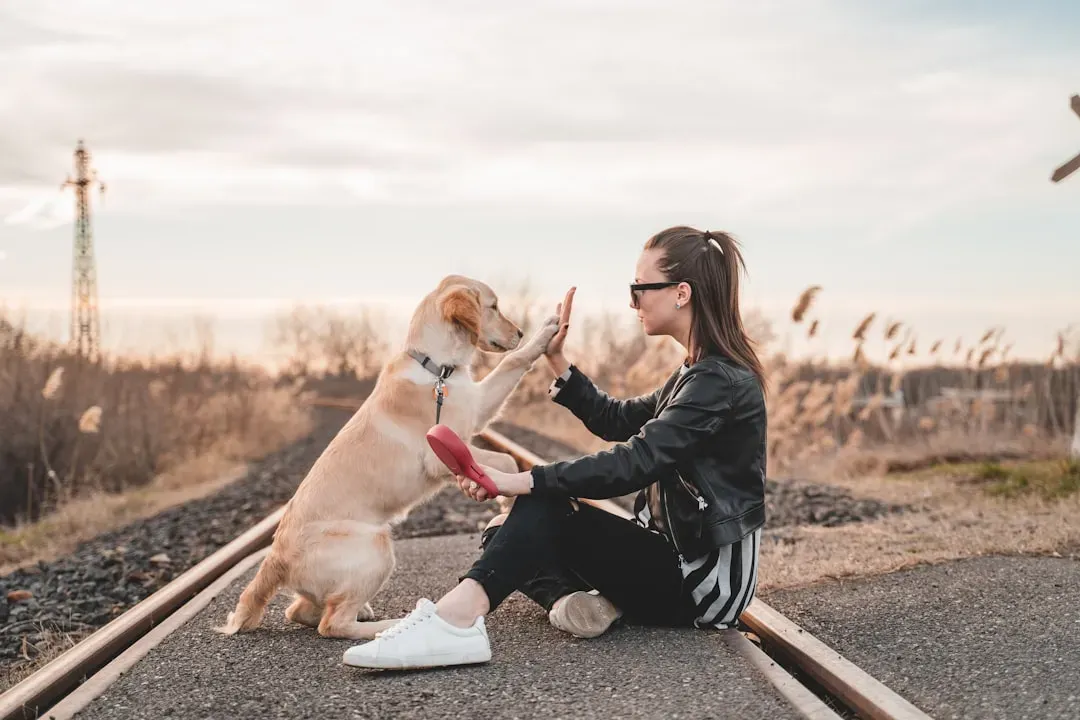
There’s a reason your dog gravitates toward you specifically and not toward the nearest couch cushion. Research supports the theory that the attachment relationship to humans has a stress-alleviating effect on the dog: in stressful situations, dogs seek assurance and comfort from their owners in the same way as human children use their caretakers as a safe haven. You are, in the most literal behavioral science sense, their anchor.
Dogs have shown behaviors indicative of an attachment relationship. One such behavior is proximity seeking, where the animal will seek out the attachment figure as a means of coping with stress. Conversely, the absence of an attachment figure can trigger behaviors indicative of separation-related distress. When you’re sitting quietly, you’re present and accessible. That’s exactly what a securely attached dog wants to be near.
Just as human toddlers look to their parents for cues about how to react to the people and world around them, dogs often look to humans for similar signs. When their people project feelings of calm and confidence, dogs tend to view their surroundings as safe and secure. Your stillness essentially tells your dog: the world is fine right now. Come rest with me.
The Emotional Mirror: When Your Dog Sits Close Because You Need It Too
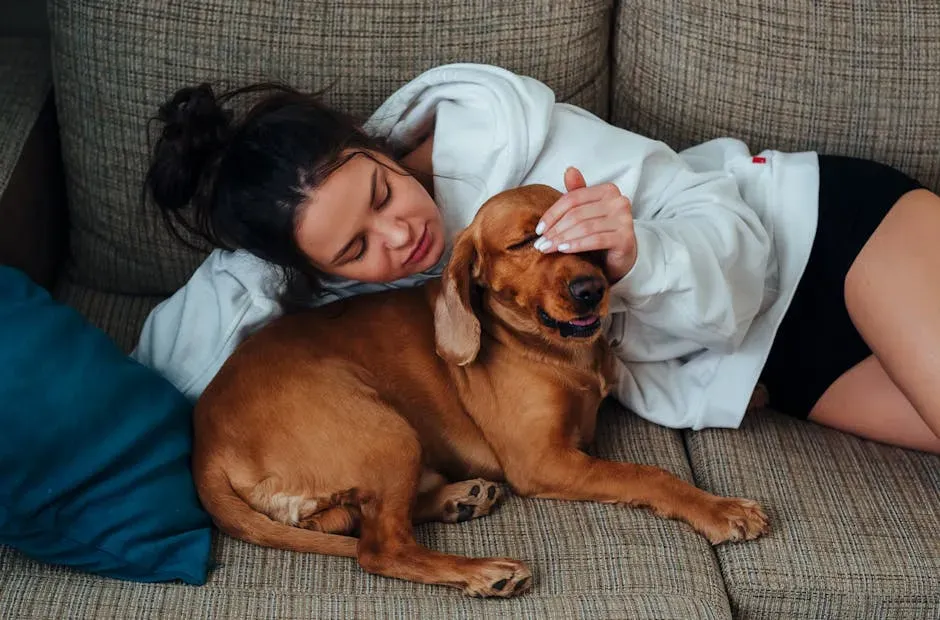
Sometimes your dog isn’t just reading you. They’re responding to you, almost therapeutically. In a similar way, your emotional state may be contagious to your dog. If you are sad, they are affected by it and come close to nuzzle you. Your dog is comforting you while seeking comfort themselves. It’s a mutual exchange, quieter than words and arguably more effective.
A well-known experiment showed that dogs were more likely to approach a crying person than someone humming or speaking normally, even if the crying individual was a stranger. This is emotional responsiveness that goes beyond trained behavior. Dogs often respond to human distress with comforting actions. These behaviors suggest that dogs don’t just detect emotions; they respond to them in meaningful ways.
Dogs often reflect the emotional state of their owners. If you’re calm, your dog tends to relax. If you’re anxious, your dog may also show signs of stress. This emotional mirroring is a key reason why maintaining a calm environment is important for your pet’s well-being. The next time your dog plants themselves against your leg on a hard day, it’s worth recognizing that the comfort goes both ways.
What to Notice, What to Encourage, and When to Pay Closer Attention
Most of the time, a dog pressing close during quiet moments is healthy, bonded behavior. When a dog sits on you, it’s usually a sign of trust and emotional closeness. Dogs often sit on people for comfort, warmth, attention, or reassurance. Context, body language, and frequency matter more than the behavior itself. Pay attention to the full picture rather than the behavior in isolation.
There are some signals worth watching. Keep an eye on the amount of lap time. Excessive lap-sitting all of a sudden could suggest your dog is not feeling well or is in pain. Laps are warmer and softer than the floor, making them an appealing spot for an aching body. If your dog seems to sigh heavily, lick their paws a lot, or show other subtle signs of pain while on your lap, they might need a little extra care.
Dogs with anxiety may sit on people excessively, especially if paired with pacing, whining, or hypervigilance. According to SpiritDog Training, anxious pets often use physical contact as an anchor. If your dog can’t relax unless they’re sitting on you, it may be a sign they need additional emotional support, structure, or calming routines. A call to your vet or a certified animal behaviorist is always a reasonable step if something feels off.
On the other hand, if your dog settles in calmly, breathes slowly, and seems at peace beside you, lean into it. Studies have shown that when dogs and humans interact with each other in a positive way, both partners exhibit a surge in oxytocin, a hormone linked to positive emotional states. Those quiet moments aren’t just comfortable. They’re biologically bonding for both of you.
Conclusion
There’s something worth sitting with in all of this. The fact that your dog seeks you out in your stillest, most undemanding moments isn’t incidental. It’s the result of thousands of years of dogs learning to read humans with a precision that still surprises scientists. A dog’s relationship with humans is related to attachment. That need for social connection drives much of dog behavior, from the desire to follow their caretakers around the house to wanting to sit on their feet or in their lap.
You don’t have to be doing anything special to be everything to your dog. Sometimes just being present and quiet is exactly what they were looking for. The warm weight beside you on the couch isn’t an accident. It’s a choice your dog makes, again and again, because you’re the safest place they know.


