
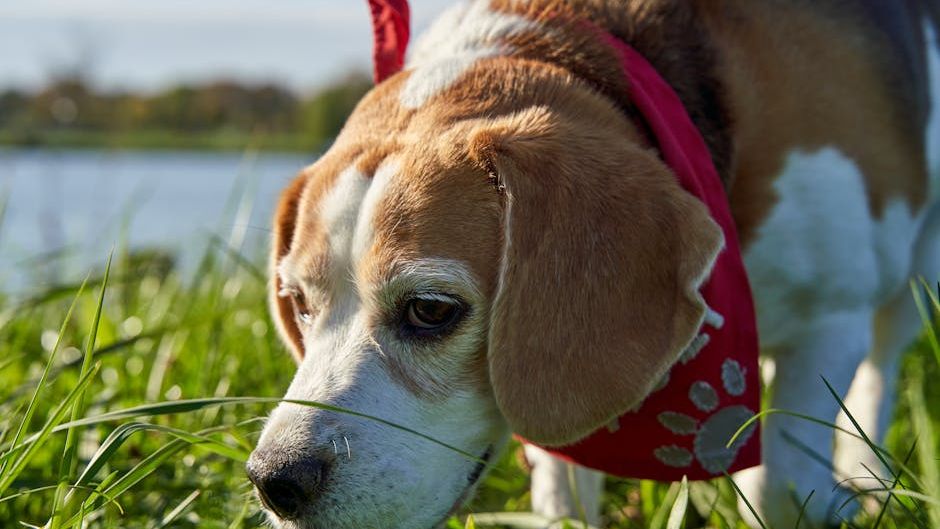
You finish your meal, push your plate aside, and your dog materializes from nowhere. Their nose moves toward your face with that particular, focused kind of intensity. Most people assume the obvious: the dog wants food. They chalk it up to begging, to opportunism, to the reliably food-motivated nature of the species. It’s a reasonable assumption. It’s also mostly wrong.
What your dog is actually doing in that moment is far more interesting than scrounging for scraps. They are running a quiet scan, collecting data from the most information-rich source available to them: the air coming out of your body. The science behind this behavior is worth understanding, because once you do, you’ll never look at that wet nose near your face the same way again.
A Nose Built for a Different Kind of Knowing
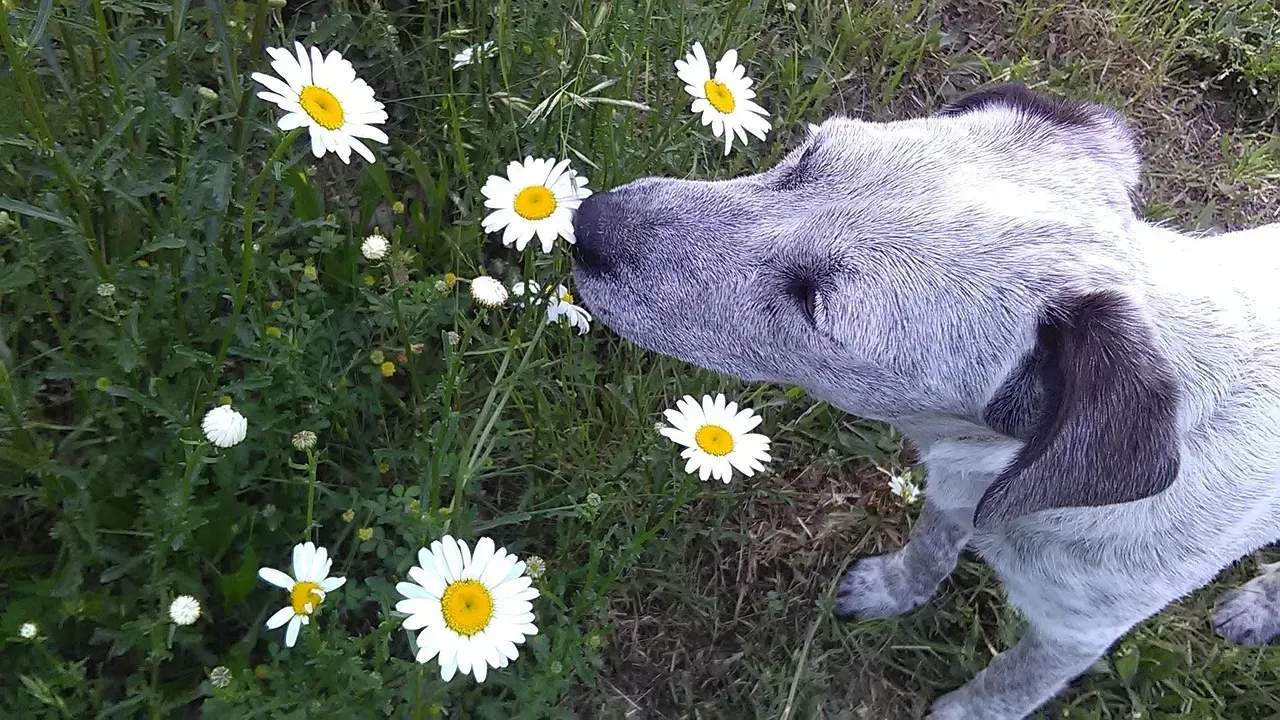
Most of us understand, at a surface level, that dogs have a good sense of smell. What we tend to underestimate is just how staggeringly different their olfactory world is from ours. A dog’s nose has approximately 300 million olfactory receptors, compared to a human’s mere six million. That gap isn’t just impressive. It represents a fundamentally different relationship with reality.
The area of the canine brain devoted to analyzing scent is roughly 40 times greater than that of humans. So it’s not only about the nose itself, it’s about the processing power dedicated to smell. Although dogs interact with their world via all of their senses, olfaction is one of the most important because it provides information not only about the current status of the environment, but can also allow detection of signals from the past. This complex network of mixtures of smells creates a three-dimensional image of the surrounding world across time.
A dog’s nose is powerful enough to detect substances at concentrations of one part per trillion, equivalent to a single drop of liquid in 20 Olympic-size swimming pools. Not only that, but dogs also inhale up to 300 times per minute in short breaths, meaning their olfactory cells are constantly supplied with new odor particles. When your dog pushes their nose toward your mouth after dinner, they’re not being polite. They’re operating at a level of biochemical precision that no technology we currently own can match.
They Know What You Ate, But That’s Just the Beginning
The food part is real. Dogs are constantly analyzing their environment, and your breath provides them with a huge amount of data. By sniffing your breath, they can detect what you’ve eaten, and some dogs may be particularly drawn to certain scents. This is the part most owners have already figured out intuitively, especially if they’ve noticed their dog showing more interest after a meal involving meat or pungent cheese.
What’s less obvious is what comes layered underneath those food scents. Dogs are incredibly attuned to human emotions. When we’re anxious, stressed, or excited, our body releases different hormones, and our breath can carry traces of these changes. So while your dog might register “chicken” on the surface, they’re also reading the hormonal texture of how you’re feeling at that exact moment. That’s two entirely different categories of information gathered in one casual, unassuming sniff.
When dogs sniff people, they are gaining all sorts of information. They know if we are familiar or a stranger. They know which scents we have attracted while we’ve been away. They know if we are experiencing changes in hormones, such as those that occur during pregnancy. They may even know if we are experiencing illness or simply are in a bad mood. In that sense, what looks like your dog trying to cadge a leftover bite is actually something closer to a health and wellness check-in.
The Safety Scan: Reading Stress From Your Breath
This is where the research gets genuinely remarkable. The physiological processes associated with an acute psychological stress response produce changes in the volatile organic compounds emanating from breath and/or sweat that are detectable to dogs. A landmark study tested this with controlled conditions and real measurements, and the results were striking.
The physiological processes associated with an acute psychological stress response produce changes in human breath and sweat that dogs can detect with an accuracy of nearly 94%, according to research. Dogs could reliably distinguish between a person’s calm baseline breath and their post-stress breath, not through visual cues, not through tone of voice, purely through scent alone.
When researchers presented samples to dogs, they could tell the difference between baseline and stress samples with over 90% accuracy. Acute stress changes what’s known as volatile organic compounds in breath and sweat. These compounds are detectable to dogs’ noses. So when your dog lingers near your face after a hard day, or an uncomfortable meal, or a conversation that left you wound tight, they may be reading exactly that.
An Ancient Instinct Built Into Every Breed
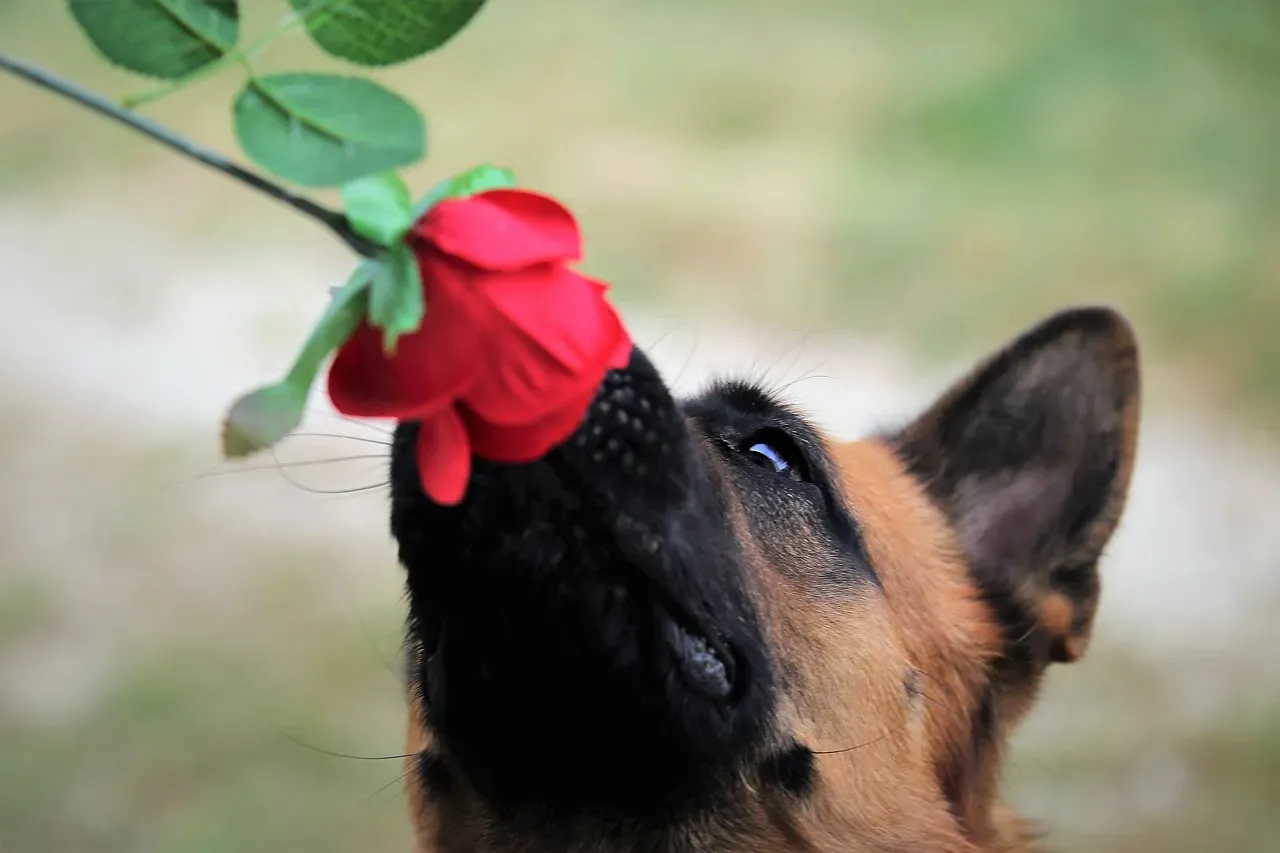
None of this behavior appeared out of thin air. Dogs have evolved from wolves who relied on scent for survival and social bonding within their packs. In the wild, pack members greet each other by sniffing as a way of exchanging vital information, where they’ve been, what they’ve eaten, and even how they’re feeling emotionally. What your dog does after dinner at your kitchen table is a direct echo of behavior that helped wild canines monitor the safety and health of their group.
In the past, wild dogs and their ancestors used the practice to find out what the pack leader ate, while puppies smelled and licked their mother’s snout in hopes of getting some food. That puppy behavior in particular helps explain why even adult, well-fed domestic dogs retain the urge to investigate a human’s mouth. It’s never been purely about hunger. It was always also about connection and information.
Sniffing plays a crucial role in forming and strengthening bonds between dogs and their human companions. By allowing your dog to sniff your mouth, you are providing them with an opportunity to connect with you on a deeper level and reinforce the bond you share. The next time your dog noses in close, understand that they’re not being rude. They’re doing exactly what thousands of years of evolution prepared them to do with the beings they care about most.
When That Sniff Might Actually Be Saving Your Life
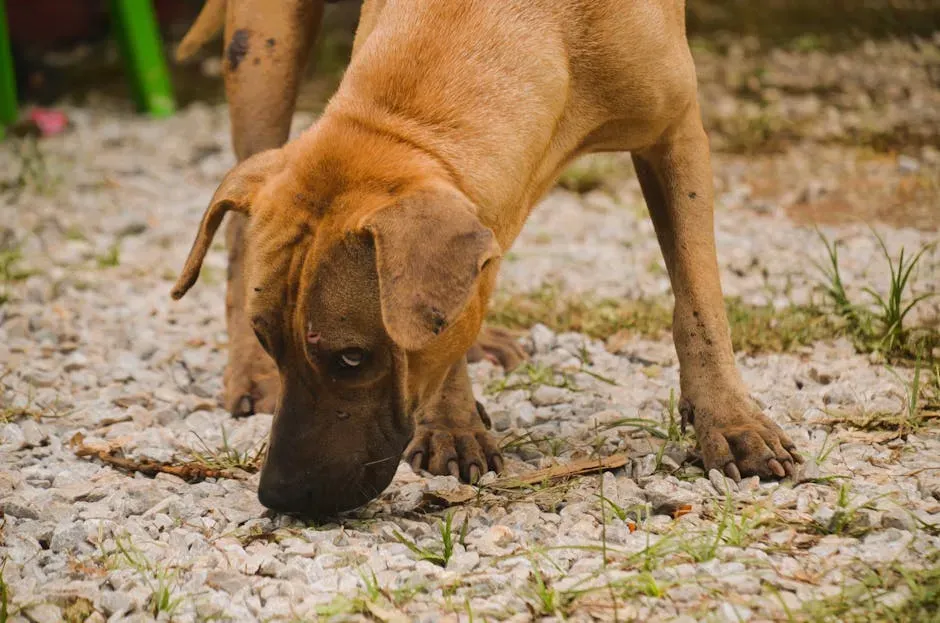
The most astonishing dimension of this behavior goes well beyond reading food or emotions. Dogs’ sense of smell is so subtle that they can notice the slightest change in human scent caused by disease. The tiniest shifts in hormones or volatile organic compounds released by diseased cells can be picked out by dogs. Consequently, dogs have been trained to sniff out the markers of disease that might even go unnoticed with medical tests.
In a 2006 study, five dogs were trained to detect cancer based on breath samples. Once trained, the dogs were able to detect breast cancer with 88% accuracy and lung cancer with nearly full accuracy. They could do this across all four stages of the diseases. These aren’t edge-case findings. Multiple independent studies have replicated the core result: dogs can identify illness through breath in ways that challenge our most sophisticated clinical instruments.
Increasingly, dogs are also helping diabetics know when their blood sugar level is dropping or spiking. The dogs detect isoprene, a common natural chemical found in human breath that rises significantly during episodes of low blood sugar. People can’t detect the chemical, but researchers believe dogs are particularly sensitive to it and can be trained to tell when their owner’s breath has high levels of it. There are also promising findings around PTSD detection: dogs’ sensitive noses can detect the early warning signs of many potentially dangerous medical situations, and scientists have found evidence that assistance dogs might even be able to sniff out an oncoming PTSD flashback by alerting to the breath of people who have been reminded of traumas.
What This Means for the Way You See Your Dog
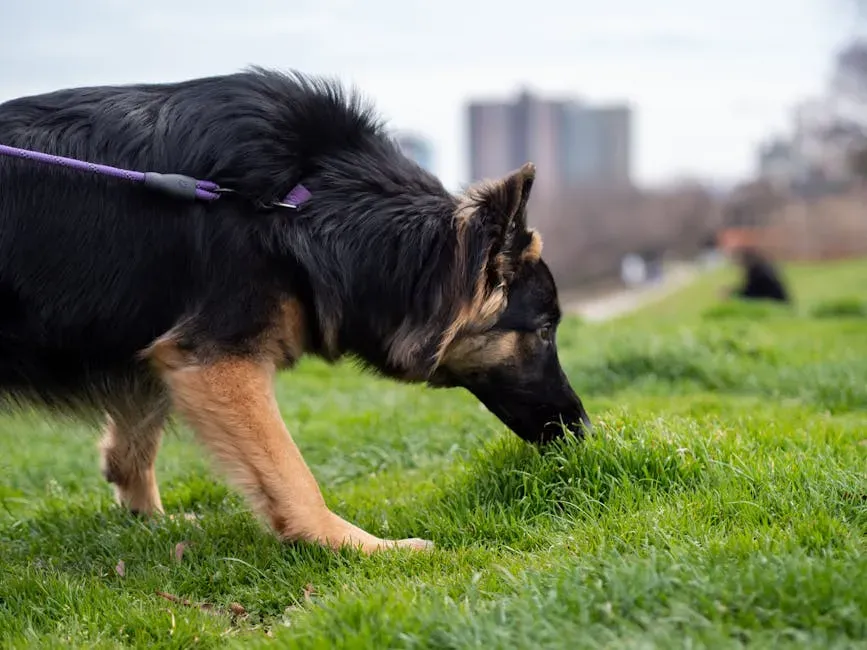
There’s a quiet recalibration that happens when you absorb all of this. Your dog isn’t just a lovable companion who happens to like the smell of dinner. They’re a creature running constant, sophisticated diagnostics on your body and mood, using a sensory system so refined that dogs can be trained by humans to use their olfactory abilities in a variety of fields, with a detection limit often much lower than that of sophisticated laboratory instruments.
Humans, who tend to rely most on sight to make sense of their environments, may well forget that dogs’ most dominant sense is actually smell, which gives them a very different perspective on the world around them. Your dog experiences you primarily as a scent. The way you look to them is secondary. The way you smell, the biochemical story your breath tells after a meal, a stressful afternoon, or a night of poor sleep, that’s the real you in your dog’s perception.
So consider what’s actually happening in that familiar after-dinner moment. Your dog pads over, leans in, nose working. On top of finding out what you ate and how you are feeling, a dog’s nose can be a real life-saving medical device. The superior smellers have helped in early detection of certain medical conditions and can be trained to sniff out things like tuberculosis, a fever, and even cancer. That patient, curious creature hovering near your face isn’t begging. They’re watching over you, in the only language they’ve ever really known.
There’s something quietly humbling about that. We spend so much energy understanding our dogs, training them, interpreting their barks and tail wags and expressions. All along, they’ve been understanding us with a depth and precision we’re only now beginning to measure. Maybe the least we can do is let them have the sniff.


