
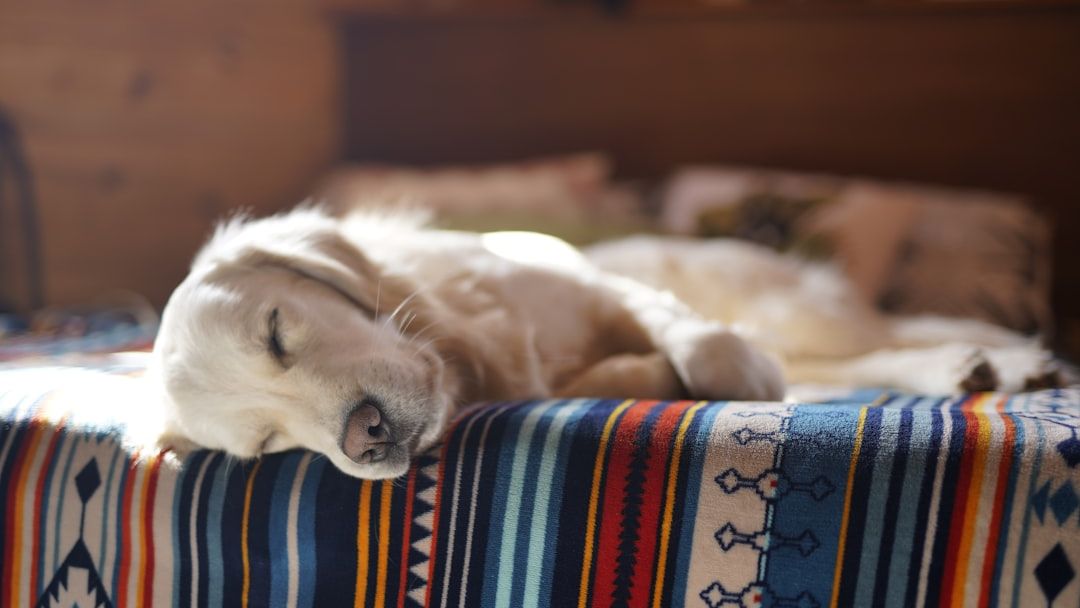
#1: The Tight Curl – When Protection Never Really Switched Off
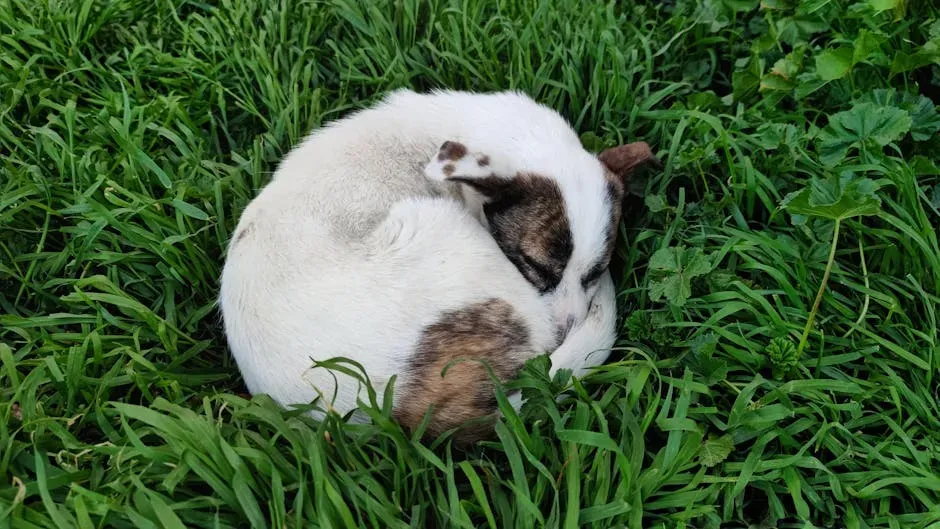
The tightly curled sleeping position, often called the donut, is one of the most common. It’s also one of the most emotionally complex when seen in the right context. In the wild, dogs and wolves curl up to sleep in order to conserve body heat on cold nights. The position also serves a defensive function – it protects their vital organs from exposure in case of attack.
For a dog with a trauma history, though, the tight curl can mean something beyond temperature. A dog that consistently curls up tightly, even in warm conditions, may be experiencing stress, anxiety, or insecurity. Dogs in new homes, shelters, or noisy environments often sleep curled up as a defensive mechanism. It’s a way of making themselves smaller, less visible, and protected.
Although the tight curl is the least vulnerable sleep position, it is also the least restful for dogs. The position allows dogs to conserve body heat and protect their limbs, face, throat, and vital organs, but they remain tense. A dog who never stretches out, who always folds inward even on the warmest summer evening, may simply not yet feel safe enough to let go.
Shelter dogs will often burrow under blankets, even after they are placed in a safe, loving home. This is worth remembering. A rescue dog curling tight isn’t being difficult or standoffish. Their nervous system is still following an old script, one that told them, at some point, that making yourself small was the safest thing to do.
#2: The Burrower – Searching for What Was Once Missing
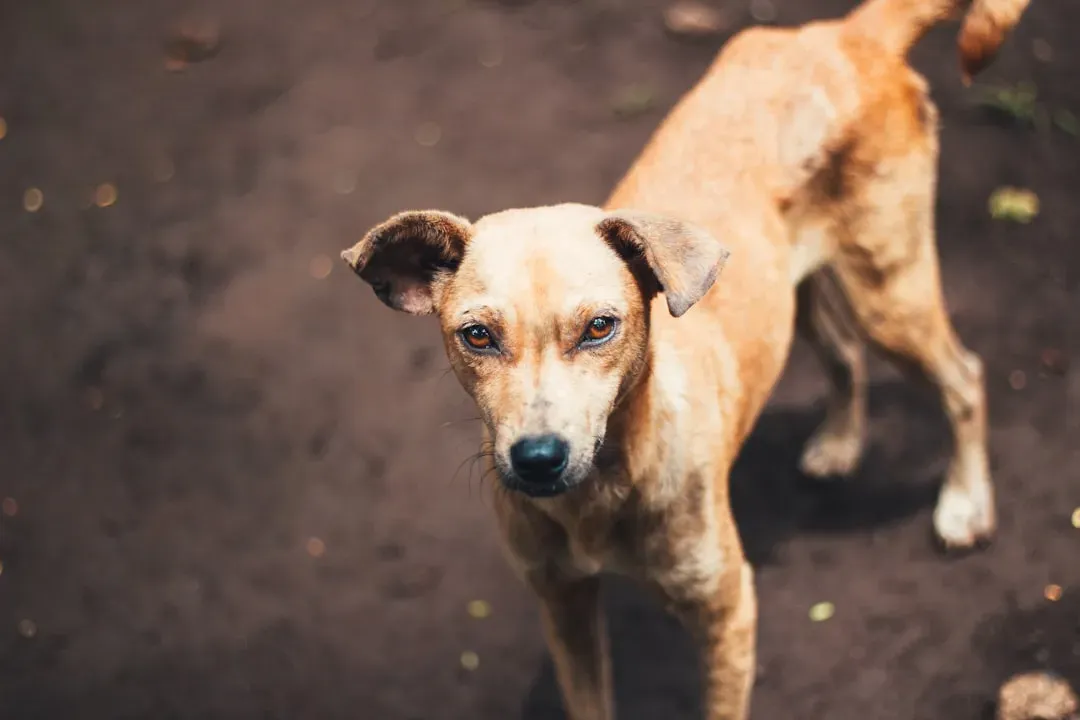
Some dogs don’t just curl up. They disappear. Under blankets, beneath pillows, wedged into the smallest corner of the couch. When dogs sleep in the burrower position, they are searching for comfort and security. Burrowers may also be seeking to calm themselves down – studies have shown that dog shirts meant to swaddle them in gentle pressure help ease nervous behaviors for dogs with anxiety disorder.
The burrowing impulse connects deeply to early experience. If your dog burrows under the covers, it can signal a need to feel companionship while sleeping. For a dog that was separated too early from its litter, spent time in an unstable environment, or was frequently left alone as a puppy, this behavior often persists into adulthood as an echo of unmet need.
Some dogs find pillows, blankets, laundry piles, and toys to bury themselves under before going to sleep. When they do this, they’re seeking additional comfort and security. There’s a certain poignancy to the image of a dog buried under an owner’s worn sweater, nose pressed into the fabric. It isn’t random. It’s a dog doing its best to reconstruct a feeling of safety using whatever is available.
The burrower position isn’t always a red flag. Context matters enormously. A cold night, a naturally anxious breed, a dog who simply loves the weight of a blanket – all of these are valid. Still, when the burrowing is persistent, compulsive, and paired with other anxiety signals, it’s worth paying attention to what the dog may be trying to tell you about where they’ve been.
#3: The Sphinx Pose – Always Ready, Never Fully Resting
The sphinx, or lion’s pose, involves a dog resting with their head on their front paws, body poised, eyes that drift closed only partway. It looks regal. In reality, it’s a position of interrupted rest. Dogs usually sleep in this position when they are feeling protective or feel like they will have to jump up at a moment’s notice.
In the lion pose, pups who are just falling asleep and want to stay alert might sleep belly down with their head perched on their front paws. Lion-pose pups are alert, loyal, and caring toward their families. For a dog with no trauma history, this can simply be a light nap. For a dog that has experienced neglect, abuse, or chronic instability, it can be something much more telling.
This dog sleeping pose may also indicate your pup is anxious and ready to jump up at a moment’s notice. Dogs suffering from canine PTSD may exhibit reactive behaviors, such as heightened vigilance and avoidance of triggers. The sphinx pose, when it’s the only position a dog ever uses even during long sleep sessions, can be a physical expression of that hypervigilance, the body’s refusal to fully release its guard.
A dog that was once punished without warning, kept in unstable conditions, or exposed to unpredictable humans may have been conditioned to stay alert at all times. Sleep, for such a dog, is not a place of peace but a reluctant concession. The sphinx pose says, in its quiet way: I’m resting, but I’m watching.
#4: The Belly-Up Position – A Sign of Trust That Didn’t Come Easily
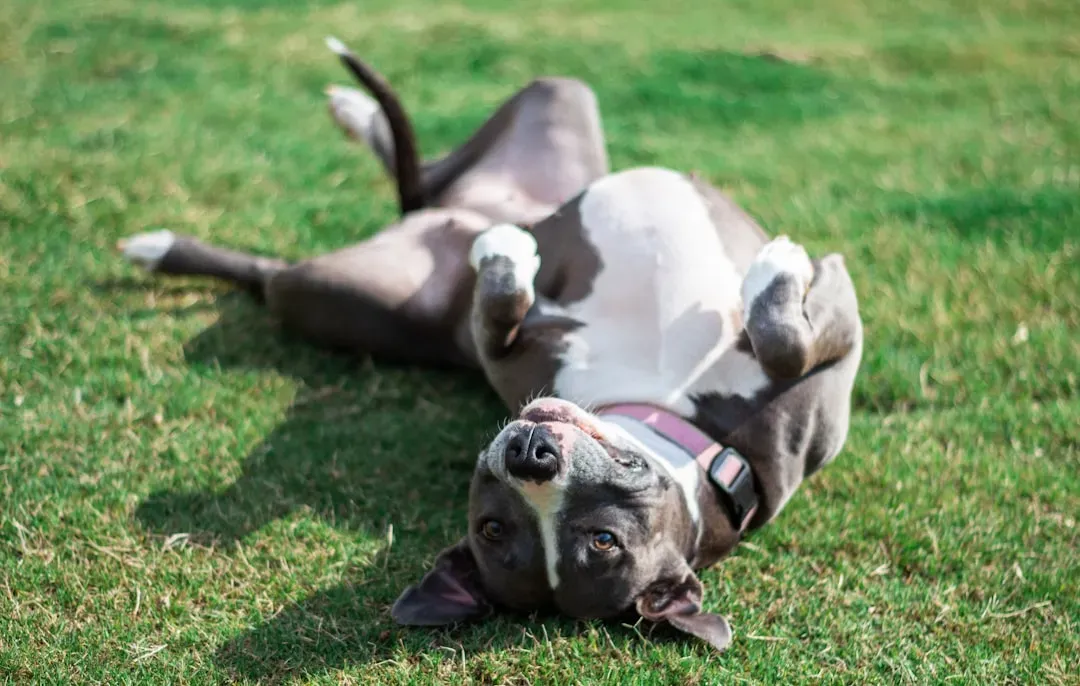
Few sights are more endearing than a dog on their back, paws flopped in the air, completely exposed to the world. It looks silly. It looks carefree. It’s also a sign that they fully trust their surroundings and don’t sense any danger, so if a dog sleeps like this around you, then you can take it as a compliment.
The belly-up sleeping position indicates that the dog is extremely relaxed and is feeling safe and unthreatened in its environment. Animals who have a sense that they might be attacked don’t expose their bellies. For a dog with a trauma history, this position is not a given. It has to be earned, gradually, through consistent safety and trust-building over time.
Dogs have a rich emotional life that includes the potential to experience fear, anxiety, and stress. When they undergo severe traumatic experiences, such experiences may result in a deep-seated emotional scar. Which is why watching a formerly traumatized dog eventually roll onto their back and sleep open and unguarded can feel like a genuine milestone. It means something shifted. The nervous system finally got the message that this place is safe.
If your rescue or previously abused dog never sleeps belly-up, that’s not a failure. Some dogs take months to reach that point. Others build toward it in small steps, a half-roll here, a brief exposed stretch there. Each increment is worth noticing. The belly-up position is, in its way, a dog’s most honest declaration of peace.
#5: The Pressed-Close Position – When Distance Feels Dangerous
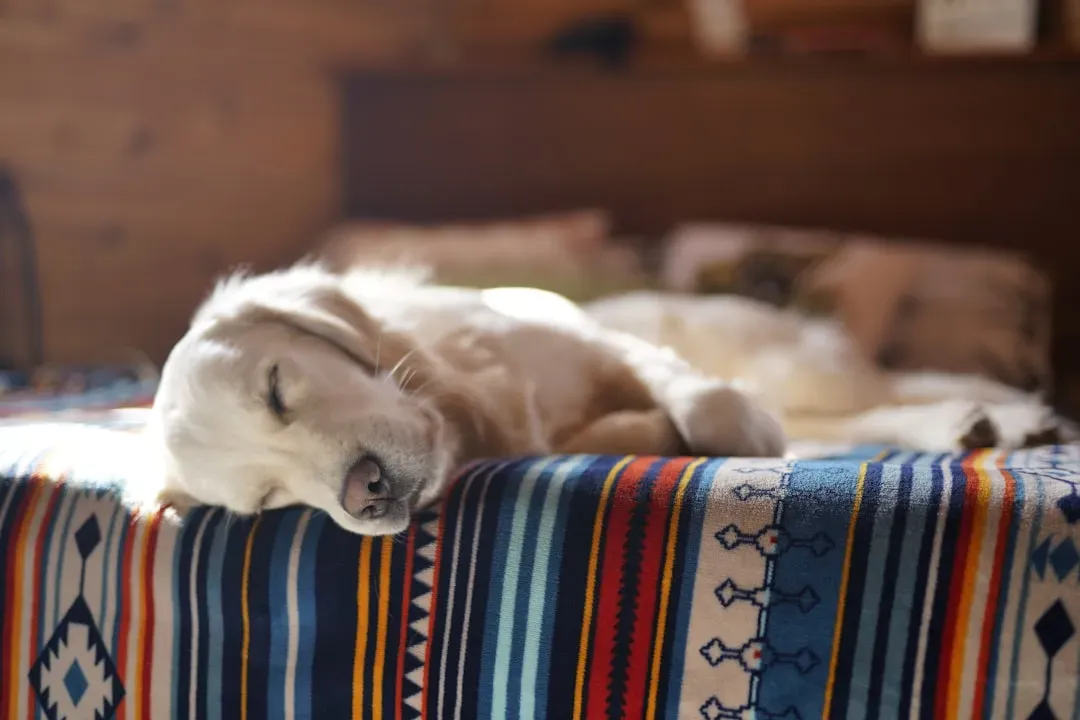
Some dogs don’t just prefer to sleep near their person. They need physical contact to settle at all. They press against a leg, curl into a lap, flatten themselves against a body with an almost insistent weight. Resting directly on a person or leaning against them reveals attachment and affection. Some dogs with separation sensitivities cling more during sleep.
Back-to-back sleeping may echo dogs’ ancestral pack behavior, when entire families slept piled together in dens. Or it may remind your dog of their first weeks of life, when they lay tumbled in an adorable furry heap with their littermates. For a dog with a history of abandonment or prolonged isolation, that pull toward contact can be especially acute. Sleeping alone, even in a warm room, simply doesn’t feel like enough.
Many dogs prefer to sleep back-to-back with other pets or people because it helps them feel safe and protected. This is especially true for dogs who suffer from anxiety, fear, and loneliness. When a dog feels stressed or threatened, he often looks for somewhere safe to sleep – which could mean curling up next to another pet or person to feel secure.
There’s nothing wrong with being the safe place your dog needs. The concern arises only when the attachment becomes distressed, when your dog cannot rest at all unless touching you, when brief separation triggers panic. Dogs show similar symptoms of PTSD as humans. These include chronic anxiety, social anxiety, hypervigilance, and avoidance of certain people and places. Persistent clinginess during sleep can be one piece of that larger picture, and a gentle, patient approach to building independent security usually helps over time.
#6: Restless Sleep, Nightmares, and Disrupted Patterns – What the Body Remembers

Sometimes the most telling thing isn’t a specific position at all. It’s what happens once a dog actually falls asleep. Whimpering, twitching intensely, waking suddenly and scanning the room, sleeping in short, shallow bursts. Dogs could experience sleep disturbances, including nightmares, difficulty falling asleep, shallow sleep, and frequent awakenings, after experiencing trauma, similar to the physical symptoms that people with the diagnosis contend with.
Increased anxiety, aggression, sleep disturbances, and signs of depression are common features of canine PTSD. Research comparing caged dogs with companion dogs found that traumatized dogs spent significantly less time sleeping or relaxed during observation periods. They were alert and on edge even during rest. The body, in these cases, simply doesn’t fully power down.
Trauma can result in sleep disturbances, generalized anxiety, hypervigilance, depression, and irritability. Dogs that have endured chronic stress or abuse may have nervous systems that remain in a low-level state of activation even during sleep, making genuine, restorative rest difficult to achieve. It’s not stubbornness or bad behavior. It’s biology responding to history.
If your dog’s sleep is consistently disrupted, agitated, or shallow, and especially if this is paired with other behavioral changes, consulting a veterinary behaviorist is a reasonable next step. Veterinarians, veterinary behaviorists, and certified dog behaviorists are experts trained to diagnose and develop treatment plans for behavior and psychological issues in dogs. They possess the knowledge and experience needed to assess and address a wide range of behavioral problems, including those arising from trauma or stress.
Reading Your Dog With Patience, Not Alarm
It’s worth being honest about the limits of this kind of reading. In most cases, which position a dog chooses likely depends on their preference in the moment. However, there are a few tidbits of information that can be gleaned from a sleeping position. A curled dog isn’t automatically a traumatized dog. A belly-up dog isn’t automatically healed. Context, patterns, and the full picture of a dog’s behavior matter far more than any single nap.
A tight curl might be a sign of anxiety or even discomfort. Instead of simply reading the positions, you should look for context and patterns. The goal isn’t to over-interpret every sleeping pose but to develop a fluent understanding of your individual dog, their baseline, what’s normal for them, and when something has genuinely shifted.
What sleeping positions offer, more than a diagnosis, is an invitation to pay close attention. Dogs speak in quiet ways long before they bark or whine. Their bodies reveal stories that run deeper than simple habits, and sleep is one of the most honest places to read those stories. A dog resting with ease shows you a window into their comfort, wellbeing, and emotional world.
A dog that once curled impossibly tight, that once flinched awake at every sound, that once couldn’t trust enough to close their eyes fully, learning to stretch out and sleep deeply in your home – that’s not a small thing. It means that, whatever happened before, something good is happening now. And they know it.


