

#1: The Evolutionary Roots of Emotional Attunement

Dogs didn’t develop their emotional sensitivity by accident. This ability likely developed through domestication. Over thousands of years, dogs that could better interpret human emotional states were more likely to survive and bond with people. That’s not a small detail. It means the very capacity your dog has to sense your unease is a feature, not a flaw, hardwired through millennia of shared living.
Dogs actively look to humans for guidance when confused. This social referencing behavior is similar to what toddlers display with caregivers. Think about that for a moment. Your dog isn’t just watching you out of habit. They’re using you as a compass, scanning your face, your posture, and your voice to figure out whether the world is safe right now.
When a dog receives a positive emotional message from their owner, they change their behavior, looking at the owner more often and spending more time approaching objects and staying close; conversely, when given a negative message, they take longer to approach and interact. The owner’s emotional tone, then, becomes a live instruction manual that your dog is consulting moment to moment. When that manual keeps changing without warning, confusion follows quickly.
#2: The Science of Stress Synchronization

One of the most striking things research has uncovered is that human and canine stress don’t just coexist; they actually synchronize. A Swedish research study found that dog owners’ stress levels can significantly influence their canine companions’ stress levels, and the study found similar amounts of the stress hormone cortisol in dogs and their owners. This is measurable, biological evidence that what you carry emotionally doesn’t stay invisible to your pet.
Researchers looked at hair concentrations of the stress hormone cortisol in both dogs and their owners as an indicator of stress. Hair cortisol concentrations were taken twice, once in the summer and once in the winter. In both samples, the cortisol levels from the dogs were synchronized with their owners. The authors say this is the first study to identify long-term synchronization in stress levels between members of two different species.
Dogs are highly sensitive to human emotions, often mirroring their owners’ stress levels. Research measuring long-term cortisol levels found a synchronization between chronically stressed owners and their dogs. An anxious household can indeed rub off on the dog. If an owner is frequently nervous or unpredictable, the dog may internalize this tension. It’s a feedback loop that can quietly escalate if no one intervenes.
#3: How Unpredictability Specifically Triggers Anxiety

There’s a meaningful difference between a dog experiencing a single stressful moment and a dog living with an owner whose emotional output is erratic and hard to anticipate. If we are constantly tense or on edge, our dogs may interpret this as a sign of danger or threat, leading them to feel anxious or uneasy themselves. Similarly, inconsistent or unpredictable behavior from their owners can leave dogs feeling uncertain and anxious about their environment.
Many behavioral issues in dogs are partially due to their owners’ insecurities and uncertainties about how to handle problems they encounter. The dog senses this uncertainty, and in turn, feels that their human is not fit to be their leader. This makes them less likely to cooperate and listen. It can create reactivity, anxiety, and sometimes even aggression.
Nervous energy perpetuates each other’s anxiety, and insecurity and lack of confidence in the owner creates a lack of consistency in the way they end up dealing with the problem. Lack of consistency makes dogs confused, and causes them to become even more insecure, all while trying to take on the role of the leader. That escalation, from uncertainty to behavioral breakdown, is exactly the cycle that unpredictable human energy can set in motion.
#4: The Physical Signs Your Dog Is Absorbing Your Energy
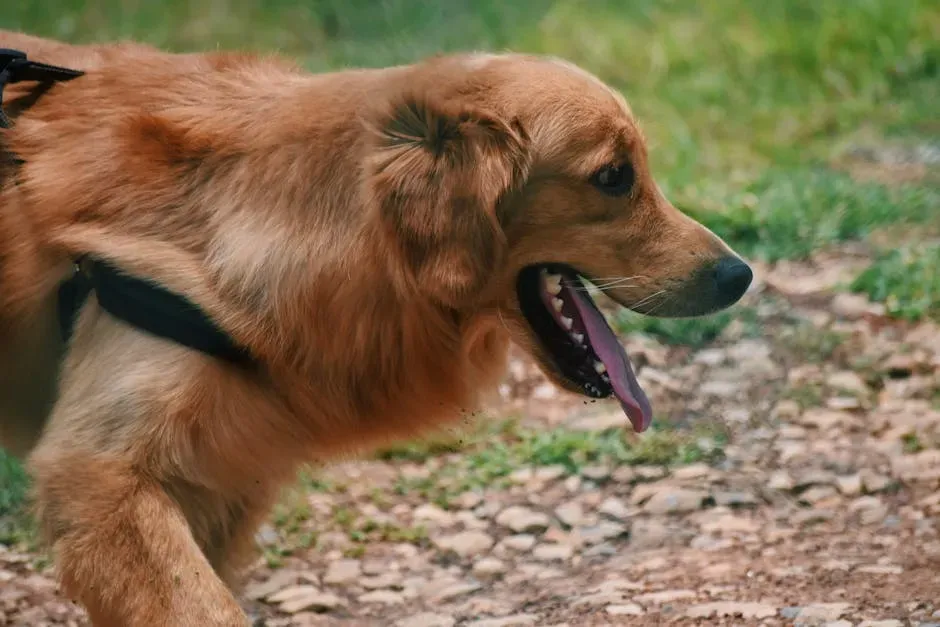
Anxious dogs rarely send one clear signal. Instead, they layer subtle cues that can be easy to dismiss. Obvious behaviors include barking, whining, pacing, destruction, or hiding. Physical clues include panting when it’s not hot, drooling, trembling, or gastrointestinal upset. Subtle signals include lip licking, yawning when not tired, avoiding eye contact, or a tucked tail. Many owners only notice the louder behaviors and miss the quieter ones entirely.
Research hypothesizes that aggressive responses in dogs can develop as a result of conflict, or anxiety about an uncertain response to their behaviors from inconsistent owners. This is a critical point. What looks like a “difficult” dog is sometimes a dog who has been reading scrambled signals for months and has reached a point of chronic low-grade stress.
A well-known experiment showed that dogs were more likely to approach a crying person than someone humming or speaking normally, even if the crying individual was a stranger. Dogs orient toward emotional distress. They notice it, flag it, and in unstable environments, they start to live on edge waiting for the next wave of it.
#5: What Calm, Consistent Energy Actually Does for a Dog

The research on stress synchronization has a quietly hopeful flip side. If anxious human energy raises a dog’s cortisol, then calm, steady human energy can lower it. Dogs respond best to calm, confident energy. Yelling or frustration can create confusion rather than clarity. Tone, posture, and pacing all register with your dog before a single word leaves your mouth.
Dogs feel secure when they can predict daily activities. Routine isn’t just a convenience; it functions as emotional scaffolding for a dog. Regular walk times, consistent feeding schedules, and predictable household rhythms communicate safety in a language that requires no translation.
Anxious dogs become more secure when they can rely on their human and understand the rules. If something frightening occurs, the calm leader guides them through it, building a coping history. Emotional regulation is taught through modeling and structured downtime. That last idea is worth sitting with. You’re not just managing your dog’s behavior. In a real sense, you’re teaching them how to handle the world by demonstrating it yourself.
Conclusion: Your Dog Is Watching, and That Matters

The relationship between human emotional energy and canine anxiety is no longer just anecdotal wisdom passed between dog owners. It’s documented, measurable, and consistent across multiple studies. Research suggests that the energy and anxiety we experience as humans can significantly influence our dogs’ behavior and emotional well-being. That’s a straightforward finding with a fairly direct implication.
If your dog seems anxious without an obvious cause, the honest first question isn’t “what’s wrong with my dog?” It’s “what am I carrying right now, and how long have I been carrying it?” Dogs don’t judge us for our stress. They just absorb it, and they do so silently and loyally, which is precisely why we owe it to them to pay attention.
There’s something quietly profound about the idea that the animal sleeping at your feet is running a live read of your inner life. Not because it’s intrusive, but because it means the bond goes deeper than most of us realize. The best thing you can do for a nervous dog might not come in a bag or a bottle. It might just be learning, slowly, to be a little steadier yourself.


