
15 Things That Only Truly Make Sense Once You Have Owned a Beagle

Most people think owning a Beagle means dealing with a cute little howler who’s maybe a bit stubborn. Beagle owners hear that and just laugh. The real story is messier, funnier, and far more emotional than any breed description ever admits.
From the way they “backtalk” you with a single look to the food rituals nobody warns you about, living with a Beagle rewires how you see dogs, routines, even your own patience. Here are 15 things that sound made up until you’ve lived through every single one of them.
#15 – The Myth Of The “Small, Easy Dog”
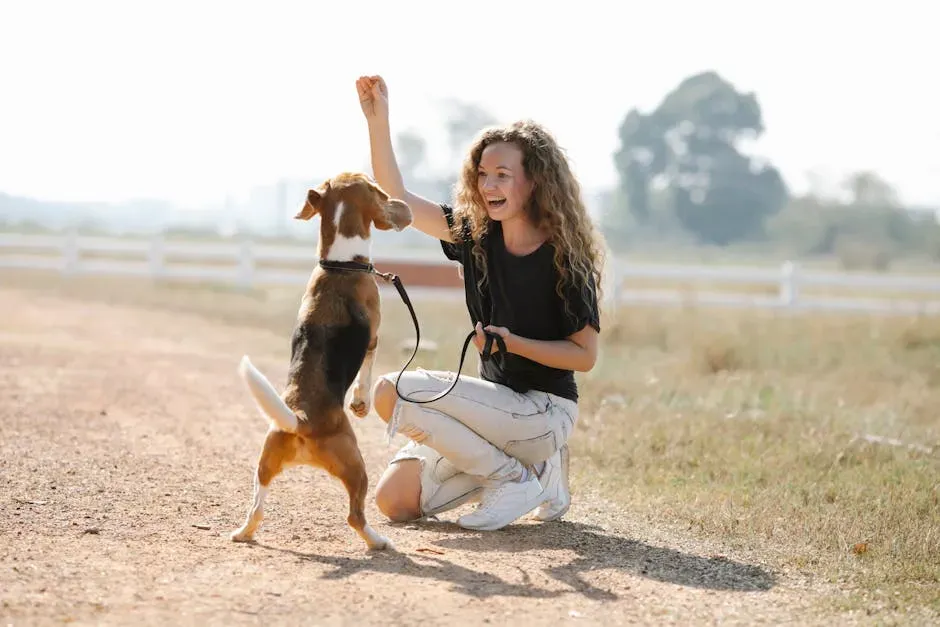
People assume Beagles are “starter dogs” because they’re small and have big brown eyes. Once you own one, you realize you didn’t buy a beginner dog. You bought a smart, loud, nose-driven decision-maker packed into a compact body.
Suddenly those words “independent” and “scent hound” on the breed description stop sounding cute and start sounding like warnings you wish you’d taken seriously from day one. Training a Beagle feels like negotiating with a tiny, stubborn lawyer who’s also a comedian. Basic commands aren’t “oh, they just learn” – they’re “what’s in it for me?” While most people assume small dog equals low maintenance, Beagle owners know it’s more like small dog, big personality, huge management.
Fast Facts
- Classified in the AKC’s Hound Group, originally bred to trail rabbits by scent
- Typical weight: 20 to 30 pounds fully grown
- Average height: 13 to 15 inches at the shoulder
- Life expectancy: 12 to 15 years
#14 – The Nose That Runs Your Entire Life

Before owning a Beagle, “dogs sniff things” sounds normal. After owning one, you realize their nose isn’t a feature – it’s the operating system. Walks don’t go from point A to point B anymore. They’re dictated by invisible scent highways your dog follows like breaking news, while you apologize to neighbors as your Beagle investigates every blade of grass.
Inside the house, that nose still runs the show. Crumbs in the couch? Found. A snack wrapper under the bed from three months ago? Found. A bag of food sealed in a container on a high shelf? They’ll park themselves under it like a protest. Many owners swear their Beagle knows the fridge is opening before they even hear the sound.
#13 – The Selective Hearing That Isn’t Actually Deafness

To outsiders, Beagles look disobedient. To owners, it’s crystal clear – they hear perfectly fine, they just prioritize differently. Call them in a quiet house with no distractions and they trot right over. Call them outside when there’s a squirrel, a scent trail, and a neighbor grilling burgers, and suddenly they’re “deaf.”
Over time you learn there are tiers of recall:
- Tier 1: Name plus the treat bag shake
- Tier 2: Name plus “DINNER!”
- Tier 3: Opening the cheese drawer
Shouting louder does nothing. Calm consistency, high-value rewards, and accepting that a scent hound off-leash is a flight risk become your new reality. Eventually you stop saying “he never listens” and start saying “he listens when the right currency is offered.”
#12 – The Constant, Comical Food Obsession

Every dog likes food. Beagles treat food like a full-time job. You don’t really understand “food-motivated” until you’ve watched a Beagle silently move a chair to climb onto a table for a single crumb.
Owners quickly learn the new house rules:
- Nothing edible can live on counters
- Trash cans need lids – heavy ones
- Guests must be briefed: do not leave plates on the coffee table
The upside is training gets easier once you realize a tiny piece of chicken can buy you miracles. The downside is turning your back for three seconds during dinner means your Beagle is already halfway across the room with your steak. You stop calling it begging and start calling it mission planning.
#11 – The “Velcro… But Only On Their Terms” Attachment

Most people expect Beagles to be velcro dogs 24/7. The truth is subtler and weirder. Beagles are deeply attached to their people, yet strangely independent in how they show it. They’ll ignore you for an hour while napping in another room, then suddenly decide they must sit on your lap, your keyboard, or your chest that exact second.
They follow you to the bathroom, but not because they’re clingy – they just don’t trust you not to grab a snack without them. They sleep pressed against you at night, but during the day they might choose a sunspot across the room and stare at you like a quiet security camera. The bond is heavy, even when it doesn’t look like traditional cuddly devotion.
#10 – The Beagle “Backtalk” And Side-Eye

Beagle owners swear these dogs can argue. Once you’ve lived with one, you start reading their eye rolls and dramatic sighs like full sentences. Tell a Beagle “no” when they want a second dinner and they’ll stare, squint, huff, and flop on the floor like a teenager who just lost Wi-Fi.
They’re masters of a few signature moves:
- The slow blink of judgment
- The offended head turn
- The “I heard you, I’m just ignoring you” stare
Many owners admit they verbalize full conversations – “don’t look at me like that, you already ate” – and somehow it feels like the dog is arguing back. Once you’ve been silently judged by a Beagle for walking past the treat jar, you know this isn’t a blank, happy-go-lucky dog. It’s a personality with opinions.
#9 – The Legendary Beagle Howl (And The Full Noise Spectrum)

Everybody knows Beagles howl. What you don’t get until you own one is the full audio catalog. There’s the alarm bark, the lonely howl, the “I heard a car two streets over” bay, and the bizarre yodel they save for special occasions. They don’t just make noise – they perform.
The first time your Beagle lets out a full hunting bay in your living room, you’ll swear a hundred-pound hound just materialized. Neighbors will assume you own three dogs, not one. You quickly learn which triggers set them off – doorbells, sirens, other dogs, and hilariously, sometimes the sound of you singing. Silence becomes rare and a little suspicious. When it’s too quiet, you’re not relieved, you’re worried.
Worth Knowing
- The distinctive “bay” was originally bred so hunters could track them across open fields by sound alone
- Common triggers include doorbells, sirens, other dogs, and unfamiliar voices
- Beagles rank among the more vocal hound breeds, using sound as their main long-distance communication tool
#8 – The Escape Artist Brain Hiding In A Cute Body

Before owning a Beagle, you see a short, floppy-eared dog. After owning one, you see a strategic engineer determined to test every fence, door, and baby gate you own. Beagles follow their nose straight through any weakness in your home security system. If there’s a gap, they’ll find it.
Owners often end up:
- Reinforcing fences, including underneath them
- Double-latching gates
- Switching to harnesses because collars slip off “accidentally”
When they do get out, they rarely just wander. They move with purpose, usually toward food, a smell, or sheer adventure. That’s when recall stops being optional and starts feeling like survival.
#7 – The Eternal Puppy Energy (Well Past Puppy Age)
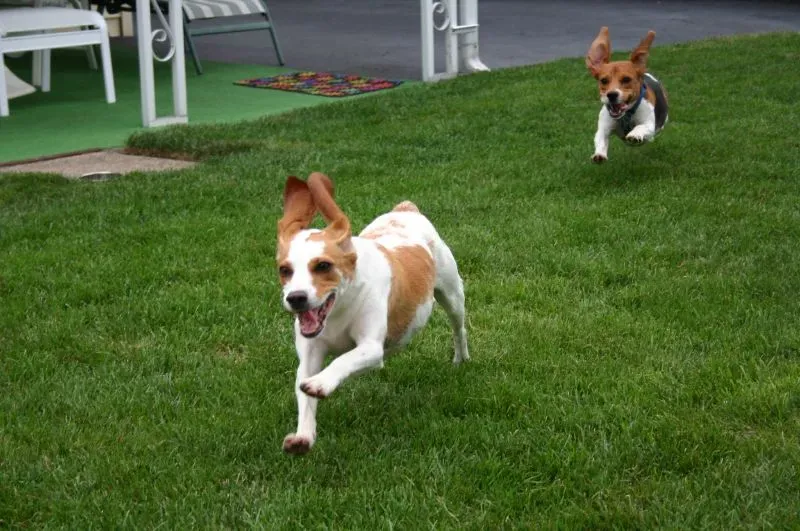
Most people think the crazy energy phase ends around age two. Beagle owners learn a harsher truth: even at five, six, seven years old, many Beagles still have zoomies that put young dogs to shame. They rest harder as adults, but when they’re on, they’re on – nose down, tail up, patrolling every inch of the yard.
A quick walk around the block isn’t enough. They need real mental stimulation – sniffing games, puzzle feeders, new routes, training sessions. Without it, they get bored, loud, and sometimes destructive. Once you lean into this, life gets easier. A tired Beagle is an angel. A bored Beagle is chaos.
At a Glance
- Recommended daily activity: roughly 30 to 60 minutes of walking or play
- Top mental enrichment tools: puzzle feeders, snuffle mats, scent games, short training sessions
- Warning signs of under-stimulation: excessive howling, digging, chewing, restlessness
#6 – The Stubbornness That’s Actually Intelligence

People love to call Beagles dumb because they don’t obey instantly like some working breeds. Beagle owners know that’s lazy thinking. Their so-called stubbornness is usually them weighing your request against their own agenda. They’re problem-solvers, especially when food or freedom is involved.
You watch them figure out:
- How to nudge open doors with their nose
- How to pull a blanket to reach something hiding under it
- How to manipulate you with a single, well-timed whine
Once you understand this, training shifts from “do what I say because I said so” to “let me make this worth your while.” Suddenly the “stubborn” dog is nailing complex tricks, but only because you finally met their brain where it lives.
#5 – The Hair. The Constant, Relentless Hair.

Beagles have short coats, so people assume low shedding. Every Beagle owner wishes that were true. The reality is a slow, steady blizzard of tiny hairs that embed in clothes, furniture, and car seats. It’s not as dramatic as a Husky blowout, but it’s constant enough that lint rollers become a lifestyle item, not an accessory.
You learn to:
- Vacuum more than you thought humanly necessary
- Accept that black clothes are now “Beagle glitter” clothes
- Keep an old towel on their favorite furniture spots
Regular brushing helps, but it never fully stops it. Most owners quietly admit they’d rather live with fur on everything than imagine their home without that warm, snoring body on the couch.
#4 – The Pack Mentality And Need For Company

Beagles were literally bred to work in packs. You don’t really grasp what that means until you see how badly they hate true isolation. A Beagle left alone for long stretches doesn’t just get “a bit sad” – they can become anxious, noisy, and destructive. They’re wired to be with others, whether that’s other dogs or humans.
Dog daycare isn’t spoiling them, it’s preserving your furniture and their mental health. A second dog, even of a different breed, often transforms a restless, vocal Beagle into a calmer, more secure animal. If a second dog isn’t possible, routines, enrichment, and predictability become non-negotiable. This breed isn’t built to be a background accessory. They’re family, and they expect to live like it.
Quick Compare
- Solo Beagle: more prone to separation anxiety, howling, and attention-seeking behavior
- Paired Beagle: generally calmer, more entertained, and less destructive when left alone
- Either setup: still needs consistent routines and daily enrichment to stay balanced
#3 – The Way They Quietly Take Over Your Home Routine

At first you think you’re adding a dog into your existing life. Then, about six months in, it hits you – your entire daily schedule now revolves around Beagle logistics. Walks are timed around the zoomies. Meals are scheduled to avoid the hangry howl. TV time gets arranged so they’re tired enough not to demand attention during your favorite show.
You catch yourself:
- Planning social events around the dog’s alone-time limit
- Checking weather apps for walk conditions, not for yourself
- Choosing vacation spots based on whether they’re Beagle-friendly
Non-dog people call it too much. Beagle people shrug and say, “it’s just life now.” The weird part is you don’t really mind – the structure they force on you often makes your own routine healthier. That’s when it stops feeling like sacrifice and starts feeling like partnership.
#2 – The Emotional Radar They Shouldn’t Technically Have
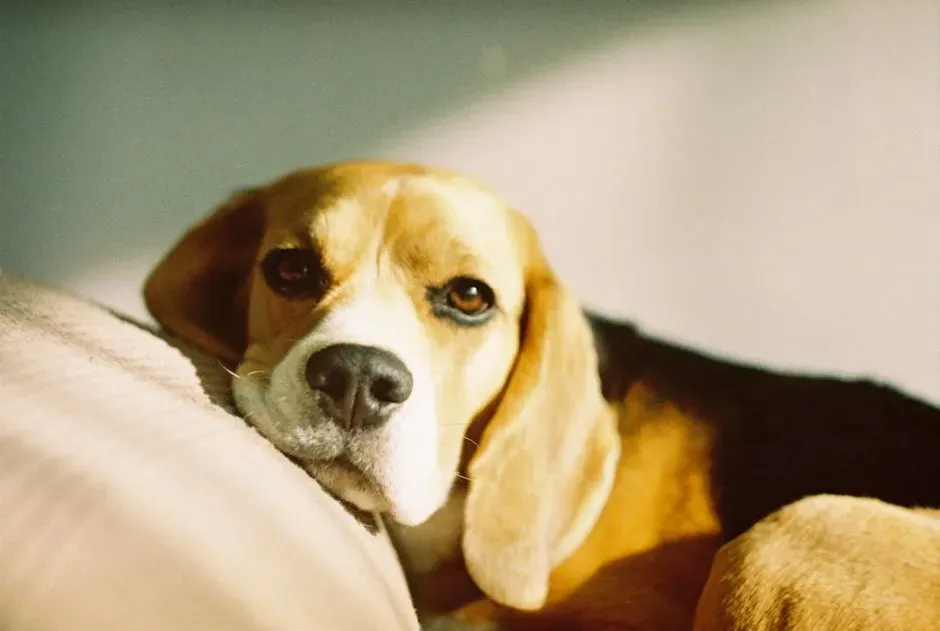
Ask almost any Beagle owner and you’ll hear some version of this: “he just knows when something’s wrong.” Beagles aren’t officially an emotional support breed, but no one told them that. They often seem to pick up on stress, sadness, or illness, and respond in their own slightly awkward, deeply sincere ways.
Maybe they abandon their favorite toy to curl up against you when you’re crying. Maybe they follow you room to room when you’re sick, refusing to leave. Maybe they go suddenly quiet and gentle when the usual chaos would normally be on full blast. Is it science, or coincidence? Probably a messy mix of both – but once a Beagle has pressed its warm body against your leg on one of your worst days, breed stereotypes start to feel shallow.
#1 – The Way They Turn From “Pet” Into A Weird, Perfect Little Person

This is the part no breed description, no online article, and no Instagram account really captures. Over time, your Beagle stops feeling like “a dog” and starts feeling like a full-blown roommate with quirks, opinions, and a shared history. You know their moods by the way they flop onto the couch. You can tell which bark means “mailman” and which one means “I dropped my toy under the stove, help.”
They weave themselves into every corner of your life – the morning snuggle before coffee, the post-work walk where you finally decompress, the late-night snack you “accidentally” share. Their stubbornness becomes a personality trait you defend to others. Their howls become “his singing.” At some point you realize you’re not just a Beagle owner, you’re a Beagle person, permanently.
A dog is the only thing on earth that loves you more than he loves himself.
Josh Billings
The Bottom Line
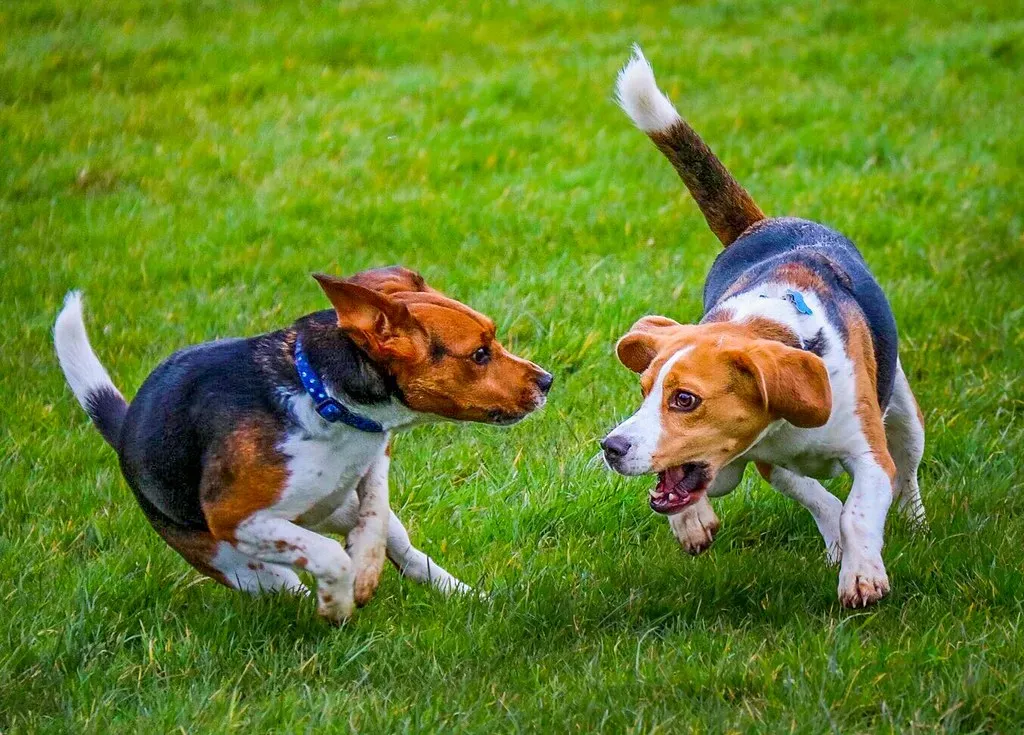
Owning a Beagle shatters the cute, simple image most people have of the breed. You learn fast that behind the floppy ears is a sharp mind, a relentless nose, and an emotional radar that rewires your whole routine. They’re stubborn, loud, escape-prone, and sometimes infuriating – but they’re also hilarious, fiercely loyal, and weirdly human in the way they fold themselves into your life.
Non-owners will always underestimate the work. Only Beagle people understand how much the chaos is part of the charm. In the end, you don’t just have a dog – you share your days with a small, opinionated partner in crime, and honestly, that’s the whole point. Be honest: if you’ve lived with a Beagle, which of these hit a little too close to home, and what would you add?