
Research Shows That Dogs Can Smell the Cortisol Your Body Releases When You Are Stressed – Which Is Why They Often React to Your Anxiety Before You Have Said or Done Anything to Signal It

If you have ever had your dog suddenly climb into your lap, stare at you intensely, or stick to you like glue on a day you felt overwhelmed, it probably did not happen by chance. Long before you slam a door, start crying, or even consciously admit to yourself that you are stressed, your body is quietly sending out chemical signals. Your dog is not guessing how you feel; in many cases, it is actually smelling it.
Recent research has shown that dogs can detect the cortisol and other compounds your body releases when you are anxious or under pressure. That means your dog may understand that something is wrong before you have said a single word. Once you start to see your dog’s behavior through that lens, even small moments – a nudge of the nose, a paw on your knee – start to feel very different.
The Science Behind Stress: What Cortisol Actually Is

When your brain decides something is stressful, your body responds with a finely tuned chemical cascade. One of the most important players in that response is cortisol, often called the stress hormone, produced by your adrenal glands. It helps mobilize energy, sharpen focus, and prepare you to handle whatever is happening, whether it is a tense meeting, a near-miss car accident, or an argument with someone you love.
Cortisol does not stay locked inside your body. It circulates in your blood and can be detected in saliva, sweat, and even on your breath. As your levels change, the chemical profile of your body odor shifts in subtle ways you will never consciously notice. To a dog, though, those tiny changes are like someone turning up the volume on a radio station that has been playing quietly in the background the whole time.
Why Dogs’ Noses Are Essentially Living Medical Devices

To understand how dogs can smell stress, you have to appreciate how insanely powerful their noses are. A dog’s sense of smell is often estimated to be tens of thousands of times more sensitive than ours, and their brains devote a huge amount of space to processing scent information. Where we see a room, they smell layers of time, emotion, and history embedded in the air.
Inside a dog’s nose are hundreds of millions of scent receptors, along with a special structure called the vomeronasal organ that helps them pick up chemical signals other animals give off. They do not smell just “you” as one thing; they smell your diet, your environment, your hormones, your mood. Compared to that level of detail, your own sense of smell is like a blurry black‑and‑white photo next to their ultra‑high‑definition color video.
What Studies Have Actually Found About Dogs Smelling Stress

In the last few years, researchers have started putting this idea to the test in more controlled ways. In carefully designed experiments, people are asked to do stressful tasks, such as challenging mental arithmetic under time pressure, while their stress levels are monitored. Saliva or sweat samples are collected before and after the stressful activity to capture the shift in their body chemistry.
Dogs are then trained to distinguish between the “calm” samples and the “stressed” samples from the very same person. Over and over again, many dogs have been able to consistently identify the stress samples at rates far above random chance. This strongly suggests that the emotional state of stress leaves a recognizable scent signature and that dogs can lock onto it with impressive accuracy.
How Dogs React to Your Anxiety Before You Speak

Once you accept that dogs can smell stress-related changes, their behavior makes a lot more sense. Many people notice that their dogs become clingy, watchful, or unusually attentive on days when anxiety is spiking, even if they are trying to keep everything “under control.” The dog is not waiting for you to snap; it is already responding to what your body is broadcasting through smell.
Some dogs respond by moving closer, leaning against you, or trying to initiate physical contact, almost like they are trying to ground you. Others might pace, whine, or act restless, picking up on the tension without knowing what to do with it. What looks like random neediness or “bad behavior” is often an honest emotional reaction to a scent cue that you did not realize you were giving off.
From Service Dogs to Everyday Pets: Stress Detection in Real Life
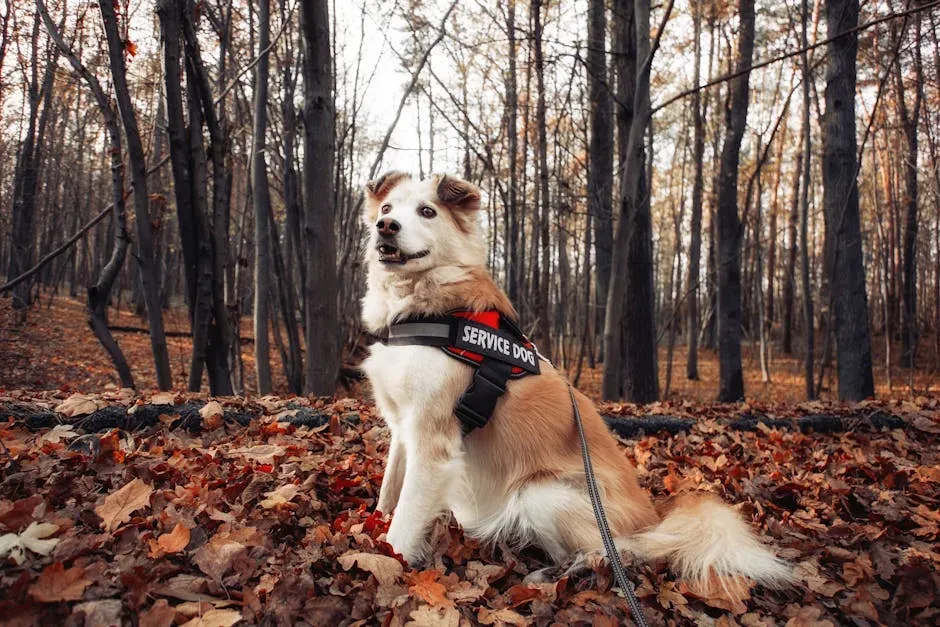
For trained service and therapy dogs, this ability to detect stress is not just a cute quirk; it can be a life-changing tool. Some dogs are specifically trained to recognize the scent and body language associated with panic attacks, PTSD flashbacks, or intense anxiety and then respond in planned ways, like nudging, leaning, or guiding their person away from crowded spaces. In those cases, what starts as an instinctive sensitivity gets shaped into a reliable, repeatable skill.
But even dogs that have never seen the inside of a training center often show smaller versions of the same behavior. They might come curl up beside you right before you mentally crash at the end of a brutal day, or refuse to leave your side when you are silently spiraling about money or health worries. It is not magic; it is biology and bonding working together in a way that feels almost supernatural from the outside.
How Your Stress Smells Shape Your Relationship With Your Dog

Once you realize your dog can smell when you are stressed, it changes the emotional contract between you a little. You might think you are “hiding it” by forcing a smile, keeping your voice level, or powering through, but your dog is still living in that invisible cloud of stress scent. They are sharing your internal weather in a way most humans around you probably are not.
That can be a good thing and a challenging thing at the same time. On one hand, it means your dog often tunes in when you most need comfort, offering support without judgment or awkward questions. On the other hand, chronic, unrelenting stress can start to color your dog’s daily environment too, potentially making them more vigilant or uneasy over time. The more you take care of your own nervous system, the more you are also taking care of theirs.
Can You Train or Harness This Ability More Deliberately?

If you are wondering whether you can “train” your dog to notice or respond differently to your stress scent, the answer is partly yes and partly no. The raw ability to smell changes in your cortisol and body chemistry is already there; you do not have to install that. What you can influence is how your dog learns to respond once they pick up on those changes, through patient, consistent reinforcement.
For example, some people intentionally pair their own calming routines with quiet connection time with their dog, such as deep breathing while gently stroking the dog or practicing short relaxation exercises together. Over time, that can help your dog associate the scent of your rising stress not just with tension, but with predictable, soothing rituals. You are turning their “early warning system” into a cue for both of you to slow down and reconnect instead of spiraling.
What This Means for How We Should Treat Dogs Going Forward

Knowing that dogs can literally smell our stress should make us rethink what we expect from them. They are not just pets absorbing whatever emotional chaos we happen to be in; they are highly sensitive partners who are physically affected by living in constant proximity to our moods. It feels unfair to demand perfect obedience and chill behavior from a dog while our own nervous system is constantly on high alert.
In my view, this is the part we do not talk about enough: if we want calmer, more secure dogs, we have to be willing to chase calmer, more secure lives for ourselves too. That does not mean pretending we are never stressed, but it does mean noticing how often we are asking our dogs to live inside our storms. If our dogs are willing to shoulder some of our emotional load, the least we can do is not make that load heavier than it needs to be.
Conclusion: Your Dog Is Reading You Long Before You Realize It

The idea that your dog can smell your cortisol and sense your stress before you say a word is not some mystical myth; it is a reflection of just how deeply biology and companionship are intertwined. Your emotional life leaks out into the air as a complex mix of chemicals, and your dog is constantly breathing that in, processing it, and quietly adjusting how they act around you. What feels like “my dog just knew” is often a finely tuned nose and a loyal heart working together.
To me, that should nudge us toward a more honest kind of responsibility: your dog is not just watching your actions; they are carrying your invisible feelings too. Maybe the most loving thing we can do for them is to take our own stress seriously, not only for our sake but for theirs. The next time your dog comes over and presses close on a hard day, you might ask yourself a simple question: if they can smell what I am feeling, what do I want that to be most of the time?