
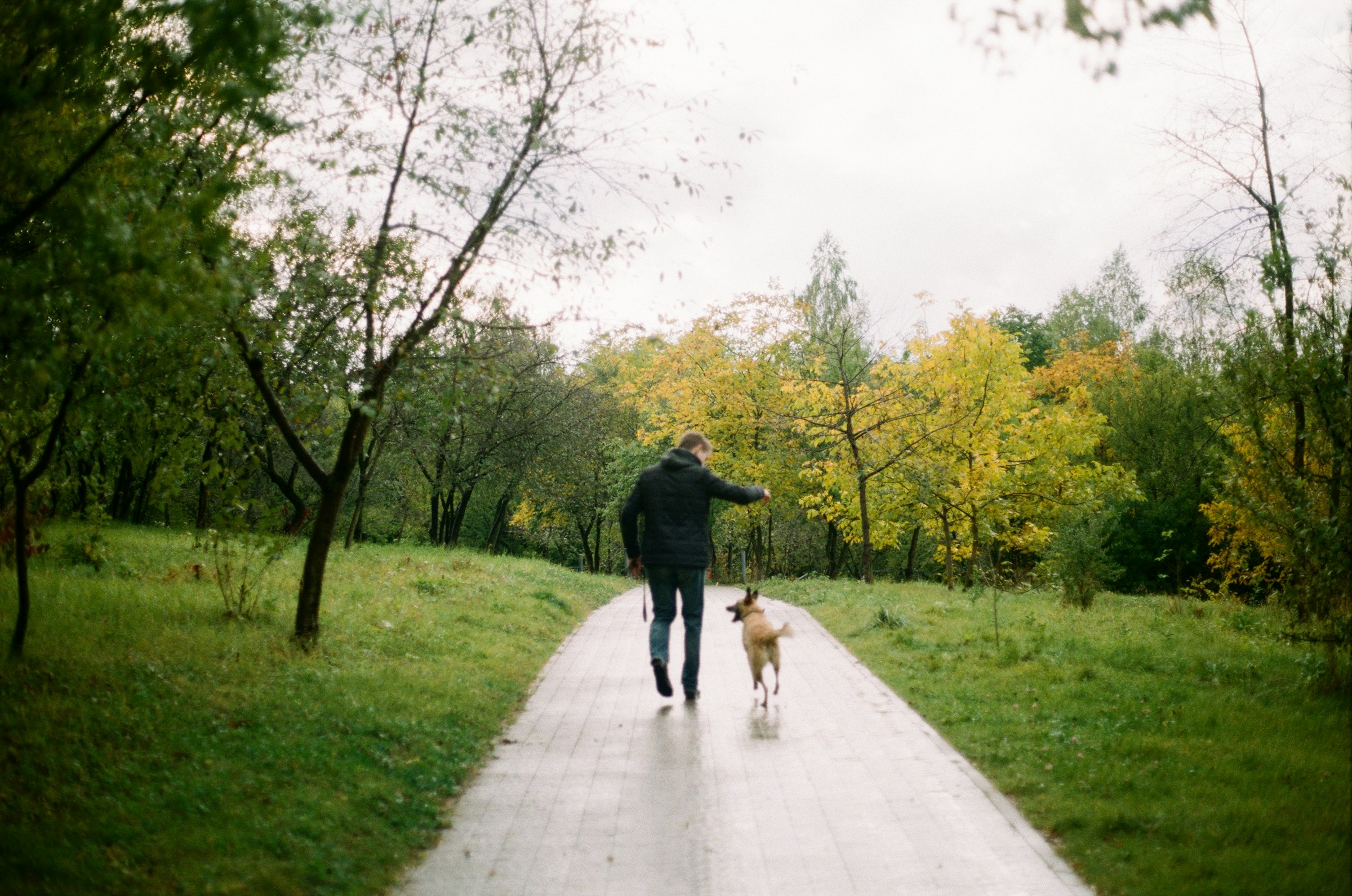
Dogs Can’t Talk, So They Walk: What A Sudden Position Change Really Means. When a dog walks behind you, it usually means they view you as their safe leader, protector, or guide. It can also mean they feel anxious, tired, or overwhelmed by their surroundings. Modern trainers note that old “dominance” or “alpha” ideas – which claimed walking behind meant submission – are outdated, and the behavior is mostly about trust or comfort.
That Strange Moment Your Dog Slips Behind You
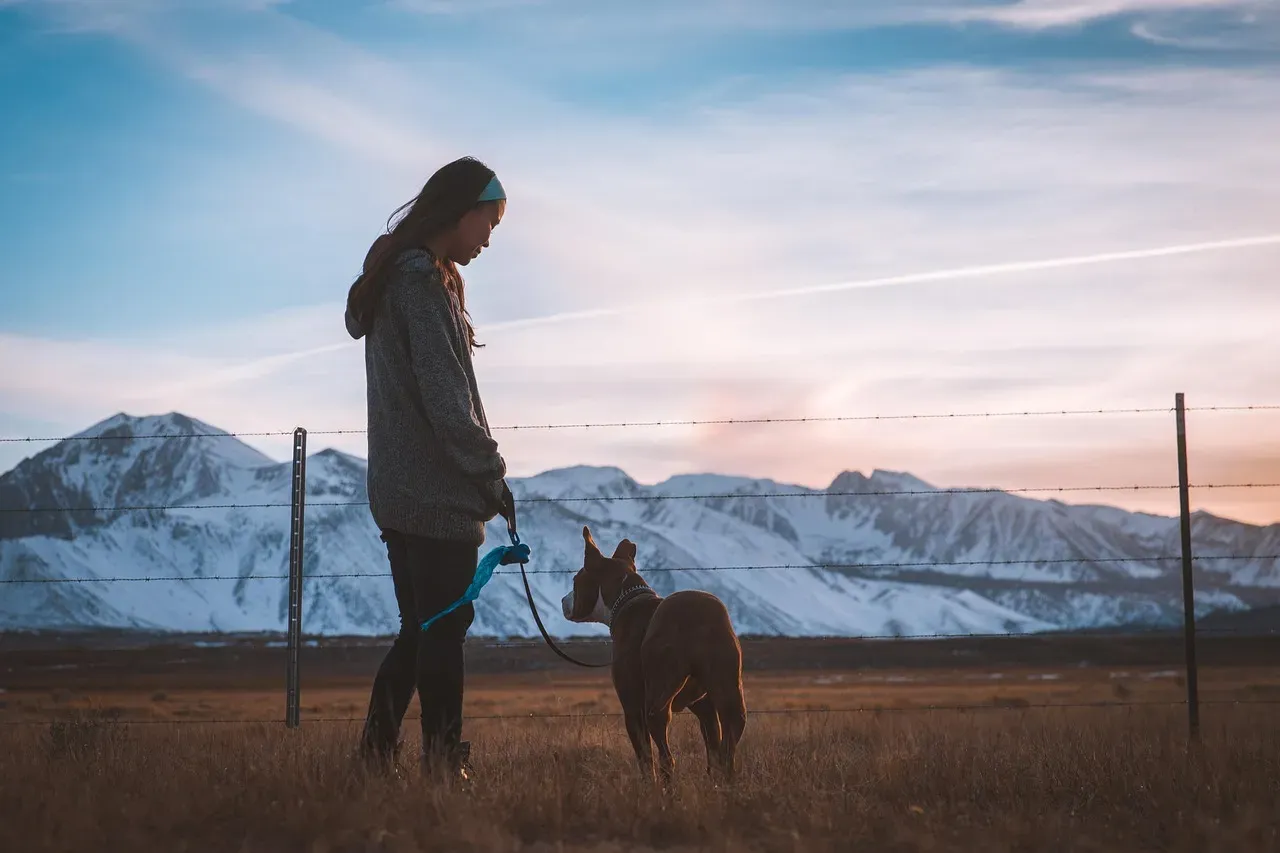
Have you ever been on a walk, your dog happily trotting by your side, and then out of nowhere they drift behind you and quietly follow your heels? It can feel a bit odd, almost like someone in a crowded street suddenly falling in line right at your back. Many people assume their dog is just getting tired or lazy, but very often this subtle shift says a lot more about trust and leadership than about low energy.
From a dog’s point of view, changing position on a walk is a form of communication. Moving behind you can be a way of saying you lead, I’ll follow, especially in moments that feel confusing, noisy, or new. When I first noticed my own dog start doing this on busy sidewalks, I thought she was worn out; over time it became obvious she was actually choosing the “safe spot” where she could let me do the navigating.
Leadership, Not Laziness: The Hidden Meaning Of Walking Behind You
In dog psychology, position in the “traveling group” matters. Confident, decision-making dogs will often walk in front or slightly ahead, scanning what’s coming; more cautious or deferential dogs prefer to hang back where the leader’s body acts as a kind of moving shield. When your dog suddenly shifts from beside you to just behind your leg, they may be saying that, in this moment, they would rather you handle the choices and potential surprises.
This doesn’t mean your dog is weak or fearful by default; it may simply reflect a healthy bond where you are the predictable one who knows where you’re going. Think of a human friend who happily lets you drive when the roads get complicated. Your dog sliding behind you on a walk can be the canine version of handing you the metaphorical car keys and trusting your route.
How Environment And Stress Shape Your Dog’s Walking Style
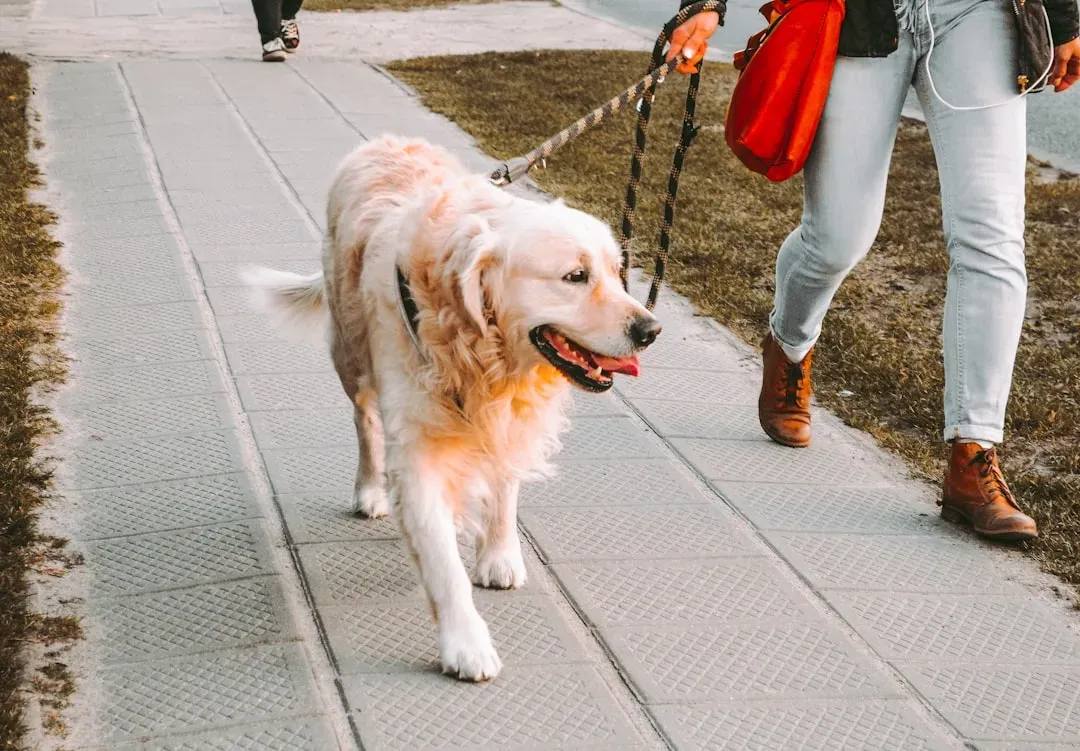
Context matters more than we realize. A dog who walks confidently in front of you in a quiet neighborhood might fall behind when you hit a crowded street, a noisy park, or a path with bikes and runners flying past. Sudden sounds, unfamiliar smells, or fast-moving objects can all push a dog into “I’ll let you handle this” mode. That tiny change of position is often the early warning sign that they feel a bit overwhelmed or unsure.
Pay attention to what’s happening around you in the exact moment your dog drops behind. Is there a barking dog across the road? A skateboard rattling nearby? A new construction site that suddenly appeared on your usual route? When you start connecting those dots, walking behind you stops looking like random behavior and starts looking like a thoughtful strategy your dog uses to feel safer while still staying close.
Reading The Rest Of The Body: Is It Guidance Or Just Fatigue?
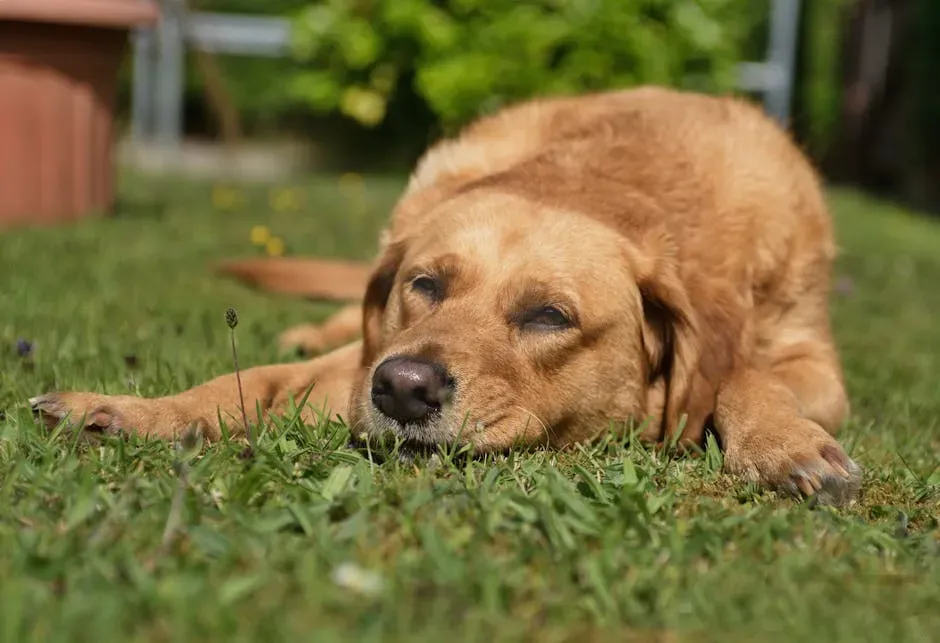
Of course, sometimes a dog really is just tired, and body language is what helps you tell the difference. A dog seeking guidance usually walks behind you with a relatively normal rhythm: the tail may be neutral or slightly lower, the ears may flick forward and back, and the leash stays fairly loose. They are alert, following you on purpose, almost like a hiker choosing to walk behind an experienced guide on a tricky trail.
Fatigue looks different. A tired dog tends to lag more heavily, possibly with a slower, dragging gait, frequent yawning or stopping, and a tongue hanging out for longer periods as they pant. You might notice they are less responsive to your cues and more interested in lying down than in watching where your feet go. When in doubt, shorten the walk and see whether they perk up later; a dog who was truly exhausted will show you with their whole body, not just by quietly choosing your slipstream.
What Your Dog Asks For When They Look To You For Guidance
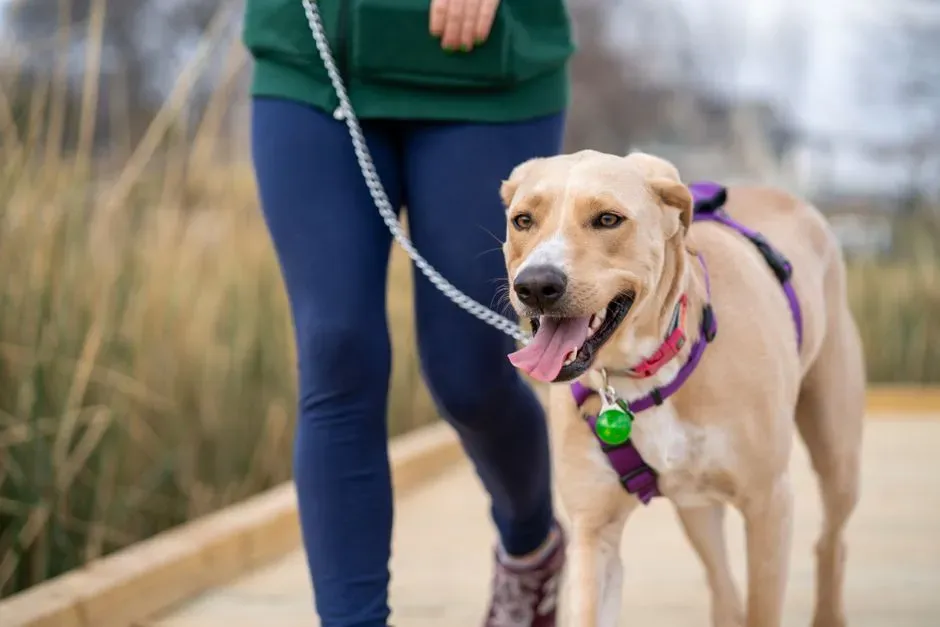
When a dog tucks in behind you, they are often asking for clarity and calm. Clear guidance on a walk is less about dominance and more about predictability: steady pace, consistent direction, and simple cues. A dog who trusts your decisions does not have to obsess over every approaching stroller or rustling bush; they can relax into the role of follower, just like a child who feels safer holding an adult’s hand in a busy store.
In practical terms, this is your chance to quietly step into the role your dog is asking you to play. Keep your leash handling smooth instead of jerky, avoid weaving unpredictably, and use familiar cues in a calm voice. If you act like the grounded center of the walk, you become the emotional anchor your dog is seeking, and that small move behind you turns into a sign of healthy reliance instead of worry.
How To Respond: Training Tips That Build Confidence, Not Fear
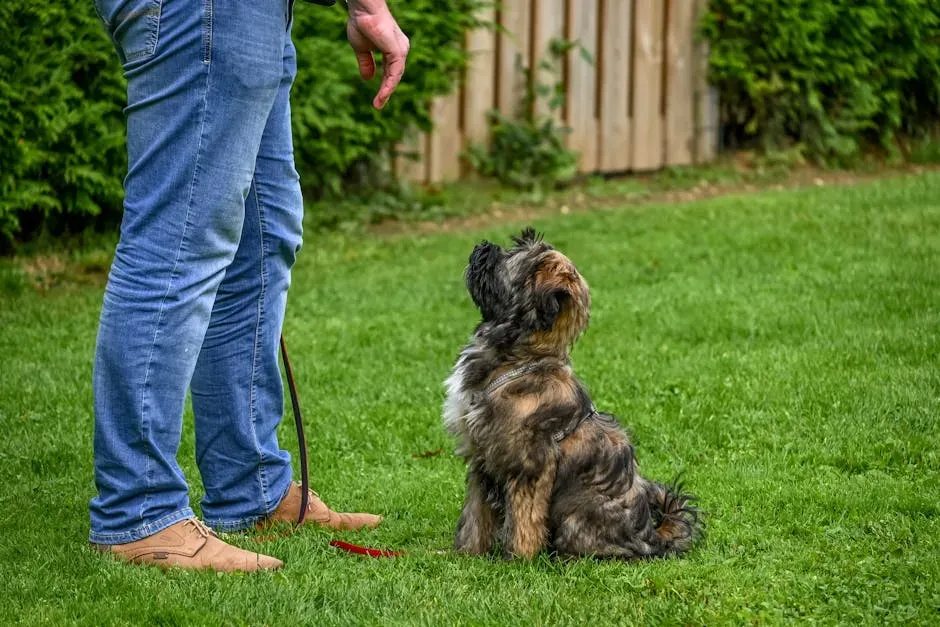
If your dog regularly retreats behind you in certain situations, you can use that information to build their confidence over time. One simple approach is gradual exposure: move toward the stressful trigger in small steps, with treats or praise for staying engaged, and then retreat before your dog tips into panic. You remain in front or slightly to the side, letting your body block some of the intensity while rewarding every sign that they can handle the moment.
Shorter, more intentional walks are often better than long, chaotic ones. Choose routes where you can predict at least some of the triggers, and use walking behind you as a cue to slow down, breathe, and maybe create a little more distance. Rather than dragging them back to heel or insisting they stay out front, treat the position change itself as useful feedback: your dog is telling you how much support they need right now, and your job is to respond thoughtfully instead of ignoring the message.
Health, Age, And Personality: When To Look A Little Closer
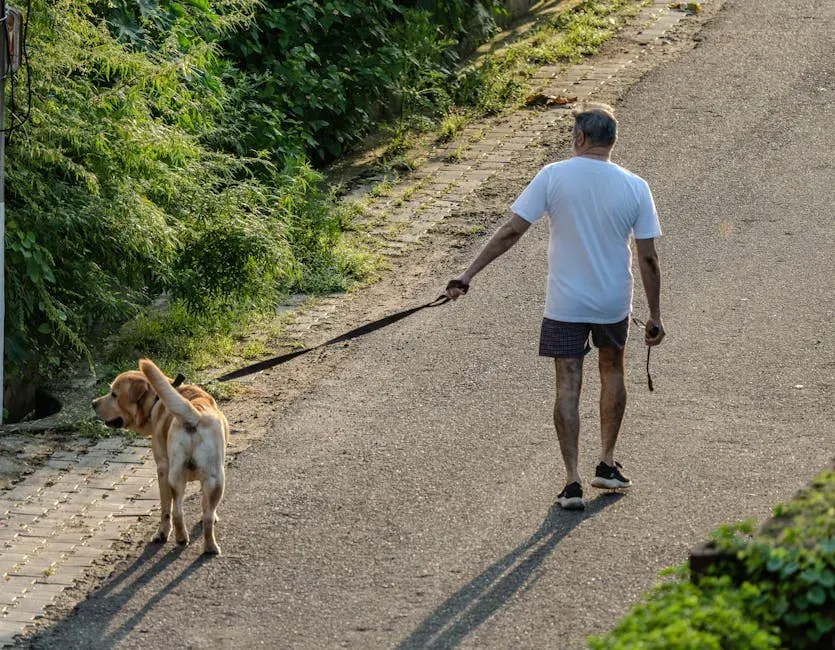
While guidance-seeking is common, a sudden and persistent change in walking style can also signal physical discomfort. Older dogs or those with joint pain may choose to walk behind because it lets them go at their own gentle pace, especially on hills or hard pavement. If your dog starts dropping back on every walk, even in calm places they used to enjoy, it is worth checking for limping, stiffness, or any signs that a vet visit might be in order.
Personality also plays a big role. Some dogs are naturally more cautious, sensitive, or people-focused, and for them, walking behind you can simply be their favorite way to stay connected. Others are bold explorers who only fall back in very specific situations. Knowing your dog’s typical style makes it easier to spot when something has shifted from “this is just how they are” to “this is new and deserves attention.” You do not have to panic, but you also do not want to dismiss a new pattern if it feels out of character.
Why This Small Behavior Change Deserves Your Respect
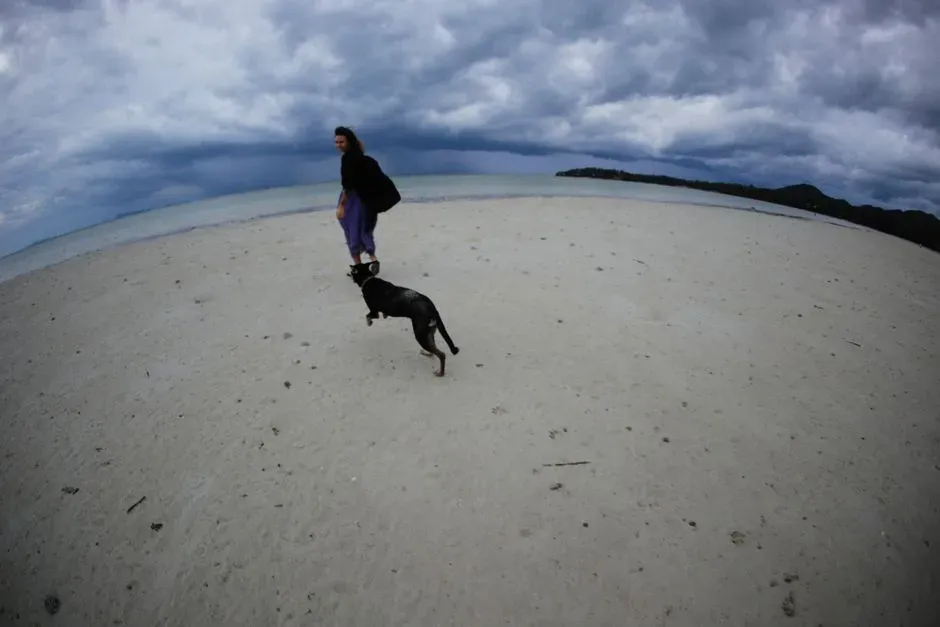
The more time you spend watching your dog instead of just walking your dog, the more you realize how many quiet decisions they make to stay close, stay safe, and stay connected to you. Sliding behind you is one of those tiny decisions that is easy to overlook or misunderstand. I used to shrug it off as my dog being a bit lazy at the end of a long day; now I see it as one of the clearest signs that she trusts me to handle the world when it feels a little too loud.
My opinion, after years of living with and watching dogs, is simple: we should take this behavior seriously, but not in a fearful way. It is a compliment, not a crisis. Your dog is not always tired or timid; often they are just choosing you as their guide in that moment. If we treat that choice with respect – adjusting our pace, watching the environment, and stepping into quiet leadership – the bond gets deeper, the walks get easier, and that small shift behind your heels starts to feel less like a mystery and more like a soft-spoken thank you. The next time your dog falls in line behind you, will you see it as a problem to fix or a relationship you get to honor?


