
11 Things a Dog’s Eyes Show That Owners Put Down to Age
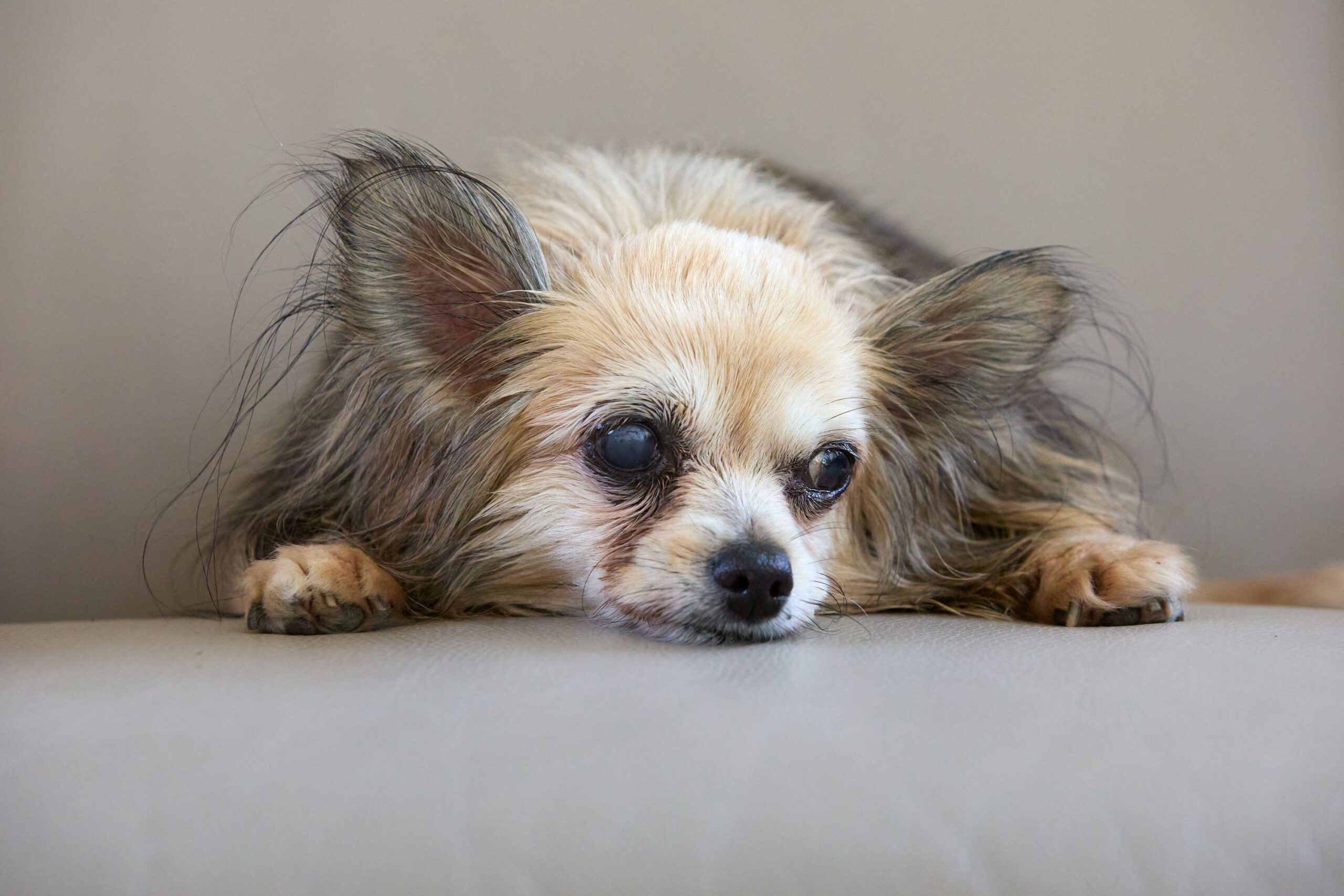
Most dog owners assume a graying muzzle and a cloudy eye just mean their pet is “getting old.” But veterinary ophthalmologists say that assumption is exactly why so many treatable eye diseases in senior dogs go undiagnosed until it’s too late.
Nearly every “normal aging” eye symptom on this list can also be the first sign of a condition that steals vision, causes chronic pain, or signals a disease elsewhere in the body. The line between harmless wear-and-tear and a genuine emergency is thinner than most people realize.
Here’s what veterinary eye specialists actually say your dog’s eyes are trying to tell you.
#1 – That Cloudy Blue Haze Isn’t Always “Just Getting Old”
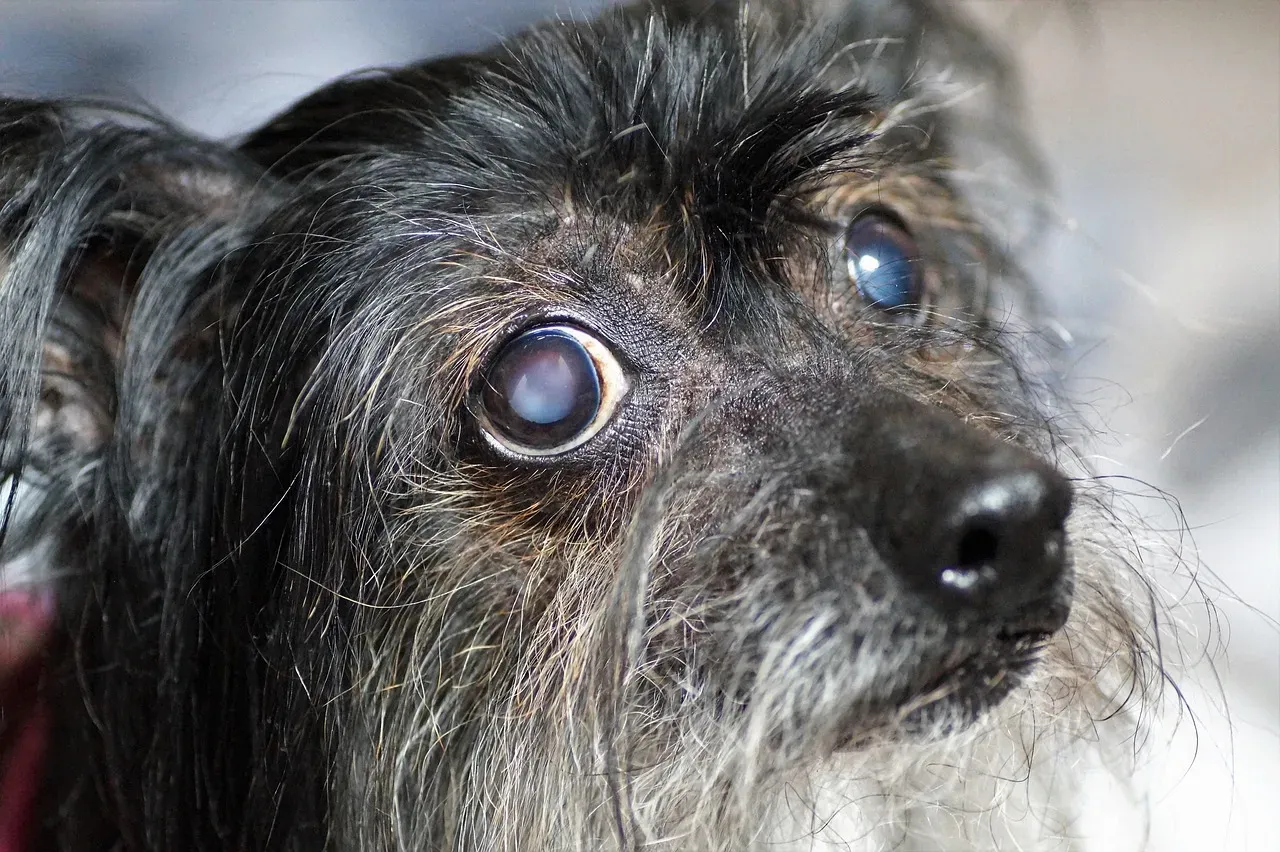
Here’s the mistake almost every dog owner makes: seeing a hazy, bluish-gray tint spread across their senior dog’s pupils and assuming it’s simple old age.
Sometimes it really is. Nuclear sclerosis is an age-related change to the lens that’s often noted after 8-10 years of age in dogs and cats. It’s considered a normal change in the lens associated with aging and is observed as a cloudiness or bluish discoloration on the pupil, and vision does not appear to be significantly affected.
But here’s what most owners don’t realize: a true cataract looks almost identical to the untrained eye, yet behaves completely differently. Cataracts are white and opaque and represent a change in the ability of light to penetrate to the retina, and cataracts cause diminished vision. Cataracts can also lead to the development of inflammation inside the eyes, which can lead to the development of serious complications, like glaucoma.
Quick Compare
- Nuclear Sclerosis: Bluish-gray haze, usually appears after age 8-10, vision stays largely normal.
- Cataracts: White, opaque lens that blocks light to the retina and reduces vision.
- Complication Risk: Cataracts can trigger internal eye inflammation and glaucoma; nuclear sclerosis does not.
- How To Tell Them Apart: Only a veterinary eye exam can confirm which one your dog has.
The only way to tell the two apart with certainty is a vet exam. And the next sign on this list is the one vets say gets waved off more than any other.
#2 – Bumping Into Furniture at Night Isn’t Clumsiness
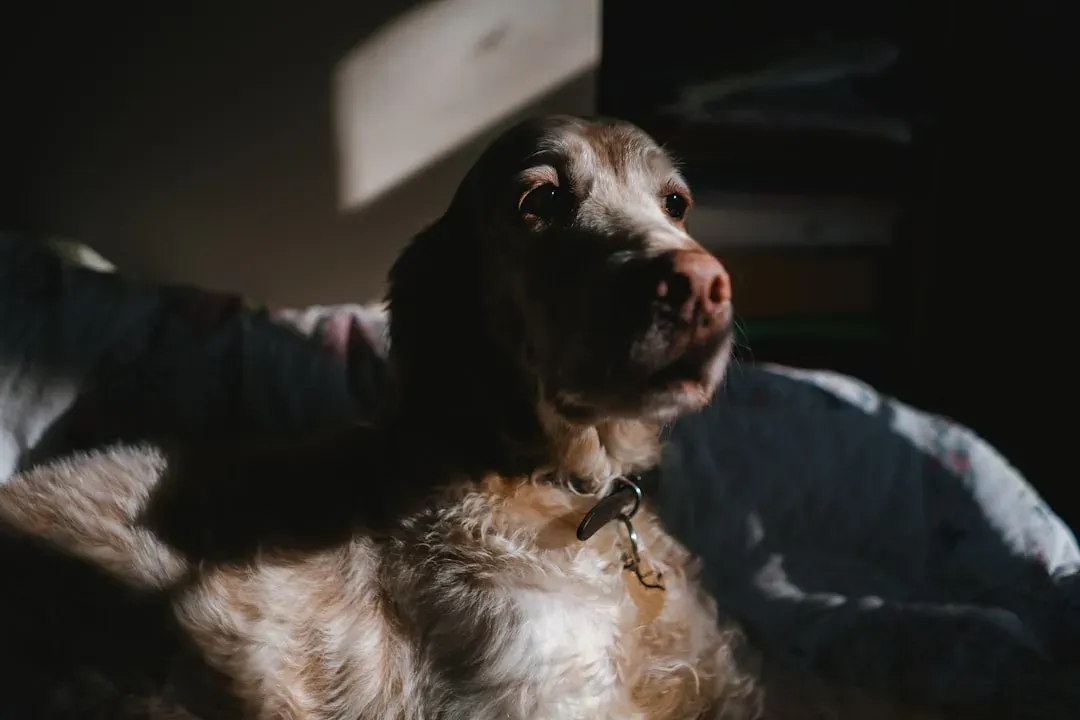
Owners love to joke that their senior dog has “gotten clumsy” or “forgets where the couch is” after dark. Vets have a much less amusing explanation.
Typically, the rod cells start to atrophy first, causing night blindness, and then the cone cells atrophy, leading to complete blindness, according to AKC’s chief veterinary officer. This condition, called progressive retinal atrophy, is sneaky because both eyes become blind, but the vision loss occurs slowly, giving dogs time to adjust to the changes. Typically the first thing caregivers notice is their dog losing the ability to see at night.
The giveaway most owners completely miss: caregivers may notice their dog’s reluctance to go outside at night, enter a dark room, or go up or down stairs. The dog’s pupils may also stay dilated and fail to constrict well in bright light, with an increase in the brightness of the normal eye shine visible within the pupil.
If your “clumsy” senior dog suddenly refuses the stairs after sunset but is fine in daylight, that’s not aging – that’s a retina quietly shutting down. Except the next sign hides behind something owners wipe away every single morning without a second thought.
#3 – Those Morning “Eye Boogers” Could Mean the Eye Is Starving for Moisture
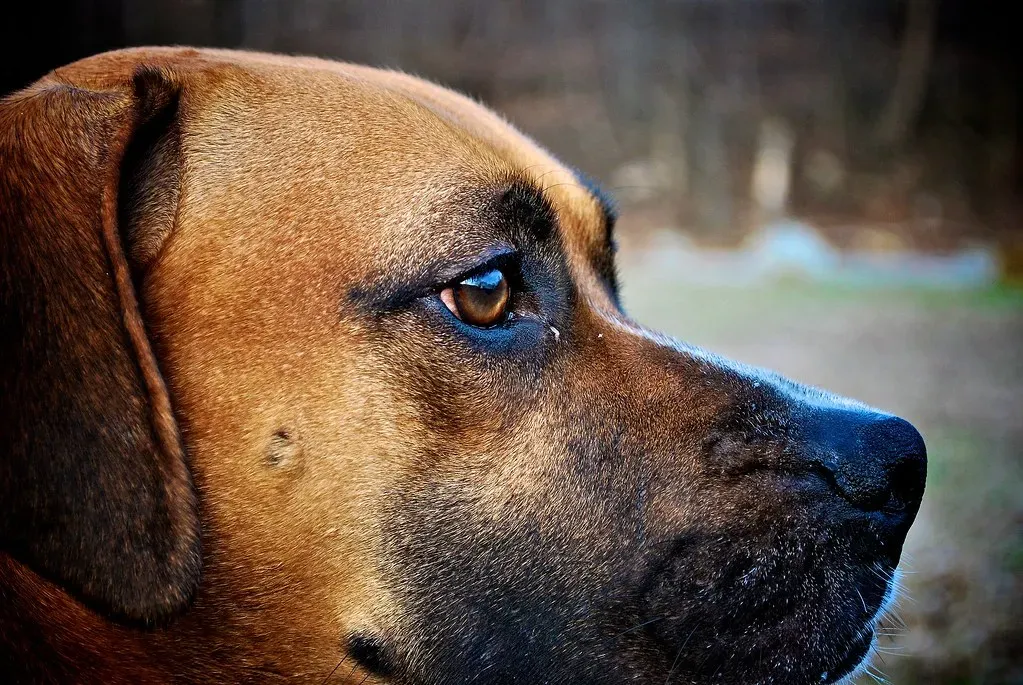
Every dog owner wipes gunk from their senior dog’s eyes and assumes it’s a harmless side effect of getting older. Most vets say that’s often a misdiagnosis.
The most common clinical signs of keratoconjunctivitis sicca, or dry eye, include painful, red eyes with thick mucoid discharge, and it most commonly occurs in both eyes. Here’s the controversial part vets rarely say out loud: many owners actively make it worse by treating the discharge as cosmetic instead of medical, wiping it away daily without ever booking an exam.
The most common cause is immune-mediated inflammation of the tear glands, though other causes include endocrine disease such as hypothyroidism, Cushing’s disease, and diabetes mellitus. KCS most commonly affects middle-aged to older dogs, which is exactly why it gets waved off as “just an old dog thing.”
Left untreated, corneal ulceration with secondary infection can lead to loss of an eye, and chronic, uncontrolled dry eye may also cause corneal pigmentation, vascularization, and scarring. But eyelids themselves tell an even stranger story.
#4 – A Droopy Lower Eyelid Is Doing More Damage Than It Looks
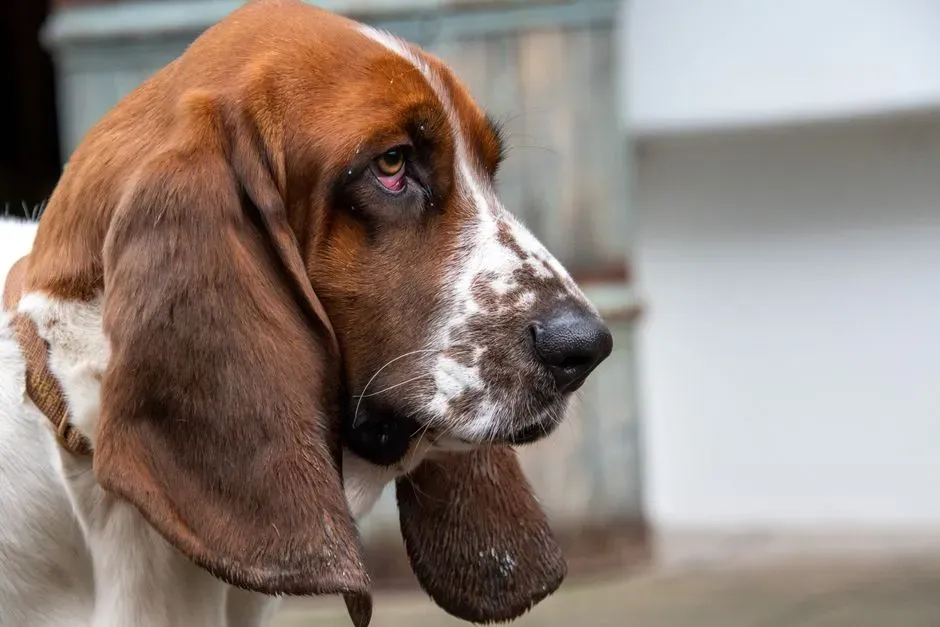
A sagging lower lid that exposes a strip of pink tissue is one of the most commonly dismissed changes in senior dogs. Owners chalk it up to “loose old skin,” the same way a person’s face sags with age.
The reality is more mechanical than cosmetic. As facial tissues lose elasticity, the lower eyelid can roll outward – a condition called ectropion – leaving the delicate conjunctiva exposed to dust, pollen, and bacteria all day long.
The single most overlooked consequence: that constant exposure sets the stage for chronic, low-grade conjunctivitis that many owners then blame on allergies instead of the eyelid structure itself.
Breeds with naturally loose facial skin – Bloodhounds, Basset Hounds, Cocker Spaniels – are more prone to this developing or worsening with age, but it can appear in nearly any senior dog. The fix is often surgical, and it’s frequently far more effective than years of antibiotic drops aimed at symptoms rather than the cause. Yet lumps near the eye raise a very different kind of red flag.
#5 – New Bumps on the Eyelid Aren’t Automatically “Age Spots”
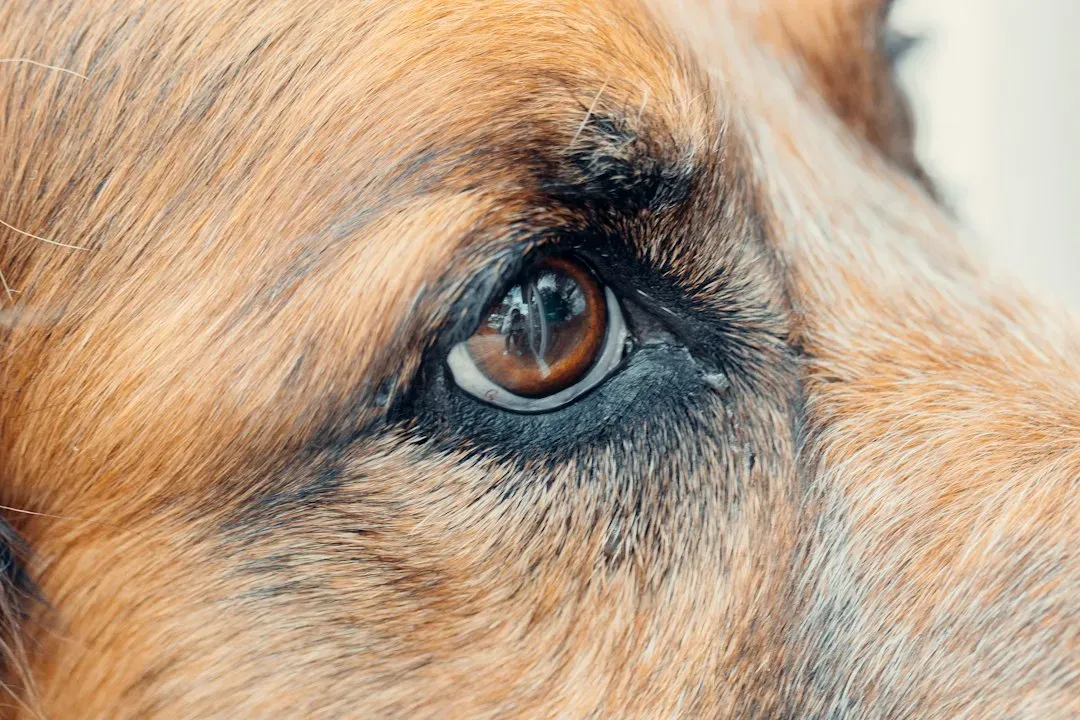
Owners frequently notice a small growth along the eyelid margin of an older dog and assume it’s simply another benign lump that comes with a graying muzzle, no different than the fatty lipomas showing up elsewhere on the body.
Here’s the part that surprises most people: eyelid tumors are actually one of the most common growths found in senior dogs, and while a large percentage turn out to be benign, they don’t always stay that way if ignored. A growth that starts as a tiny pink dot can slowly enlarge, rub against the cornea with every blink, and eventually cause irritation, tearing, or even corneal ulceration from constant friction.
The controversial opinion many vets won’t say directly: waiting to “see if it grows” is often the wrong call. Small eyelid masses are far easier and cheaper to remove early, under lighter sedation, than after they’ve grown large enough to distort the eyelid shape.
Fast Facts
- Eyelid growths are among the most frequently diagnosed lumps in senior dogs.
- Most turn out benign, but they don’t always stay harmless if left alone.
- Even small growths can rub the cornea with every blink, leading to irritation or ulcers.
- Early removal, while the growth is small, typically requires lighter sedation and less recovery time.
Any new lump near a senior dog’s eye deserves an actual look under magnification, not a guess from across the living room. Still, nothing quite compares to the lump that seems to vanish and reappear on its own.
#6 – A Red Lump in the Corner of the Eye Isn’t a “Weird Aging Thing”
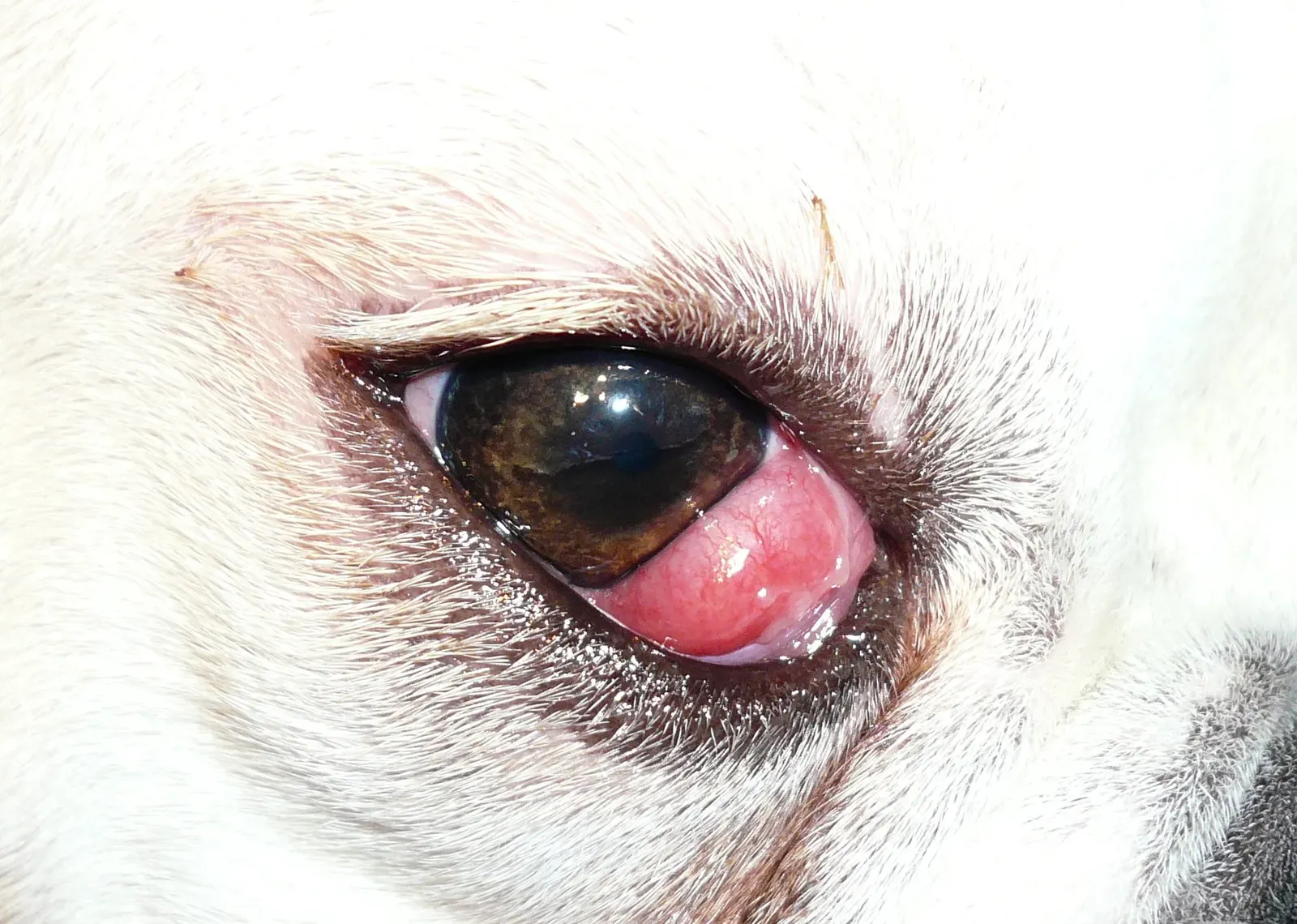
When a fleshy, red mass suddenly appears in the inner corner of a senior dog’s eye, most owners panic briefly, then convince themselves it’s just another quirky sign of getting old – especially if it seems to come and go.
That red lump has an actual name: a prolapsed third eyelid gland, commonly nicknamed “cherry eye.” It happens when the connective tissue holding the tear-producing gland of the third eyelid weakens and lets the gland pop up into view.
Most owners don’t realize this gland produces a significant portion of a dog’s tear film, which is exactly why simply cutting it out – a once-common fix – often backfires by causing chronic dry eye years later.
While cherry eye is often thought of as a young-dog problem in breeds like Bulldogs and Cocker Spaniels, connective tissue weakening with age can cause it to reappear or develop for the first time in senior dogs whose tissues have simply lost their earlier tone. Surgical repositioning, not removal, is the standard recommendation for exactly that reason. Then there’s the change that looks like nothing more than a suntan.
#7 – A Dark, Dull Film Creeping Across the Eye Is a Scar, Not a “Tan”

Some senior dogs develop a brownish, leathery-looking film spreading across the surface of the eye, and owners often describe it as the eye “just getting darker with age,” almost like a suntan.
It isn’t pigmentation from sun exposure at all – it’s scar tissue. Many dogs develop corneal scarring called hyperpigmentation that can be seen on close observation, and corneal scarring often looks like a dark brown film covering the eyes. This typically develops as a downstream consequence of long-term irritation, most often chronic dry eye that was never treated aggressively enough.
The detail almost no owner catches in time: tiny blood vessels coursing across the cornea can often be seen alongside the pigmentation, and vision may be reduced if the scarring is extensive.
By the time that brown film is visible to the naked eye, the underlying irritation has usually been building for months, quietly stealing clarity one layer at a time. What looks like a cosmetic quirk of aging is really the eye’s own defense system scarring over a wound that was never properly addressed. But pupils can lie in a much quieter way.
#8 – Pupils That Won’t Shrink in Bright Light Are a Warning Sign, Not a Quirk
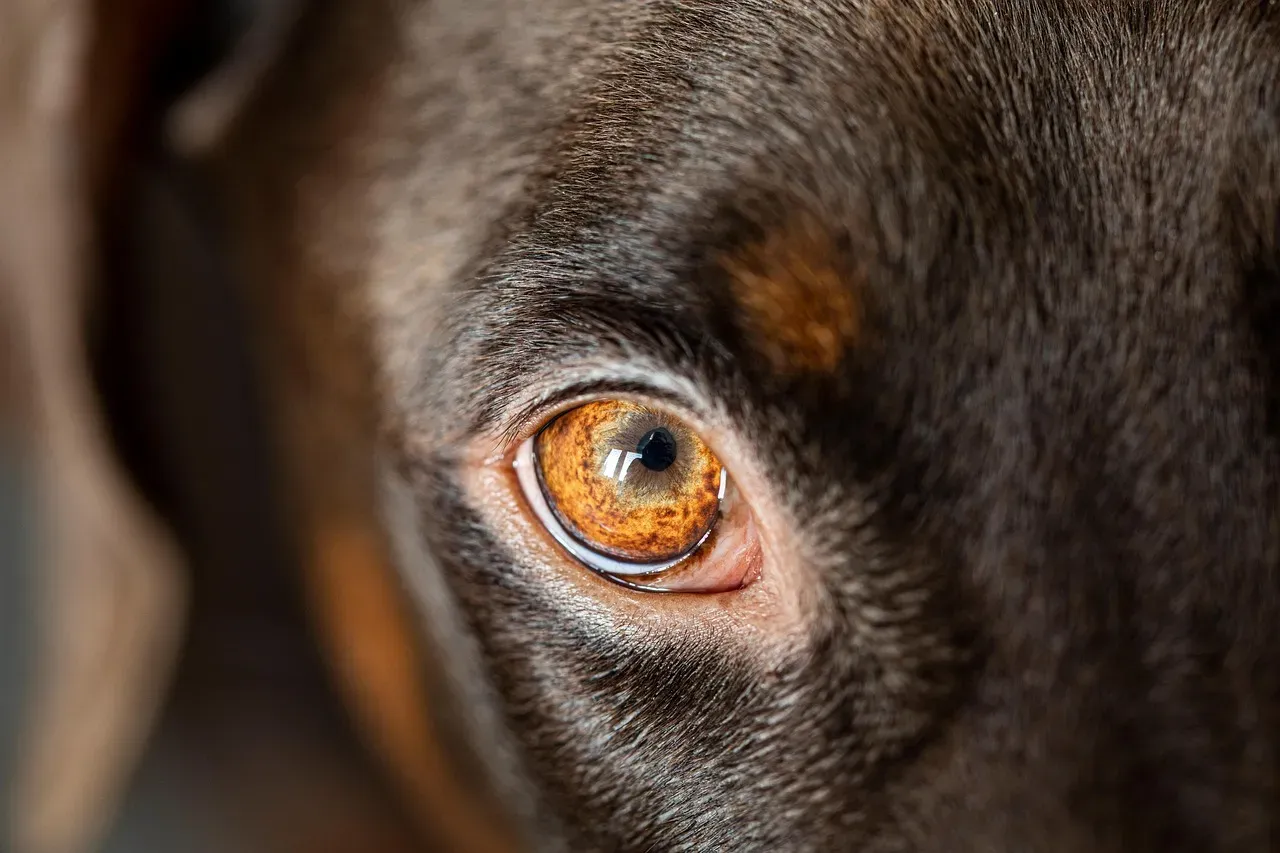
Owners often notice their senior dog’s pupils look permanently larger than they used to, especially in bright rooms, and assume it’s simply “how his eyes look now.”
Fixed or sluggish pupils are one of the more diagnostic clues vets rely on. Dogs may have dilated pupils that don’t constrict well in bright light, as well as an increase in the brightness of the normal eye shine visible within the pupil, called the tapetal reflection. This combination points strongly toward retinal degeneration rather than ordinary aging.
What makes this particularly deceptive: the dog often still walks around confidently in familiar rooms, because a home doesn’t change layout often enough to expose the vision loss. It’s only in unfamiliar spaces, in dim lighting, or when furniture gets rearranged that the failing eyesight becomes obvious.
At a Glance
- Pupils stay wide and slow to shrink, even in bright light.
- Eye shine looks noticeably brighter than it used to.
- Dog moves confidently at home but hesitates in new or dim spaces.
- A simple penlight check can reveal the problem long before it’s obvious day-to-day.
A basic penlight test – checking whether both pupils shrink evenly and quickly when light hits them – takes ten seconds and can catch this months before an owner would notice on their own. None of that, though, matches the danger hiding in a simple red eye.
#9 – A Persistently Bloodshot Eye Is Rarely Just “Tired Old Eyes”
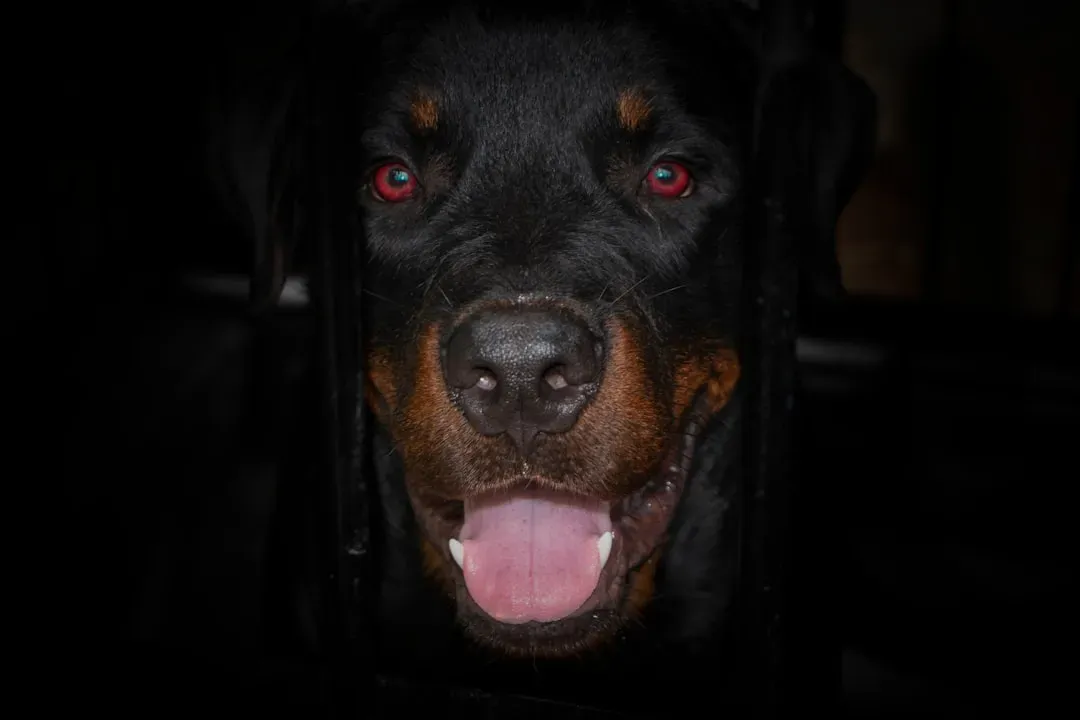
A senior dog with one eye that looks a little red gets written off constantly as tired, dusty, or irritated from a nap in direct sunlight. Vets say that assumption is responsible for more permanent vision loss than almost any other on this list.
Sometimes the initial symptoms of glaucoma are subtle and go undetected, a phenomenon actually nicknamed “silent glaucoma.” Most dogs with early to moderate longterm glaucoma are not taken to the veterinarian because the early signs – sluggish to slightly dilated pupils, mild congestion of the veins in the conjunctiva, and early enlargement of the eye – are so subtle that owners are not aware of the changes.
That subtlety is exactly the danger. Glaucoma occurs in about 1.7% of dogs in North America, and it doesn’t announce itself loudly in the early stages the way people expect a serious disease to.
A red eye that lingers for more than a day or two – even without obvious pain – deserves a pressure check, not a shrug.
By the time it becomes unmistakable, permanent damage has often already happened. And squinting takes that same danger one step further.
#10 – Squinting and Pawing at the Eye Is Pain, Not “Sensitivity From Age”
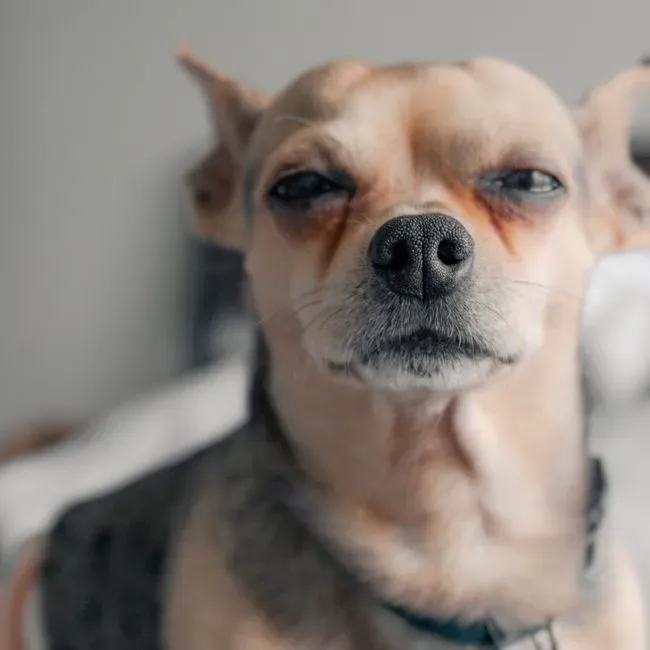
Owners frequently interpret an older dog squinting, blinking rapidly, or pawing at one eye as the pet simply becoming “more sensitive” or “grumpier” with age. Vets read it as something far more specific: active pain.
Most dogs with dry eye have painful, red, and irritated eyes, and they may squint, blink excessively, or hold their eyes shut. The same behavior shows up with corneal ulcers, uveitis, and early glaucoma – conditions that share overlapping symptoms but require completely different treatment.
The symptoms associated with glaucoma can also occur with other eye diseases that are much more common than glaucoma in nonpredisposed breeds, but these other eye conditions can also lead to glaucoma, and it’s possible for a dog to have more than one eye condition at a time.
Here’s the uncomfortable truth many owners resist: self-diagnosing eye pain based on symptoms alone is essentially guesswork, even for vets, which is why glaucoma cannot be diagnosed by symptoms alone. Squinting is never just a personality change – it’s the eye’s version of a wince. But nothing on this list is as urgent as the final sign.
#11 – A Suddenly Bigger, Bulging Eye Is a True Emergency, Not “Puffiness”
This is the sign owners most often misread as harmless swelling from allergies, a bug bite, or “just getting puffy with age” – and it’s the single most dangerous item on this entire list.
Glaucoma typically causes the eye to appear larger or more bulging than normal, often with a cloudy or bluish appearance. Glaucoma can cause permanent vision loss and is painful, and timely intervention is crucial to have the best chances of protecting sight. This is not a “wait and see how it looks tomorrow” situation.
What makes this genuinely urgent: the condition causes dangerous pressure inside the eye that can permanently damage vision within hours. Interestingly, some dogs don’t even show the obvious pain signals owners expect.
Glaucoma feels like a headache, so many times, dogs will not experience squinting or pawing at the eye, but may sleep more instead or not act like themselves. A visibly bigger eye combined with lethargy is the body’s clearest possible distress signal – and it’s one that has nothing to do with age and everything to do with a ticking clock on that dog’s sight.
Worth Knowing
- A bulging or noticeably larger eye is never a normal aging change.
- Pressure can build fast enough to cause permanent damage within hours.
- Some dogs skip squinting entirely and instead just seem unusually tired or withdrawn.
- Bulging plus lethargy should mean an emergency vet visit the same day, not a wait-and-see approach.
The Bottom Line
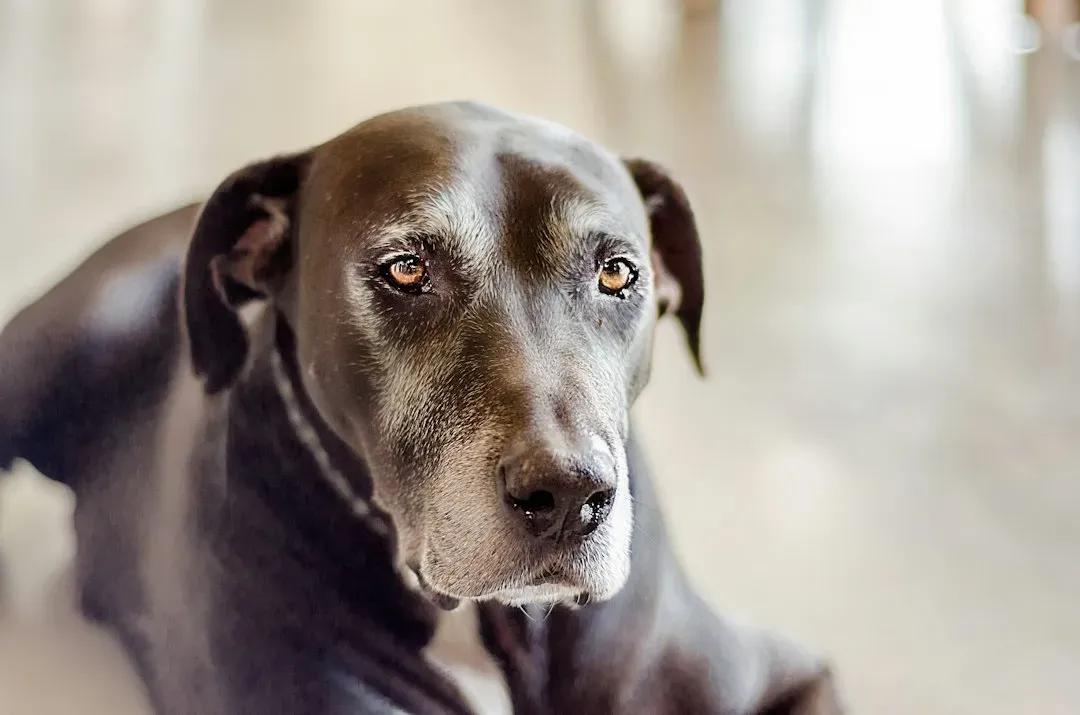
The uncomfortable truth is that “old dog eyes” is often a diagnosis owners invent themselves, not one any vet would actually give.
Cloudy lenses, night clumsiness, red eyes, morning gunk, and sudden bulging can all be brushed off as harmless aging – yet several of these signs are tied directly to pain, blindness, or permanent tissue damage. The real pattern here isn’t age at all; it’s owners confusing “common in older dogs” with “nothing to worry about.”
Those are not the same thing, and vets say that gap is exactly where preventable blindness happens. Has your senior dog shown any of these signs? Drop your story in the comments – you might help another owner catch it in time.