
13 Things About Dogs the Textbooks Had Backwards Until Recently
For years, we were told very confident things about dogs: they see the world in black and white, they only respect “alpha” humans, and if you let them sleep in your bed you’ll “ruin” them forever. A lot of that advice sounded authoritative, came from people in lab coats, and got repeated so often it started to feel like law.
But in the last couple of decades, careful research, better technology, and some refreshingly humble scientists have quietly rewritten huge chunks of what we thought we knew. The result is both surprising and oddly comforting: dogs are more emotional, more flexible, and in many ways more similar to us than the old textbooks ever dared to admit.
Let’s walk through some of the biggest dog myths that have been flipped on their heads, and what the newer science actually says. You might see your own dog very differently by the end.
#1 – Dogs Do Not See the World in Black and White

For a long time, people repeated the idea that dogs see life like an old television: all shades of gray. That claim made it into books, training manuals, and even vet pamphlets. The reality is more interesting. Dogs do see fewer colors than humans, but their world is not colorless; it’s more like a muted, blue-yellow tinted version of ours.
Modern studies on dog retinas show that they have two types of color receptors instead of the three that most humans have. This means they can distinguish blues and yellows pretty well, but reds and greens blend together, a bit like if you were red–green colorblind. So that bright red toy you bought because it “stands out” in the grass? To your dog, it probably looks like a dark, dull object against a similar background.
What dogs are really good at is seeing in dim light and picking up motion. Evolution pushed their eyes toward dawn and dusk hunting, not rainbow appreciation. So while the textbooks used to paint their vision as “black and white and boring,” the truth is more like “low light, motion-sensitive, blue-yellow world,” which is still pretty amazing when you think about it.
#2 – The “Alpha Dog” Dominance Theory Fell Apart

If you ever watched old-school training shows, you probably heard that you must be the “alpha” or your dog will try to dominate you. This idea came from early wolf studies on unrelated wolves forced to live in cramped zoo enclosures. Those stressed animals did fight a lot and formed harsh hierarchies – but that situation turned out to be nothing like how real family wolf packs live in the wild, or how dogs live with humans.
More recent wolf research, plus work on free-ranging village dogs, shows that most natural groups are more like families with parents and kids than street gangs battling for power. Cooperation and relationships matter far more than constant status fights. When we applied that old dominance model to our pet dogs, we ended up justifying confrontational techniques – alpha rolls, harsh leash corrections – that often increased fear or aggression instead of respect.
Modern behavior science leans toward understanding dogs as social learners, not tiny dictators. They repeat what works, avoid what feels unsafe, and read our emotions constantly. Instead of “be the alpha or else,” the updated picture looks more like “be a consistent, safe, rewarding leader.” It is less macho-sounding, but a lot more effective and humane.
- Old view: dogs constantly fight for rank and must be dominated.
- New view: dogs thrive under clear, kind, consistent guidance.
- Practical takeaway: focus on teaching and rewarding, not “putting your dog in its place.”
#3 – Punishment Is Not the Secret Ingredient in Training

Traditional training advice often leaned heavily on corrections: choke chains, yelling, jerks on the leash. The assumption was that without punishment, dogs would become spoiled and out of control. But a huge body of learning research, originally done on many species including humans, has been applied more carefully to dogs over the last few decades, and it paints a different picture.
Dogs learn best when they clearly understand which behavior brings good outcomes. Rewards – food, toys, play, attention – make a behavior more likely to happen again. Harsh punishment might sometimes stop a behavior in the moment, but it comes with meaningful risks: fear, anxiety, damaged trust, and even redirected aggression. That does not mean consequences are impossible; it just means that painful, scary ones are rarely necessary and are often counterproductive.
Modern trainers who use reward-based methods consistently report strong results: faster learning, happier dogs, and fewer side effects. Many vet behaviorists now openly discourage tools that cause pain or fear, not because they are being “soft,” but because the evidence linking positive reinforcement to better outcomes keeps stacking up. It turns out you do not need to scare a dog into listening; you just need to make listening worth their while.
#4 – Separation Anxiety Is Not Just “Spoiling the Dog”

Years ago, if a dog destroyed furniture or barked non-stop when left alone, people were quick to blame the owner: you cuddled them too much, let them on the bed, or treated them like a child. The behavior was called “naughty” or “spiteful.” Modern behavioral science has largely moved away from those judgments. What used to be framed as moral failure is now recognized as a real anxiety disorder in many dogs.
Dogs are social animals. Being suddenly left for long stretches, especially without preparation, can be genuinely distressing. Heart rate data, hormone measurements, and video monitoring all show that dogs with separation-related problems are not plotting revenge; they are panicking. They pant, pace, drool, howl, and sometimes harm themselves trying to escape. That is not bad manners – it is fear.
Newer approaches treat separation issues like a mental health challenge, not a power struggle. That can include gradual desensitization to being alone, enrichment that keeps the dog mentally engaged, sometimes medication prescribed by a vet behaviorist, and changes in routine. The blame-heavy narrative of “you made this dog too clingy” has slowly been replaced by “this dog needs help coping,” which is far more accurate and compassionate.
- Old story: destructive behavior when alone equals revenge or naughtiness.
- Updated view: many of these dogs are experiencing genuine panic or high anxiety.
- Result: focus on gradual training and support, not punishment after the fact.
#5 – Dogs Do Experience Complex Emotions (Within Limits)

Textbooks once talked about dogs almost like furry machines: driven by instinct, simple drives, and basic stimulus-response loops. Anything beyond basic emotions – like joy or fear – was considered “anthropomorphism,” just humans projecting their feelings. Newer research on brain activity, hormone changes, and behavior has softened that stance. While dogs are not little humans, their emotional lives are richer than the old models allowed.
Studies now support the idea that dogs experience something like attachment, jealousy-like behavior in specific contexts, and different shades of frustration. Brain imaging experiments have shown that some of the same brain regions that respond to human voices or familiar scents in people also light up in dogs when they hear their owner or smell something associated with them. This is not proof they feel exactly what we feel, but it does strongly hint at emotional depth.
At the same time, responsible scientists are careful about drawing lines. There is good evidence for emotions like fear, excitement, affection, and something close to disappointment. There is far weaker evidence for purely human-heavy concepts like guilt or moral judgment. So yes, your dog absolutely has feelings – but not necessarily the kind of complex, language-tinged inner drama a person has.
#6 – “Guilty Looks” Are Not Proof of Actual Guilt
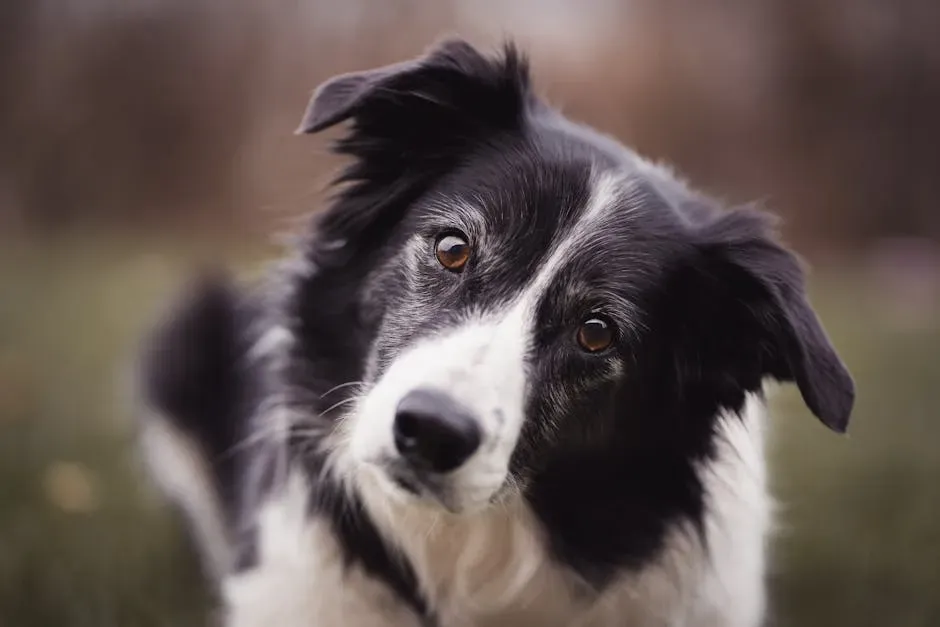
Everyone knows the classic scene: you walk in to find the trash shredded, your dog tucks their tail, avoids eye contact, and gives that melting, guilty expression. For years, people took this as obvious proof that dogs know they “did wrong” in a moral sense. Experiments over the last decade or so have challenged that assumption in a pretty eye-opening way.
In some of these studies, dogs were blamed for things they did not do, or not scolded for things they did. The facial expressions we label as guilt cropped up much more in response to the owner’s tone and body language than to whether the dog had actually committed the “crime.” In other words, that look seems to be more about appeasement and trying to calm a potentially angry human than about reflecting on past choices.
This does not mean dogs are sneaky or fake. It means they are experts at reading our mood and adjusting their behavior to avoid conflict. The “guilty” look may simply be a way of saying, “I see you are upset; please do not be mad at me,” not “I regret my actions in a moral way.” Understanding that can change how we respond, shifting from angry lectures to better management and training.
#7 – Dogs Are Not Wolves in Our Living Rooms

A lot of early dog advice treated them as almost interchangeable with wolves. The thinking was that understanding wolf behavior would tell us everything about dogs. But genetic work and careful observation of both species have made it very clear: dogs are not just tamed wolves. They share a common ancestor, but thousands of years of living alongside humans have changed them – physically, mentally, and socially.
Free-roaming dogs in many countries tend not to form stable, highly cooperative packs like wild wolves. Instead, they often live in loose groups or alone, gravitating toward human settlements and garbage dumps. Their survival strategy is less about coordinated hunts and more about living off human-created resources. That shift shows up in their bodies and brains too; dogs are born more playful and stay that way longer, a trait linked with domestication in multiple species.
This matters because it affects how we care for and train them. Methods and expectations suited to a wild predator working in freezing forests may not map neatly onto a family pet snoozing on the couch. Dogs evolved to read human cues, tolerate close contact, and fit into our chaotic households. Seeing them as their own species, not just “house wolves,” helps us make better choices for their welfare.
#8 – Breed Is Not Destiny for Behavior

Old-school dog books loved to declare that certain breeds were automatically aggressive, others were naturally gentle with children, and still others were hopelessly stubborn. While breed tendencies do exist, newer behavioral genetics research suggests that the story is far more nuanced – and that textbooks oversold how much behavior is locked in by breed alone.
Large, modern analyses that compare personality-style traits across many dogs show that individual variation inside a breed can be huge. Two Labrador retrievers might be as different from each other as a Lab and a mixed-breed in terms of energy, fearfulness, or sociability. Some behavioral traits also overlap strongly across many breeds, especially when those breeds were created recently or share common ancestors.
What is becoming increasingly clear is that environment, early socialization, training style, and life experiences play a massive role. Breed gives you a starting point, not a script. That means it is risky to assume a dog is “safe” or “dangerous” purely based on how they look, and it is equally risky to assume that a breed label guarantees suitability for every family. The newer science nudges us to see each dog as an individual first.
- Breed influences tendencies, not guaranteed behaviors.
- Upbringing and environment can amplify or soften those tendencies.
- The dog in front of you matters more than the stereotype in your head.
#9 – Dogs Do Not Just Live in the Present Moment

A popular feel-good claim is that dogs live entirely in the now, with no real memory of the past or expectation of the future. It sounds poetic and simple. The science, however, points to something more subtle. Dogs remember things: specific places, routines, people, and even events that happened some time ago. They also show behaviors that look a lot like anticipating what comes next.
Experiments have shown that dogs can remember the location of hidden objects and can be trained on tasks that require recalling what they just did a short time before. On top of that, many owners see their dogs react to familiar cues that predict the future: the sound of car keys, the closing of a laptop at the end of the workday, or shoes being put on. Dogs learn these chains of events and behave as if they are expecting what usually follows.
That said, their sense of time is not the same as ours. There is no solid evidence that dogs sit around worrying about next month’s vet visit or replaying arguments from last year. Their memory seems more tied to specific cues and learning histories than to an abstract mental timeline. But the idea that they are goldfish-like creatures stuck in an eternal present is not supported by what we now know.
#10 – Food Is Powerful, But Not the Only Thing That Motivates Dogs
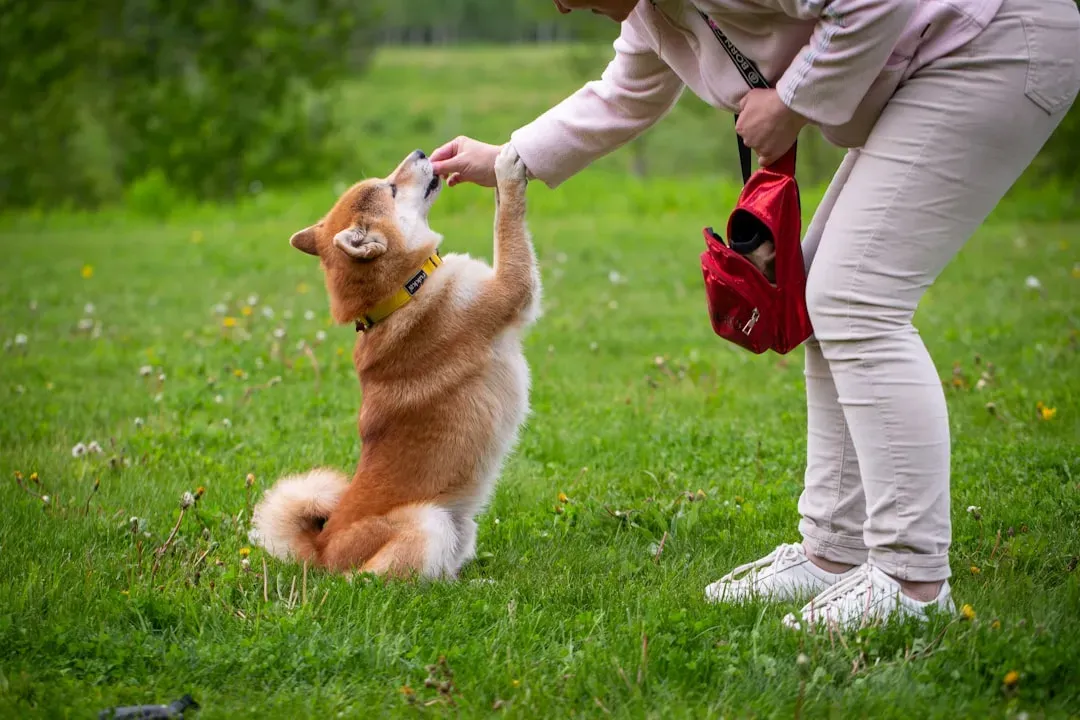
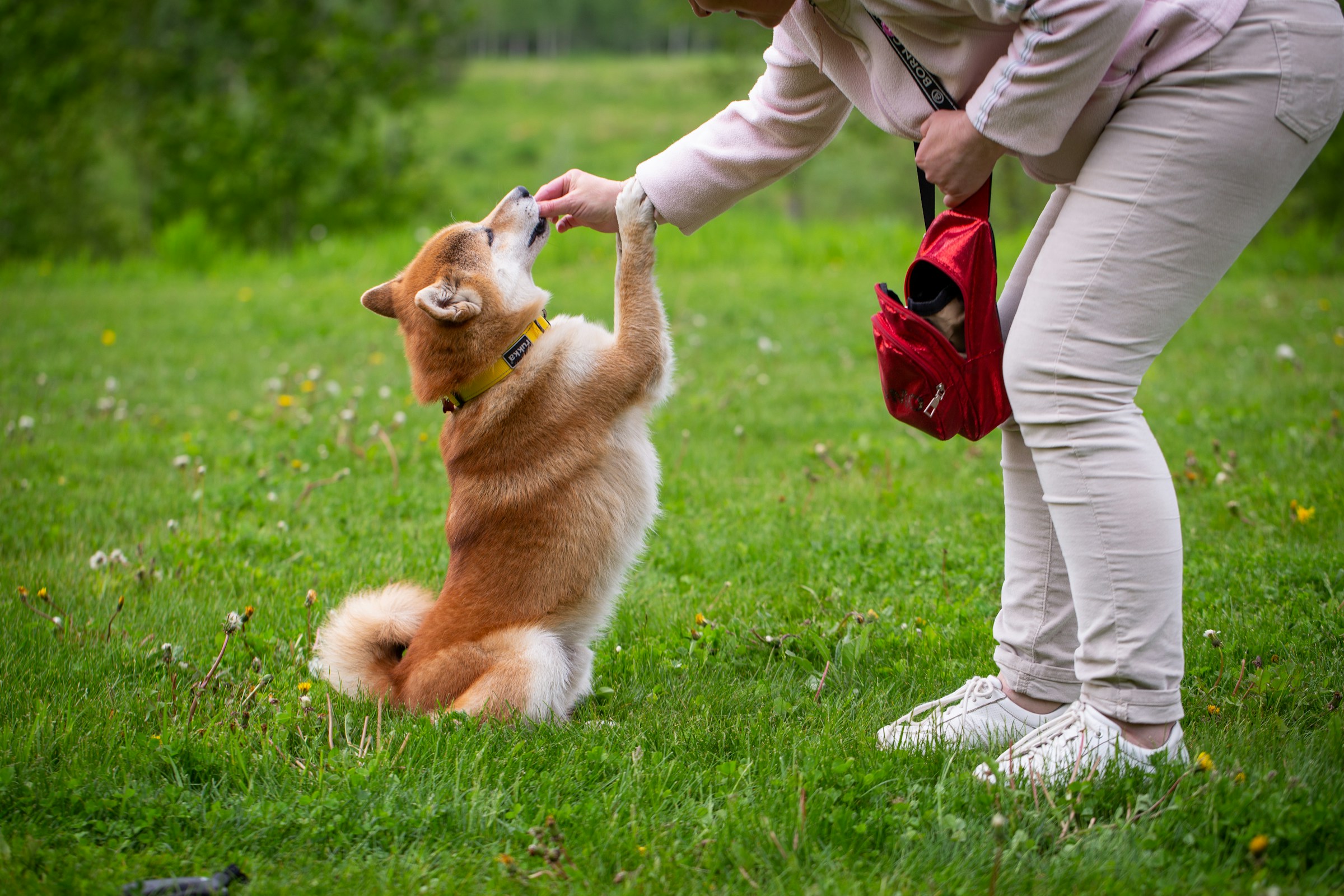
A lot of training materials swung from one extreme to another: either punishments rule, or food is everything. The more recent behavioral research – and what skilled trainers see daily – suggests a more balanced reality. Food is a fantastic, efficient reward for many behaviors, especially new ones, but it is not the only thing dogs care about.
Dogs are also motivated by access to things they love: going outside, greeting people, playing with toys, sniffing that really interesting patch of grass. Some dogs will work harder for a game of tug or a chance to chase a ball than they ever will for a treat. Others find gentle praise or touch incredibly rewarding once a behavior is understood.
Understanding this matters because it frees owners from the idea that training is either “bribery” with cookies or harsh corrections. In reality, you can use a mix of rewards that matter to your particular dog. The textbooks that treated food as almost a trick or a crutch missed the bigger point: reinforcement is about what the learner values, and different individuals value different things.
#11 – Canine Body Language Is More Nuanced Than “Tail Wagging = Happy”
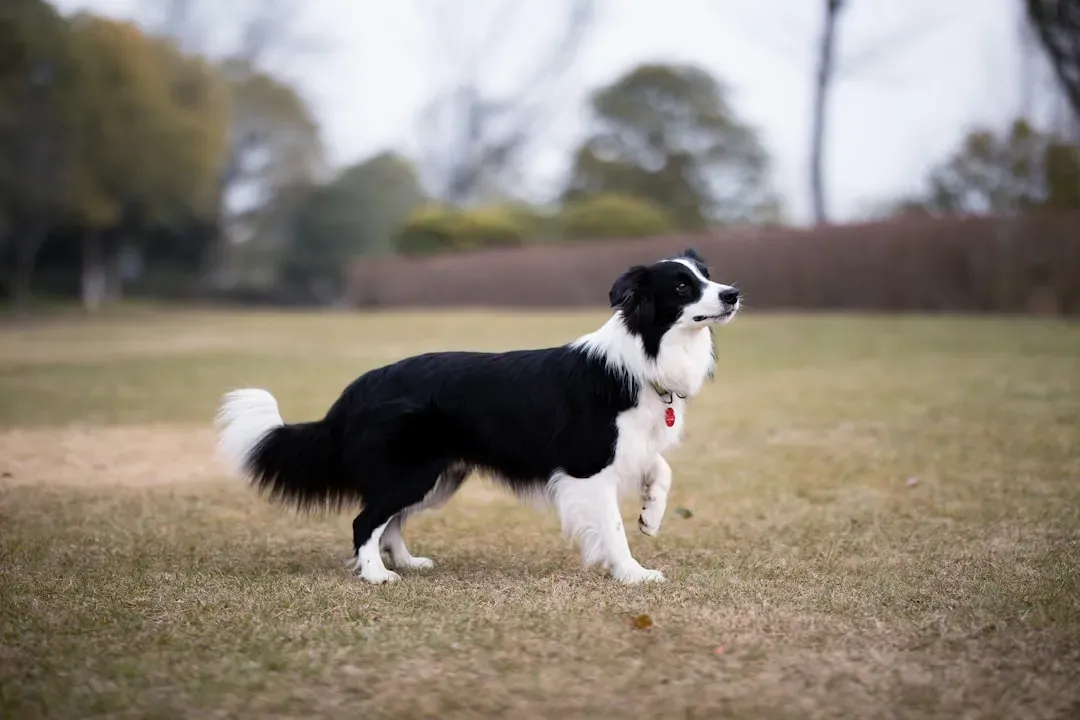
Many old guides simplified dog communication to a couple of cartoon-level rules: wagging tail means happy, growling means aggressive, ears back means guilty. Newer ethology research, plus better high-speed video and large-scale observation, has revealed that canine body language is a layered, context-dependent system. That wagging tail might actually signal stress or uncertainty, depending on how it moves and what the rest of the body is doing.
Today we know that subtle signals – lip licking, turning the head away, slow blinking, shifting weight – can all be early signs that a dog is uncomfortable and trying to avoid conflict. Many bites happen after people ignore those early warnings, assuming the dog “bit out of nowhere.” In reality, the dog may have been practically shouting in dog language for several minutes.
Once you start learning this richer vocabulary, everyday interactions look different. You notice when a dog is merely tolerating a child’s hug instead of enjoying it, or when two dogs at the park are playing fairly versus one getting overwhelmed. The simplistic textbook checklists did not capture that complexity, but modern resources are slowly correcting that gap.
#12 – Old Dogs Learn More Than We Gave Them Credit For

The saying that you cannot teach an old dog new tricks stuck around in textbooks and common wisdom for ages. It fed the idea that once a dog hit a certain age, their personality and habits were basically set in stone. More recent data on cognition across the canine lifespan shows a different story: while aging does bring changes, many older dogs can absolutely learn new tasks and adapt to new routines, especially with patient, thoughtful training.
Research into canine cognitive decline has even used training and mental enrichment as tools to slow or soften age-related changes. Games, gentle problem-solving tasks, and continued practice of known behaviors keep older dogs’ minds active. Like humans, they may process things more slowly, and physical limitations might change what they can comfortably do – but learning itself does not just shut off on their tenth birthday.
For owners, this is good news. Adopting an adult or senior dog does not mean you are stuck with every habit they arrive with. It may take more repetition and creativity, but their brains are still capable of building new associations. The textbooks that wrote off older dogs as fixed entities underestimated their resilience.
#13 – Dogs Need More Mental Enrichment Than “A Walk and a Bowl”

Traditional care advice focused on meeting dogs’ basic physical needs: food, water, shelter, and a daily walk. Mentally, they were often treated as simple, easily satisfied creatures. Over the last few decades, a surge of research into canine cognition, problem solving, and welfare has pushed a new idea to the forefront: many behavior problems are really boredom or unmet mental needs in disguise.
Dogs were originally bred for jobs – herding, guarding, hunting, pulling, searching. Even though most pet dogs are no longer doing those tasks, the mental energy did not vanish. Without enough to do, that energy leaks out as chewing, barking, digging, or hyperactivity. Enrichment tools like puzzle feeders, scent games, training sessions, and varied walks that allow sniffing are now recognized as important, not just “extra spoiling.”
That does not mean your dog needs a full-time curriculum and five subscription boxes. It means that a richer, more interesting life often produces a calmer, more content animal. The new consensus looks less like “a dog is fine as long as it is fed and walked” and more like “a dog thrives when its body and brain are both engaged regularly.”
- Basic needs: food, water, shelter, regular exercise.
- Thriving needs: problem-solving, sniffing, social contact, variety.
- Side effect: better behavior and deeper human–dog bonds.
Conclusion – Seeing Dogs Clearly Means Letting Go of Old Myths
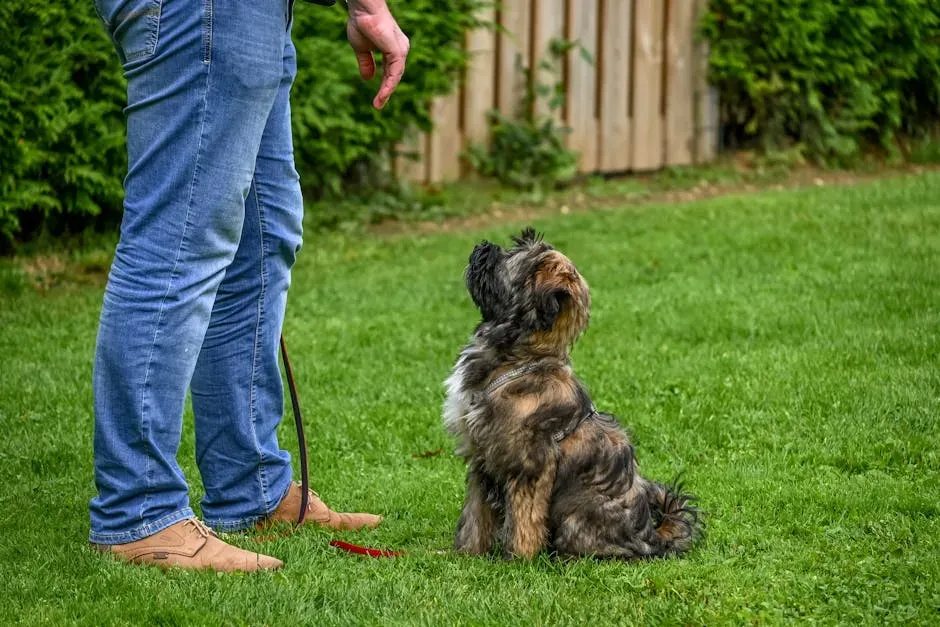
When you line up all these reversals – the color vision myth, the fall of alpha theory, the richer emotional life, the need for mental work – it becomes obvious how much our picture of dogs has shifted. The old textbooks did not get everything wrong on purpose; they were working with limited tools and early data. But hanging on to those outdated ideas, especially around dominance and punishment, has real consequences for how safely and kindly we treat the animals who share our homes.
In my own life, the biggest change came when I stopped asking, “How do I control this dog?” and started asking, “What is this dog feeling, and how can I make the right choice easy for them?” That small mental flip, backed by all the science you have just read about, turned training sessions from a battle into a conversation. It is humbling to realize how much we once misunderstood, but it is also exciting: if we can update our thinking, we can give dogs better lives starting today.
So the next time someone confidently repeats an old dog “truth” that does not quite match what you see in front of you, remember that textbooks are not sacred – they are snapshots in time. Our understanding evolved, and it will keep evolving. The question is whether we are willing to evolve with it, for our dogs’ sake as much as our own. What else do you suspect we are still getting wrong about them today?