
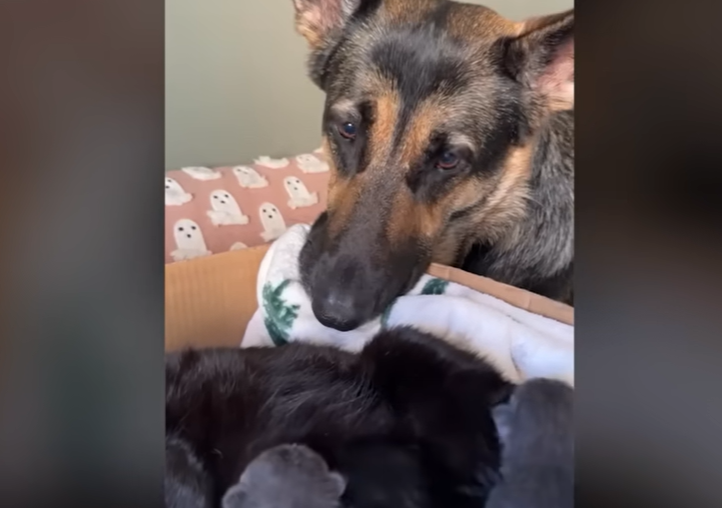
A resourceful feral cat has demonstrated remarkable judgment by selecting a reliable companion to help raise her kittens. The mother cat, navigating the challenges of outdoor life, identified an animal whose temperament and attentiveness matched the needs of her vulnerable young. This partnership has allowed the litter to thrive under combined protection and care. Observers note the mother’s deliberate choice reflects an instinctive understanding of safety and support networks.
Establishing the Caregiving Arrangement
The feral mother approached the potential nanny with cautious assessment before granting access to her kittens. Initial interactions involved close observation and gradual acceptance rather than immediate trust. Once established, the arrangement provided the mother with essential breaks for hunting and rest. The nanny cat assumed responsibilities that included grooming, play supervision, and territorial vigilance. This division of labor has proven effective in reducing stress on the primary caregiver. Such alliances among cats are uncommon yet highlight adaptive strategies in feral populations.
Vigilant Headcounts and Expert Insights
Each return from foraging expeditions begins with a meticulous inspection of the litter. The mother cat methodically counts and examines every kitten to confirm their presence and well-being. This routine serves as both reassurance and a safeguard against potential threats or losses. Kittens respond calmly to the process, indicating familiarity with the established pattern. The behavior underscores the mother’s acute awareness of her offspring’s numbers and individual conditions. Katerina, associated with Eka’s Animal Planet, discussed the dynamics observed in this case during conversations with field producers. She emphasized how feral cats sometimes form selective partnerships that benefit entire litters. These relationships often emerge from prior familiarity or demonstrated reliability rather than random encounters. Katerina noted that such nanny arrangements can improve survival rates in challenging environments.
Long-Term Outcomes and Broader Implications
The shared caregiving model has contributed to healthy development among the young cats. Kittens exhibit strong social skills and reduced fear responses due to consistent adult presence. As they mature, the dual influence appears to prepare them better for eventual independence. The mother cat continues to lead while relying on her chosen helper during critical periods. This cooperative approach may influence how the offspring later form their own social connections. Stories like this illustrate the complex social intelligence present in feral cat communities. Urban environments often force animals to improvise support systems amid limited resources. Recognition of these behaviors can inform more effective trap-neuter-return programs and community outreach.
Final Thought
Continued documentation helps scientists understand feline adaptability in human-dominated landscapes. What would you have guessed about these alliances?
Source: Original YouTube Video


