

#1. Dogs Are Hardwired to Register the Sound of Your Laughter

Research has provided evidence that the brains of dogs and humans process the emotional tones of voices in the same way. That’s not a minor detail. It means laughter isn’t just pleasant background noise to your dog. It’s a meaningful emotional signal that their brain is specifically structured to receive and interpret.
One area of dogs’ brains showed more brain activity when hearing a positive human sound, such as laughter, than a negative human sound, such as crying. The practical implication of this is real: your dog has been cataloguing the frequency, texture, and energy of your laughter since the day you brought them home. When it disappears from your daily life, something measurable changes in their world.
Emotions enhance memory. There is considerable evidence that events which induce positive or negative emotions are more easily remembered than those which are emotionally neutral, which means that your dog’s strongest memories of you might be the ones when you’re laughing. In other words, joy leaves a deep imprint. Its absence leaves one too.
#2. The Cortisol Connection: Your Stress Becomes Their Stress

The levels of stress in dogs correlate with the stress of their owners, according to research from Linköping University, Sweden. The scientists believe that dogs mirror their owner’s stress level, rather than vice versa. This isn’t a soft, anecdotal claim. It was measured through cortisol concentrations in hair samples collected from both owners and their dogs over several months.
Researchers found that the levels of long-term cortisol in the dog and its owner were synchronised, such that owners with high cortisol levels have dogs with high cortisol levels, while owners with low cortisol levels have dogs with low levels. When laughter fades from a household, it’s rarely alone. It tends to leave alongside ease and levity, and the cortisol creep that follows reaches four paws as surely as two feet.
Owner’s personality rather than dog’s personality affects the dog’s hair cortisol concentration, and this represents the first demonstration of a long-term synchronization in stress levels between members of two different species. The weight of your mood is not carried quietly inside you. It is shared, biologically and measurably, with the animal sleeping at your feet.
#3. Dogs Grieve Shifts in Emotional Tone, Not Just Permanent Losses

For years, people believed that dogs were not capable of grieving and were simply responding to human emotions. Newer research indicates that changes in a dog’s behavior following the death of a person or companion dog are expressions of grief. This understanding has expanded considerably. Grief in dogs is no longer seen as a response only to death. It’s understood as a response to loss of connection, consistency, and emotional warmth.
Feelings of stress, depression, and sadness are often triggered by periods of change or inconsistency in a dog’s life. A household where laughter has gone quiet represents exactly that kind of change. The routine has not visibly broken. The food still arrives. The walks still happen. Yet something essential has shifted, and the dog registers it at a level that precedes language or logic.
Canine companions can experience depression in the form of the blues, sadness, and grief. Distressing events or major life changes can sometimes cause a dog’s nerves to go haywire, or trigger feelings of sadness or anxiousness. The emotional tone of a home is, to a dog, a kind of environment in itself. When that tone darkens, the environment darkens with it.
#4. The Behavioral Signs Your Dog Is Quietly Struggling

Dog depression refers to a noticeable change in mood and behavior that results in reduced engagement, sadness, or withdrawal. These changes can look deceptively minor at first. A dog that plays a little less. A dog that eats a bit slower. A dog who watches the door more than they used to, as though waiting for something they can’t name.
Some signs include clingy, needy behavior and a need to be closer to the owner in general, while some dogs, however, can go the other way and become overly withdrawn. The two poles of this response are easy to miss precisely because they look like opposite problems. Clinginess gets written off as sweetness. Withdrawal gets written off as the dog being tired. Neither gets recognized as grief wearing a different coat.
According to dog owners’ answers, the surviving dog after the death of a companion changed both in terms of activities such as playing, sleeping, and eating, and emotions including fearfulness, which occurred as a function of the quality of the relationship between the two animals. When the relationship quality between a dog and owner changes, even without any physical departure, similar behavioral ripples can follow.
#5. What the Science Means for How You Show Up for Your Dog

There is growing evidence that dogs can distinguish between happy and angry human faces and voices. Dogs also often respond to crying or distress by approaching and offering contact to their humans. Your dog is not passively receiving your emotional state. They’re actively responding to it, offering what comfort they can with the tools they have. They meet your grief with presence. The least we can do is meet theirs with awareness.
One study found that dogs show the same stress levels as their owners. As a result, some dogs may become depressed if their owner shows signs of depression. This creates something of a quiet feedback loop. The owner’s joy dims, the dog’s mood follows, and the reduced playfulness of the dog subtly reinforces the owner’s low energy. Neither party means to drag the other further down. It simply happens, organically, between two creatures who are deeply attuned to each other.
Fortunately, dogs can often conquer their depression and anxiety on their own. Depending on the dog and the situation, the process can take anywhere from days to months. No matter what, the love and care of their owners and some guidance from a veterinarian can help them overcome their sadness. Recovery is possible for both of you, often simultaneously, and often through the same basic things: presence, routine, and a little more lightness where you can find it.
A Final Thought Worth Sitting With
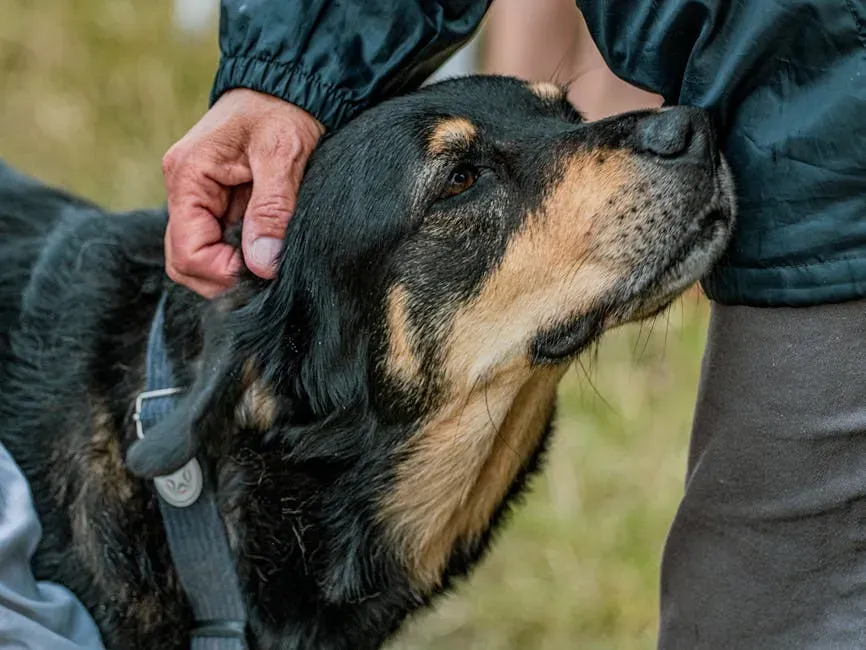
There’s a particular kind of love in what dogs do. They don’t grieve because you failed them. They grieve because they were paying close attention all along, close enough to notice when the sound of your happiness stopped filling the room. That’s not burden. That’s devotion at its most honest.
The science here isn’t telling us to perform joy for our dogs or pretend that hard seasons don’t exist. It’s telling us something more important: that the bond between a person and their dog is a genuine two-way emotional current, and that tending to your own wellbeing is, in a very real and measurable sense, an act of care for them too. Your laughter matters more than you think. To your dog, it always has.


