

There’s a moment most dog owners know well. You grab your keys, lace up your shoes, or simply reach for your coat, and your dog is already at the door. They didn’t hear anything out of the ordinary. You didn’t say a word. Yet somehow, they knew. It’s tempting to chalk this up to luck or coincidence, but science keeps pushing back on that comfortable explanation.
The reality is that dogs are tracking you in ways that go far deeper than trained responses. They’re reading your emotions, mapping your schedule, processing your scent, and building an internal picture of your daily world that rivals what most of us imagine. The gap between what we think our dogs understand and what they actually do is a lot wider than it first appears.
#1: Dogs Are Wired to Watch You Constantly

Dogs are constantly observing their owners. A growing body of research confirms that they are able to determine our emotions. This isn’t passive background awareness. It’s active, focused attention directed at the person they depend on most.
Dogs live and work in close association with humans and have therefore developed exceptional social communication skills, including the ability to get along with people, knowing what is expected for social interactions, reading facial expressions and gestures, recognizing emotions, and communicating effectively.
Dogs have often been used in studies of cognition, including research on perception, awareness, memory, and learning. In the course of this research, behavioral scientists uncovered a surprising set of social-cognitive abilities in the domestic dog, abilities that are neither possessed by dogs’ closest canine relatives nor by other highly intelligent mammals such as great apes. Rather, these skills resemble some of the social-cognitive skills of human children.
Researchers from dog cognition labs, including the Max Planck Institute and the Duke Canine Cognition Center, have found that dogs routinely outperform chimpanzees in tests of social cognitive ability. That’s not a small finding. For all the attention primates receive in animal intelligence research, your dog quietly ranks above them in certain social skills that matter most to human life.
#2: They Read Your Emotions in Real Time

An abundance of anecdotal evidence, plus recent studies using simulated or recorded emotional expressions, indicate that dogs perceive differences in human emotion and behave differently depending on their owner’s emotional state. This plays out in very observable ways during everyday moments at home.
Research found that dogs behaved differently depending on the owner’s emotional state: they gazed and jumped less at owners when they were sad, and their compliance with the ‘sit’ command was also diminished. When owners were happy, dogs performed better in the trained task. The emotional atmosphere you carry into a room genuinely shapes how your dog behaves in it.
When researchers used brain imaging (fMRI scans) on dogs, they discovered something fascinating: dogs process emotional tone in a similar brain region that humans use. When owners show anxiety, dogs’ cortisol levels often rise as well. This ability likely developed through domestication. Over thousands of years, dogs that could better interpret human emotional states were more likely to survive and bond with people.
Research demonstrates that dogs can extract and integrate bimodal sensory emotional information, and discriminate between positive and negative emotions from both humans and dogs. They’re not simply reacting to tone of voice. They’re cross-referencing your face, your sound, and your body language simultaneously, which is a sophisticated cognitive act.
#3: Their Sense of Smell Is Their Real Superpower
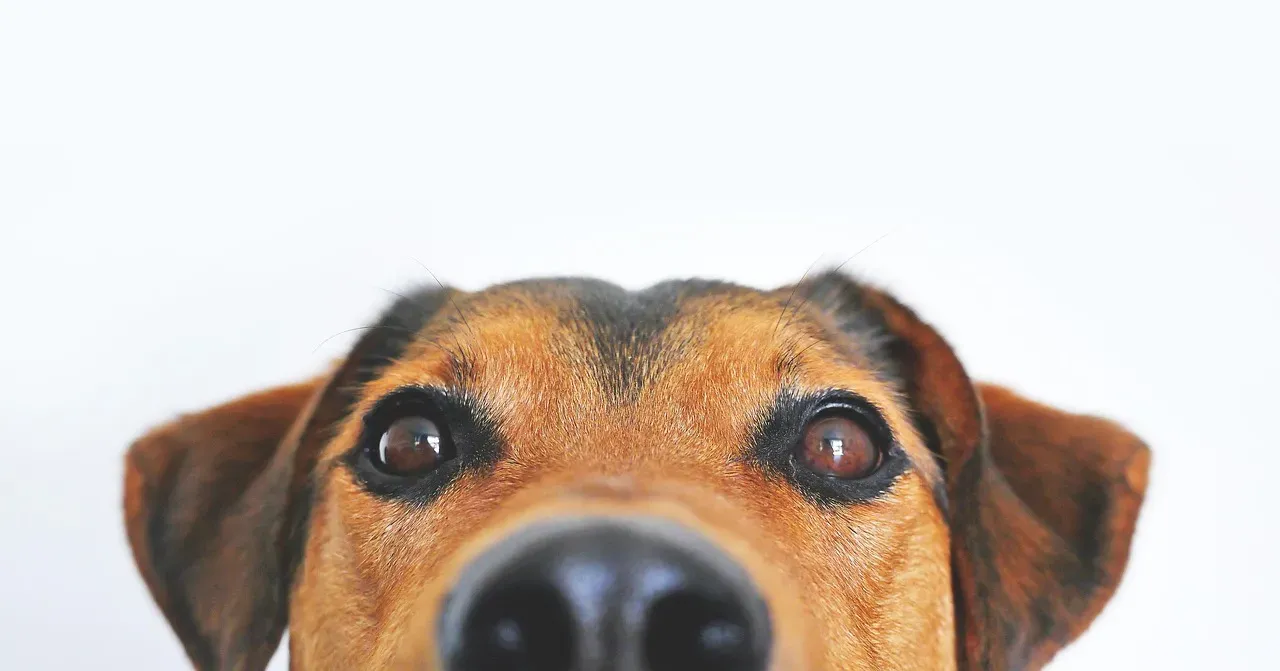
Dogs experience the world primarily through scent. Their sense of smell is estimated to be up to 100,000 times stronger than ours. Where we might see the day unfolding with visual imagery, dogs smell their way through time. Smells change over time. This is crucial to understanding how they orient themselves within your daily routine.
Studies suggest that dogs perceive time through changes in their bodies, environment and routines. For example, they may anticipate mealtimes based on their feelings of hunger or predict your return home by monitoring changes in scent intensity. When your scent fades after you leave, they’re literally watching the clock through their nose.
Research suggests dogs assess how long a person has been gone by scent strength, with fresher scent meaning recent presence. The theory of scent distribution and a dog’s ability to remember something based on scent is called olfactory memory. It’s plausible that a dog can track short amounts of time by the strength of an odor and use olfactory memory for long-term time tracking. This is an elegant system that operates entirely without conscious effort from the dog.
#4: Your Daily Routine Is Their Internal Calendar

Dogs might not read clocks, but they are brilliant at reading routines. They notice what usually happens and when, like meals, walks, or when it is time for dog training classes. These moments help shape their day-to-day habits, and while their sense of time does not match ours, it definitely shows up through how they behave.
Over time, a consistent and predictable daily routine can serve as a kind of internal clock for them, helping signal when it’s time to play, eat, nap, or patrol the front window. When you do the same thing each day, dogs catch on quickly. If you always feed them after the kettle boils, it becomes a clear sign that breakfast is coming. The sequence of events matters just as much as any specific time.
While dogs can’t comprehend the concept of a day in the abstract sense, they understand when it’s time for activities they’re accustomed to, like mealtimes or walks. Therefore, if a dog knows they go for a walk when you get home from work, receive their meals at specific times, and have playtime after dinner, their internal clock aligns with these recurring events.
A 2018 study shows that yes, dogs do have a sense of time. They have what scientists call “timing cells,” special cells that help your pup gauge time during routine days. These aren’t metaphors or folk explanations. They reflect real neurological structures that evolved specifically for this purpose.
#5: They Pick Up on Social Cues You Don’t Even Notice

Research is investigating how dogs read human social cues to decide who to cooperate with. In one study, dogs watched an experimenter interact with two other humans: a helper and a non-helper. When the experimenter reached for a clipboard just out of reach, the helper always handed them the clipboard; the non-helper always moved the clipboard further away. Dogs quickly developed a preference for the helper. They’re judging character from observation alone.
Dogs are among the few nonhuman species that appear to possess geometrical gaze-following, which entails tracking the gaze direction of others around visual obstacles. Dogs not only recognize and appropriately respond to a variety of visual attention cues but also demonstrate a burgeoning understanding of the human visual perspective and exploit this information in functional ways both in cooperative and competitive contexts.
Using a “semantic violation paradigm,” researchers spoke a word that dogs were trained to know while showing them an object. Sometimes, the object matched the word; other times, they were mismatched. In humans, the mismatch triggers a distinct electrical response in the frontal lobe known as the N400 effect. In the 2024 study, dogs showed a comparable EEG response. Dogs don’t just respond to the sounds of words. They form mental representations of what those words mean.
#6: Disrupting Their Routine Has Real Consequences
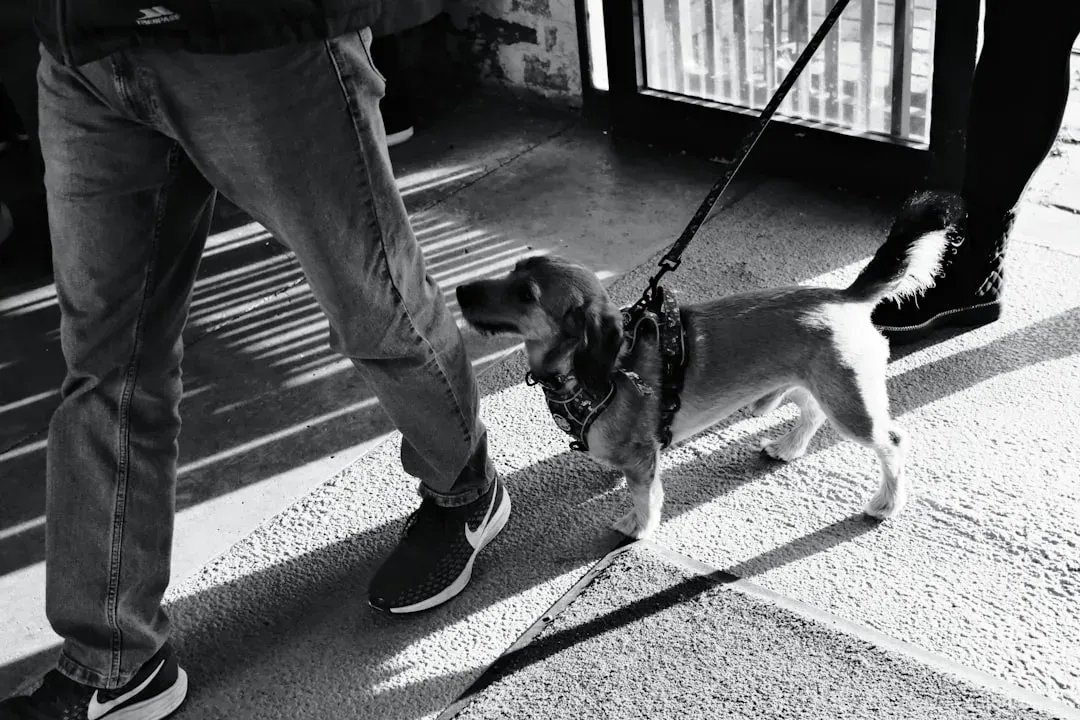
Because dogs are so in tune with our activities, pet owners can affect their dog’s sense of time by changing their schedule. Many dogs can’t sleep until their humans settle. Dogs may wait longer for breakfast on certain days, or have their weekday walk swapped for a car ride to the dog park. Though most dogs eventually adjust to certain changes, if you have a dog that struggles with anxiety, constant disruptions in schedule and routine can be difficult for them and result in additional problems.
For anxious or rescue dogs, routine can be the key to emotional stability. Just like humans, pets thrive on predictability as it helps them feel safe, secure, and less anxious. The structure of your day isn’t just a matter of logistics for your dog. It’s the framework their sense of security is built on.
Evidence suggests that dog owners perceived positive impacts on their well-being, arising from routine, a perceived non-judgmental relationship characterised by unconditional love, or the simple presence of the animal. This runs both ways: the routines that ground your dog also tend to anchor your own daily rhythm in ways that quietly benefit you, too.
Older dogs may experience canine cognitive dysfunction, disrupting their internal sense of time, leading to disorientation or abnormal schedules. Keeping daily patterns consistent becomes even more important as dogs age, providing familiar footholds in a world that may otherwise feel increasingly uncertain to them.
The Bigger Picture
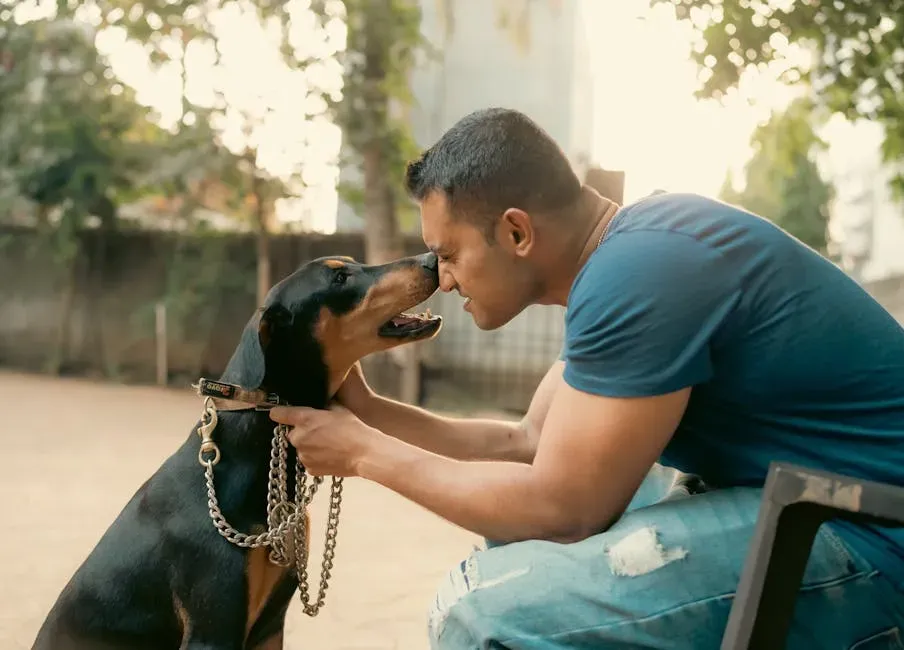
Most of us spend years living alongside our dogs without fully grasping the depth of what’s happening between us. We see the wagging tail and the waiting face at the door, and we smile. What we miss is the extraordinary cognitive machinery behind those moments, the scent-tracking, the emotion-reading, the pattern-recognition, all quietly running in the background of a mind that has spent thousands of years evolving specifically to understand us.
Humans and dogs have lived side by side for some 30,000 years, and along the way, evolution seems to have given dogs the skills to read their owners’ needs and emotions. That’s not a coincidence. That’s coevolution at its most intimate. The skills your dog shows every morning when you reach for the leash are the product of an ancient partnership.
The honest takeaway here isn’t that dogs are secretly human. It’s something more interesting than that. They’re their own kind of intelligent, shaped by a shared history with us, oriented toward reading our world more carefully than most of us ever realize. If you’ve ever felt truly understood by your dog in a quiet moment, the science suggests you probably were.


