
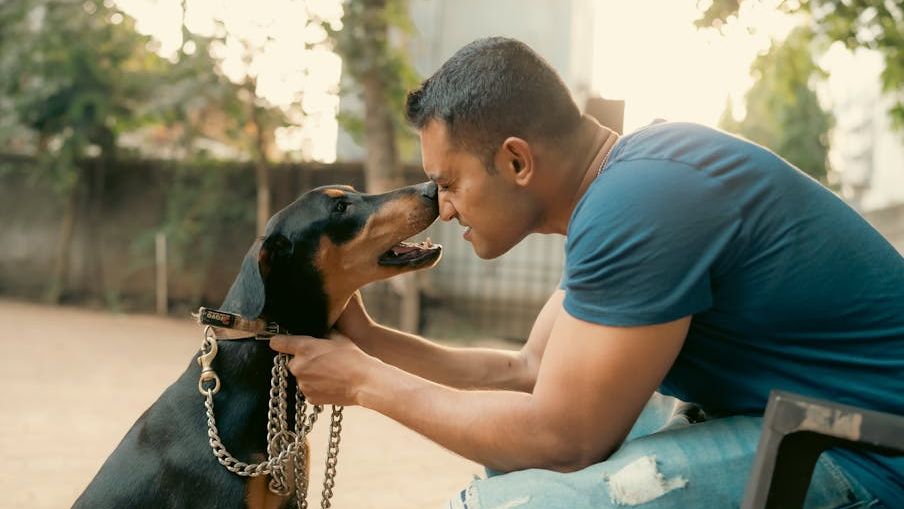
You’re deep in a deadline. Emails are piling up, your shoulders are tight, and your jaw is doing that clenched thing it does. Then your dog wanders over, flops down with a dramatic, drawn-out sigh, and stares at you.
It feels like a minor comedy. A mood. Maybe even a little accusatory. Most people laugh it off as a coincidence, or chalk it up to a pet’s quirky personality. The truth, though, is considerably more fascinating – and a little humbling. That sigh isn’t random. It might be one of the most honest reflections of what’s actually happening in the room.
The Science Behind the Sigh: Your Dog Is Literally Reading You

Dogs have spent thousands of years evolving alongside humans, and that proximity has shaped them in extraordinary ways. Modern studies show that dogs process emotional cues from humans in sophisticated ways, including the ability to distinguish between happy and angry human facial expressions – even when those faces belong to strangers.
That’s not a party trick. It’s the result of deep neurological wiring. The evidence for this emotional intelligence begins in the brain itself. Dogs’ brains have dedicated areas that are sensitive to voice, similar to those in humans, and brain imaging studies found that dogs possess voice-processing regions in their temporal cortex that light up in response to vocal sounds.
Brain scans also reveal that emotionally charged sounds – a laugh, a cry, an angry shout – activate dogs’ auditory cortex and the amygdala, a part of the brain involved in processing emotions. So when your voice gets clipped, tense, or hushed during a stressful work session, your dog is registering more than just sound. They’re registering you.
Cortisol Doesn’t Lie: How Stress Travels Between Species

Researchers at Linköping University in Sweden did something quietly remarkable. They determined stress levels over several months by measuring the concentration of cortisol, a stress hormone, in a few centimetres of hair from both the dog and its owner. What they found reframed the way many scientists think about the human-dog bond.
Surprisingly, they found no major effect of the dog’s personality on long-term stress. The personality of the owner, on the other hand, had a strong effect, leading researchers to suggest that the dog mirrors its owner’s stress. The direction of that mirroring matters. It’s going from you to them, not the other way around.
Researchers call this emotional contagion – a basic form of empathy where one individual mirrors another’s emotional state. A 2019 study found that some dog-human pairs had synchronised cardiac patterns during stressful times, with their heartbeats mirroring each other. This emotional contagion doesn’t require complex reasoning; it’s more of an automatic empathy arising from close bonding. That’s worth sitting with for a moment. Your dog’s heartbeat can literally sync with yours.
What the Sigh Actually Means – and When to Pay Attention

Not every dog sigh carries the same emotional weight, and it helps to know the difference. Dogs typically sigh when they are falling asleep or feel very comfortable. They do, however, occasionally sigh when they are bored or agitated. If a dog has discovered that sighing can attract their owner’s attention, they may do it more often.
One of the most frequent reasons for dogs sighing is contentment. When your dog curls up next to you after work to express happiness that you’re back, or when they lay down after a long day of play, they may let out a long and deep sigh. A dog with a contented sigh will have a soft face, may keep half-open eyes and relaxed ears, and will generally be lying down.
The sighs that show up when you’re stressed tend to look a little different. Beyond obvious behaviors, dogs may use more subtle signals to communicate empathy, including sighing, tilting their head, or softly whining in response to your emotions. Some dogs even display protective behaviors, positioning themselves between you and others during stressful moments. If you notice your dog sighing and then watching you closely, staying near but not quite settling, they may be absorbing your emotional state rather than expressing their own contentment.
The Longer You’ve Lived Together, the Deeper It Goes
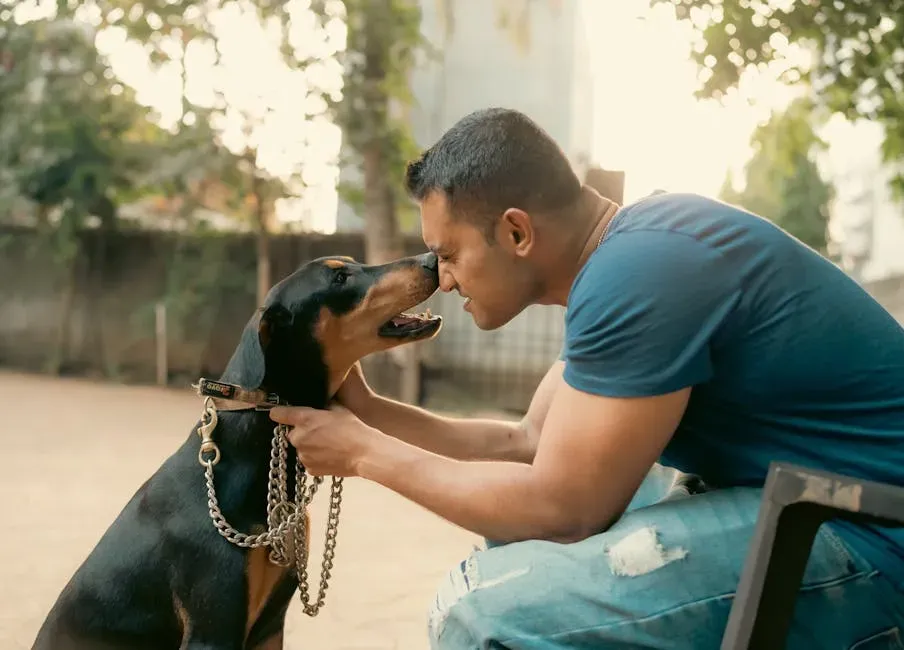
The emotional connection between a dog and their person isn’t static. It deepens with time. Research shows that the extent to which dogs catch their owner’s emotions depends on the duration of the relationship. In other words, the dog you’ve had for eight years is tuned to you more acutely than a dog who just arrived.
Results from one study suggest that emotional contagion from owner to dog can occur especially in females and that the time sharing the same environment is the key factor in inducing the efficacy of emotional contagion. Time together matters more than any specific training or breed temperament. Shared environment, shared routine, shared life – all of it compounds the sensitivity your dog has toward you.
The stress level of competing dogs seems to be linked more strongly with that of the owner, which scientists speculate may be associated with a higher degree of active interaction when they train and compete together. The more your lives overlap, the more your nervous systems find each other. Your dog doesn’t just know your schedule. They know your emotional patterns, your tense posture, your rushed breath.
What You Can Actually Do With This Information
A dog living with a calm, emotionally stable owner is more likely to be relaxed, confident, and socially adaptable. A dog cohabiting with high emotional tension may exhibit hyperactivity, reactivity, or withdrawal. This isn’t “bad behavior” – it’s behavior shaped by emotional proximity. That reframe changes things. It moves the conversation away from discipline and toward self-awareness.
The key is self-regulation. Practicing mindfulness, creating calm environments, and maintaining healthy routines can help soothe both of your nervous systems. You don’t have to be perfectly zen. But small shifts – slowing your breathing, stepping away from the screen for five minutes, giving your dog a calm pat – create a measurable difference in the atmosphere you both share.
When dogs and humans make gentle eye contact, both partners experience a surge of oxytocin, often dubbed the “love hormone.” In one study, owners who held long mutual gazes with their dogs had significantly higher oxytocin levels afterwards, and so did their dogs. During your busiest hours, a brief moment of eye contact with your dog isn’t a distraction. It’s a reset – for both of you.
A Conclusion Worth Sitting With
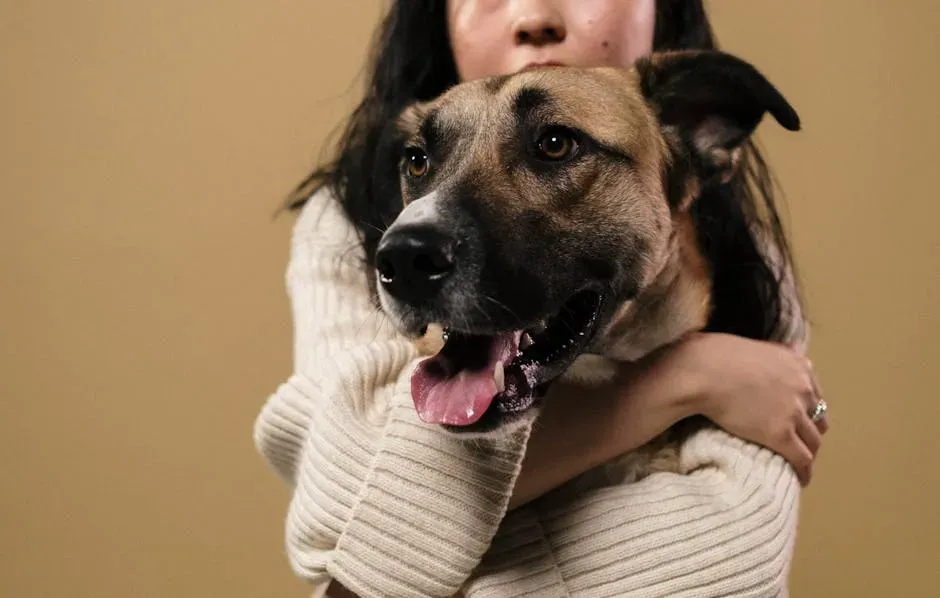
The sigh your dog makes when you’re drowning in a deadline deserves more credit than it gets. It’s not theatrical. It’s not manipulation. It’s one of the most honest biological responses available to a creature that has no way to tell you, in words, that they feel what you feel.
Many people who have lived with dogs have intuited the synchronization of stress and other emotions between dogs and their humans. For them, this sort of cross-species empathy is rather common and to be expected. Science has now caught up to what dog owners quietly understood all along.
There’s something genuinely worth honoring in that. Your dog isn’t just reacting to your moods – they’re carrying some of them. And if you’ve ever noticed that the room feels lighter when you stop rushing and just sit down next to them, that’s not coincidence either. That’s two nervous systems finding their way back to calm, together. The least we can do is occasionally return the favor.


