
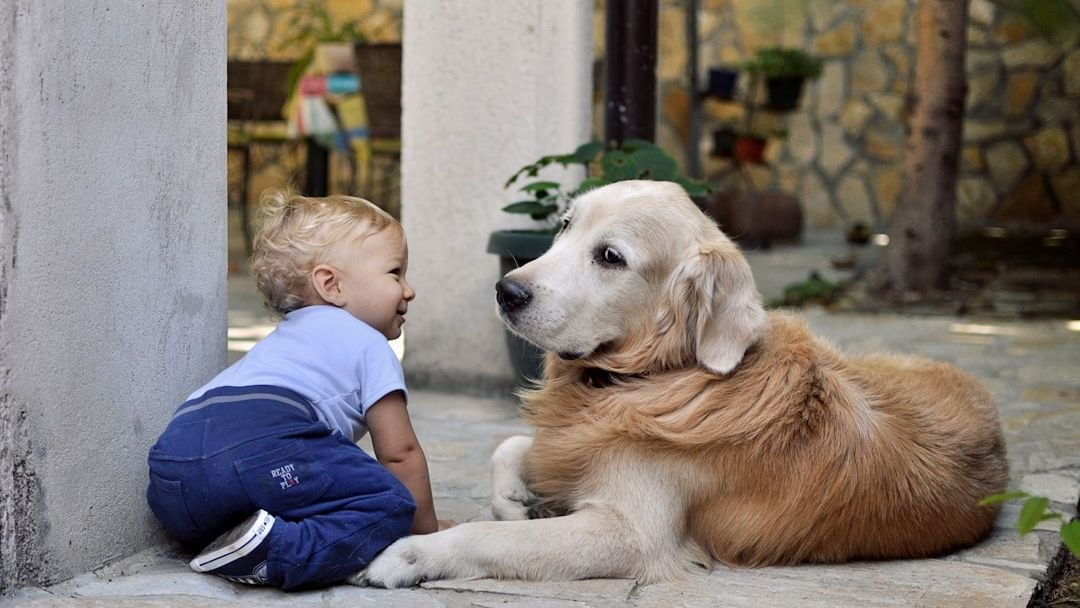
There’s a common assumption that a big dog is a brave dog. A 90-pound Rottweiler or a towering Great Dane strolling down the block looks like a creature that has nothing to fear. Don’t be fooled. Size has very little to do with what goes on inside a dog’s head when the world feels threatening, unpredictable, or overwhelming.
Dogs experience fear along a spectrum influenced by genetics, early socialization, learning, health, and environment. That 100-pound Labrador hiding behind your legs during a thunderstorm isn’t being dramatic. He’s communicating something real, and he genuinely needs your help. Understanding what scares your dog is one of the most empathetic and practical things you can do as a dog owner. Here are ten of the most common and powerful fear triggers that regularly rattle even the biggest, boldest dogs.
1. Thunderstorms: More Than Just Noise
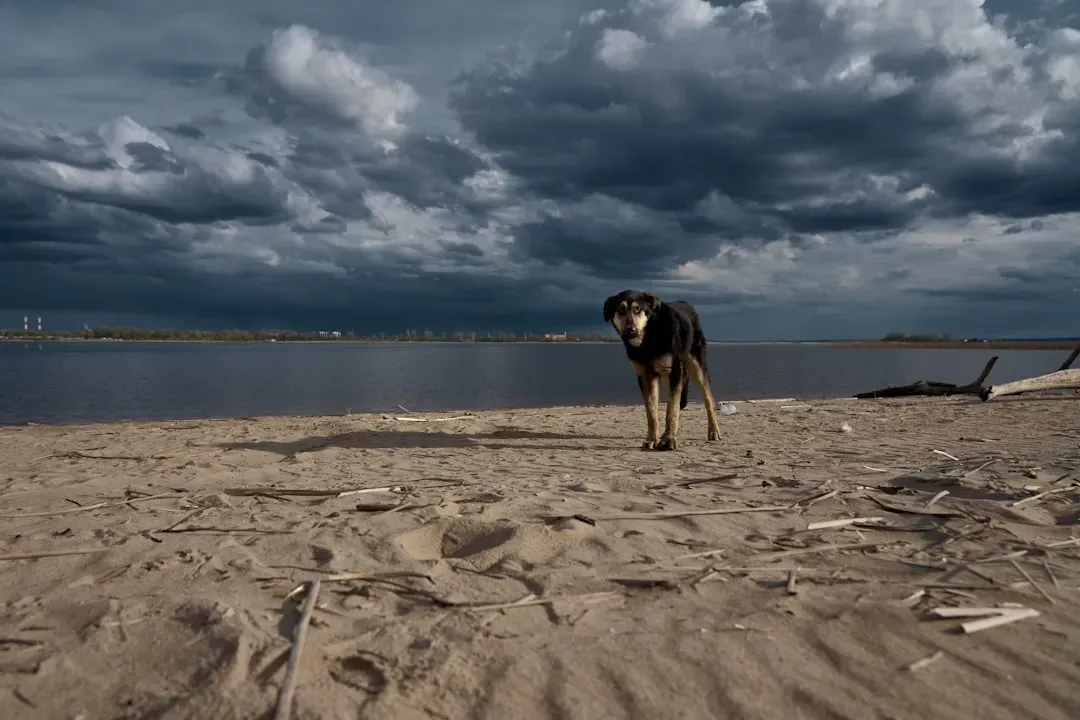
Most dog owners know that storms upset their dogs, but the full picture is more complex than the obvious clap of thunder. Dogs’ hearing is two to three times more sensitive than ours, meaning the booms of a summer storm are far louder, far closer, and far more jarring to them. That alone would explain a lot. The reality goes even further.
Recent studies have found that the loud cracking sound of thunder is just a small part of what makes storms so terrifying. Thunderstorms also alter the atmosphere, releasing a large amount of static electricity into the air, which dogs experience as a tingling throughout their hair coat, and they may even receive multiple shocks before the storm lifts. Many large dogs try to hide in bathrooms or basements during storms, not randomly, but because those rooms tend to be more grounded.
Fear of thunderstorms can worsen with repeated exposure, and the phobia is complex because it encompasses not just sound, but changes in barometric pressure, darkening skies, lightning flashes, and rain and wind. If your dog starts pacing and panting an hour before a storm hits, that’s not coincidence. They detected it long before you did. Prevention includes creating a quiet, safe den, using calming wraps, and consulting your vet about anxiety support for severe cases.
2. Fireworks: The Number One Noise Trigger

Much like thunderstorms, fireworks are one of the most common phobias in dogs. A 2013 study by the University of Bristol’s School of Veterinary Sciences found them to be the number one trigger for fearful behavior. Not only are fireworks extremely loud, they also produce frightening odors and visual effects. It’s a triple sensory assault that dogs simply cannot rationalize away.
In addition to the sensory component, some scientists believe there is a genetic aspect to noise phobias in dogs. A 2015 study conducted by the Norwegian University of Life Sciences in Oslo found a marked correlation between certain breeds and noise-sensitive fearfulness. So if your German Shepherd or Husky is particularly rattled by Fourth of July celebrations, their genetics may be playing a role.
Since we know which holidays typically bring fireworks, it’s possible to plan ahead. You can keep your dog in the quietest and most secure space in the house, or speak with your vet about calming treats or medications in advance. Never wait until the fireworks start to begin managing this one. Timing matters, and calm preparation always outperforms reactive scrambling.
3. Separation Anxiety: The Fear of Being Left Behind
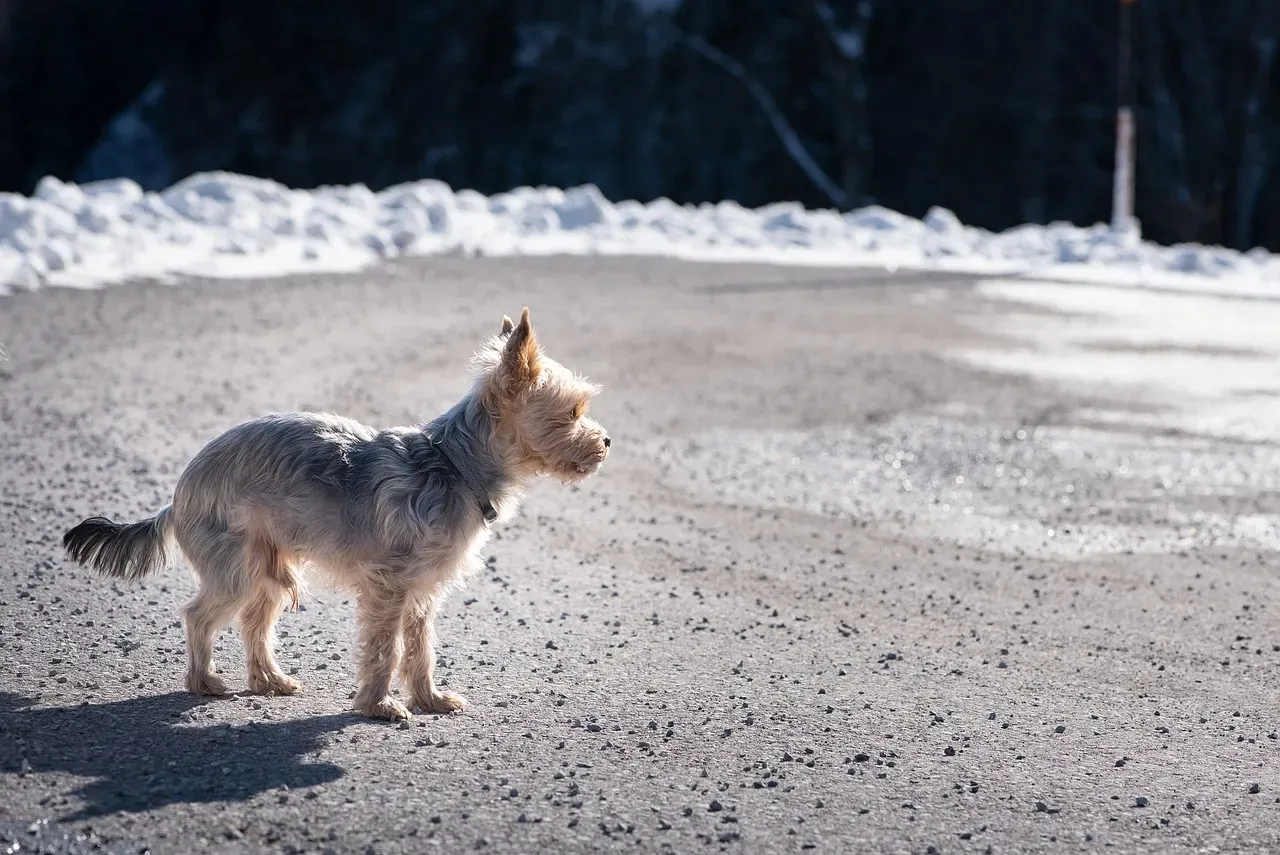
Separation anxiety describes dogs that are overly attached or dependent on family members. They become extremely anxious and show distress behaviors such as vocalization, destruction, or house soiling when separated from their owners. Most dogs with separation anxiety try to remain close to their owners, follow them from room to room, and rarely spend time outdoors alone. This isn’t attention-seeking. It’s genuine distress.
Separation anxiety is often linked to changes in routine, changes in household members, rehoming, shelter adoption history, or a sudden increase in time spent alone. Some dogs become distressed after a pet parent returns to work after being home more often. If the pandemic years brought your dog closer to you than ever, the subsequent return to normal schedules may have triggered something real and lasting.
Avoid punishment for barking, accidents, or destruction that happens during your absence. Anxiety-driven behavior is not spite. Punishment can increase fear and make departures feel even less safe. Instead, work gradually with your vet or a certified behaviorist to build calm independence through structured routines and slow, positive exposure to alone time.
4. Visits to the Veterinarian
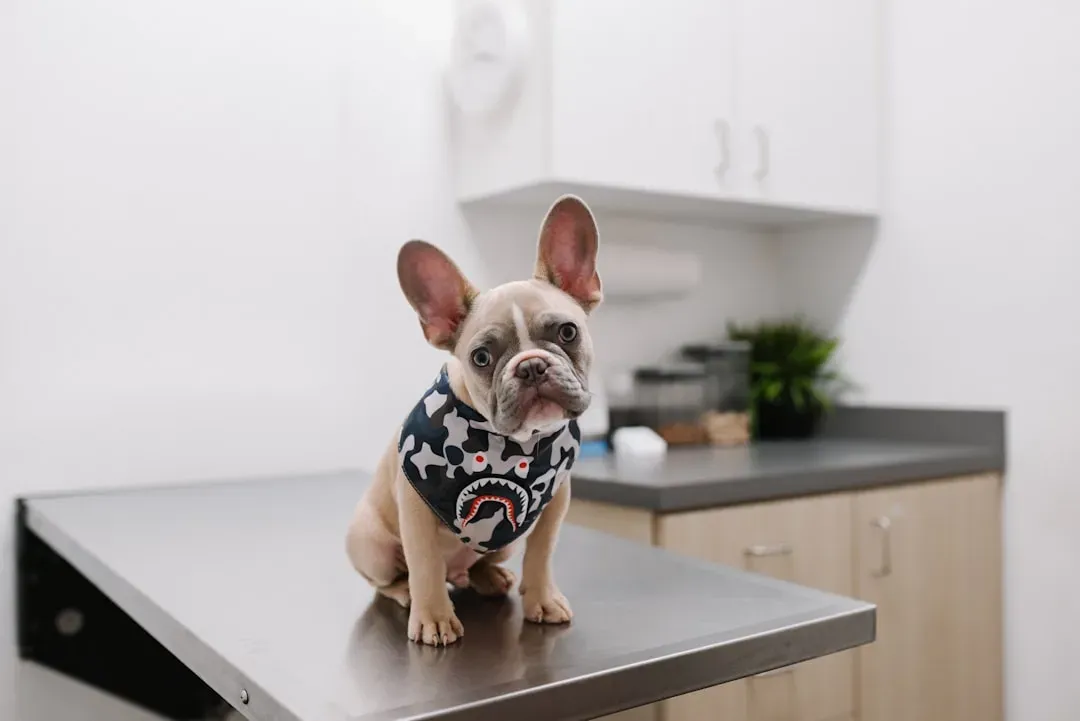
One study found that more than half of dogs showed some level of fear while visiting the vet. This most likely stems from previous negative experiences of feeling ill or having injections. For large dogs especially, the vet clinic carries a distinct smell, an unfamiliar environment, the presence of stressed animals, and a history of being poked, prodded, and restrained. The brain connects all of that quickly.
Some dogs experience a genuine phobia around veterinary visits. Dogs don’t understand that these visits are in their best interest, and many of the circumstances around them, such as feeling sick, pain, car rides, new locations, strangers, and the presence of other stressed animals, can compound this fear into a full phobia. What looks like a dog being “difficult” is often a dog communicating very clearly that they’re overwhelmed.
One of the most effective strategies is to take practice car rides that don’t end at the vet, and to visit the vet clinic just to say hello, get treats, and leave. Many practices are now Fear Free certified, which means the entire environment is designed to reduce stress at every step of the visit. Asking your vet about these approaches can make a significant difference over time.
5. Strangers and Unfamiliar People
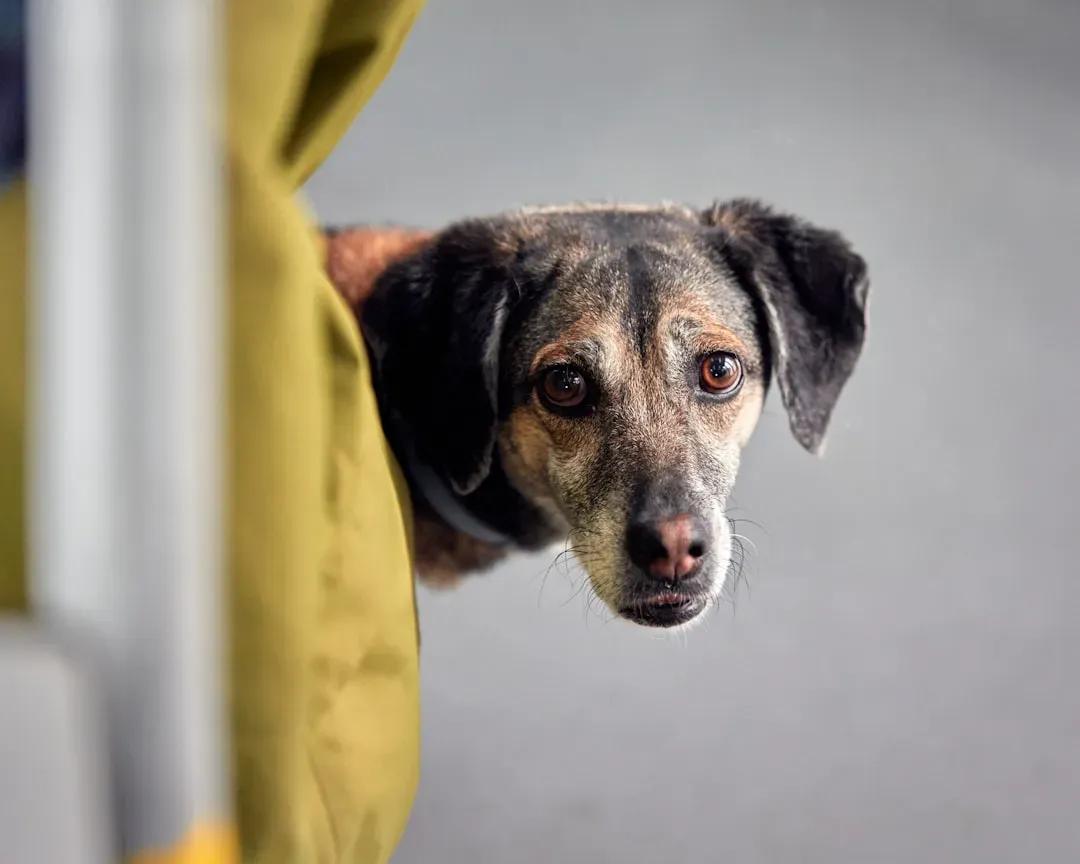
Fear of strangers is common in dogs rescued from abusive environments, though it can take different forms. Some dogs fear any person they don’t know, while others may dislike a specific category of people, often because of previous negative experiences, such as men or people wearing hats. A large dog reacting fearfully to a stranger can look alarming from the outside, but it’s important to understand what’s driving the behavior.
There are many reasons why dogs can develop a fear or phobic response toward people, including lack of socialization, traumatic learning experiences, genetic predisposition, and medical conditions. Some dogs develop a fear of strangers, particularly men, after a negative experience. Dogs rescued from abusive homes often suffer from this fear, which can lead to reactive behavior. Recognizing the root cause matters, because the right support looks different for a traumatized rescue dog versus a simply undersocialized one.
Let your dog approach new people at their own pace. Forcing them to interact with strangers too soon can make their fear worse and even lead to aggression. Keep greetings calm, short, and reward-based. You can also use a vest with a warning label that tells people your dog is anxious and needs space. That small tool can prevent more uncomfortable encounters than you might expect.
6. Loud Household Objects: The Vacuum Cleaner Effect
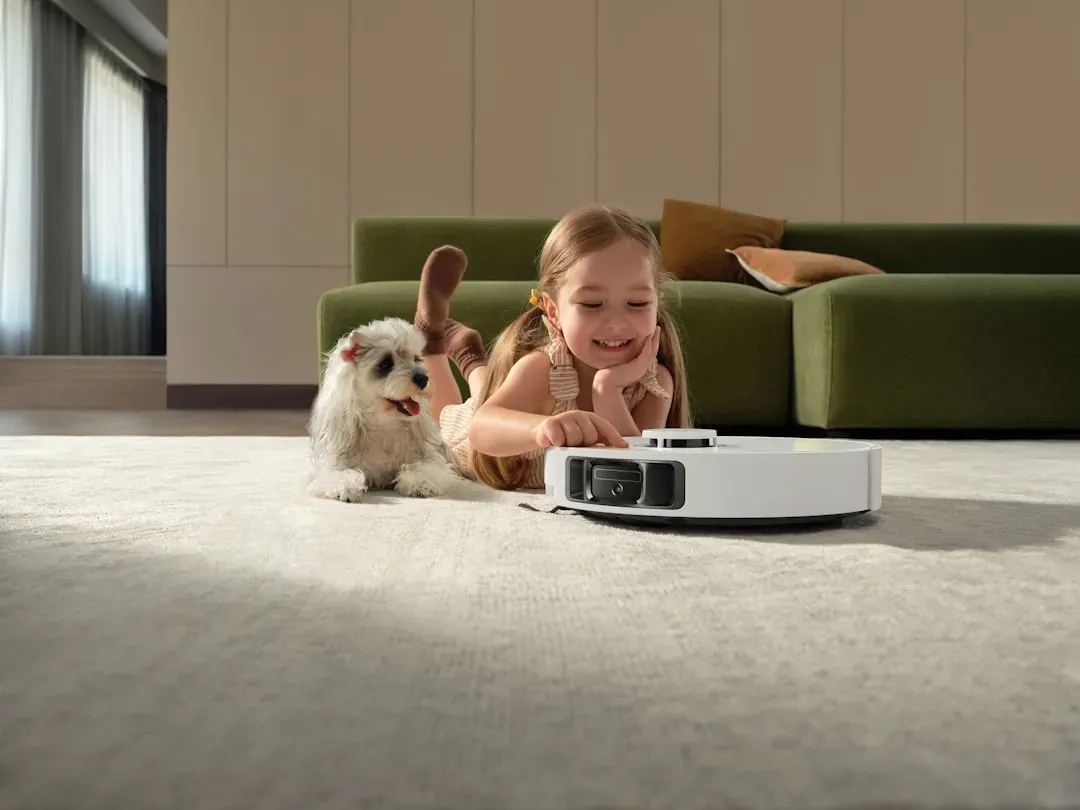
Vacuums are one of the most common objects a dog fears, as they’re loud and move around unexpectedly. Think about it from your dog’s perspective. A large, roaring machine that chases you around the house, smells strange, and has no predictable path is genuinely startling. For a dog already sensitive to sound, the vacuum becomes something closer to a recurring threat.
Any object that frightens your dog can become a source of fear for various reasons. Most dogs don’t feel safe around items that produce intense noise. Many stay away from vacuum cleaners or hair dryers, though sometimes dogs show signs of stress when facing typical household items such as a broom, a trash bag, or even a hat. The unpredictability of movement is often as much of a trigger as the noise itself.
When you plan to vacuum or use a particular scary object, put your dog in a different room with their favorite toy or chew. Never chase a dog with an object that makes them uncomfortable, as this can make them more reactive. Over time, gradual desensitization, starting with simply leaving the vacuum in the room without turning it on, can help your dog build a more neutral association with the object.
7. Children: Unpredictable Energy in a Small Package
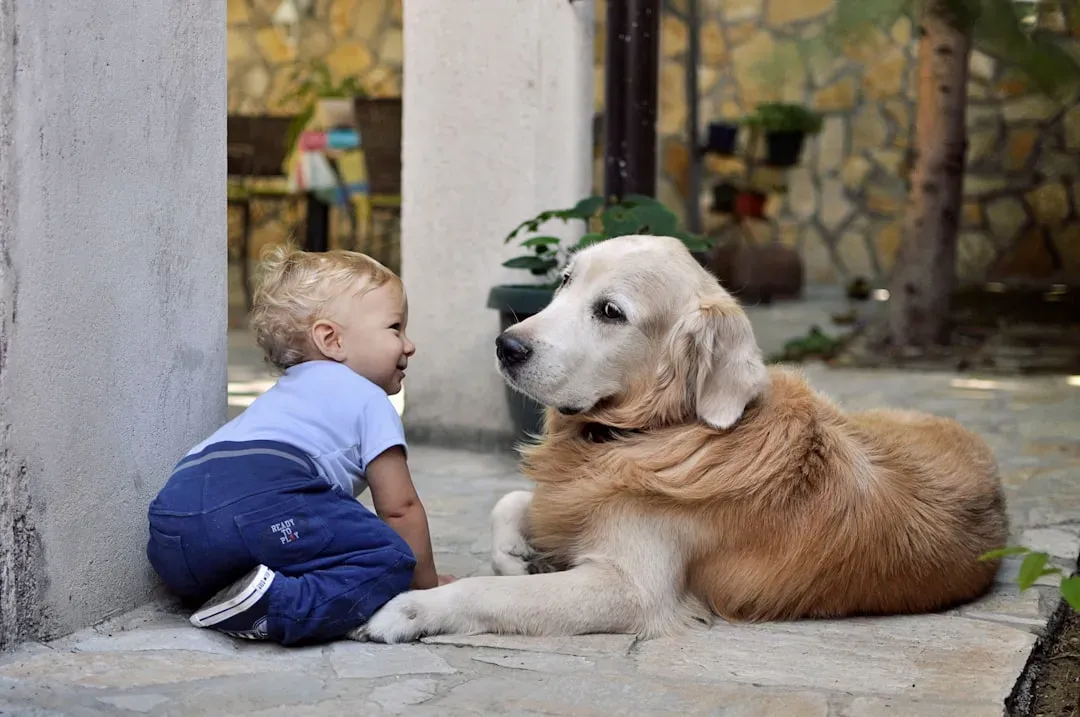
Fear of children typically occurs due to a lack of exposure from a young age or because of previous negative experiences with kids. Children are often loud, energetic, and unpredictable. Their erratic behavior can be too much for a dog to handle, and some dogs need owner assistance adjusting to younger family members. This is one of the more important fears to take seriously, because the stakes involve both the dog’s wellbeing and a child’s safety.
When dogs feel threatened, they almost always give several signals before resorting to aggression. Signs include flattened ears, stiff body posture, dilated pupils, raised hackles, a curled lip, and growling. If these signals are ignored, the dog may escalate their behavior to make the scary thing go away. It’s important to ensure that children understand how to approach and handle dogs gently.
Never leave a fearful large dog alone with young children, regardless of how well-behaved the dog normally is. Introduce children and dogs slowly and from a distance. Tell children to be cautious and move slowly for their own protection. Patience on both sides of the interaction is what builds genuine comfort over time.
8. Car Rides: Motion, Smells, and Bad Memories
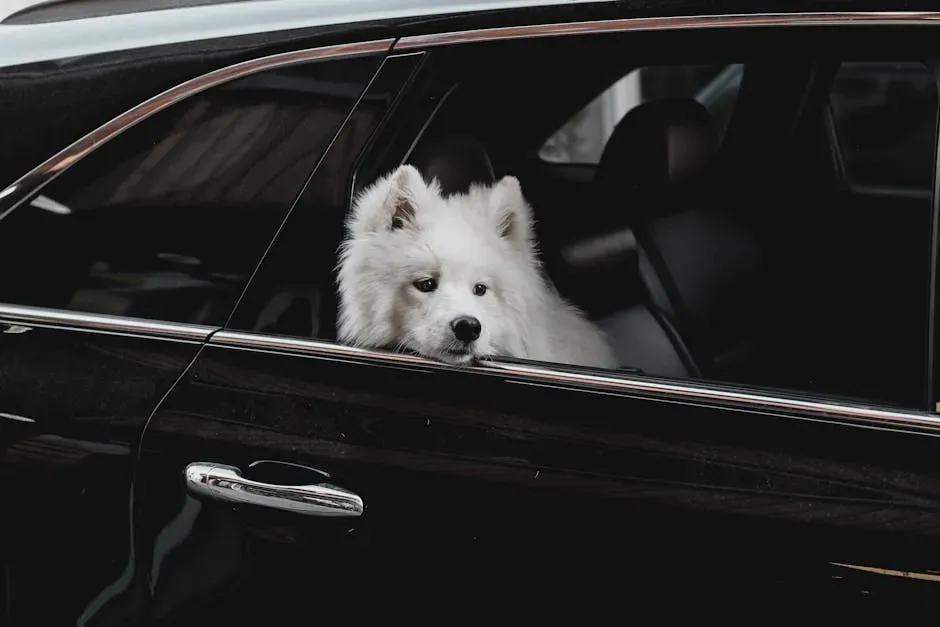
Though many dogs enjoy car rides, some develop negative associations that can become a true fear or phobia. This is typically the result of past adverse events connected with rides. A dog can remember getting sick in a car or associate car rides with trips to the vet. For a large dog that already struggles in enclosed spaces, a car can feel overwhelming before it even starts moving.
Fear of car rides can manifest in many ways. The dog may have had a bad experience, experience car sickness, or simply associate cars with vet visits or other negative environments. Common behavioral cues include refusing to get in the car, panting heavily once inside, drooling, whining, or attempting to escape. These are all distress signals worth respecting.
To help your dog overcome this fear, start by using treats and positive reinforcement to encourage them simply to get into the car. Gradually build up to short, easy rides, and ensure the destination is somewhere fun, like the park, so your dog begins to associate car rides with positive experiences rather than stress. Consistency with this approach, even over several weeks, tends to produce steady and lasting results.
9. Unfamiliar Surfaces and Environments
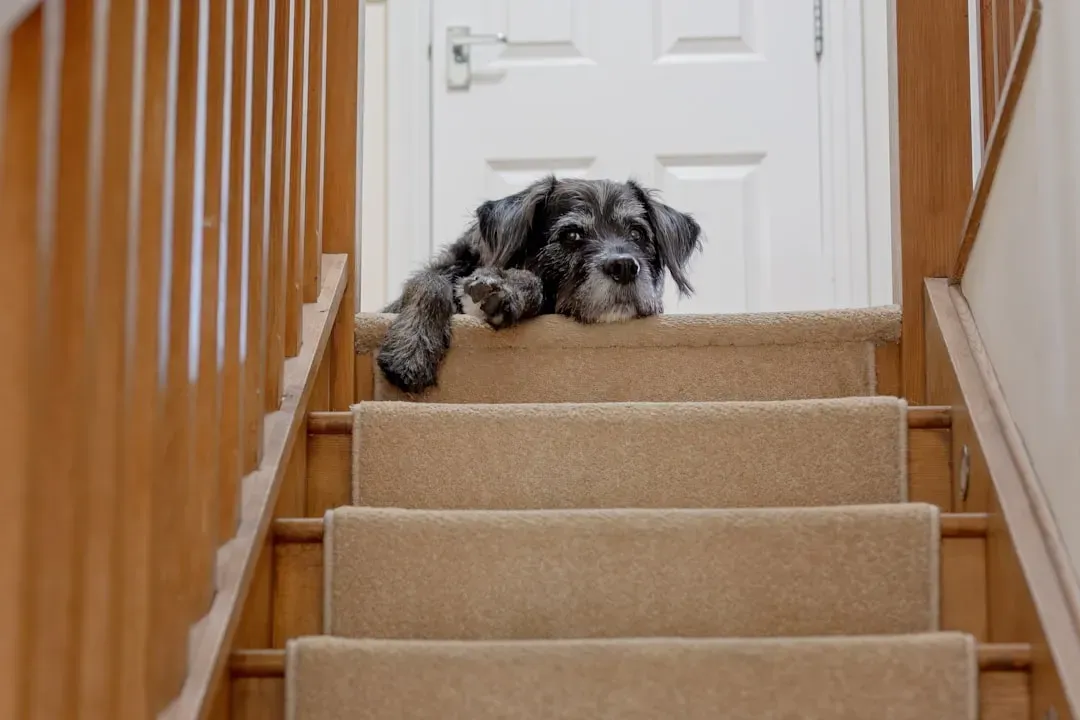
Unfamiliar floors or surfaces, such as grass, tile, wood floors, or stairs, can trigger anxiety in dogs, especially if the dog hasn’t been exposed to them before. A large dog suddenly freezing at the top of a staircase or refusing to walk across a slippery tile floor isn’t being stubborn. They’re genuinely unsure of their footing, and for a heavy breed, that uncertainty carries real physical risk in their minds.
You might not notice your dog’s fear of stairs until they suddenly freeze at the sight of a set of steps. This anxiety usually stems from a lack of early exposure and socialization. If a puppy isn’t introduced to stairs, they may develop a fear of them later on. Novel environments, like a new home, a boarding facility, or a pet store with bright lights and echoing sounds, can produce similar responses.
To help your dog get comfortable with stairs or new surfaces, try turning it into a game or approach the training step by step, using plenty of positive reinforcement. For large dogs with joint concerns, also check in with your vet to ensure that hesitation on surfaces isn’t partly related to physical discomfort, which can compound fear-based avoidance considerably.
10. Being Left Alone with No Routine or Stimulation

Dogs are naturally sociable animals and find it hard to go without company for long periods. Separation anxiety affects a significant portion of dogs, roughly four in ten, making it one of the most commonly reported canine fears. For large, high-energy breeds built for work and companionship, empty hours in a quiet house can be genuinely distressing, even when the dog is physically comfortable and well-fed.
Anxious dogs exhibit physiological and behavioral signs even when the trigger is not yet present. Underlying anxiety can contribute to many behavioral signs and syndromes, such as nocturnal wakefulness, excessive vocalization, and house soiling. For some dogs, anxiety begins before you even leave the house, triggered by your morning routine. There are even dogs who can tell the difference between workdays and days off and are only anxious on workdays.
Dogs of all ages, sizes, and breeds need daily exercise and play for their health, happiness, and mental enrichment. Engaging your dog’s brain and body through interactive play matters. Even 15 minutes of fun, easy training or enrichment games like “find the toy” can help your dog expend mental energy and feel more settled when alone. A well-stimulated dog is far more resilient to the discomfort of solitude.
Conclusion: Fear Doesn’t Care About Size
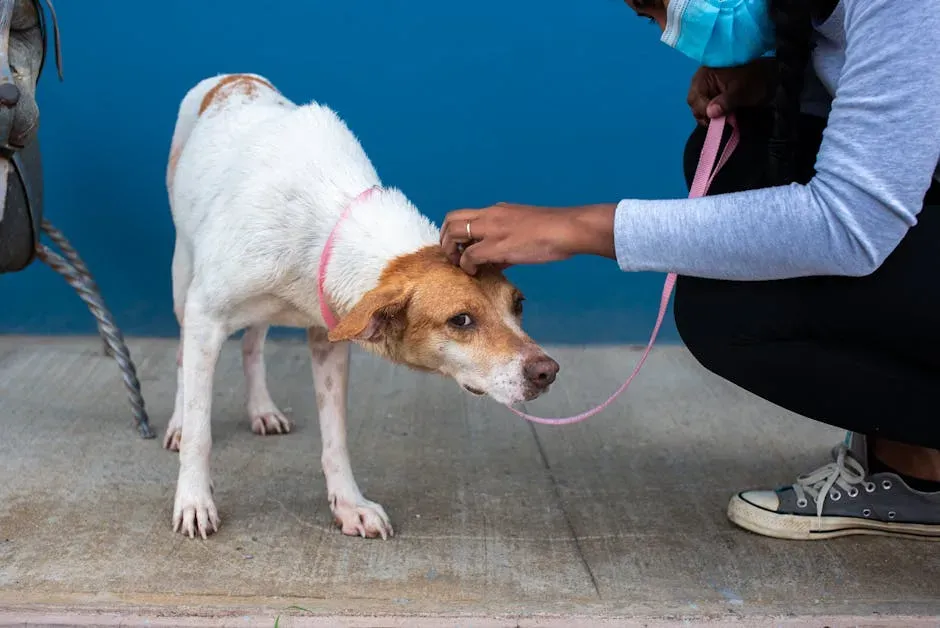
A frightened Great Dane is still a frightened dog. The behavior cues are the same whether you’re watching a Chihuahua or a Cane Corso: trembling, drooling, panting when not hot, yawning when not tired, pacing, excessive barking, hiding, cowering, whining, flattened ears, wide eyes, stiff posture, and a tucked tail are all signs of fear worth paying attention to.
A fearful dog isn’t being “bad” or “stubborn.” They’re communicating discomfort or distress. Learning to recognize these signals early helps you prevent overwhelming situations, avoid behavioral problems, and strengthen the bond built on empathy and respect. That’s the real work of being a dog owner.
Helping a dog deal with their fears is not quick, but it is possible. Patience and consistency are the key to success. It’s also important to address fears immediately to prevent them from developing into full-scale phobias. The dogs who feel seen, supported, and guided through what scares them tend to become steadier, calmer, and more trusting companions. That outcome is worth every step of the process.


