

Picture a toddler who snores so loud you can hear it through two closed doors, gags on air multiple times a day, and gets winded walking to the mailbox. You’d call a pediatrician immediately. But when it’s a French Bulldog doing all three, the internet calls it “personality” and hits like.
That gap between what we’d tolerate in any other living creature and what we’ve decided is just “Frenchie things” is bigger than most owners want to admit. Some of these normalized habits are harmless quirks. A lot of them are quiet emergencies wearing a cute face. Here’s where the line actually is.
#1 – Constant Snoring You Can Hear Through Walls

People joke that Frenchies “sound like little motorcycles,” but chronic, heavy snoring is often a breathing disorder, not a cute personality trait. Their flat-faced structure means narrowed airways, long soft palates, and tiny nostrils working overtime just to move air.
Over time, that constant struggle can cause inflammation, fatigue, and even heart strain. If your dog sleeps sitting up, gasps awake, or sounds like they’re choking at 3 a.m., that’s not a quirky lullaby – that’s distress with a soundtrack. If you wouldn’t accept those sounds from a sleeping toddler, don’t accept them from a dog that can’t ask for help.
#2 – Daily Gagging and Reverse Sneezing Passed Off as “Just Frenchie Things”

Many owners casually post, “Oh, he just reverse sneezes every day, totally normal.” It is not normal for a dog to look like it’s choking on air on a regular basis. Reverse sneezing is a reflex often triggered by throat or nasal irritation, and in flat-faced breeds it can point to chronic airway compromise or structural problems.
We’ve normalized grabbing the phone to film it instead of asking why it happens so often. A rare episode is harmless. Daily snorting, gagging, or honking is a symptom being mistaken for a personality trait.
- Frequent episodes can signal an elongated soft palate.
- Repeated “honking” sounds can point to serious airway disease.
#3 – Collapsing After a 10-Minute Walk in Mild Weather

“Frenchies just don’t do well in heat” has become an excuse for dogs that can barely manage a short stroll on a mild day without panting like they’ve run a marathon. All dogs need protection from extreme temperatures – but if 70°F, some shade, and ten minutes of walking leave your dog flattened on cool tiles for half an hour, something is off.
Owners quietly rebuild their whole routine around it: sunrise-only bathroom breaks, no real walks, constant AC. It becomes so routine people forget a healthy dog should enjoy moving. When a breed gets marketed as “perfect for apartments” because it physically can’t handle normal activity, that’s not convenience – that’s impairment with good branding.
Fast Facts
- A healthy dog should be able to enjoy a short walk without needing to lie down and recover afterward.
- Heavy panting, blue-tinged gums, or collapse after mild activity are hallmark warning signs of Brachycephalic Obstructive Airway Syndrome (BOAS).
- Heat intolerance in flat-faced breeds is often a symptom of restricted airflow, not simply “the breed being the breed.”
#4 – Wrinkles That Are Always Red, Raw, or Smelly

People love Frenchie wrinkles. Instagram loves them even more. But skin folds that are constantly red, yeasty, or smelly are infections, not “Frenchie smell.” Trapped moisture and poor airflow in facial and tail folds create a perfect breeding ground for bacteria and yeast.
Some wrinkle maintenance is normal. Recurring infections are not – they’re a design flaw dressed up as high-maintenance cuteness. If your dog’s skin looks raw, they’re rubbing their face on the couch, or you can smell their folds from across the room, that’s pain hiding under adorable rolls.
#5 – Spending More Time at the Vet Than at the Park
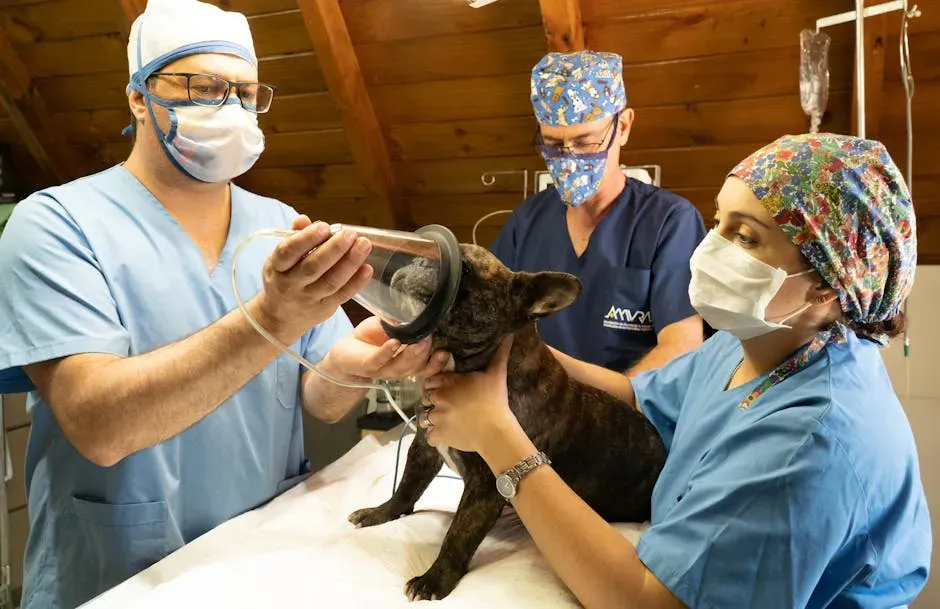
Ask around and you’ll hear it: “Frenchies are just vet dogs.” Owners swap $5,000, $10,000, even $20,000 medical bills like war stories, then shrug it off. When an entire breed is accepted as a walking invoice for specialists, something has gone very wrong with what we call normal.
Allergies, ear infections, spine issues, palate surgery, eye problems – the list keeps growing, and people call it the price of love. Any dog can get sick, sure. But routine quality of life shouldn’t involve rotating through dermatologists, cardiologists, and orthopedic surgeons before age five.
#6 – Calling Limited Stamina a “Low Exercise Needs” Selling Point

One of the most repeated pitches for Frenchies is, “They’re lazy, they don’t need much exercise.” That’s extremely convenient for busy owners – and extremely misleading when what’s really being described is limited physical capacity, not a chill personality.
Frenchies are often clownish and energetic in bursts, then suddenly done, sometimes because their bodies can’t keep up with their minds. Many owners quietly notice their dog wants to play more but starts coughing or collapsing instead. Calling that “low exercise needs” makes humans feel better. It doesn’t make the dog any more comfortable in its own body.
#7 – Praising Obesity as “Cute and Chunky”

Scroll Frenchie hashtags and you’ll see thick neck rolls, huge bellies, waddling gaits, all captioned “chonky king.” Obesity is so normalized in this breed that plenty of clearly overweight dogs get praised as “stocky” or “well built.”
For a dog already struggling to breathe, extra fat makes everything worse – airways, joints, heart, and spine all pay the price. A Frenchie should have a visible waist and easily felt ribs, just like any other dog. Cute doesn’t mean comfortable, and “chonky” almost always means a shorter life.
#8 – Treating C-Sections as Just “Part of the Breed”

Here’s a harsh truth many people gloss over: a huge percentage of French Bulldogs cannot mate or give birth naturally. They require artificial insemination and planned C-sections just to produce a litter. If an animal can’t reliably reproduce on its own, that’s not cute – that’s a welfare crisis wearing a bow.
Breeders pass the reproductive costs onto buyers, and buyers unknowingly fuel demand for dogs whose bodies literally can’t safely whelp. In most other animal breeding programs, stock that can’t reproduce naturally gets pulled. With Frenchies, it’s become the standard business model.
#9 – Calling Wobbly Back Legs “Clumsy Frenchie Energy”

Frenchies are built like tanks on toothpicks – heavy front, narrow hips, short legs. That structure, combined with genetics, sets them up for intervertebral disc disease (IVDD), hind-leg weakness, and sudden paralysis far more often than most owners realize.
When dogs start bunny-hopping, dragging paws, or struggling with stairs, people joke they’re “just dramatic.” But these can be early warnings of serious spinal trouble. Plenty of heartbreaking stories about young Frenchies suddenly needing wheelchairs started with subtle mobility quirks that got shrugged off for months.
Worth Knowing
- Sudden reluctance to jump, a hunched back, or yelping when picked up can signal spinal disc trouble.
- Dragging back paws or “bunny hopping” often shows up months before a dog loses the ability to walk normally.
- Short-legged, long-backed breeds like French Bulldogs carry a higher genetic risk for IVDD than average.
#10 – Nonstop Itching and Ear Infections Called “Just How They Are”

Some owners can’t remember a time when their Frenchie didn’t scratch, lick their paws raw, or shake their head. “He just has allergies, that’s Frenchies for you,” they’ll say. Chronic skin and ear issues are signs of an immune system fighting its environment, not a personality trait.
It becomes the background soundtrack of the home: tags jingling as they scratch, midnight licking, constant vet trips for ear drops. People adapt around it instead of questioning the breeding practices that produce such sensitive dogs in the first place.
#11 – Turning Up the TV Because the Dog’s Breathing Drowns It Out

If you routinely raise the volume because your dog’s breathing is louder than the show you’re watching, that is not normal canine behavior – that’s respiratory distress casually accepted as background noise. Snorts, wheezes, and grunts with every movement mean the upper airway is working overtime, every hour, every day.
Owners often film the noises as comedy content, and the internet rewards it with likes. What doesn’t get shared is the dog’s rising risk of heat stroke, sleep apnea, and surgery down the line. Imagine a child breathing that way – nobody would call it charming.
#12 – Paying Extra for Rare Colors Linked to Health Risks

Blue, lilac, merle, fluffy – certain Frenchie colors now sell for car-level prices. What many buyers don’t realize is that chasing rare colors has often come at the direct expense of health and genetic diversity, with some trendy shades linked to higher rates of skin issues, deafness, or immune problems.
People shrug off the risk as the cost of uniqueness, turning a living animal into a luxury item. Breeders chasing “investment puppies” have less reason to prioritize temperament or health over the next hype color. Meanwhile, shelters quietly fill with less-fashionable Frenchies whose medical bills overwhelmed their owners.
#13 – Calling Screaming Separation Anxiety “Sweet”

French Bulldogs are famously people-oriented. But clinging to you so hard they scream when you leave the room is not sweet – it’s severe anxiety wearing a cute costume. Owners normalize it because the dog is small enough to carry everywhere and sleep with, so the dog never actually learns to self-soothe.
These aren’t quirks, they’re distress behaviors:
- Destroying things when left alone
- Salivating, pacing, or howling the second you’re gone
We reward constant contact instead of training independence – until life changes force alone time, and the dog simply can’t cope.
#14 – Treating a 10-Year Lifespan Like a Win

Too many owners quietly expect their dog to be “doing well” if it makes it to 10. For a small breed, that’s not old – it’s the bare minimum, not a success story. Plenty of other small dogs regularly live well beyond that when bred and cared for responsibly.
Because Frenchies pack so many health issues into a compact body, early losses have become weirdly accepted. Going into ownership already expecting major surgery by five and mobility decline by eight isn’t stewardship – it’s damage control with a leash.
Quick Compare
- French Bulldog average lifespan: commonly cited around 10 to 12 years.
- Many other small breeds, like Chihuahuas or Toy Poodles, routinely live into their mid-to-late teens.
- Weight management, breathing surgery when needed, and heat caution can meaningfully extend a Frenchie’s healthy years.
#15 – Treating Surgery Savings as a Non-Negotiable Line Item

With most breeds, pet insurance is smart. With Frenchies, it’s treated like a survival requirement, and that alone tells you everything. “Get insurance before they turn one or you’ll go bankrupt” gets repeated half-jokingly, but behind the joke is an expectation of serious, expensive problems.
When a normal conversation in a breed group includes these topics, something has shifted from bad luck to a predictable pattern:
- Which policies cover airway surgery
- How to finance an $8,000 back operation
- Whether you can even afford “another dog like this”
Buyers are rarely told upfront how likely big-ticket health issues really are. They’re sold clown dogs and little hippos, not the reality of medical debt.
#16 – Excusing Reactivity and Snapping as “Small Dog Attitude”

Frenchies are often hilarious and confident, and that energy can tip into lunging at other dogs, guarding toys, or snapping when handled. Owners frequently wave it off as “small dog syndrome” or “Frenchie sass.” But pain, breathing problems, and pent-up frustration from limited exercise can absolutely fuel behavior issues.
A dog that’s physically uncomfortable or easily overwhelmed lashes out faster – and when that dog is also spoiled, under-exercised, and under-trained, everyone blames “the breed” instead of the setup. Normalizing bad behavior under a cute label hurts the dog most; it’s not attitude, it’s a cry for structured support.
#17 – Calling Rescue Frenchies “Broken” Instead of Overbred

Scroll rescue pages and you’ll see senior Frenchies, medically complex Frenchies, and behaviorally complicated Frenchies, all looking for homes. Many buyers glance at them and say, “I want a fresh puppy, not a problem” – missing the fact that most of those “problems” started with the exact same extreme breeding choices that produced their dream puppy.
Overbreeding to meet demand has flooded the market with poorly bred dogs, and backyard breeders and trendy color farms feed the rescue pipeline daily. The narrative becomes “rescue Frenchies are risky” instead of “our breeding culture is creating disposable dogs.”
#18 – Calling a Face That Can’t Breathe Properly “Iconic”

Here’s the core issue almost everything else circles back to: we’ve accepted a face so flat it compromises breathing as “iconic” and “on brand” for the French Bulldog. The shorter the muzzle, the more desirable some people think it is, even though that same structure drives many of the breed’s worst health problems.
This isn’t about hating Frenchies. It’s about admitting a dog should be able to breathe, walk, and sleep comfortably as a baseline. Slightly longer muzzles and wider nostrils are already being bred by more ethical programs, and these dogs still look unmistakably Frenchie – they just function better.
Why It Stands Out
- Muzzle length directly affects airway size, breathing ease, and heat tolerance.
- More ethical breeding programs are prioritizing slightly longer muzzles without losing the breed’s signature look.
- A Frenchie that can breathe, sleep, and play without struggle is still unmistakably a Frenchie.
The Bottom Line

French Bulldog owners are some of the most devoted, ride-or-die dog people out there. The problem was never the love. It’s what we’ve been taught to accept in the name of that love.
Chronic breathing struggles, endless vet visits, skin infections, anxiety, spinal issues, and shortened lifespans are not personality quirks – they’re welfare failures we’ve normalized one laughing comment at a time. It’s uncomfortable to admit the breed we adore was built on extremes that cost dogs their comfort and their years. But discomfort is exactly where change starts.
Demanding healthier breeding, refusing to pay extra for “cuter” suffering, and being brutally honest about what’s not okay is the only way Frenchies get a better future. So, do you think we’ve gone too far, or not far enough? Say it plainly in the comments – this breed needs the honest conversation, not another round of applause for the wheezing.


