
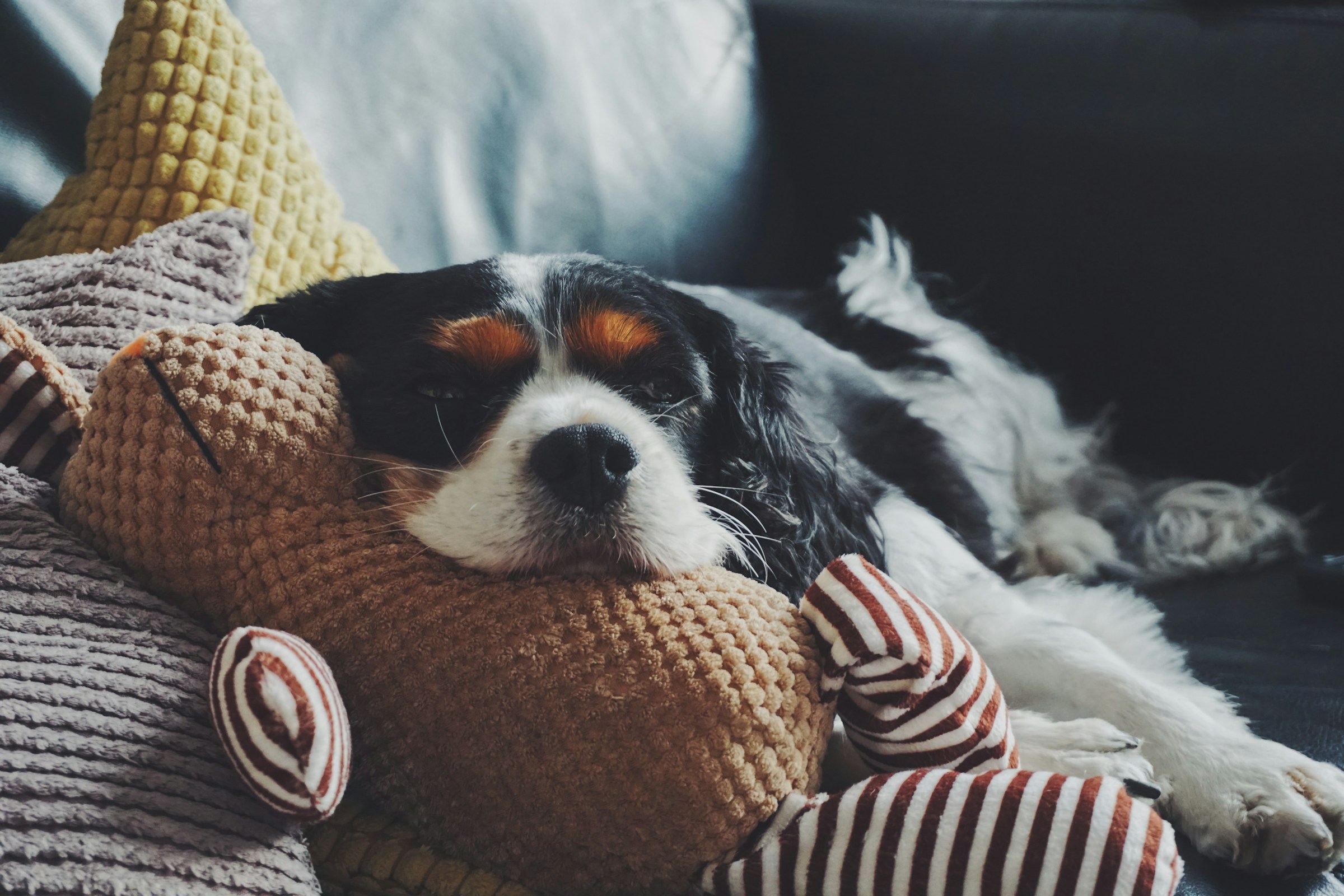
You know that feeling when your dog quietly walks over, sighs, and just plops their chin on your leg, chest, or shoulder? It is such a small gesture that it is easy to overlook, but to your dog, it can mean a lot. That gentle weight of their head can carry messages about love, comfort, stress, habit, and even health.
The tricky part is that dogs do not come with subtitles. One chin-rest can mean “I adore you,” and another can quietly mean “I do not feel so good.” The real magic is learning to read the context: the eyes, the body language, what is going on around you. Let us dive into some of the most common – and how you can respond in a way that makes your bond even stronger.
1. “I Feel Safe With You”
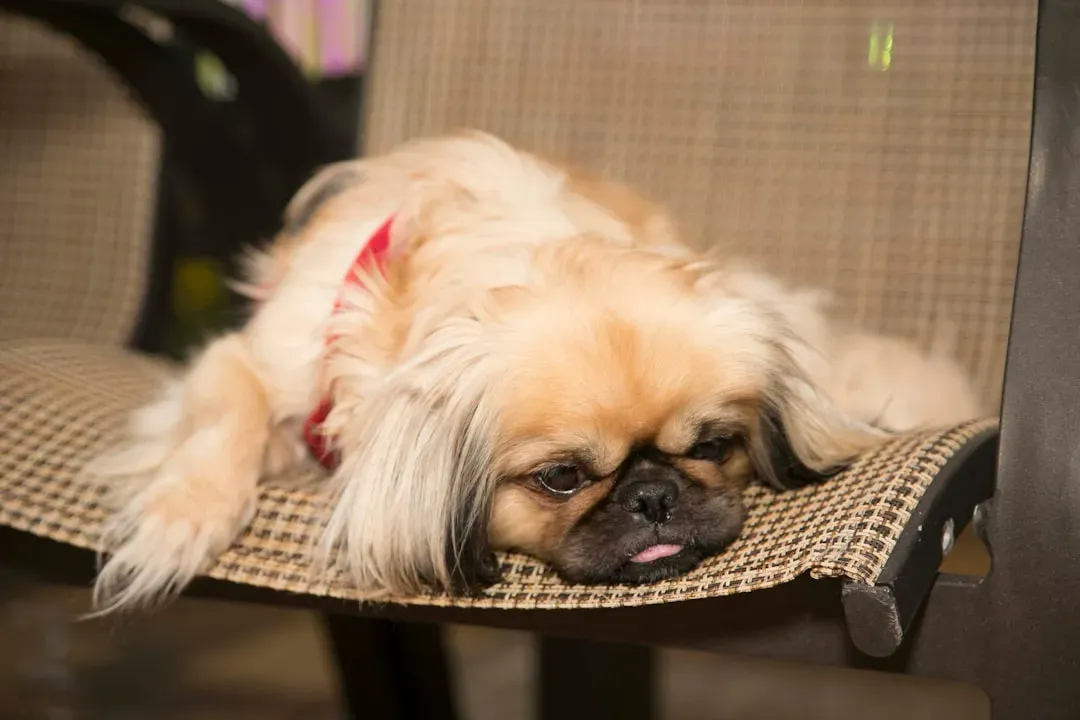
One of the most heart-melting reasons your dog rests their chin on you is simple: safety. When a dog chooses to relax enough to literally put the weight of their head on your body, they are letting their guard down in a pretty vulnerable way. In the animal world, exposing the head and closing the eyes near another being is a huge vote of trust.
You might notice this most when you are on the couch, in bed, or sitting on the floor. Your dog sidles up, leans in, places their chin on your leg, and maybe gives a deep, contented exhale. Their eyes may soften or slowly blink, their ears relax, and the whole body kind of melts. That is your dog saying, in the most dog-like way possible, that you are their safe place, their emotional “home base.”
2. “I Want Attention, Right Now”
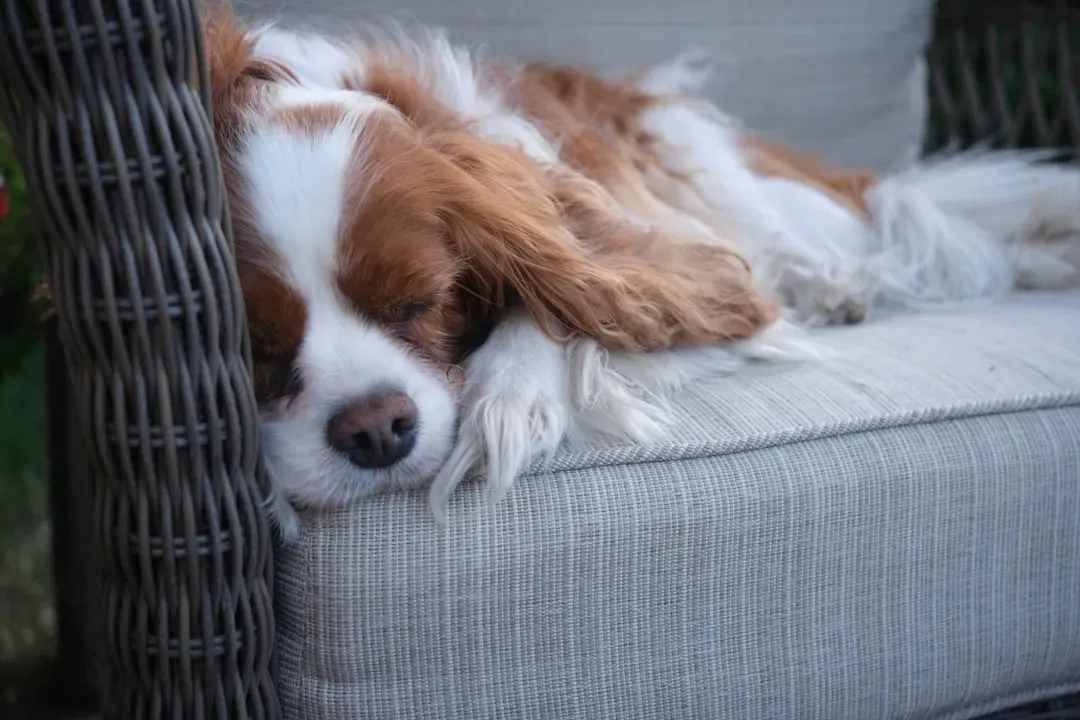
Sometimes a chin on your body is not subtle at all – it is a polite demand. Dogs are smart pattern-learners. If resting their chin on your laptop wrist, your hand, or your thigh once led to petting, play, or treats, they will remember that. Before you know it, you have a furry little notification system that pops up every time they decide it is “you and me” time.
You will often see this when you are busy: staring at your phone, on a video call, or trying to work. Your dog may rest their chin, stare at you, maybe add a tiny paw or a soft whine. It can be their way of saying, “Hey, remember me? The living, breathing, walk-loving creature?” You do not have to drop everything every time, but building small, predictable moments of attention through the day can make these demands calmer and less desperate.
3. “I Am Seeking Comfort or Reassurance”
Pay attention to when your dog chooses to rest their chin on you. Is it during a storm, fireworks, after a loud argument, or when a stranger visits? In those moments, the chin-rest can shift from casual affection to a quiet plea for reassurance. Your dog is literally anchoring themselves to you when their world feels a bit shaky.
The body language looks different here: maybe the ears are slightly back, the eyes are wide or darting, the body is a bit tense instead of floppy. The chin might feel heavier, like they are pressing in. In those moments, calm matters more than chatter. Soft voice, gentle touch, slow breathing, and acting like everything is okay can do more for your dog than a thousand words ever could.
4. “You Are Mine (In the Best Possible Way)”
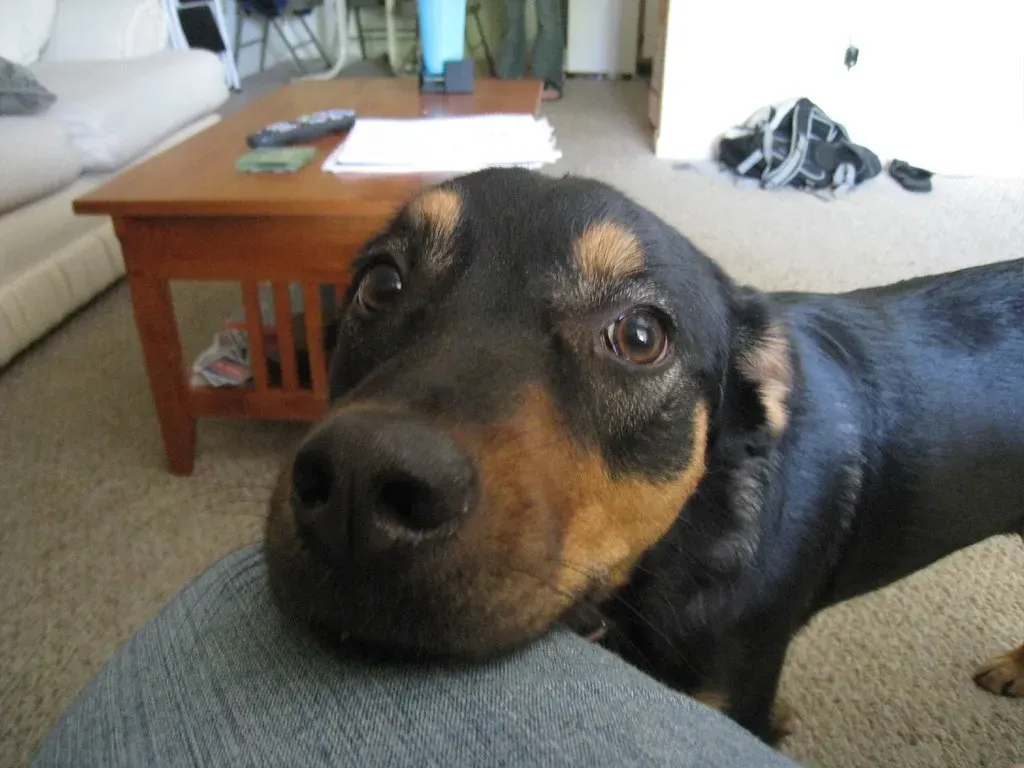
Dogs are social animals, and some of them are a little bit possessive – in a loving way. Resting their chin on you can sometimes be a light, physical way of claiming you as part of their inner circle. It is like the dog version of leaning into a friend at a party: subtle, but saying, “We are together.”
If you notice your dog resting their chin on you when other people or dogs are nearby, it might be a sign of low-level resource guarding of you as a valued “resource.” Watch for signs like stiffening when others approach, or a side-eye toward whoever is getting close. If that shows up, it is worth gently working on building positive associations when others come near, so your dog learns they do not have to protect you to keep you.
5. “I Am Tired or Not Feeling Great”
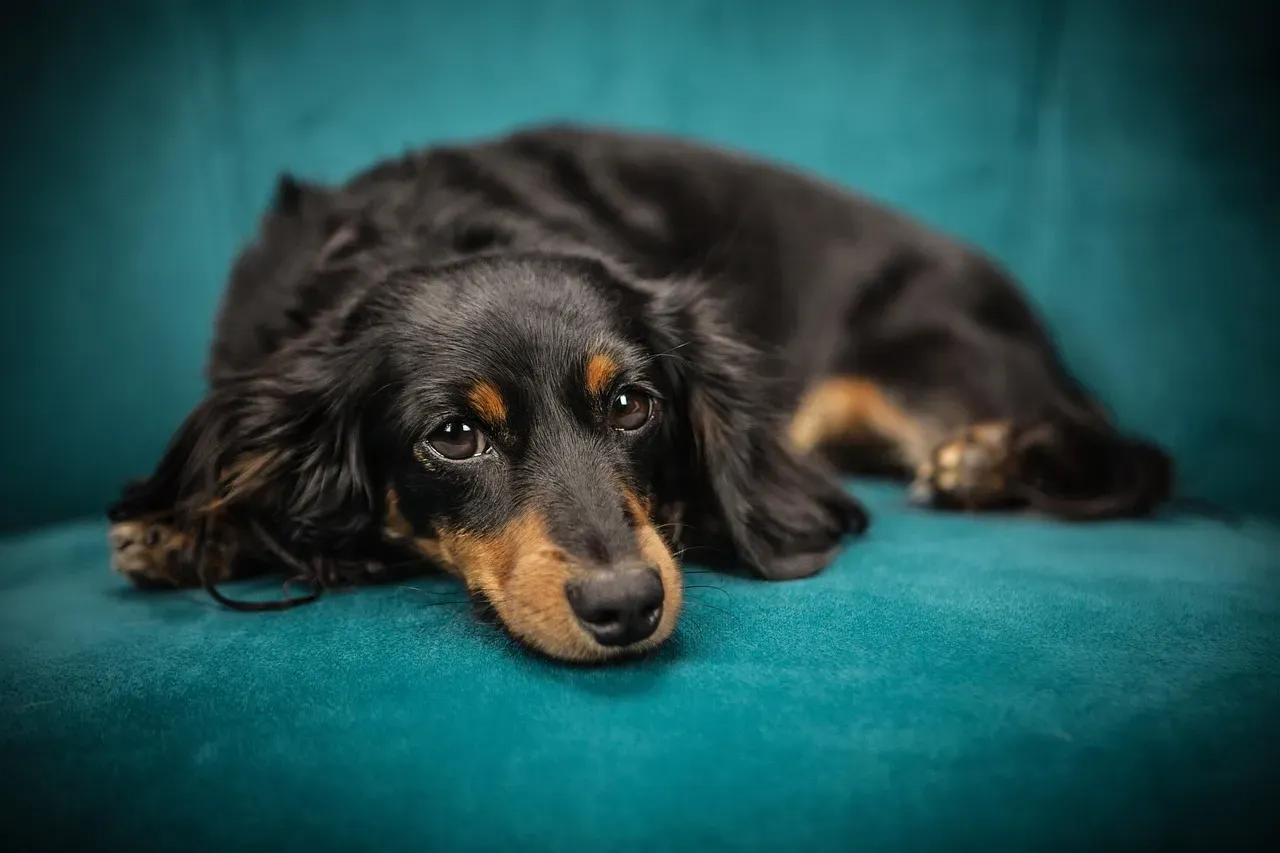
Sometimes a chin on your leg is less about bonding and more about fatigue or discomfort. If your dog is unusually quiet, less playful than normal, or seems to be using your body almost like a prop to hold their head up, it could be a sign they are tired, sore, or just off. Dogs are masters at hiding pain, so you often get whispers, not shouts.
Look at the whole picture: Are they moving more slowly on walks? Hesitating on stairs? Sleeping more? Eating less or just looking “dull” in the eyes? If the chin-resting is new for your dog and comes with other small changes, it is worth taking notes and checking in with a vet. I have personally had a dog who started resting his chin on my leg a lot more before we realized his joints were bothering him – it looked sweet, but it was also a quiet clue.
6. “I Am Bonding With You, Like Family”
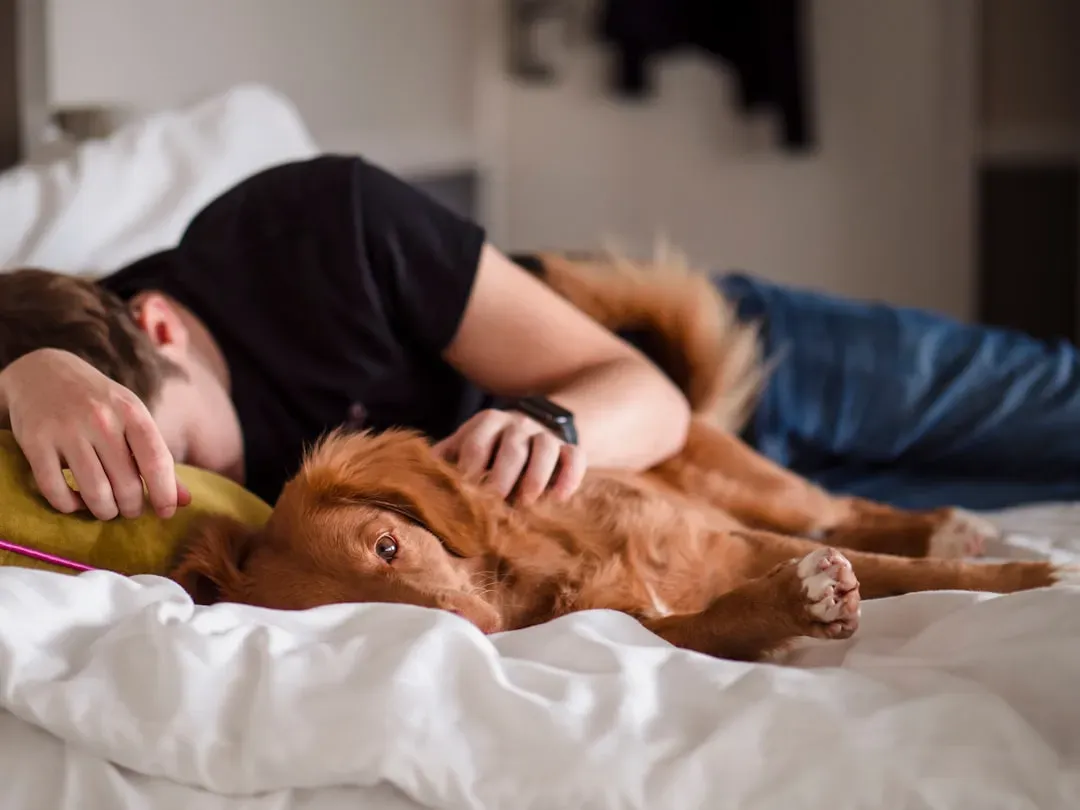
Physical closeness is a huge part of how dogs bond. Puppies pile together, adult dogs lean on each other, and friendly dogs will rest their heads over each other’s backs in social situations. When your dog rests their chin on you, they may simply be including you in this natural canine way of saying, “We belong together.” It is their version of a shared couch, a shared blanket, a shared moment.
Over time, these tiny rituals add up. The chin on your knee while you watch TV, the head on your chest on a lazy weekend morning, the gentle weight on your shoulder when you sit on the floor – it weaves you into their emotional fabric. If you respond with calm affection and consistency, you are reinforcing a secure bond that pays off in better behavior, easier training, and a dog who is more confident in the world because they are sure of you.
7. “I Am Bored and Looking for Something to Do”
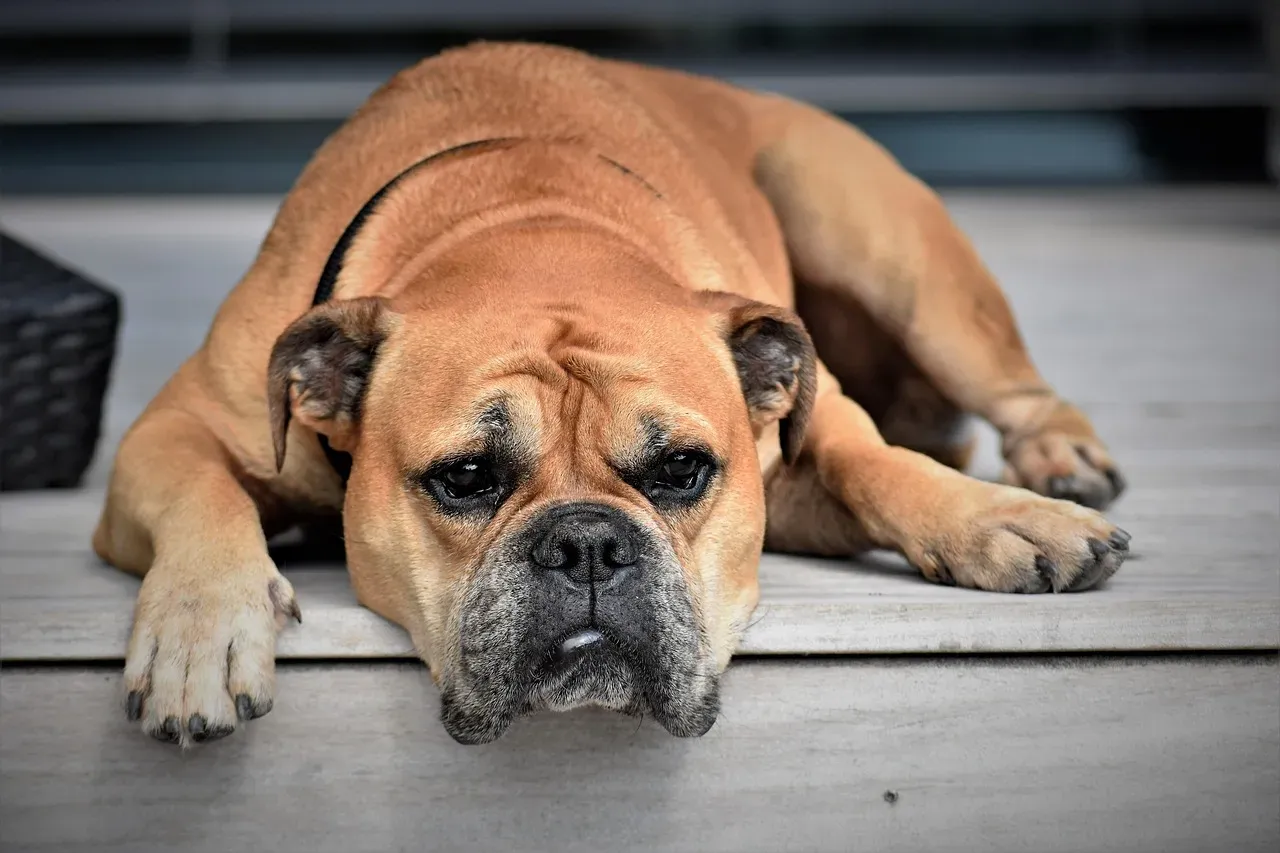
A bored dog is extremely creative, and not always in ways humans appreciate. If your dog drops their chin on you, stares, sighs dramatically, then tries again, it might just be the canine version of “I am bored out of my mind.” This is especially likely if it happens at the same times each day, like late afternoon or after a lazy weekend morning.
Think of that chin as a soft poke that says, “So… what is next?” A quick play session, a puzzle toy, a little training game, or a sniffy walk can turn that moment into something positive. When you occasionally meet that chin-rest with an engaging activity, you are not “spoiling” your dog; you are letting their body language be a doorbell that opens into healthy mental and physical exercise.
8. “This Is Our Ritual, and I Love It”
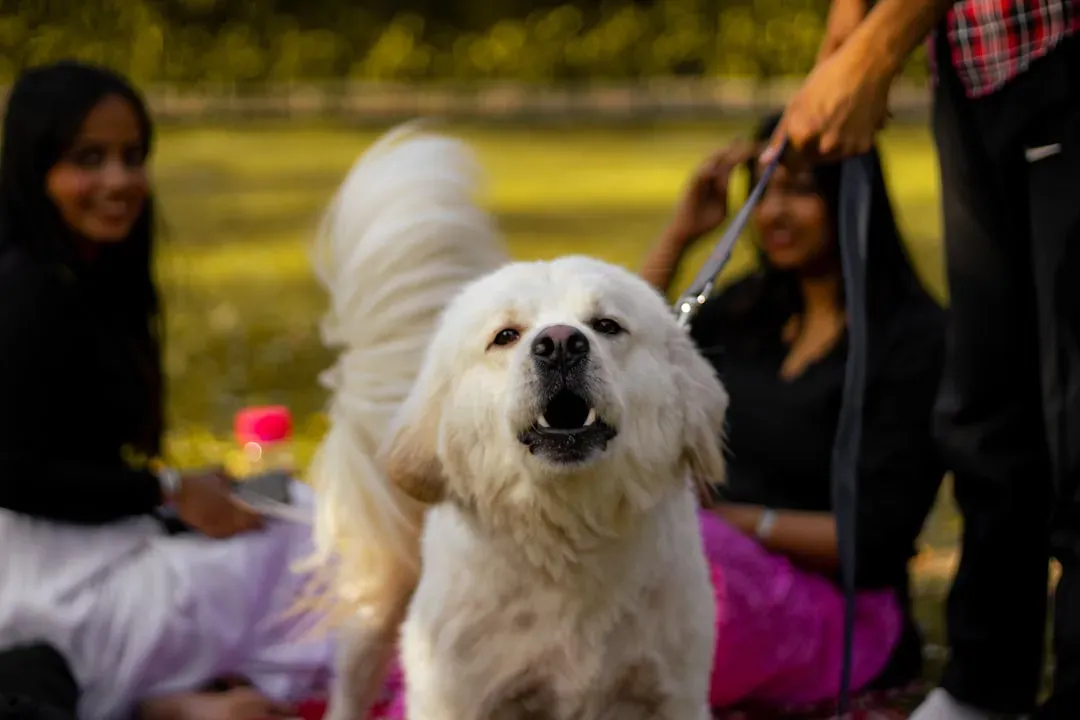
Over time, many dogs develop little traditions with their humans – tiny routines that repeat day after day. Maybe your dog always hops up at night, rests their chin on your chest for a minute, and then rolls over to their side of the bed. Or they put their chin on your knee first thing in the morning before you stand up. These patterns become rituals that anchor both of you.
Rituals feel almost sacred because they are predictable, gentle, and shared. Your dog may be telling you, “This is our thing,” every time they place their chin in that familiar spot. Lean into that. Notice it, enjoy it, maybe even pause what you are doing for a few seconds to be fully present. Those tiny, repeated moments end up being the ones you miss the most someday.
Conclusion: Listen With Your Eyes, Not Just Your Heart
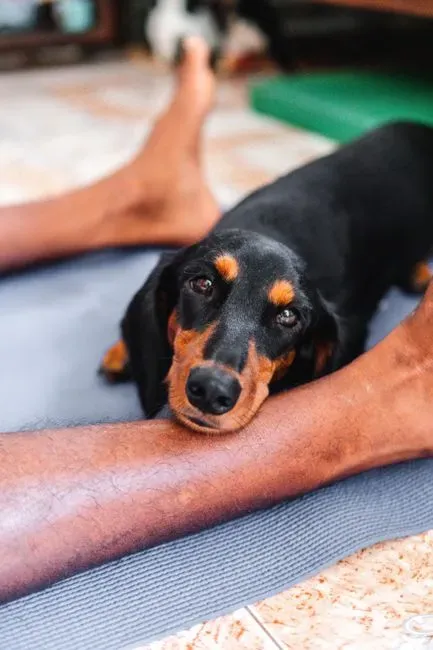
When your dog rests their chin on your body, it is not always a grand, mysterious signal – but it is never meaningless. Sometimes it is pure affection, sometimes it is boredom, sometimes it is stress, and occasionally it is a quiet hint that something in their body or mind needs help. The most important thing is not to over-romanticize every gesture, but to really pay attention to patterns, context, and your dog’s overall behavior.
Personally, I think this is one of the most beautiful parts of living with a dog: learning to read these tiny, wordless messages and responding in a way that makes your shared life softer and safer for both of you. The more you notice, the clearer your dog’s “language” becomes, and the more you realize they have been talking to you all along. Next time you feel that warm little chin on your leg, what do you think they are saying to you in that moment?


