
If you hang around barns long enough, you’ll notice something: not every beautiful horse is a good fit for a nervous first-time rider. Some breeds are like sports cars with rocket engines and a mind of their own. For an experienced rider, that can be thrilling. For a beginner, it can be terrifying, dangerous, and a fast way to fall out of love with horses altogether.
This list is not about shaming any breed. Every horse is an individual, and in the right hands, all of these breeds can be amazing partners. But when you look at common tendencies – like hot temperaments, huge power, lightning-fast reactions, or intense training needs – some breeds are simply stacked against true . Let’s look at eight that are often a rough match for people just starting out.
1. Thoroughbred
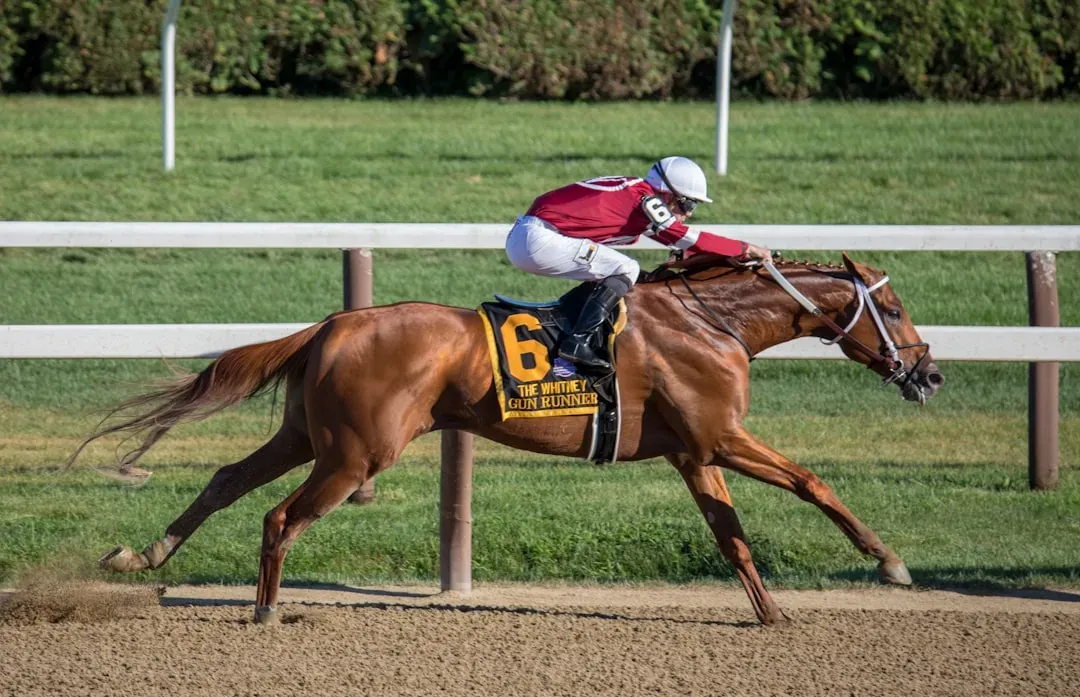
The sleek, elegant Thoroughbred is the classic racehorse – and that’s exactly why it can overwhelm a new rider. This breed is literally designed to run at high speed, think fast, and respond instantly to tiny cues, which makes them incredibly sensitive and sometimes anxious. Fresh off the track, many Thoroughbreds are still mentally wired for racing, so things that seem small to us – a gust of wind, a flapping tarp, a rider shifting weight – can trigger big reactions.
Even retrained ex-racehorses, while often wonderful in experienced homes, tend to be “hotter” than your average beginner-safe mount. They may be forward, fidgety, and prone to spooking or bolting if they feel trapped or scared. I still remember the first time I got on a lightly retrained ex-racer: I barely closed my leg and he shot forward like I’d hit a turbo button. For a confident rider that can be fun; for a shaky beginner who just wants to walk on a trail, it can be downright terrifying.
2. Arabian
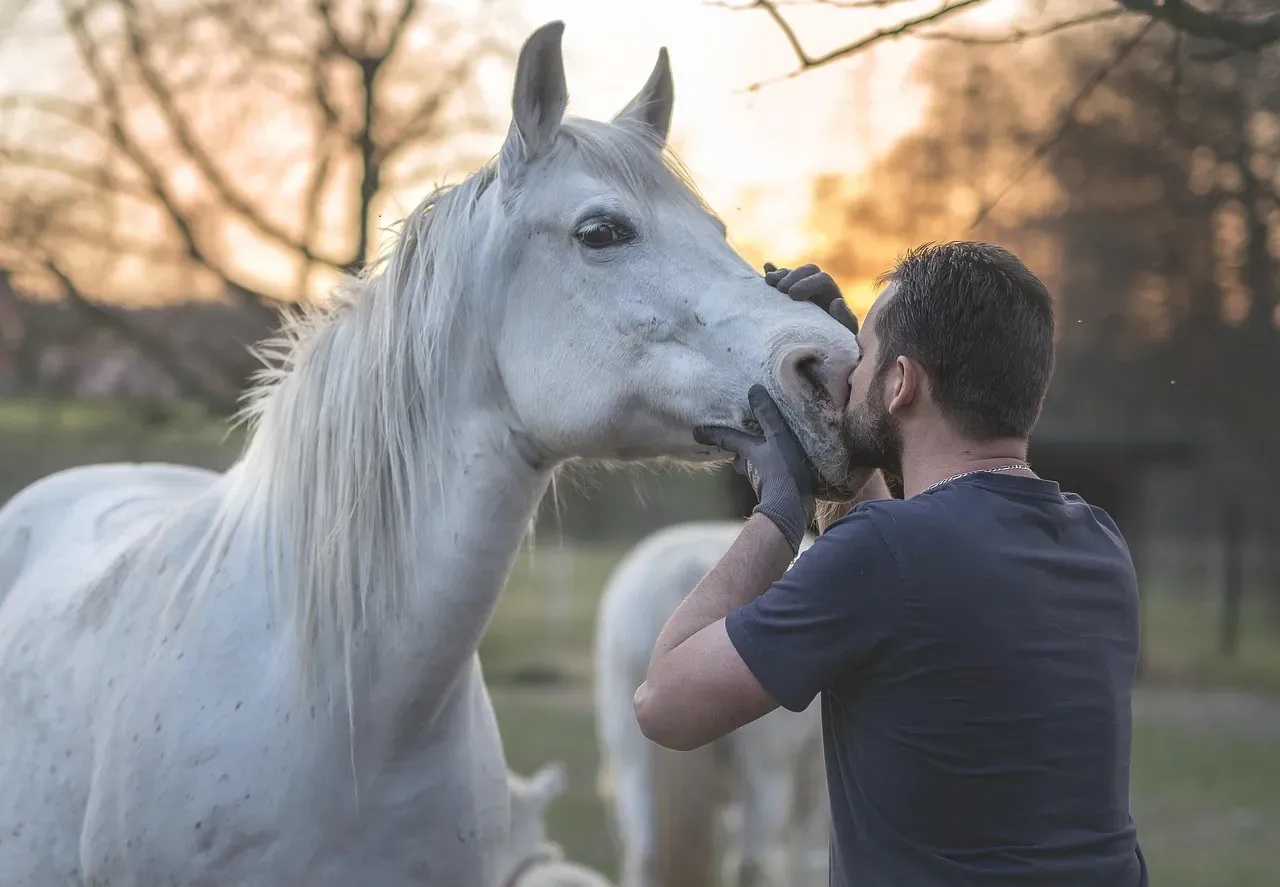
Arabians are breathtaking – big eyes, arched necks, that dramatic tail carried high. But along with all that beauty comes a sharp, intense mind and a lot of energy. They were bred as war and desert horses, meant to cover ground quickly, react fast, and stay alert for danger. That heritage still shows today, and it often means Arabians think faster than their riders, especially if the rider is still learning the basics.
Beginners often need a horse that will quietly ignore confusing signals while they figure out their balance and aids. Many Arabians, by contrast, are incredibly attuned to every shift in weight, leg, or rein. That sensitivity is amazing for advanced riders, but it can turn into a chaotic feedback loop with someone new: the rider tenses, the horse gets sharper, the rider gets more nervous, and suddenly everyone’s heart rate is through the roof. For someone still learning to breathe and relax in the saddle, a calmer, more forgiving breed is usually a better start.
3. American Saddlebred
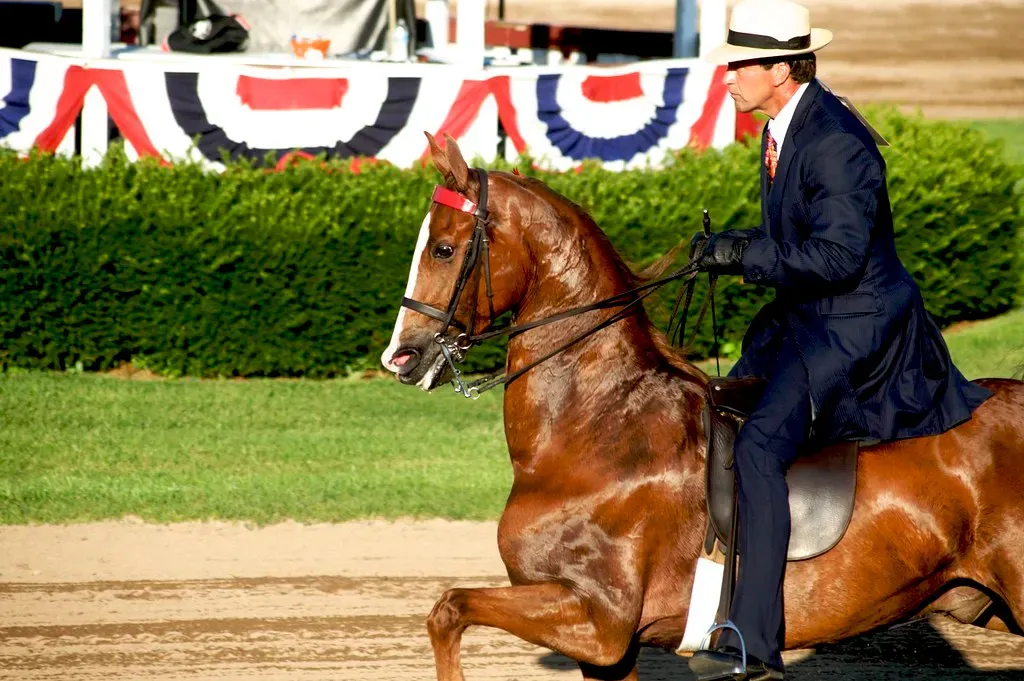
American Saddlebreds have that dramatic, high-stepping movement you see in show rings, and it’s stunning. But that flashy motion is often paired with a naturally high energy level and a tendency toward excitement. Many Saddlebreds are bred for animation – they are supposed to look proud, bright, and ready to go, not sleepy and slow. For a brand new rider, that can feel like sitting on a spring ready to uncoil at any moment.
These horses also tend to come from training backgrounds that emphasize show-ring performance, not beginner lessons. They’re used to riders with a certain level of skill and balance, and they can struggle when a new rider is unsteady or gives mixed messages. I’ve ridden a few Saddlebreds that felt like finely tuned instruments: absolutely magical when I was focused and precise, but quick to get tense if I lost that clarity. That kind of ride asks a lot from the human – probably too much for someone just starting out.
4. Warmblood Sport Horses
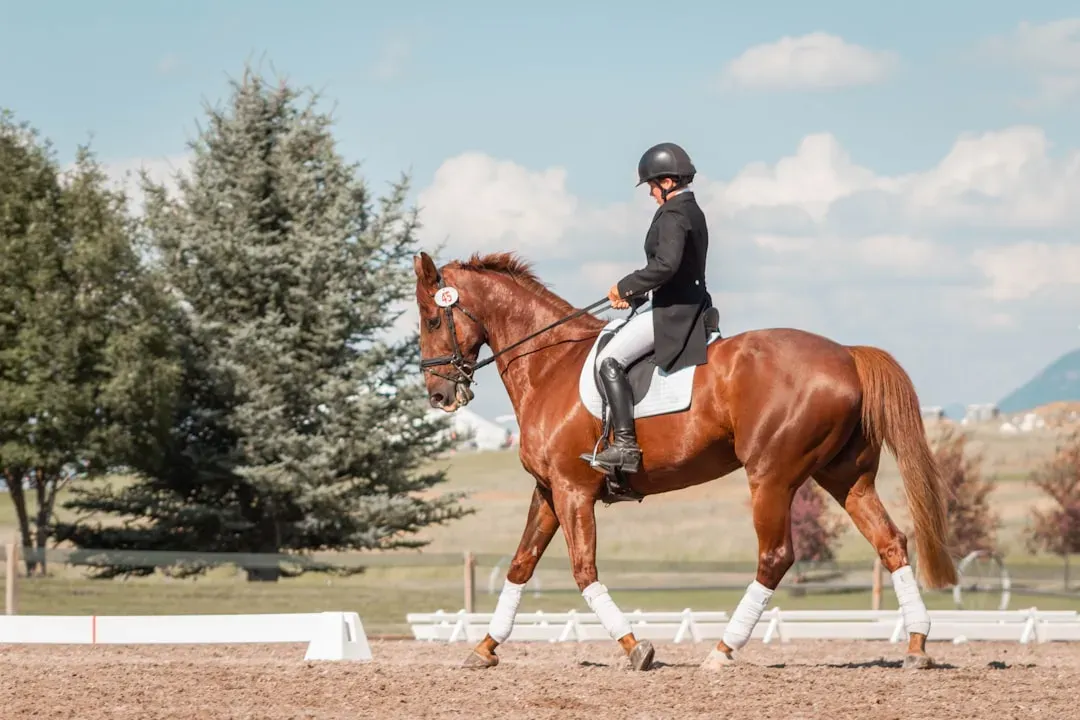
Warmbloods dominate modern dressage, show jumping, and eventing. They’re big, athletic, and insanely talented. But that mix of size and power can be a major challenge . It’s one thing to be unbalanced on a small, tolerant pony; it’s another to wobble around on a seventeen-hand athlete who can jump six feet. Even when they’re kind, their sheer momentum and stride length can be overwhelming to someone who’s still learning how to post the trot.
Another factor with many sport-bred Warmbloods is that they’re often selected and trained for performance, not for absolute bombproof calm. They tend to be clever and sometimes opinionated, which is great for upper-level work but less ideal when the rider is still trying to learn how to steer. A beginner might accidentally teach bad habits without realizing it – like leaning on the reins or nagging with the leg – because the horse is simply too smart and too powerful for their current skill set. These horses shine when they have clear, consistent guidance, which is not something you can expect from someone on their first year in the saddle.
5. Friesian
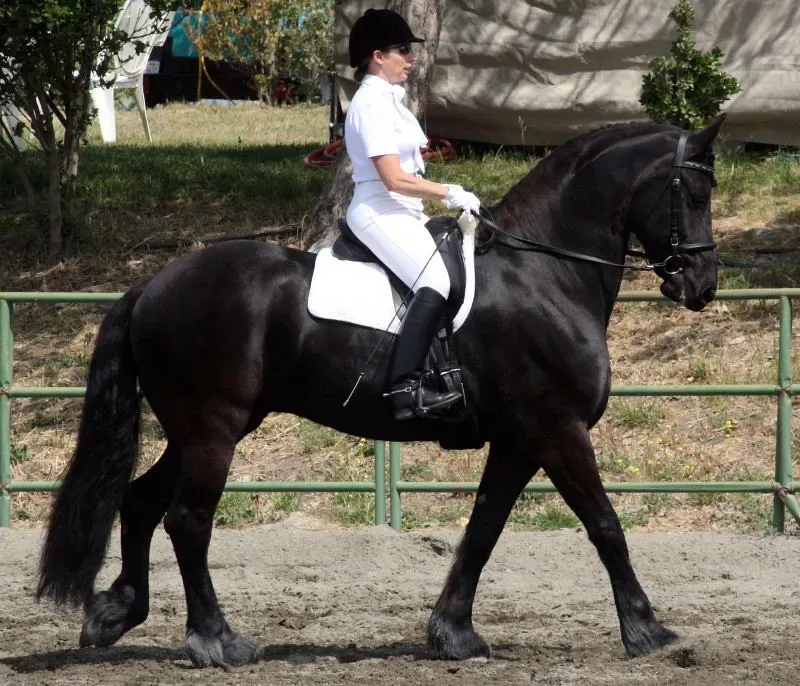
Friesians look like fairy-tale horses: black coats, flowing manes, feathered legs. It’s easy to see one online and think, that’s my dream beginner horse. The reality is that Friesians are big, heavy, and can be surprisingly strong-willed. Their size alone can be intimidating, especially when you’re still trying to feel stable at the walk and trot. A slight pull or push from a Friesian can move a person right off their feet on the ground, and in the saddle, that power can feel like steering a freight train with bicycle brakes.
On top of that, while many Friesians are kind, they’re not always naturally easy, push-button rides for novices. They can be sensitive, and their movement is often lofty, which can toss an unbalanced rider around more than a flatter-moving horse would. I once watched a beginner try a Friesian for a trail mount; the trot was so bouncy and powerful that she ended up clinging to the saddle, exhausted after just a few minutes. A horse that impressive really deserves a rider who can enjoy and manage all that grandeur, not someone just trying to figure out how to sit up straight.
6. Akhal-Teke
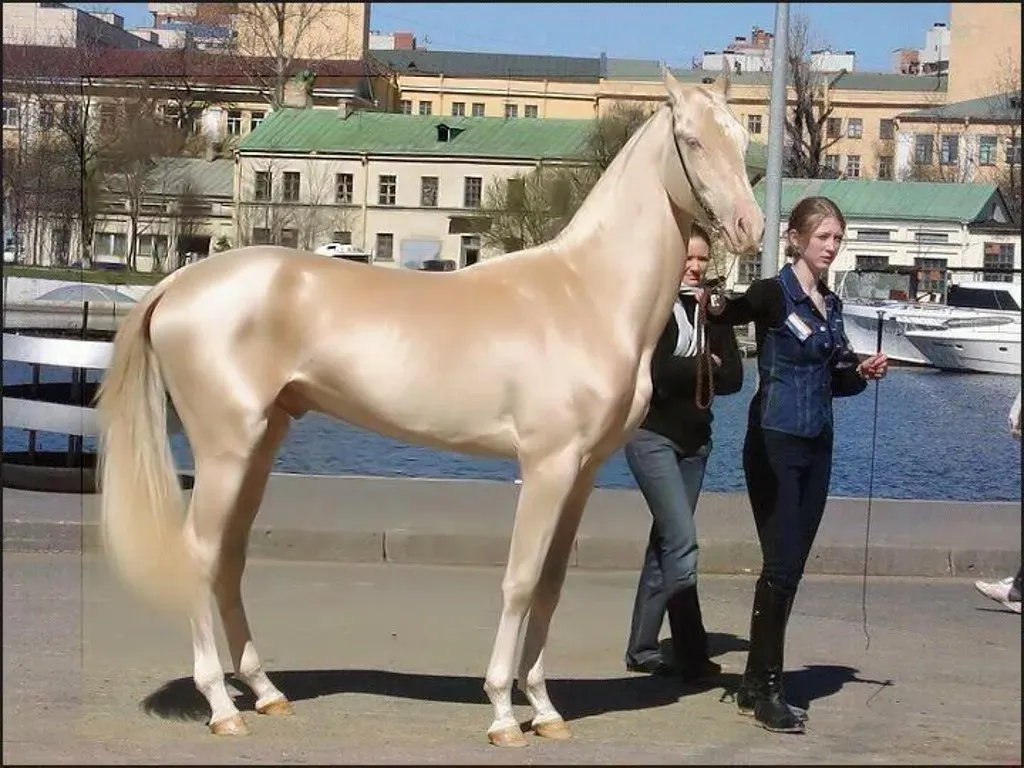
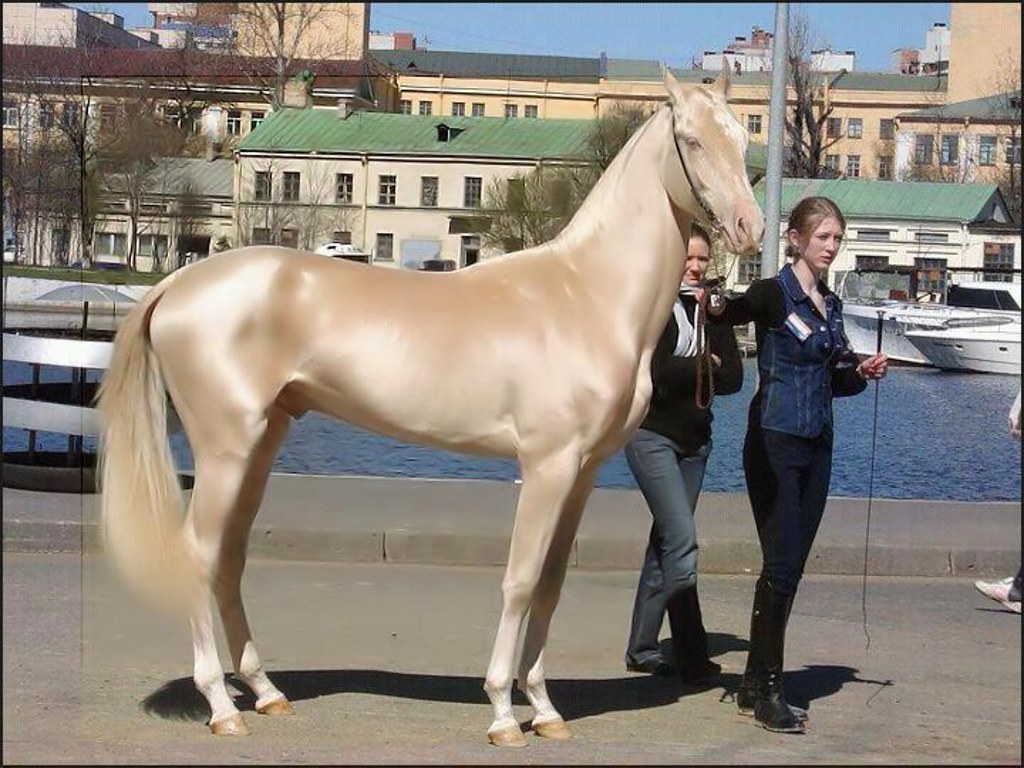
The Akhal-Teke is one of the most distinctive horse breeds in the world, with that metallic sheen and lean, almost greyhound-like build. They come from a tough desert background and are known for endurance, intelligence, and sensitivity. That combination sounds great on paper, but in day-to-day riding, it can mean a horse that notices everything, reacts quickly, and does not automatically trust a clumsy rider. These are not plug-and-play lesson horses; they’re more like elite athletes with strong opinions.
, the mental side of the Akhal-Teke can be especially challenging. They tend to form deep bonds with riders and can become wary or frustrated if handled inconsistently or unfairly. A novice, still learning timing and feel, may unknowingly send mixed signals or apply pressure at the wrong moment, creating tension instead of trust. Instead of building confidence, a partnership like that can leave both horse and rider stressed. It’s far kinder, to both species, to reserve this breed for people who already have calm, clear communication skills in place.
7. Paso Fino and Other High-Energy Gaited Breeds
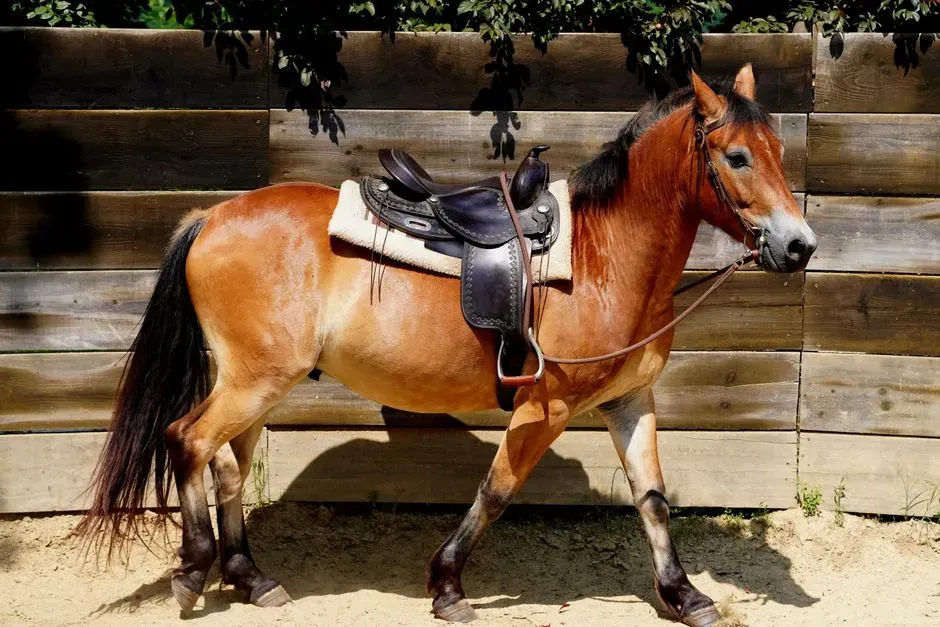
Gaited breeds like the Paso Fino are often marketed as smooth and comfortable, which is absolutely true. What gets lost in the sales pitch is that many are also high-energy and very responsive. The Paso Fino in particular has that rapid, machine-gun-like gait that can feel exhilarating but also intense, especially if the horse is naturally forward. If a beginner tenses up or pulls on the reins out of fear, the horse may only get more animated, not calmer.
The other issue is that gaited horses often require a slightly different riding style and feel, especially when it comes to encouraging or maintaining their special gaits. That nuance is tough for someone who’s still wrapping their head around the basic walk-trot-canter. A seasoned rider can enjoy the smooth ride and fine-tuned control; a new rider might feel like the horse is rushing out from under them even when everything is technically “going well.” For a first horse, simplicity and predictability usually beat fancy gaits every time.
8. Mustang and Other Recently Feral Horses
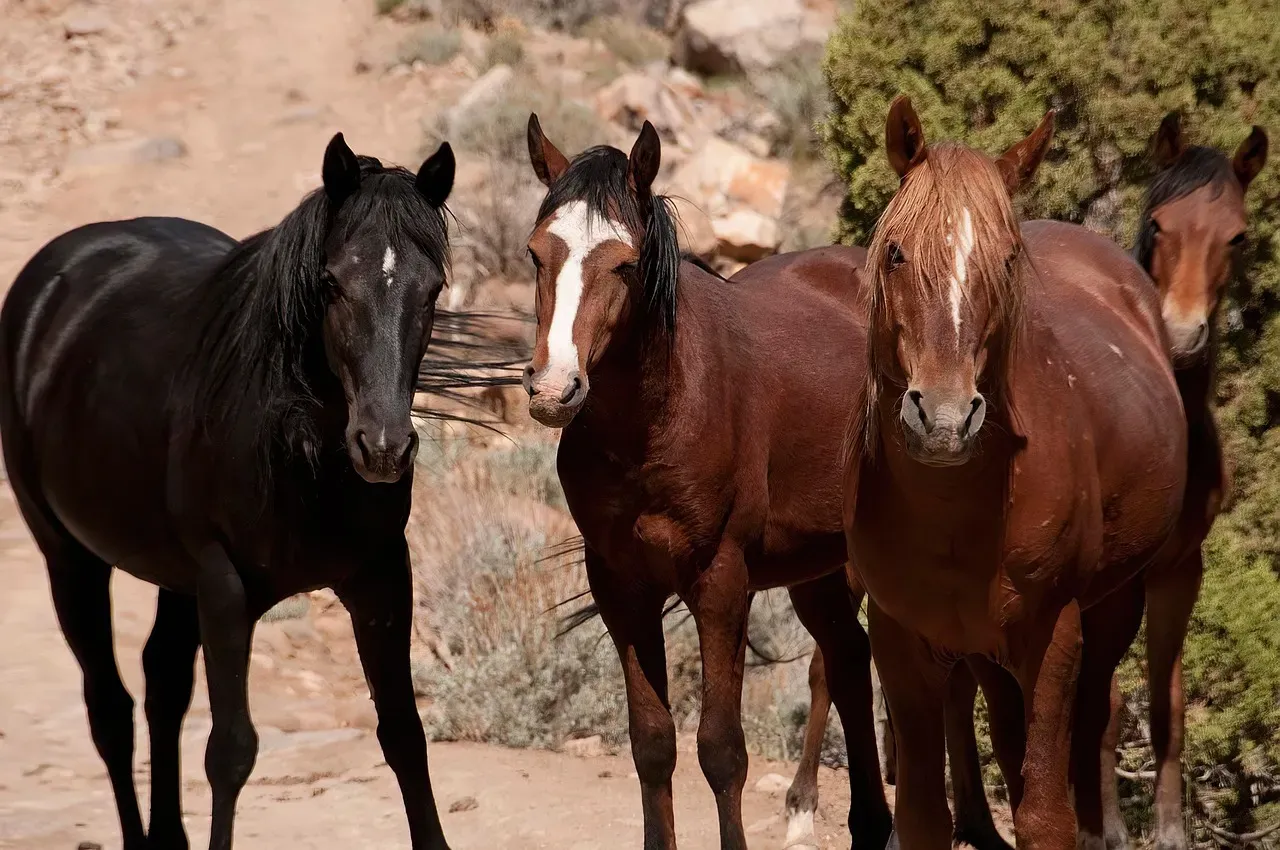
Mustangs have a huge fan base, and for good reason: they’re hardy, smart, and can form incredibly strong bonds with humans. But many of them come with a wild or semi-feral past, and that history matters. Horses that spent part of their lives surviving in the wild tend to be hyper-aware of their environment and quick to react to perceived threats. That level of self-preservation is completely understandable – and exactly why they can be way too much for someone who’s just learning how to sit a spook.
Training a Mustang or any recently feral horse requires patience, clear boundaries, and impeccable timing. Beginners, through no fault of their own, simply do not have those skills yet. I’ve seen well-meaning first-time owners adopt Mustangs because the story and the price were appealing, only to find themselves scared, over-horsed, and in way too deep. Those horses are often labeled “problem horses” when really they were just mismatched. For everyone’s sake, Mustangs are better suited to riders or trainers who already have a solid foundation and the support system to bring out their best.
Conclusion: It’s Not the Horse’s Fault – It’s the Match

When you look closely at these eight breeds, a pattern emerges: none of them are “bad” horses. They’re specialized, sensitive, powerful, or intensely intelligent – and all of those traits can be incredible in the right hands. The real problem is when a brand-new rider, still wrestling with basic balance and nerves, ends up on a horse that demands experience and quiet confidence. That mismatch can turn what should be an exciting new hobby into a string of scary moments and shattered trust.
If you’re just starting out, the best horse for you is not the flashiest one on Instagram, the tallest in the barn, or the rarest breed you can find. It’s the one that lets you make mistakes without punishing you for them, the one that plods instead of bolts when you get unbalanced or anxious. Later, when your skills and seat are rock-solid, you can chase the dream horse – maybe even from one of the breeds on this list. Until then, it’s worth asking yourself: would you rather impress people today, or still be happily riding ten years from now?


