

You’re having a rough day. You haven’t said a word. Yet your dog is already at your side, pressing gently against your leg, watching your face with a stillness that feels almost deliberate. It’s not coincidence, and it’s definitely not magic. It’s something researchers have been studying more carefully than ever, and what they’ve found is genuinely fascinating.
Research indicates that dogs can comprehend not just words, but also the emotions behind our expressions, gauging our moods with impressive accuracy. Dogs’ emotional intelligence can be traced back to their long history of domestication, during which they evolved alongside humans as loyal partners, and studies have revealed that dogs possess oxytocin responses similar to humans, underlying their capacity for forming strong emotional connections.
Not every breed wears this gift the same way. Some are quiet sentinels. Others are enthusiastic cheerleaders. A few seem to read your emotional state before you’ve even registered it yourself. Here are nine breeds that take this connection to a whole other level.
1. Golden Retriever: The Original Emotional Mirror
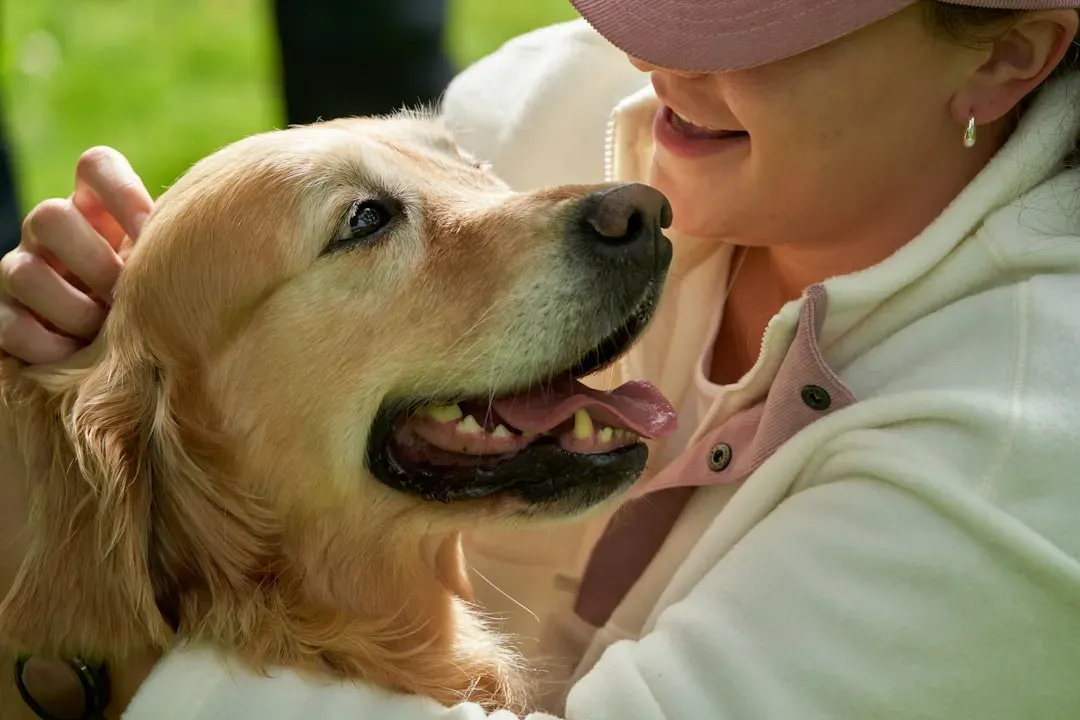
Golden Retrievers aren’t just popular because they’re beautiful. They are famously sensitive to the mood of their household, possessing a very natural “emotional radar” that allows them to detect tension or grief almost immediately. Golden Retrievers carry a specific genetic mutation that changes their oxytocin production, leading to higher baseline oxytocin levels and boosting their natural capacity to bond with people on a deep emotional level and respond to emotional cues accordingly.
In practical terms, this means your Golden isn’t simply reacting to your tone of voice. Their emotional intelligence goes beyond mere mood recognition to sophisticated behavioral responses based on emotional context, and they can differentiate between various modes of distress. Training these inherently empathetic dogs is geared towards enhancing their natural emotional intelligence rather than introducing new behaviors, and their best uses are in hospitals, nursing homes, and educational therapies, where their quiet presence can aid in the healing process. If a Golden leans into you during a hard moment, trust that it’s intentional.
2. Labrador Retriever: The Room Reader

Labrador Retrievers are not just popular for their friendly demeanor and loyal nature, they are also among the breeds with the highest emotional intelligence, with an innate ability to sense the emotions of those around them. Labs are intelligent dogs known for their ability to decode human emotions and body language even with the slightest hints, and they effectively read their surroundings and recognize facial expressions. Think of them as a living mood detector who also doubles as a warm, slobbery hug.
Labs are excellent at reading human body language and responding appropriately, which makes them great companions in times of stress or sadness, and they are known for their ability to adapt their behavior to different situations, showing a rare and deeply valued emotional awareness. If you’re feeling blue, they’ll become goofballs to cheer you up, and their friendly, intuitive nature means they’re often the first to notice when something’s off with you and the first to try to fix it. That instinct to lift the room is hard to fake, and Labs aren’t faking anything.
3. Border Collie: The Predictive Empath
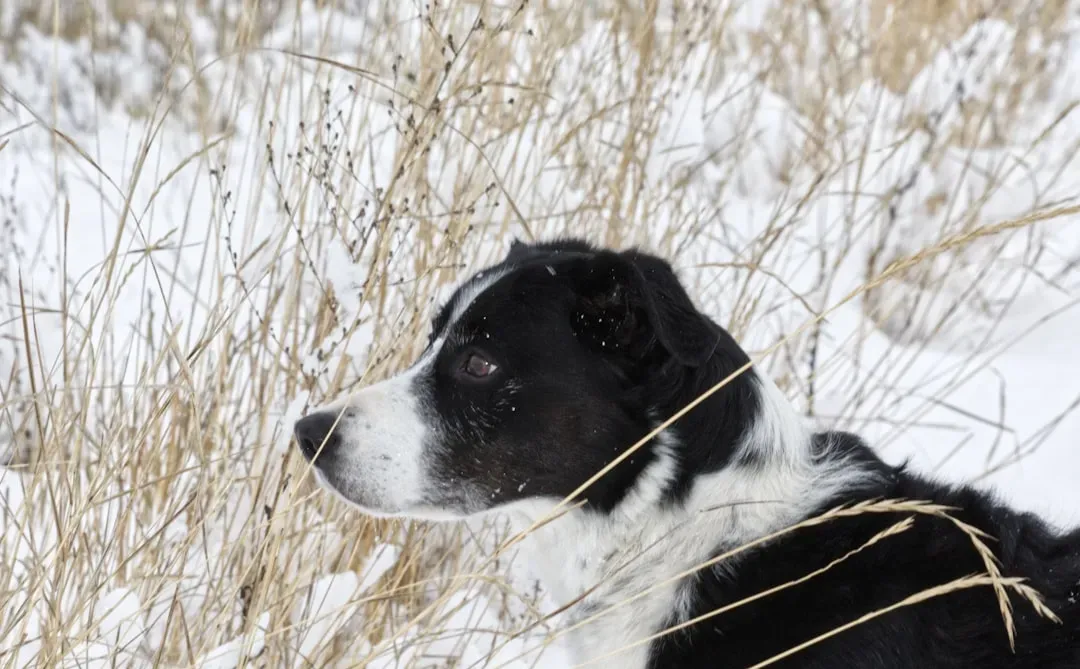
The Border Collie’s true genius lies in their ability to read body language expertly, and this breed is hyper-aware of its environment and reacts to human emotions with fitting behaviors. Unlike breeds that react to strong present-day emotional cues, Border Collies exhibit predictive emotional intelligence, putting themselves in a position to help even before distress becomes evident to human observers. That’s a remarkable distinction. They’re not just responding to what you’re feeling now, they’re anticipating what you might need next.
The Border Collie’s bond feels deeply connected because of their intense focus. A Border Collie doesn’t just look at you. They study you. They learn your routines, your micro-expressions, and your vocabulary with startling speed. Training Border Collies as emotionally supportive dogs requires recognition of their high intellectual status and need for cognitive stimulation, as their intelligence can become problematic if undirected, making them nervous or destructive. Keep their minds busy and they’ll give you everything they’ve got emotionally in return.
4. Cavalier King Charles Spaniel: The Gentle Mood Sensor

Cavalier King Charles Spaniels are well-known for their affectionate and empathetic nature. They are extremely sensitive to the emotions of their owners and are known to be very attuned to the mood in their environment, often mirroring the emotions of their owners, offering cuddles and comfort when they sense sadness or distress. Their small size and gentle approach make them ideal for being close companions, often found sitting on laps or lying beside their owners to provide comfort.
Cavalier King Charles Spaniels are small but mighty when it comes to offering emotional support. These dogs are particularly sensitive to their owners’ emotional needs and form strong bonds with their human families, instinctively knowing when their owners are feeling sad or stressed and often providing comfort by curling up next to them. Dogs that were bred for companionship were chosen precisely because they were able to comfort us, partly by understanding when we needed it the most. Cavaliers are the living proof of that breeding philosophy.
5. German Shepherd: The Protective Empath
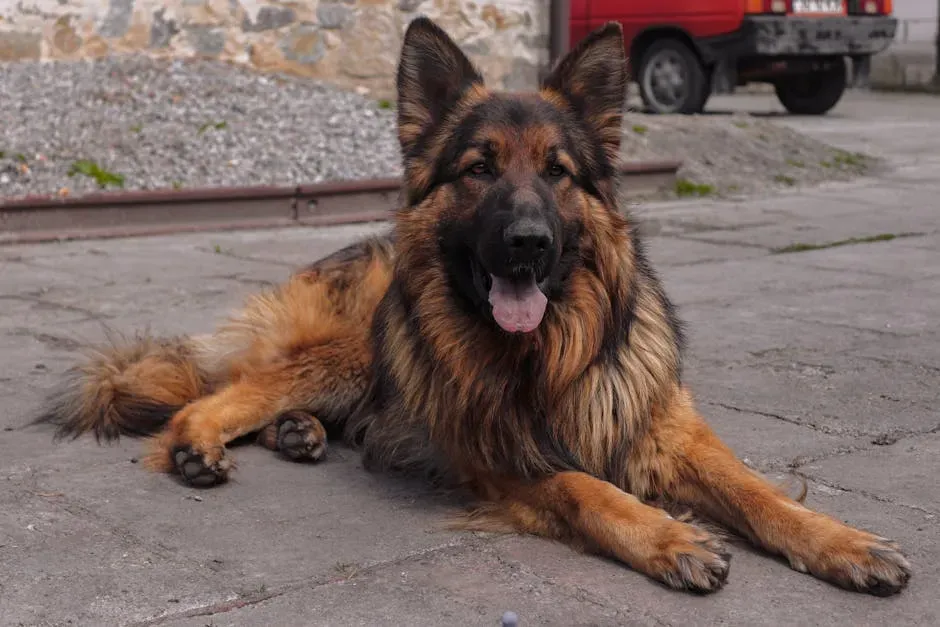
The German Shepherd is loyal and protective, with emotional intelligence rooted in its history as the guardian of sheep and of humans, and they are particularly good at reading fear and tension. Though they are often viewed as “tough” dogs, they are deeply sensitive to the emotional safety of their pack, and what sets them apart is the ability to discern between a real threat and human emotional distress. That’s a nuanced skill that most animals simply don’t possess.
German Shepherds are known for their loyalty and protective nature but are also highly emotionally intelligent. They have a unique capacity to sense danger or distress, which is why they are often used in police and rescue operations. German Shepherds are not only good at reading human emotions, but they also react in a way that demonstrates understanding and empathy, known to offer comfort to their owners in times of sadness or stress. A German Shepherd who senses you’re anxious won’t simply bark at the world on your behalf. They’ll stay close, steady, and watchful until you’re okay.
6. Poodle: The Quiet Observer

Poodles, which come in standard, miniature, and toy sizes, are highly intelligent and perceptive dogs. Their intelligence extends beyond learning tricks and commands, as they are also adept at reading human emotions. Poodles can pick up on subtle signs of anxiety and stress, and they are known for “staring” at their owners, not out of demand, but to gauge their owner’s current mental state, making them excellent partners for those requiring a dog that can anticipate a dip in mood.
Poodles are often lauded for their intelligence but are also highly emotionally intelligent dogs, excellent at reading human emotions and responding in a way that is both appropriate and comforting. Don’t be distracted by their elegant appearance or the fancy haircut. Underneath all of that is a dog that is genuinely clocked into your emotional frequency. Three of the top five most emotionally intelligent breeds according to veterinary experts have also been ranked among the most intelligent breeds by renowned dog researcher Stanley Coren, and the Poodle is one of them.
7. Collie: The Gentle Nuzzler
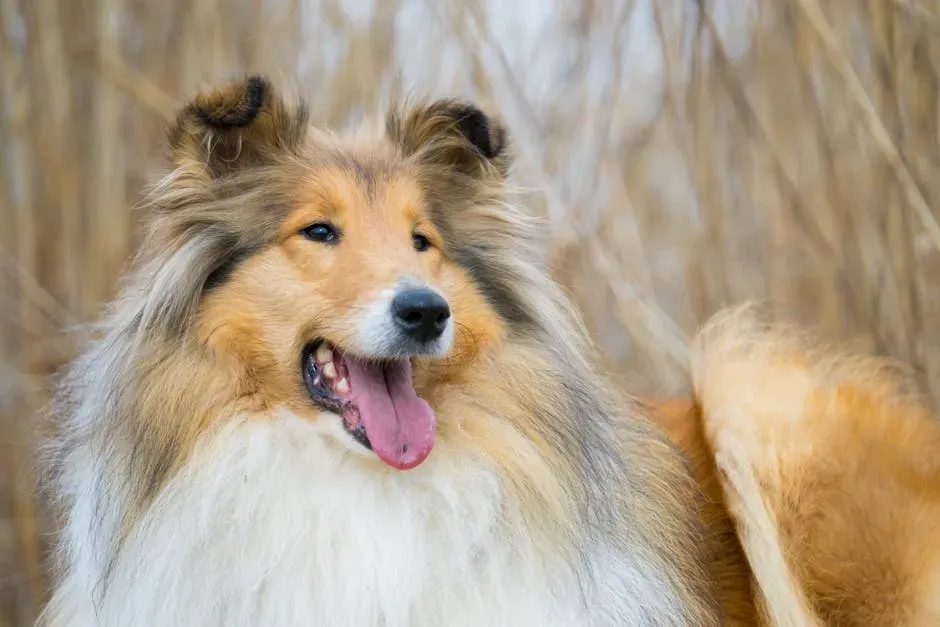
Collies, both Rough and Smooth varieties, are renowned for their sensitivity and ability to connect with humans on an emotional level. They are intuitive and can pick up on subtle changes in their owner’s emotions, often responding with a gentle nuzzle or by simply being present. While Border Collies are celebrated for intelligence and herding skills, Rough Collies are also shockingly perceptive regarding human emotions, as keen observers who quickly pick up on body language and voice changes, often adjusting their behavior without you even realizing it. If you’re upset, your Collie may shadow you more than usual or lie close by, alert and waiting.
Collies have an old-fashioned quality that’s hard to put into words. They don’t rush at you with concern the way some breeds do. Instead, they settle in beside you, calm and unhurried, which is often exactly what a troubled heart needs. Dog breeds that were bred to work closely with humans were carefully chosen for emotionally intelligent traits, and for example, herding breeds needed to be closely tuned into what their owners wanted and to understand when they were upset or happy with a job well done. Centuries of that kind of selective partnership show up clearly in the Collie’s temperament today.
8. Boxer: The Joyful Healer

Boxers are known not just for their playful and energetic nature but also for their ability to read and respond to human emotions. They are extremely loyal and form strong bonds with their family members, often becoming deeply attuned to their moods and feelings, and are known to offer comfort by snuggling or gently placing their head in their owner’s lap when they sense sadness or distress. Their expressive faces and body language reflect their concern and empathy for their owners, and their protective nature also means they are quick to sense and respond to any emotional threats to their family.
With a heart as big as their boundless energy, Boxers are in tune with human emotions and quick to act when something’s amiss, and they can sense when you’re feeling low and will usually respond with exaggerated silliness, tail-wagging marathons, or by gently pawing at you for attention. Don’t let their clownish nature fool you; underneath the wiggles is an intensely loyal and empathetic soul. Sometimes what you need isn’t a quiet presence. Sometimes you need someone to make you laugh, and Boxers are very good at that.
9. Vizsla: The Velcro Empath

Nicknamed the “Velcro dog,” the Vizsla is attached to their humans emotionally as much as physically. They thrive on constant contact and are super sensitive to your emotions, and they are extremely affectionate and naturally attuned to your needs, whether curling into your lap or leaning on you when you need grounding. Vizslas often provide emotional comfort and seem to “know” when someone needs extra affection, and for families who value emotional connection with their pets, this trait is a major plus.
Vizslas have an energetic, gentle-mannered demeanor. They’re affectionate and sensitive dogs with a fearless outlook and a well-developed protective instinct. Vizslas can also make great emotional support dogs. Their sweet, loving, and kind nature makes them great at caring for their owner, and while they need to undergo specific training before becoming certified emotional support dogs, they’re a great breed to provide physical and mental support. Just be ready to never have a private moment again. They mean it when they say Velcro.
The Science Behind the Sixth Sense

A study conducted by the Department of Veterinary Medicine at the University of Bari Aldo Moro looked at how dogs interpret emotional sounds like laughing or crying. Dogs used the right brain more for negative sounds like fear and sadness, and the left brain more for positive sounds like happiness. Their heart and behavior changes showed they’re genuinely sensitive to emotional cues in nonverbal human vocalizations.
Research also confirms that dogs experience emotional contagion from the smell of human stress, leading them to make more “pessimistic” choices. The University of Bristol-led study, published in Scientific Reports, was the first to test how human stress odours affect dogs’ learning and emotional state. Separately, research published in Current Biology determined that dogs can recognize emotions in humans by combining information from different senses, taking into account both visual and auditory cues. In other words, dogs aren’t guessing. They’re processing.
Dogs’ social cognition facilitates interaction with humans, and the ability to read and respond appropriately to emotional cues may have been, and may still be, key for the establishment of these interspecific bonds. Emotional intelligence can also be trained to a degree, through consistent positive reinforcement for exhibiting the desired behaviors, and through socializing a dog to many different situations so that they feel secure and comfortable when confronted with new things. That means how you engage with your dog day to day shapes how emotionally attuned they become.
Conclusion: What This Means for You and Your Dog

Living with an emotionally perceptive dog isn’t just a heartwarming bonus. It’s a responsibility and a gift in equal measure. These nine breeds offer something genuinely rare: a companion who notices the subtle shifts in your mood, adapts to your needs, and shows up without being asked.
The research makes clear that this isn’t simply loyalty or conditioning. The ability to perceive and recognize human emotions likely developed in dogs over the long co-evolution process between dogs and humans, as it has been adaptive to perceive negative or positive emotions in humans and respond by either avoiding or approaching them. What feels like a sixth sense is actually thousands of years of shared evolution, shaped into something that looks a lot like love.
The dog at your feet isn’t just waiting for dinner. They’re paying attention. The real question is whether we’re returning the favor.


