
You’re sitting on the couch, half-watching something forgettable on TV, when you feel it. That unmistakable sensation of being watched. You glance over, and there it is – your dog’s warm, steady gaze locked entirely on you. No agenda, no distraction. Just you.
It’s one of the most quietly profound moments in the human-dog relationship, and honestly, most of us take it for granted. But that look? It’s not random. It’s not begging (well, not always). There’s real science, deep biology, and thousands of years of co-evolution packed into those soulful eyes. What your dog is actually communicating when they stare at you will surprise you, move you, and maybe even change the way you look back. Let’s dive in.
The Science Behind the Stare: It’s Basically a Love Drug
Here’s something that genuinely blew my mind the first time I read about it. Mutual staring between humans and dogs releases oxytocin, the so-called “love hormone,” which plays an important role in bonding and boosts feelings of love and trust. We’re not talking about a tiny blip either. Research shows that direct eye contact increased oxytocin levels by roughly 130 percent in dogs and nearly 300 percent in people.
The same hormone released when a new mother looks at her baby is also triggered when you look at your dog. Think about that for a second. Your dog’s gaze is activating the same neurochemical response as the most powerful bonding moment in human biology. These findings support the existence of an interspecies oxytocin-mediated positive loop facilitated and modulated by gazing, which may have supported the coevolution of human-dog bonding.
People and dogs also look into each other’s eyes while interacting, a sign of understanding and affection that dogs’ closest relatives, wolves, interpret as hostility. It’s wild to think that what feels completely natural between you and your dog is actually a uniquely evolved behavior. Wolves don’t do this. It truly belongs to the bond between our two species alone.
Your Dog Is Reading You Like a Book (And You Don’t Even Know It)
More than almost any other animal on earth, dogs are in tune with humans. They sense our moods, follow our pointing gestures, and read us for information about what’s going to happen next. It’s honestly a little humbling. Your dog may understand your emotional state better than most people in your life.
Dogs have so fine-tuned their ability to read into us that they can distinguish their owner’s expressions even by looking at images. In one study, pet dogs were shown images of happy and angry faces on a computer screen. They would get a treat when they nose-touched an image. But researchers found that when seeing an angry face, the dogs were reluctant to approach the image, despite the promised treat. Even food couldn’t override their sensitivity to your emotional state. That’s remarkable.
Your dog watches your body language and looks at your facial expressions to help them recognize what you’re thinking and feeling. They rely on you for everything: food, water, cuddles, exercise, and even when and where to go to the toilet. Understanding your behavior helps them work out what’s going on and what’s going to happen next. You are essentially their entire world, displayed in a 24/7 livestream they never stop watching.
Decoding the Gaze: Love, Requests, and the Warning Signs You Shouldn’t Miss
Not all dog stares mean the same thing, and this is where being a thoughtful dog parent really matters. A gentle gaze often signifies that a dog is happy and content to interact with you. Soft and direct eye contact, paired with a relaxed body posture, typically indicates that a dog is calm and feeling friendly. Think soft eyes, loose body, maybe a slow wag. That’s the look of pure contentment.
On the flip side, a “hard stare” is typically accompanied by a stiff tail, tense posture, and dilated pupils. That’s a completely different conversation. Looking away or offering “whale eye,” which means showing the whites of the eyes, typically indicates stress, fear, or an attempt to avoid confrontation. Learning to tell these apart could genuinely prevent a dangerous situation.
By noticing subtle body language cues, such as tension around the eyes, stiffness in the body, or an inability to break gaze, you can notice when attention-seeking is actually anxiety in disguise. The rule I always come back to? Never decode a dog’s eyes in isolation. Watch the whole animal. A wagging tail on a rigid body tells a very different story than a wagging tail on a wiggly one.
When the Stare Is a Request (And How You’ve Been Training This Behavior Without Realizing It)
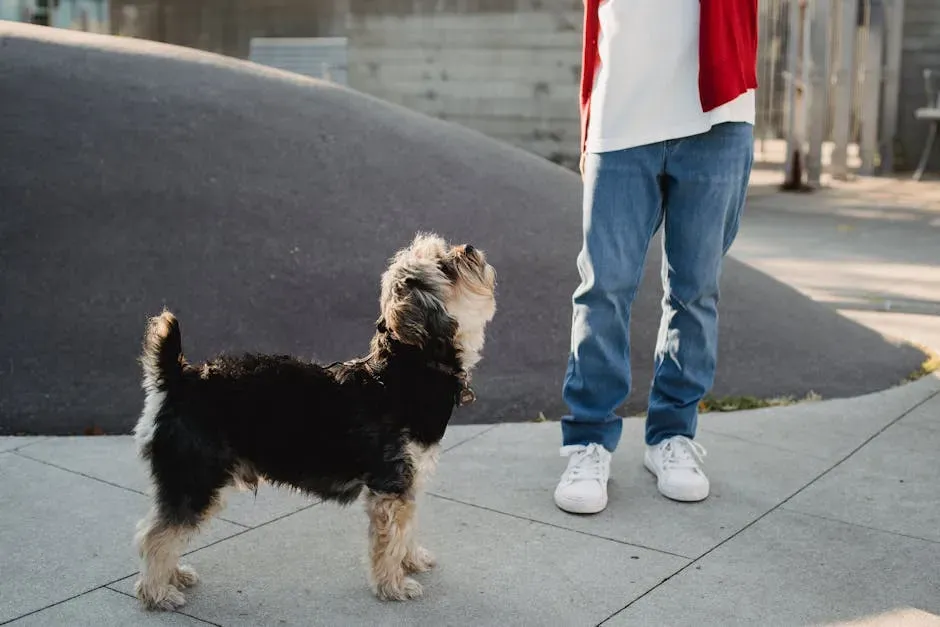
Let’s be real. Sometimes your dog is staring at you because they want something. Dinner. A walk. The ball under the couch. Your pup may need to go to the bathroom, want you to throw their ball, or be hungry. Direct eye contact is hard to ignore, and dogs quickly learn that staring at us is an acceptable way to ask for something. They usually get what they want from staring, and they’re not likely to be scolded for it the way they might be for barking or whining.
The reason dogs stare when they want something is that we’ve unintentionally taught them this behavior. Whether it’s reaching for the treats, taking them for a walk, or offering a cuddle, dogs quickly learn there is a “cause and effect” rule involving their ability to keep eye contact with their owner. If you reward them with treats and attention every time they stare, they’ll keep doing it to get what they’re after. You created this, friend. Own it.
The practical fix? A better approach is to teach your dog what you’d like instead. For example, your dog could chew a bone in a dog bed while you eat, or ring a doggie bell to let you know it’s time for an outdoor potty break. Redirect rather than react, and you’ll reshape the habit entirely over time.
When the Stare Is a Warning Sign: Older Dogs and Cognitive Decline
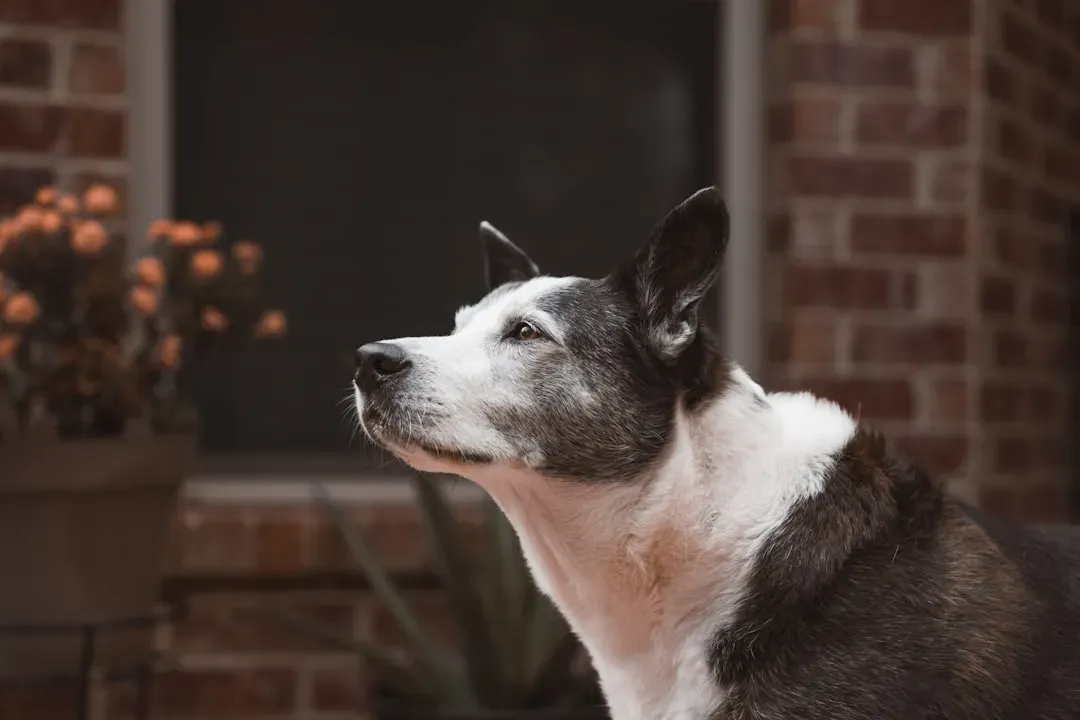
Here’s the part that doesn’t always come up in sweet feel-good articles about dog gazes, but it genuinely needs to. If your older dog is staring constantly at you with no apparent reason, this behavior could be a sign of an illness known as Cognitive Dysfunction Syndrome in dogs. Wandering around aimlessly, forgetting basic commands, and looking disoriented in familiar settings are other signs your dog might be suffering from cognitive decline. Make sure you check with your vet if you notice any unusual signs accompanying your dog’s habit of staring at you.
Senior dogs are at the highest risk for developing this condition: roughly a quarter of dogs aged 11 to 12 are affected, and more than two thirds of dogs aged 15 to 16 have cognitive dysfunction syndrome. Those are sobering numbers. The most common signs may include disorientation, getting lost in familiar places, getting stuck in corners, and staring into space.
The best thing you can do is catch dementia changes early and try to slow it down. Treatment is usually a combination of environmental changes, nutritional supplements, special diets, and medications. Don’t brush off unusual staring in a senior dog as just “a quirk.” Trust your instincts, and call your vet sooner rather than later.
How to Strengthen Your Bond Through the Gaze
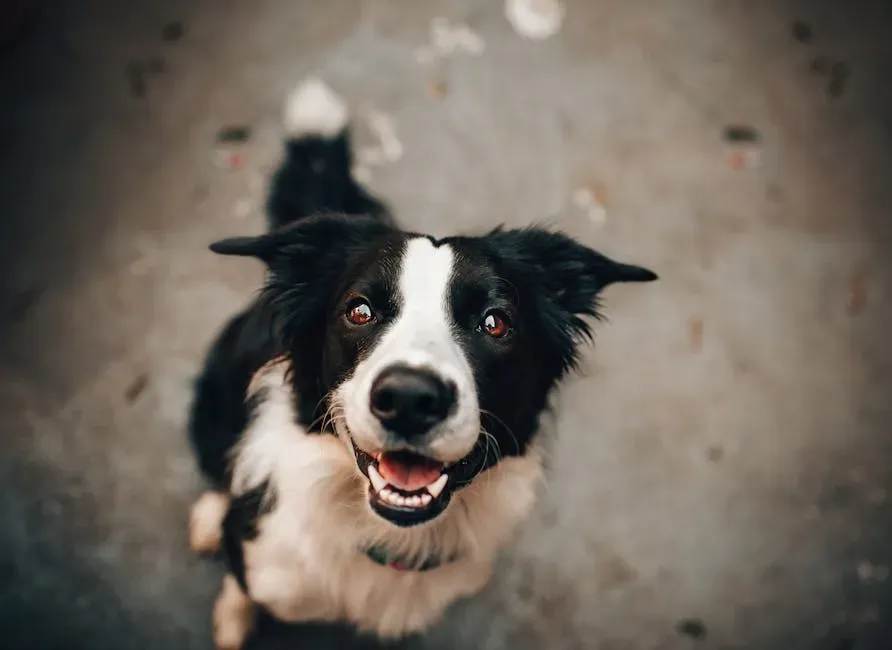
Now for the beautiful part. Knowing all of this, you can actively use the gaze to deepen your relationship with your dog. If you want to share the love with your pup, try taking a minute or two to lie on the floor and gaze into each other’s eyes. I know it sounds a bit dramatic, but it genuinely works. Think of it as a two-minute meditation that benefits you both.
Experts recommend that owners increase their eye contact with their puppies so that they can build better relationships. This is especially true during training. Strong eye engagement increases focus, bonding, and responsiveness to commands. Eye contact isn’t just emotional, it’s a practical training tool that sharpens your dog’s attention and deepens mutual trust.
One small caution worth keeping in mind: dogs can perceive direct eye contact from unfamiliar people as a threatening gesture. So when meeting a dog for the first time, it’s typically best to avoid making direct eye contact, staring at, or leaning over the dog, particularly if the dog is fearful or anxious of new people. Save the long, loving stares for the dog who already knows your heart.
Conclusion: That Look Means More Than You Think
When your dog looks at you with those soft, warm eyes, something genuinely extraordinary is happening. It’s not just cute. It’s chemistry, evolution, communication, and love all woven together in a single glance. Through their careful study of our behavior, dogs have discovered that humans gaze at each other as a sign of intimacy and friendliness. What our dogs want most in the world is to be a part of our families.
We have a responsibility to look back, to truly see them in return. To learn their signals, read their body language, and recognize when a stare means joy, when it means need, and when it’s quietly asking for help. The better we understand those eyes, the better we care for the animals who have shaped their entire existence around watching us.
So next time your dog locks eyes with you across a quiet room, hold that gaze for a moment. Let the oxytocin do its thing. Because honestly, is there anything more worth pausing for? What does your dog’s look tell you? We’d love to hear your story in the comments.


