
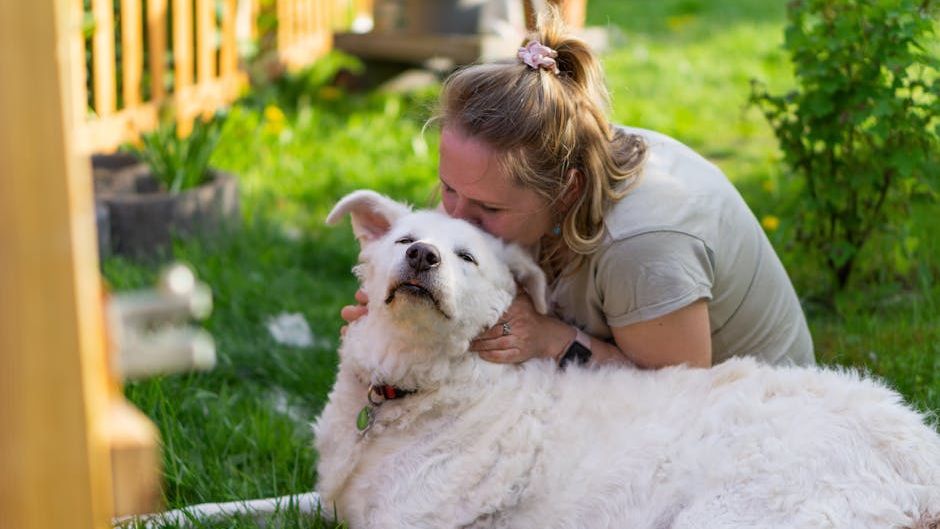
#1. Dogs Can Literally Smell Your Emotional State

The idea that a dog “just knows” when you’re having a hard time isn’t sentiment. It has a biochemical foundation. Researchers at the University of Bristol conducted a study that found dogs can detect stress through the hormone cortisol in human sweat. This means a dog doesn’t need you to cry or even change your expression. It can read your distress through something as subtle as the air in a room.
Dogs have evolved to read verbal and visual cues from their owners, and research has found that not only can dogs smell stress, represented by higher levels of the hormone cortisol, but they also react to it emotionally. This emotional reaction is part of what triggers the behavioral shift many dog owners recognize during their most vulnerable moments. The dog moves closer. It becomes more attentive. It seems, for lack of a better word, tuned in.
Research provides evidence that dogs can detect an odour associated with acute stress in humans from breath and sweat alone, which provides a strong foundation for future investigations into areas such as emotional contagion. That phrase, emotional contagion, is significant. It suggests the dog isn’t just detecting your state. It’s being affected by it. Results indicate that the physiological processes associated with an acute psychological stress response produce changes in the volatile organic compounds emanating from breath and sweat that are detectable to dogs, and these results could have applications to emotional support and PTSD service dogs.
#2. Loneliness Specifically Strengthens the Human-Dog Bond

Not all difficult emotions deepen the dog-human connection equally. Loneliness, in particular, seems to have a specific and well-documented effect on the strength of the bond. Higher social-loneliness and family-loneliness predicted higher negative affect, and higher levels of family-loneliness and romantic-loneliness predicted a stronger human-dog bond, which in turn predicted higher positive affect. That’s a meaningful pattern. The more disconnected a person feels from family or a romantic partner, the closer they draw to their dog.
The human-dog bond mediated the relationship between family-loneliness and positive affect as well as the relationship between romantic-loneliness and positive affect, and these mediating effects indicated that the human-dog bond mitigated the deleterious effects of family-loneliness and romantic-loneliness on positive affect. In plain terms, dogs absorb some of the emotional damage that loneliness causes. They don’t eliminate it, but they soften it in measurable ways.
Findings revealed that the human-dog bond functions as a stable emotional anchor, promoting non-judgmental connection and emotional security, with participants reporting greater emotional expression, enhanced social engagement, and improved psychological balance. What’s striking here is the phrase “non-judgmental.” During loneliness, people often feel unseen or misunderstood by the humans around them. A dog offers connection without the social risk that human relationships can carry.
#3. The Oxytocin Loop: How Closeness Feeds Itself
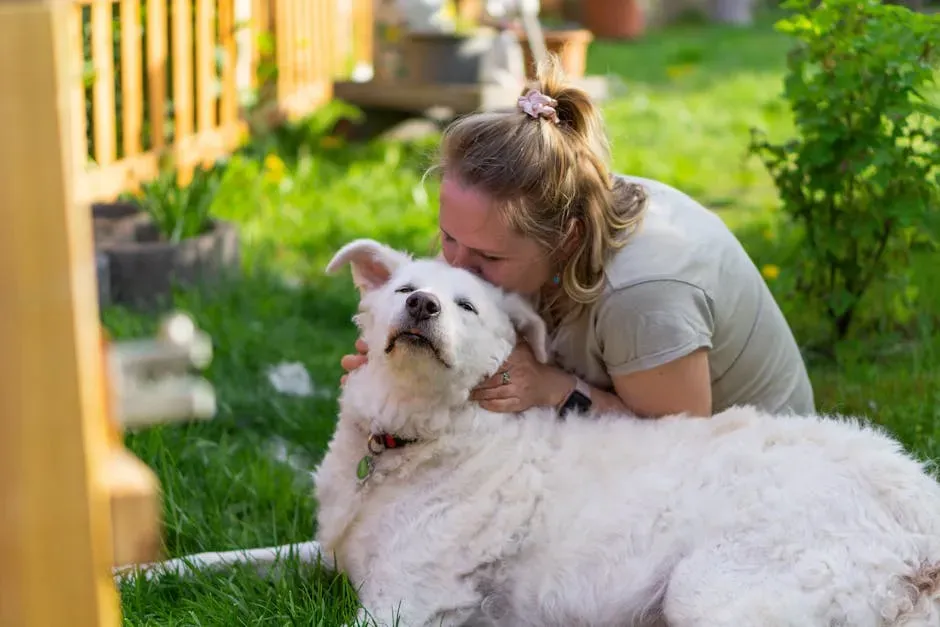
Much of the emotional deepening that happens between dogs and lonely humans is neurologically driven. Studies have found that interacting with a dog can trigger the release of oxytocin in the human brain, fostering feelings of happiness, trust, and bonding, and this effect is mutual, as dogs experience a similar surge in oxytocin when interacting with their human companions. This isn’t a one-sided transaction. Both the person and the dog are being chemically bonded through the interaction.
The mutual gaze between humans and dogs, similar to the gaze between parents and infants, triggers oxytocin release, fostering a sense of love and attachment. When a person is lonely, they tend to seek more of this kind of eye contact and physical closeness from their dog. A study published in Science discovered that mutual gazing between dogs and their owners significantly increased oxytocin levels in both, and this hormonal release not only deepens the bond but also creates a positive feedback loop where the more time spent bonding, the stronger the connection grows.
Physical interaction with pet dogs has been shown to induce the release of oxytocin in a similar way to physical contact between two people linked by an affective bond. During periods of loneliness, when physical closeness with other people is reduced, this becomes especially significant. The dog steps into a biochemical role that would ordinarily be filled by human touch. Respondents living alone or with a smaller social network obtained more comfort from their pets than those living with more people, and this finding could be linked to the association between access to affiliative physical contact and loneliness.
#4. Dogs Respond With Behavioral Shifts, Not Just Passive Presence

Dogs don’t simply sit nearby when their owner is lonely. They actively recalibrate their behavior. They are highly attuned to human emotions and social cues, often reacting to feelings of sadness or isolation by seeking comfort or offering their own, and this empathetic ability stems from their pack mentality and deep social bonds. The behavioral changes owners observe, a dog pressing closer, following from room to room, or placing a paw on an arm, are all purposeful responses to a perceived change in the emotional environment.
Dogs have evolved alongside humans for thousands of years, developing sophisticated ways to read moods and intentions, and their keen senses of smell and hearing, combined with their ability to interpret body language and vocalizations, allow them to pick up on subtle emotional shifts. Loneliness, in many cases, comes with quieter voices, slower movement, and changes in routine. Dogs register all of these signals. Their attachment response isn’t random. It’s a calibrated reaction to a specific kind of human distress.
A human’s need to nurture is so intense that when this need is not met, incidences of depression increase and the individual’s overall health is negatively impacted, and the ability to nurture a dog allows for the expression of love and affection, leading to better mental and physical health. There’s a reciprocal logic here worth sitting with. When a person is lonely, their need to give affection is also unmet. The dog receives that affection, and in doing so, gives the human somewhere meaningful to direct it.
#5. The Psychological Nuances: What the Research Actually Cautions

The relationship between dogs and human loneliness isn’t a simple cure, and the science is careful to say so. Prospective studies are needed that use more similar approaches to attachment to humans and pets, and investigate whether a stronger emotional attachment to pets develops as a response to negative bonding experiences, and whether this compensatory strategy benefits or harms psychological well-being. The question of whether leaning heavily on a dog for emotional support is ultimately healthy is still being examined by researchers.
Some research suggests that over-reliance on pets for emotional support may unintentionally exacerbate feelings of loneliness by highlighting the absence of interpersonal relationships, and this echoes research that emphasizes the limitations of pets as substitutes for the various psychological and social benefits provided by interpersonal relationships. This is worth acknowledging honestly. A dog can bridge emotional gaps, but it can’t replace the full complexity of human connection. It was never meant to.
Dog parks, pet-related social events, and casual conversations sparked by dog walking can lead to new friendships and a stronger sense of community, and the act of pet care evokes feelings of empathy, nurturing, and responsibility, which can provide a sense of purpose and enhance life satisfaction. This is perhaps the most underrated aspect of the dog-loneliness dynamic. The dog doesn’t just offer private comfort. It opens doors back into the world. Most participants who owned a companion canine reported feeling less lonely and found it easier to be with other people, and companion dogs were associated with significant increases in socialization among study participants.
A Final Thought Worth Sitting With

The science of dogs and loneliness is, at its core, the science of what it means to be truly seen. The emotional benefits of the human-dog relationship are closely tied to fundamental human needs for social connection and belonging, and in the context of growing loneliness, a phenomenon increasingly described as a modern epidemic in individualistic societies, dogs have become salient as both emotional and social support resources.
What psychology is telling us is that the bond between a dog and its lonely owner isn’t just comfort. It’s a dynamic, biochemically active, and psychologically complex attachment that shifts and deepens precisely when the human needs it most. A comprehensive Hungarian study demonstrated that dog owners often report higher satisfaction and emotional support from their dogs compared to most human relationships, with the notable exception of bonds with their own children. That’s not a small finding.
There’s something worth honoring in the fact that an animal with no language and no agenda can detect a person’s sadness, move toward it without hesitation, and in doing so, become more deeply bonded. In a world increasingly measured by digital connection and social metrics, the dog sitting quietly beside a lonely person may represent one of the most reliable and unconditional forms of attachment we have left. In my view, we don’t pay nearly enough attention to how profoundly dogs carry us through our hardest hours, and science is only just beginning to understand what dog owners have always quietly known.


