

You already know your dog makes you smile when you walk through the door and somehow always finds a way onto your side of the couch. But here’s the thing most people don’t realize: your four-legged companion is quietly doing far more than keeping you company. The science has been building steadily, and what it reveals about the human-dog bond is genuinely surprising. We’re talking about measurable changes in your body chemistry, your heart, your brain, and even your ability to connect with other people.
These aren’t feel-good theories. They’re grounded in research from institutions like Harvard Medical School, the American Heart Association, and national health registries spanning millions of people. Your dog may be your best health investment you never planned on making.
Your Body’s Stress Response Gets a Real-Time Reset

Picture this: you’ve just had one of those days where everything went sideways, and you walk in the door to your dog’s full-body wag. What happens next in your body is more significant than you might expect. Interaction between humans and dogs, which includes pleasant sensory stimulation, can induce oxytocin release in both humans and dogs and generate effects such as decreased cortisol levels and blood pressure. That’s not just comfort. That’s biochemistry working in your favor.
A study found that just fifteen minutes of playing or petting a friendly dog can measurably reduce stress and lower heart rate and cortisol levels. For context, cortisol is the hormone your body produces under stress, and chronic elevation of it is linked to sleep problems, weight gain, and weakened immunity. Your dog is helping you manage all of that, without a prescription.
The significantly lower response to a stress test shown in the dog group, through their heart rate and cortisol levels, supports the thought that the presence of a dog could be associated with lower stress responses. The decrease of cortisol levels also suggests that dogs can provide a faster stress recovery response. So it’s not just about feeling calmer in the moment. Your body is literally bouncing back faster from stress when your dog is nearby. That kind of recovery, repeated daily, adds up over time.
Your Heart Health Gets a Quiet But Powerful Boost

The cardiovascular benefits of dog ownership have been studied with some of the largest datasets in medical research, and the findings are hard to ignore. Numerous studies have explored the relationship between pet, primarily dog or cat, ownership and cardiovascular disease, with many reporting beneficial effects, including increased physical activity, favorable lipid profiles, lower systemic blood pressure, improved autonomic tone, diminished sympathetic responses to stress, and improved survival after an acute coronary syndrome.
Some research suggests that people with dogs experience less cardiovascular reactivity during times of stress. That means their heart rate and blood pressure go up less and return to normal more quickly, dampening the effects of stress on the body. Over a lifetime, those repeated daily dampening effects translate into something measurable at the population level.
Researchers found that dog ownership was associated with a roughly one-quarter reduced risk of death from any cause among the general public, and a roughly one-third lower risk of death among heart attack survivors who live alone. That is a remarkable finding, and it comes from a meta-analysis covering millions of people. Dog owners were more likely to achieve recommended levels of behavioral cardiovascular health metrics, such as physical activity and diet, than non-dog owners, which translated into better cardiovascular health overall. Your daily walk with your dog is doing more for your heart than you probably give it credit for.
Daily Walks Become Built-In Exercise You Actually Do

Most of us know we should move more. Knowing it and doing it are two very different things. This is where dogs have a quiet edge over every fitness app you’ve ever downloaded and ignored. Over sixty percent of dog owners meet the recommended weekly amount of exercise, which means they get one hundred fifty minutes of moderate exercise or seventy-five minutes of vigorous exercise each week. That’s a meaningful difference compared to the general population.
Research suggests that, on average, people who own dogs walk about twenty minutes more per day than those who don’t have a dog. Those twenty minutes don’t feel like exercise to most dog owners. They feel like time with their dog. That psychological reframe is powerful because it removes the friction that keeps most people from exercising consistently.
Establishing healthy routines such as daily movement and maintaining a healthy weight can reduce the risk of breast, prostate, lung, colon and kidney cancers. The walk isn’t just about fitness in the narrow sense. It’s woven into a pattern of daily structure that has compounding benefits across your health. Dogs are great mindfulness teachers because they live in the moment, using their senses of smell, hearing, sight, and touch as they move through the world. Following your dog’s lead when taking a walk, paying close attention to your dog and your immediate surroundings, is a good way to de-stress. Some walks turn out to be moving meditation, whether you realize it or not.
Your Brain Stays Sharper for Longer
This benefit tends to surprise people the most, perhaps because we don’t think of our dog as a cognitive workout partner. Owning a dog isn’t just fun; it might also help keep your brain sharp as you age, according to a study published in Scientific Reports. The study didn’t just rely on surveys. Researchers examined eighteen years’ worth of data from more than sixteen thousand people aged fifty and older. They assessed the link between pet ownership and cognitive decline, as well as any distinctions between people who had dogs, cats, birds, and fish.
Researchers found that people with dogs showed a slower decline in memory, including both immediate and delayed recall, compared with participants who didn’t own pets. Memory preservation over nearly two decades of follow-up data is a significant finding. The mechanisms aren’t fully understood yet, but researchers point to increased physical activity, reduced loneliness, and the mental engagement that comes with caring for another living creature.
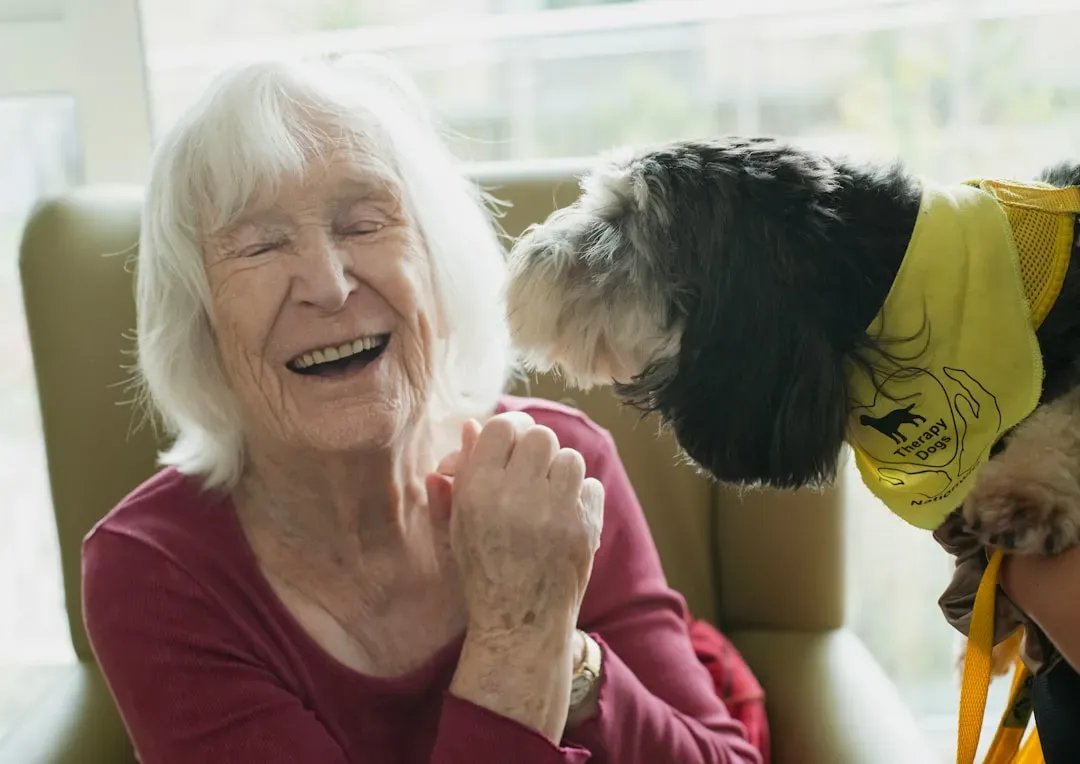
A study evaluating animal-assisted therapy in nursing home residents with dementia showed stabilization of symptoms of depression and agitation over two and a half months when residents participated in weekly sessions in which they petted and groomed a therapy dog. Patients who received usual treatment showed worsening symptoms. Whether you’re in your thirties managing everyday stress or in your seventies navigating the later years, the cognitive case for dog ownership is growing stronger with each new wave of research.
You Become More Connected to the World Around You

Loneliness has been called one of the defining public health challenges of our time. Dogs, it turns out, are surprisingly effective at addressing it, not just by providing company at home, but by opening doors to human connection outside it. Pets can be a great social lubricant for their owners, helping you start and maintain new friendships. Dog owners frequently stop and talk to each other on walks, hikes, or in a dog park. Pet owners also meet new people in pet stores, clubs, and training classes.
Researchers from Australia, the UK, and the US found that as many as roughly two in five dog owners make friends more easily, and as many as four in five talk to new people while taking their dogs out and about. That social byproduct of dog ownership is far from trivial. Research shows that social relationships, both their quantity and quality, profoundly affect mental and physical health. Scientific research also continues to support pet ownership and human-animal interaction for improving social connections, providing social support, and decreasing loneliness and depression.
Owning a pet can build positive social skills, both with the animal and with people. The bond between a pet and its owner teaches empathy, care, and responsibility. For children, these lessons can carry over into their social interactions, helping them develop stronger communication and relationship-building skills. Dogs don’t just fill the silence at home. They pull you back into the world, one wagging tail and one sidewalk conversation at a time.
Conclusion: The Dog You Love Is Loving You Back in More Ways Than One

None of this means you need to rethink your relationship with your dog through a clinical lens. You love your dog because of who they are, not because of what they do for your cortisol levels. Still, there’s something genuinely moving about the research: the bond you’ve built with your dog is wired deeply into both your biologies, and the daily rhythms of your life together, the walks, the quiet evenings, the door greetings, are shaping your health in real and lasting ways.
The best thing you can do with this knowledge is take it as encouragement to invest in that bond even more. Keep up those daily walks. Make time to sit with your dog without a screen in front of you. Keep up with your veterinary visits so your dog stays healthy enough to keep giving you all of these gifts. The relationship is reciprocal in ways science is still uncovering.
In the end, maybe the most unexpected health benefit of having a dog is the simplest one: they give you a reason to show up for life every single day. And that, it turns out, is medicine in its own right.


