

There’s something almost unsettling about how well your dog knows you. You walk in after a brutal day at work, shoes barely off, and already your dog is responding differently, quieter maybe, more clingy, or strangely restless in a way you can’t quite explain. You didn’t say a word. You didn’t have to.
The relationship between a dog and its owner runs much deeper than companionship. Science has been steadily uncovering how dogs function as living, breathing emotional mirrors, absorbing and reflecting the internal states of the people they love most. Some of what researchers have found is genuinely surprising, not just heartwarming, but a little humbling too.
#1. Your Stress Hormones Become Theirs

Of all the ways your mood reaches your dog, this one might be the most striking. The stress levels of dogs and their owners follow each other closely, and researchers believe it is the dogs who mirror their owner’s stress levels, rather than the other way around. That’s a meaningful distinction. It places the source of the emotional current squarely on us.
In a study conducted in Sweden, researchers measured the cortisol levels of dogs and their owners over time. They found that regardless of the dogs’ personalities, their cortisol levels were higher when their owner’s levels were high, and lower when their owner’s levels were low. Cortisol, the body’s primary stress hormone, was essentially synchronized between species.
This isn’t a fleeting, situational response. Long-term stress levels have been shown to be synchronized in dogs and their owners. Living with a chronically stressed person doesn’t just affect a dog’s behavior in the moment. It shapes their baseline wellbeing over time, which is a genuinely sobering thing to sit with.
#2. Your Heartbeat Sends a Signal They Can Feel

A study published in Scientific Reports in October 2024 offered insight into a physiological measure of the emotional connection between dogs and their owners, finding that the heart rate variability of a dog and its owner often mirror each other during interactions. Heart rate variability is a subtle, beat-to-beat measure, not something you’d consciously control or even notice in yourself.
Greater heart rate variability is linked to better heart health and occurs more during relaxation and less often during times of stress. So when you’re genuinely at ease, your dog’s cardiovascular rhythms tend to settle in kind. The connection operates almost like a biological feedback loop, one where calm genuinely begets calm.
Research from Queens University Belfast highlighted this connection in a stressful situation, finding that a change in an owner’s heart rate predicted a similar change in their dog’s. The study measured the heart rates of owners and dogs during a mildly stressful or relaxing intervention at an unfamiliar veterinary clinic, and despite owners not being permitted to interact with their dogs during this time, the dogs could still tell when their owner became stressed. The signal passed without a single word, gesture, or glance.
#3. They Read Your Face With Surprising Precision

Dogs are surprisingly skilled at reading human body language and facial expressions. Experiments demonstrate that pet dogs can distinguish a smiling face from an angry face, even in photographs. That’s not just pattern recognition. It reflects genuine emotional processing at a level we didn’t credit dogs with for a long time.
In one study of dogs and human facial expressions, scientists demonstrated that dogs differentiate between happy and angry human faces, and that dogs find angry faces to be aversive. They don’t just see a difference in expression. They react to it emotionally, pulling back from what reads as threatening or negative. Research also found that dogs engaged in mouth-licking in response to angry expressions, doing so when they saw images of angry human faces but not when they simply heard angry voices, emphasizing the importance of visual cues. Mouth-licking can be an appeasement signal, and it may serve as a way for a dog to respond to perceived negative emotion in a human companion.
#4. They Smell Your Emotional State Before You Show It

Your dog’s nose is doing something remarkable long before you’ve given any outward sign of how you feel. Recent olfactory studies suggest that human emotional chemosignals can actually alter dog behavior. When you feel afraid or anxious, your body releases chemical compounds your dog can detect, and they respond to those cues in measurable ways.
Dogs understand human emotions far better than we once imagined, reading faces, listening to tone shifts, interpreting body language, and even detecting chemical changes in our scent. The scent channel is particularly important because it works invisibly and continuously. You can control your voice and your posture. You cannot control what your sweat glands are broadcasting.
Research from the University of Bristol showed that the smell of human stress affects dogs’ emotions and can even lead them toward more pessimistic choices in problem-solving tasks. When we’re stressed, we release cortisol, and dogs can sense this. The whole picture, face, voice, body, and scent, works together to give your dog a remarkably full read on how you’re actually doing.
#5. Your Tone of Voice Shifts Their Behavior Instantly

A cheerful, high-pitched “Good boy!” with a relaxed posture sends a very different message than a stern shout with rigid body language. Dogs process these differences not just as commands, but as emotional information. They’re not simply listening for words. They’re listening for what those words mean about the state of the person saying them.
Research indicates that dogs can comprehend not just words but also the emotions behind expressions, gauging moods with impressive accuracy. In practice, this means your dog is constantly making micro-assessments of your vocal tone throughout the day. A clipped, tense voice while you’re on a work call registers differently than your relaxed weekend voice, and your dog adjusts accordingly.
In one study, scientists played different kinds of audio for dogs, including sounds indicating positive emotions like laughing, negative emotions like crying, and non-emotional sounds like rainfall. The dogs paid significantly more attention to the emotional sounds and behaved differently depending on whether those sounds were positive or negative. Researchers concluded that dogs can both pick up on human emotions and distinguish between types of emotions. So yes, they’re really listening.
#6. A Sad Day Makes Them Rush Toward You
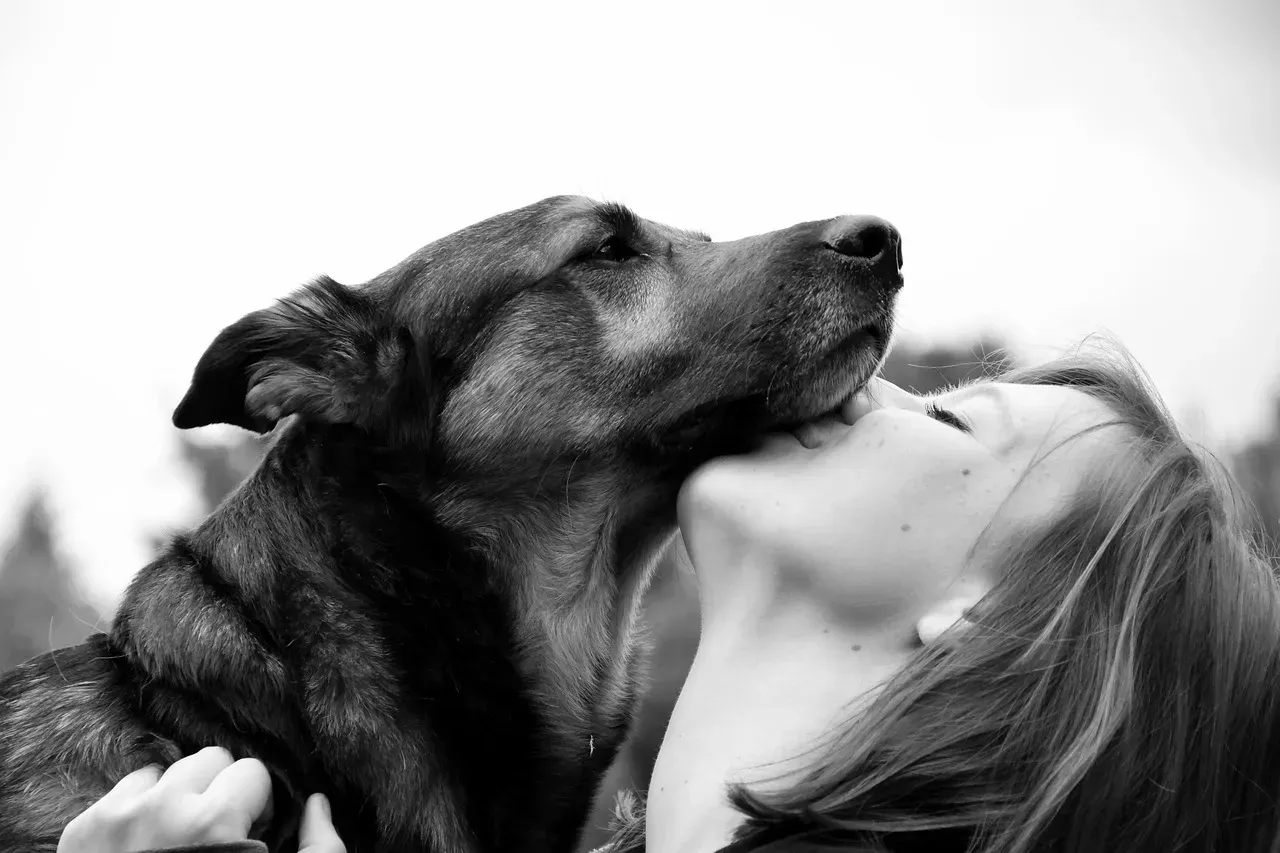
Most dog owners have experienced it: a bad mood, some quiet tears, and suddenly your dog is impossibly close, head on your knee, not going anywhere. A 2018 study showed that dogs opened a door that separated them from their owner faster when they heard their owner crying than when their owner was simply humming. They weren’t trained to do this. They chose it.
Studies have revealed that dogs possess oxytocin responses similar to humans, and this physiological bond underlies their capacity for sensing when their human counterparts need comfort or support, making them exceptional at providing emotional assistance. The impulse to comfort isn’t incidental. It’s neurologically and chemically embedded in how dogs relate to the people they’re bonded with.
Interacting with dogs has been shown to release oxytocin, the “love hormone,” in both species, and this mutual release helps reinforce the emotional bond, underscoring the psychological benefits of having a dog in our lives. On a genuinely hard day, there’s something real happening biochemically when your dog curls up next to you. It’s not just comfort. It’s chemistry.
#7. Your Mood Shapes Their Personality Over Time

A single bad day doesn’t permanently change your dog. Sustained emotional patterns, however, can. Dogs definitely reflect their owners’ personalities and emotional states, and since they’ve lived alongside humans for more than 30,000 years, dogs have had to adapt to tune into our emotions and modify their behavior to suit. This adaptation runs deep, encoded through thousands of generations of coevolution.
Research confirms this is not coincidence. Dogs can mirror their owners’ emotions and behaviors, and recent research indicates that personality similarities between dogs and their humans are not merely anecdotal but grounded in scientific observation. An owner who is consistently anxious, withdrawn, or emotionally unpredictable can gradually shape a dog’s baseline temperament in the same direction.
This reflection illustrates the adaptability and empathy inherent in dogs and emphasizes the crucial influence of an owner’s behavior and emotional state on their pet. It works the other way too, of course. Just as our dogs reflect our feelings, we can be influenced by their states of mind. A lively dog can elevate an owner’s mood, while a scared or anxious dog can correspond with heightened stress in their human. The mirror faces both directions.
#8. Calm Humans Create Calm Dogs

A dog’s stress hormone levels, measured through cortisol, can correlate with their owner’s anxiety levels, and this connection is so profound that a calm human can engender tranquility in their dog, while an anxious pet parent may inadvertently heighten their dog’s fear and stress responses. The direction of influence matters enormously here.
Spending quality time with dogs reduces stress and increases the power of brain waves associated with relaxation and concentration, according to a study published in the journal PLOS ONE. The relationship is genuinely reciprocal: your calm shapes their calm, and their calm, in turn, reinforces yours. This emotional awareness strengthens the bond between humans and their dogs, and by staying calm, consistent, and attentive, you can create a secure emotional environment for your pet.
Despite owners not being permitted to interact with their dogs in one study, dogs could still tell when their owners became stressed, and this caused the dogs themselves to become stressed via social referencing, where a dog looks for signals from their owner about how to react in an uncertain situation. Choosing to steady yourself, even deliberately, even imperfectly, is one of the most direct things you can do for your dog’s quality of life.
Conclusion: Your Dog Is Watching You More Carefully Than You Know

There’s something worth taking seriously in all of this. Your dog is not just a pet waiting for the next walk or meal. They are attuned to you in ways that go well beyond training or habit. They track your hormones, your face, your voice, your heartbeat, and even your scent. Every mood you carry into a room lands somewhere.
That could feel like pressure. Honestly, it probably should. Not in a way that creates guilt, but in a way that invites real awareness. The emotional environment you create at home shapes a creature who has no defense against it and no choice but to absorb it.
The good news, and it is genuinely good, is that the connection runs both ways. Your dog’s calm can steady you just as your calm steadies them. Of all the relationships in a person’s life, few are this honest, this immediate, and this free of pretense. Your dog doesn’t interpret your mood. They simply live inside it with you. That’s worth paying attention to.


