

#1: The Extraordinary Nose That Reads the Body Like a Book
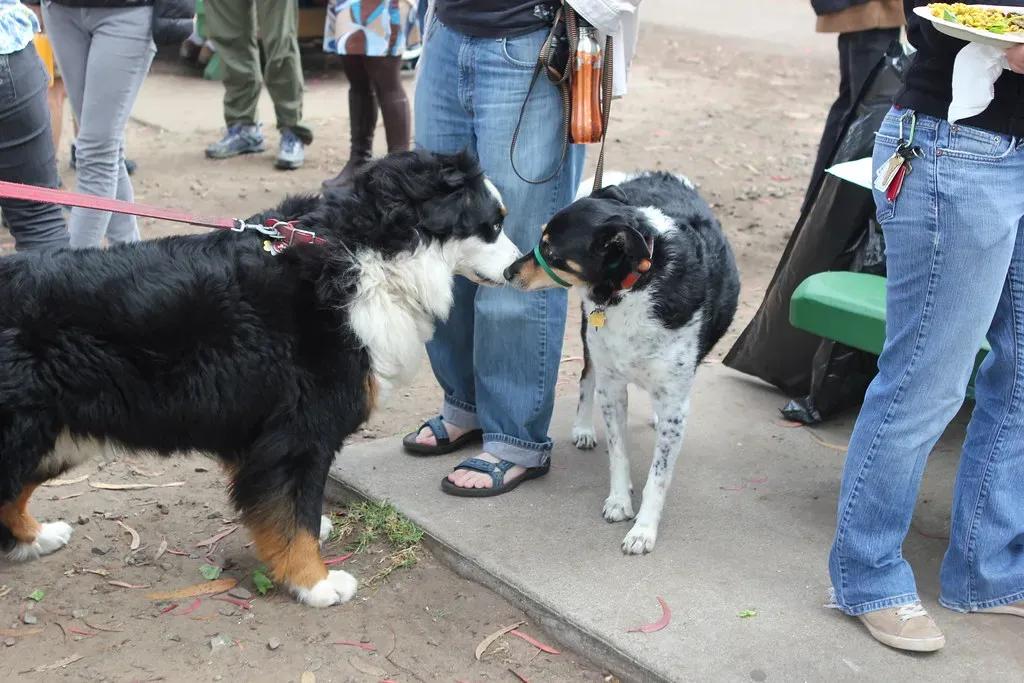
A dog’s nose is a complex sensory organ with approximately 300 million olfactory receptors, roughly four times the amount humans have. In proportion to total brain size, the olfactory bulb in a dog is about 40 times larger than ours. That’s not a small edge. That’s a completely different relationship with the world of scent.
From a physiological standpoint, dogs possess a highly developed sense of smell that allows them to detect subtle biochemical changes in a living being that may signify illness or impending death. Research indicates that dogs can identify specific scents associated with human health status, suggesting an ability to perceive what lies beneath the surface of physical existence.
Dogs’ sense of smell is so subtle that they can notice the slightest change in human scent caused by disease. The tiniest shifts in hormones or volatile organic compounds released by diseased cells can be picked out by dogs. Consequently, dogs have been trained to sniff out the markers of disease that might even go unnoticed with medical tests.
In a 2006 study, five dogs were trained to detect cancer based on breath samples. Once trained, the dogs were able to detect breast cancer with 88 percent accuracy, and lung cancer with near-perfect accuracy. They could do this across all four stages of the diseases. The body, when it’s failing, tells a chemical story. Dogs are simply reading it.
#2: Emotional Intelligence and the Mirror Effect

While a dog’s physical senses are extraordinary, their emotional intelligence is equally impressive. Dogs are social animals that have evolved to read human cues for survival and companionship. They can interpret facial expressions, tone of voice, and body posture with remarkable accuracy. This emotional attunement allows them to sense when their owners are anxious, sad, or in pain.
Researchers have also found that dogs are highly responsive to human hormones such as cortisol and oxytocin. These chemicals fluctuate with stress, fear, and sadness, giving dogs a biochemical window into our emotional state. This combination of sensory and emotional awareness helps explain why dogs often behave differently around people who are sick or dying, as they are responding to real, measurable changes rather than supernatural signals.
Dogs are constantly paying attention to body language, tone of voice, and shifts in behavior. Over time, they become experts at their owner’s patterns and emotional cues. Think of it this way: they’ve been studying you, daily, for years. A sudden change in how you move, how you smell, or how your voice sounds is practically an alarm bell to them.
In end-of-life situations, dogs may mirror their owner’s emotional state, becoming subdued or protective as they sense distress. The behavior that looks like mourning in advance may actually be a form of empathetic resonance, tuned to frequencies we can’t consciously detect ourselves.
#3: Behavioral Changes That Dog Owners Recognize

Behaviorally, dogs exhibit certain actions that may imply awareness of death. Instances have been documented where dogs refuse to leave the side of their ailing human companions, or they may show signs of agitation, restlessness, or sadness when a family member is nearing death. These behaviors could suggest that dogs have an innate understanding of their owner’s condition, even if they cannot comprehend the notion of death in the human sense.
Dogs can behave differently when they sense someone is dying. They may show signs of distress or become more calm and attentive. They tend to stay close to the person, providing comfort and companionship. This instinctual response aligns with the natural pack mentality of dogs.
Current research suggests dogs may try to offer comfort to people in distress, which could explain why they’re nearby people in these situations. This matters. It shifts the narrative from “mystical prediction” to something far more grounded: a deeply bonded animal responding to distress with closeness and care.
Common behaviors include increased vigilance, refusing to leave the person’s side, and gentle physical contact like nuzzling. To an outsider, it can look like the dog somehow knows what’s coming. To a psychologist studying animal behavior, it’s a predictable response to mounting biological and emotional signals.
#4: The Science of Grief and Attachment in Dogs

From a biological perspective, exhibiting patterns of grief-like behavior in dogs could be seen as a response to separation from an attachment figure. According to animal behaviorist Marc Bekoff, dogs might display grief as a result of a close relationship, due to their highly social nature.
Studies show that dogs exhibit increased stress and behavioral changes when their owners are absent. Dogs grieve the death of human and animal companions, displaying reduced appetite and clinginess. These aren’t random behaviors. They follow recognizable patterns that psychologists link directly to attachment theory.
According to dog owners’ answers in published research, the surviving dog after the death of a companion changed both in terms of activities such as playing, sleeping, and eating, and also in terms of emotional responses such as fearfulness, which occurred as a function of the quality of the relationship between the two animals.
Some skeptics suggest that dogs don’t really grieve and attribute their behavioral changes to the alterations in daily routine resulting from the absence of an integral figure in the dog’s life. In other words, the dog is simply “upset” because its schedule is off. That interpretation may be partially correct, but it doesn’t explain why the behavioral shifts often begin before the death, not after. The anticipatory nature of these changes is what makes this phenomenon so compelling.
#5: Dogs in Hospice and End-of-Life Care Settings

Persons with dementia may have severe physical and psychological symptoms at the end of life. A therapy dog used in their care can provide comfort and relieve their anxiety. What’s interesting, though, is that hospice workers have repeatedly observed something the research is still catching up to: dogs often seem to know who in a room needs them most.
Ellen Holland and her colleagues have witnessed many things that can’t be easily explained, including a dog alerting them to a patient on the floor in a facility, in what appeared to be an empty room, or seeking out someone who really needed comfort. These aren’t trained detection responses. They appear to emerge from the dog’s natural attunement to human distress.
Research indicates animal-assisted therapy positively influences hospice care by enhancing emotional and psychological states of patients. Pet therapy offers a comforting and supportive presence for hospice patients through certified therapy dogs. The dog provides comfort and relief through its presence and by responding to the physical and emotional expressions of the dying person.
For patients in the final stages of life, interacting with a dog can prompt memories and spark communication when it might not have occurred otherwise. Research also shows that therapy animals, through their empathetic responses, are able to understand human emotions and provide comforting interactions, even with patients who may have cognitive impairments. In settings where words have run out, a dog’s presence fills a quiet, irreplaceable space.
Conclusion: More Than Instinct, Less Than Magic

The honest answer to whether dogs can is this: probably, in ways that are grounded in biology rather than mysticism. Science has not outright confirmed that dogs can sense death, but it has not been ruled out either. As there is no true way to understand what goes on in the minds or noses of a dog, researchers continue to explore what animals can actually perceive.
What’s clear is this: dogs primarily use their acute sense of smell to detect biochemical changes in the human body, combined with their ability to notice subtle changes in behavior and body language. Their superior olfactory capabilities allow them to perceive alterations in body chemistry that often occur during the dying process.
The idea that this is purely supernatural doesn’t hold up. Neither does the idea that it’s purely coincidence. For thousands of years, dogs have lived alongside humans, evolving from wild wolves into loyal companions who share our homes, routines, and emotions. This long history of coexistence has created a unique bond that goes beyond simple companionship.
What dogs offer in those final, tender moments is not a prophecy. It’s presence. And arguably, that matters more. The most remarkable thing isn’t that a dog might sense death coming. It’s that when it does, the instinct is to stay close, to offer warmth, and to never leave the person’s side. Science can explain the mechanism. It can’t fully account for what it means.


