
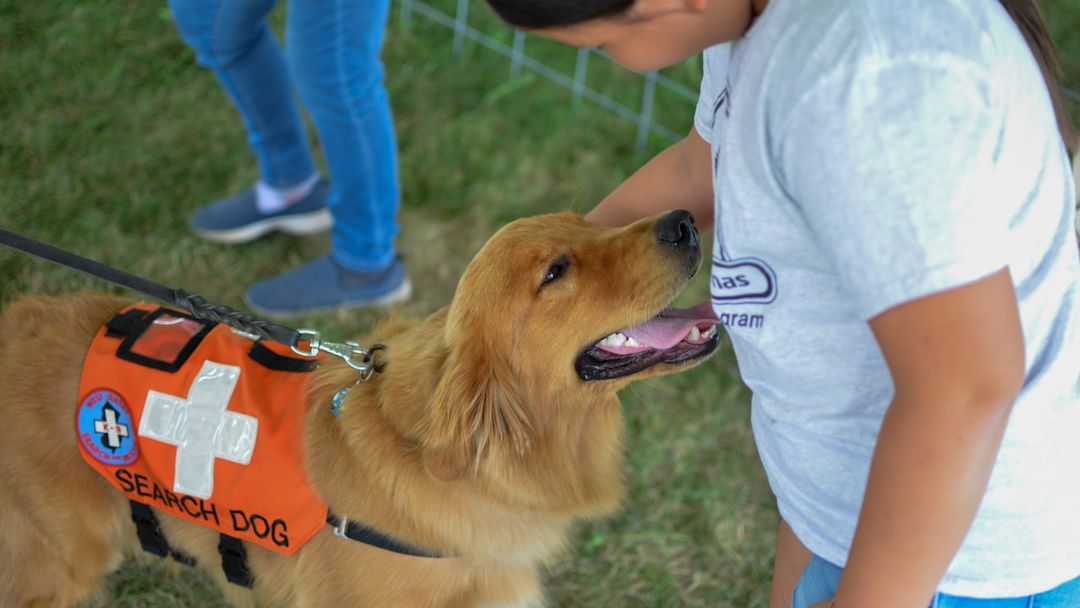
#1. They Position Themselves Between You and the Door

If you’ve ever noticed your dog choosing to sleep directly in front of the bedroom door rather than next to you on the bed, that’s not random. Dogs with protective instincts tend to sleep facing the door or window to monitor surroundings while keeping a paw or resting their head on their owner. It’s a deliberate physical arrangement, a statement about who controls access to you while you’re at your most vulnerable.
Dogs that sleep facing the door or between their owner and the entrance are positioning themselves to intercept any potential threat. This behavior stretches all the way back to their wolf ancestry, where pack members would take turns keeping watch so others could rest safely. In the wild, dogs are pack animals – they sleep in groups and take turns keeping watch to ensure the safety of others. Your dog doesn’t see any separation between that ancient responsibility and what happens in your bedroom at 2 a.m.
#2. They Stay Awake Longer Than Seems Necessary

This protective behavior is commonly observed during the night, when human senses are less sharp and the environment is quieter – conditions that, to a dog’s instincts, might mean greater danger. There’s something almost poignant about it. While you drift off peacefully, your dog is still processing the world around you, running through a checklist you’ll never be aware of.
Some dogs stay awake longer than necessary, occasionally with ears perked or tail twitching. Some dogs even interrupt their own rest if they sense unfamiliar activity nearby, cueing into doors creaking, cars pulling up, or nocturnal animal sounds. It isn’t insomnia, and it isn’t anxiety in most cases. It’s watch-keeping – a function so deeply embedded in canine behavior that many dogs perform it without any training or encouragement whatsoever.
#3. They Can Detect What You Genuinely Cannot Sense
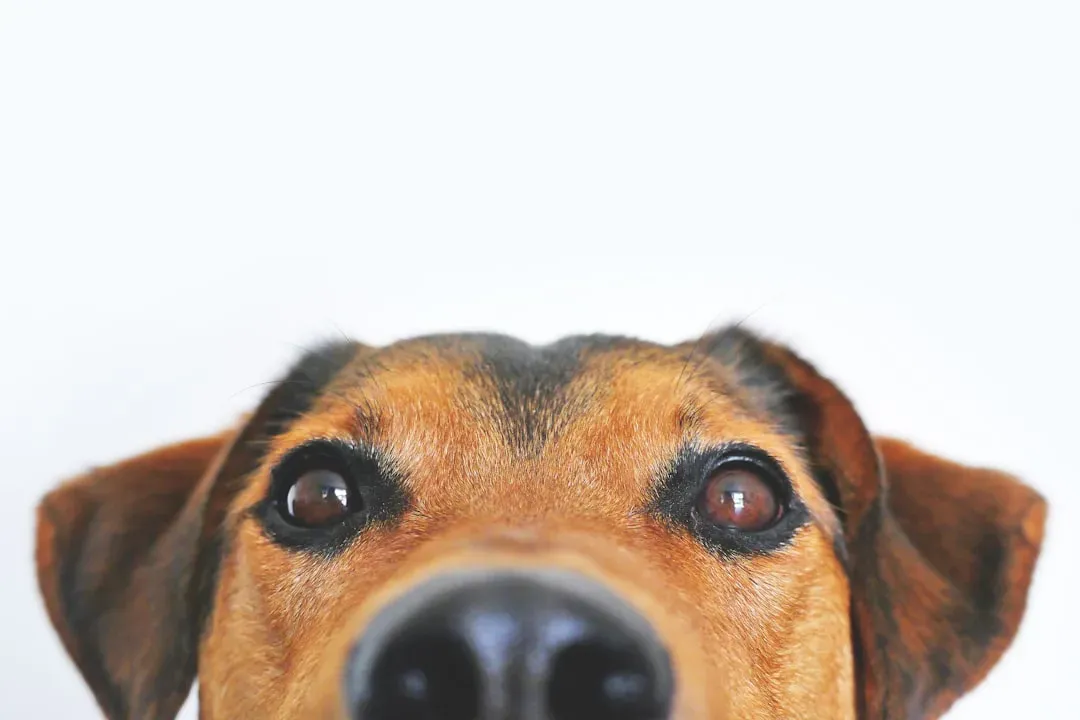
This is where things get genuinely remarkable. Dogs possess approximately three hundred million olfactory receptors compared to roughly six million in humans, giving them a sense of smell estimated to be ten thousand to one hundred thousand times more sensitive than ours. That gap isn’t a rounding error – it’s a completely different sensory reality. While you sleep, your dog is passively monitoring the chemical composition of the air around you.
Dogs also have highly sensitive ears, capable of detecting sounds at frequencies much higher than human hearing. They can hear ultrasonic sounds that humans cannot perceive, which allows them to pick up on subtle noises that may indicate danger, like the creaking of floors under pressure or distant alarms. On top of this, dogs are known to wake their owners up moments before a fire spreads through a home. Their acute sense of smell allows them to detect smoke and burning materials long before smoke alarms do. The threat your dog is reacting to in the middle of the night might not be imaginary. It may simply be invisible to you.
#4. They Stare at You While You Sleep

Waking up to find your dog watching you can feel strange the first time it happens. It’s easy to overthink. Pack members rely on one another for survival. Dogs therefore make efforts to ensure their pack mates are free from physical harm, and standing guard over their family as they sleep is one way to protect them. To your dog, you and the other humans and pets in your family are their pack. So if one night you wake up and notice your dog staring at you, they could simply be obeying their instinct to protect a loved one.
There’s also an emotional attunement happening in those quiet moments. Dogs often match your breathing and become attuned to your emotional states, offering silent companionship through the night. The staring isn’t unsettling once you understand it. It’s your dog checking on you the only way they know how – by watching, listening, and remaining present in a room full of darkness and silence that they are far better equipped to navigate than you are.
#5. They Respond to Health Changes You Haven’t Noticed Yet
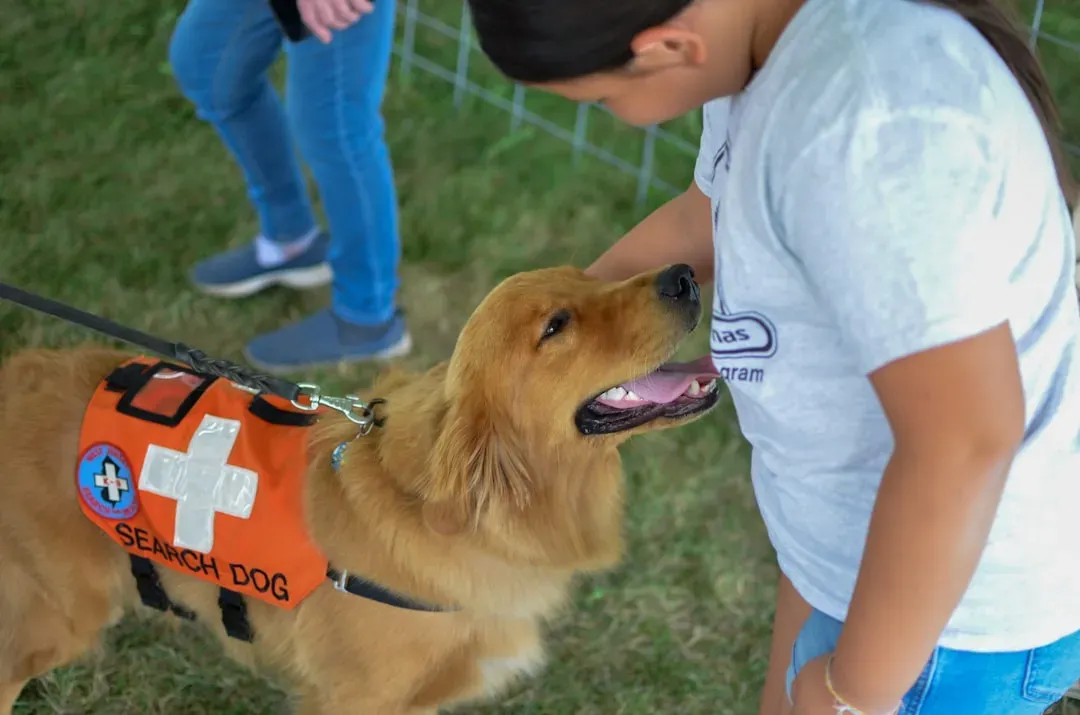
In addition to sensing external dangers, dogs can also detect changes in their human’s health, often before symptoms become obvious. Dogs have been known to detect illnesses like cancer, diabetes, and seizures through their keen sense of smell and ability to detect chemical changes in the body. This means the protection your dog offers while you sleep isn’t limited to threats coming from outside the house. It also includes threats that may be developing inside your own body.
Some dogs have the remarkable ability to detect changes in their owner’s health, including impending seizures, heart attacks, and drops in blood sugar levels. Medical alert dogs are trained to recognize these signs and can warn their owners before an episode occurs. Even untrained dogs have been known to alert their owners by nudging, whining, or acting unusually protective when they sense something is wrong. A dog suddenly pressing close to you at night, nudging you awake without apparent cause, or whimpering softly isn’t always a dog being needy. Sometimes it’s a dog telling you something your own body hasn’t communicated yet.
Conclusion

There’s a certain comfort in recognizing that the creature curled up near your feet at night isn’t just sleeping – it’s watching over you. The midnight repositioning near the door, the unexplained alertness, the steady gaze in the dark: these behaviors aren’t quirks or coincidences. They are the expression of a protective relationship that has been refined over thousands of years of living alongside humans.
What makes it particularly striking is that your dog’s protection operates on a completely different sensory plane. The common thread is sensory advantage. Dogs hear lower frequencies, smell chemicals we cannot detect, feel atmospheric pressure changes, and continuously observe the people around them. They are not reacting to ghosts or mysteries. They are responding to real, measurable information that their biology can process and ours simply cannot.
Honestly, the most underappreciated fact about sleeping next to a dog isn’t the warmth or the companionship. It’s that while your brain switches off and your defenses drop, theirs don’t. There is something genuinely humbling about that. The dog you care for every single day has quietly been returning the favor every single night – and you’ve probably been sleeping right through it.


