
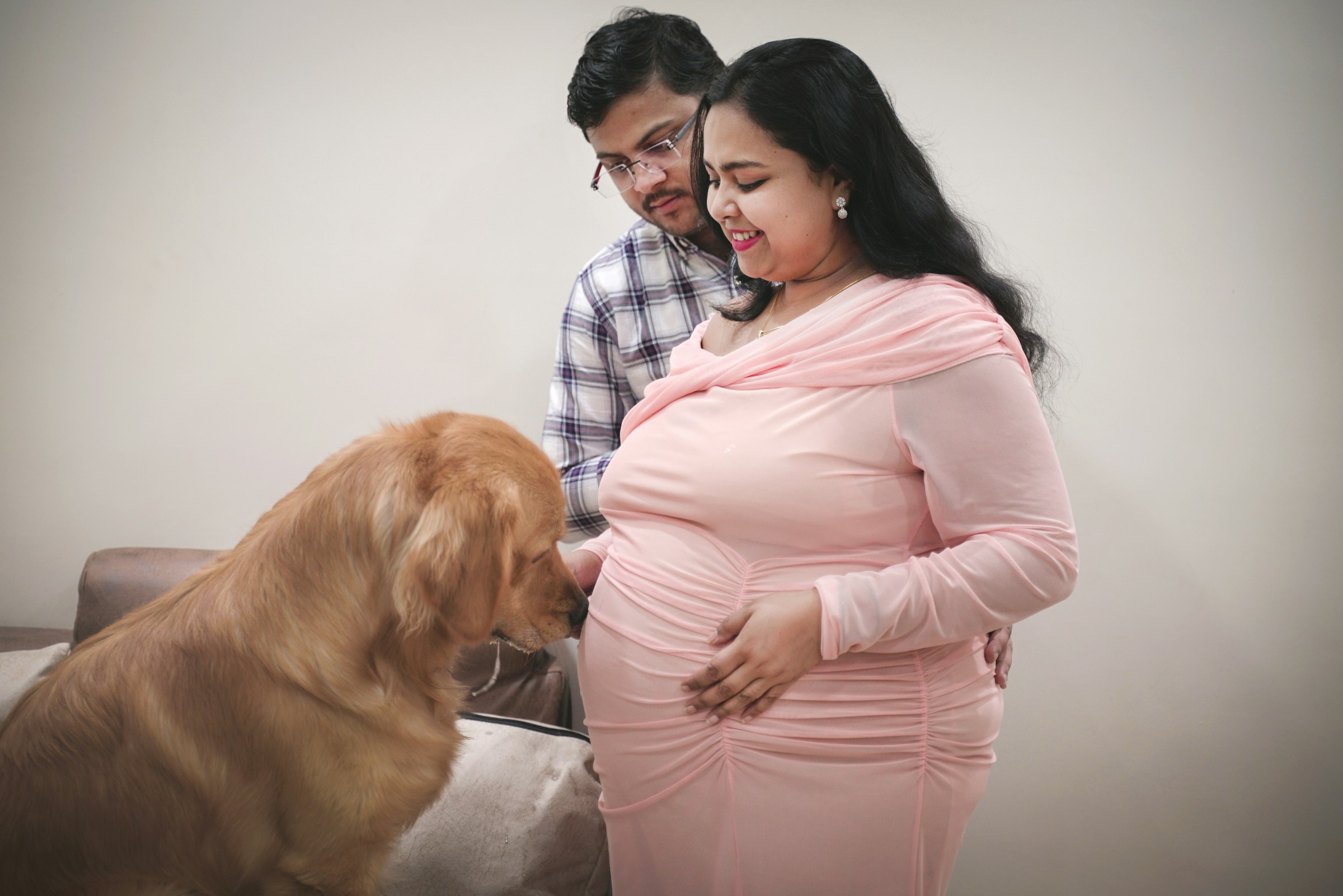
You know that feeling when your dog starts acting weirdly clingy or protective and you cannot quite explain why? For some women, that shift in behavior has quietly lined up with something life-changing: the very first weeks of pregnancy, long before a test strip ever turned positive. It sounds almost magical, but underneath the heartwarming stories is a fascinating mix of biology, chemistry, and evolution.
Researchers and veterinarians are increasingly interested in how dogs react to the invisible changes that happen in the human body. Early findings suggest that at least some dogs really are picking up on hormonal shifts through scent, and their behavior may change in noticeable ways. It is not a fully mapped-out science yet, but what we do know is already pretty mind-blowing – and it opens up big questions about how close our bond with dogs really goes.
How Early Pregnancy Changes a Woman’s Body – Long Before She “Feels” Pregnant

In the very first weeks after conception, a woman’s body starts changing fast, even if she feels totally normal. Hormone levels such as human chorionic gonadotropin, progesterone, and estrogen begin to rise, quietly reshaping everything from metabolism to body temperature. These shifts happen before many women miss a period or have any classic signs like nausea or fatigue.
What often goes unnoticed is that hormones can also subtly alter body odor and the chemical makeup of sweat, breath, and even skin oils. To the human nose, those changes are basically invisible. We do not wake up thinking we smell different on a microscopic level. But to a dog, whose entire world is shaped by scent, this internal storm of hormones may register as a clear and distinct signal that something is different.
Why a Dog’s Nose Is a Superpower for Detecting Tiny Scent Changes

We like to joke that dogs can smell a snack from two rooms away, but their nose is genuinely a biological superpower. A dog has tens of times more scent receptors than a human and a specialized part of the brain dedicated just to processing smells. In practical terms, that means where we smell “nothing,” they may be sorting through layers of information like a detailed report.
Dogs also explore the world far more through scent than through sight. When a dog sniffs you, it is not just saying hello; it is gathering data about your mood, your health, and even what you have eaten. So when pregnancy hormones start to tweak the volatile organic compounds that drift off the body, a dog is perfectly equipped to notice that shift, even if the human has not the slightest clue anything is happening yet.
What Science Actually Says About Dogs Detecting Pregnancy (So Far)

Right now, the evidence around dogs detecting early pregnancy is a mix of scientific plausibility and real-world observation. Researchers already know that trained dogs can detect certain cancers, blood sugar changes, and infections based on smell alone, which makes the idea of detecting hormonal shifts scientifically reasonable. If dogs can be trained to notice tiny scent traces related to disease, there is a strong case that they could also pick up on the scent fingerprints of pregnancy.
However, the research specifically focused on natural, untrained detection of early pregnancy is still limited and developing. Much of what we have comes from case reports and patterns in personal stories rather than controlled, large-scale studies. That means we can say the idea is biologically credible and supported by what we know of dog noses, but we cannot yet treat it like a proven diagnostic method. In other words, your dog’s behavior might be a clue, but it is not a medical test.
Common Behavior Changes Owners Report in Dogs Around Early Pregnancy

Ask around enough, and you start hearing some strikingly similar stories from women who later discovered they were pregnant. Some describe their normally independent dog suddenly becoming velcro-like, insisting on being pressed up against their abdomen or following them from room to room. Others talk about a protective streak kicking in – the dog may position itself between the woman and visitors, or react more intensely to strangers approaching.
On the flip side, a smaller number report that their dog seemed oddly unsettled, avoiding them or acting anxious for no clear reason. From a behavioral point of view, these changes may be the dog’s way of responding to a new scent signal it does not fully understand. To the dog, you are literally not “smelling like your usual self,” and its instincts are telling it that something important has shifted in the environment – that something being you.
Could Dogs Ever Become Reliable Early Pregnancy Detectors?

It is tempting to imagine a future where you could walk into a clinic, have a dog sniff your hand, and get an instant answer on whether you are pregnant. Technically, if there is a consistent scent pattern tied to early pregnancy hormones, dogs could be trained to recognize it, just like they are trained to identify blood sugar changes or specific disease markers. The same basic principles of scent training could apply here.
But there are big practical and ethical questions. You would need standardized tests, strict training protocols, and a clear understanding of false positives and false negatives. There is also the emotional weight of telling someone something as personal as a pregnancy based on an animal’s reaction. For now, pregnancy tests and medical exams remain the gold standard, and rightly so. Dogs, at least in the near term, are better thought of as sensitive companions than as official diagnostic tools.
The Emotional Side: Why the Idea of Dogs “Knowing First” Hits So Deep
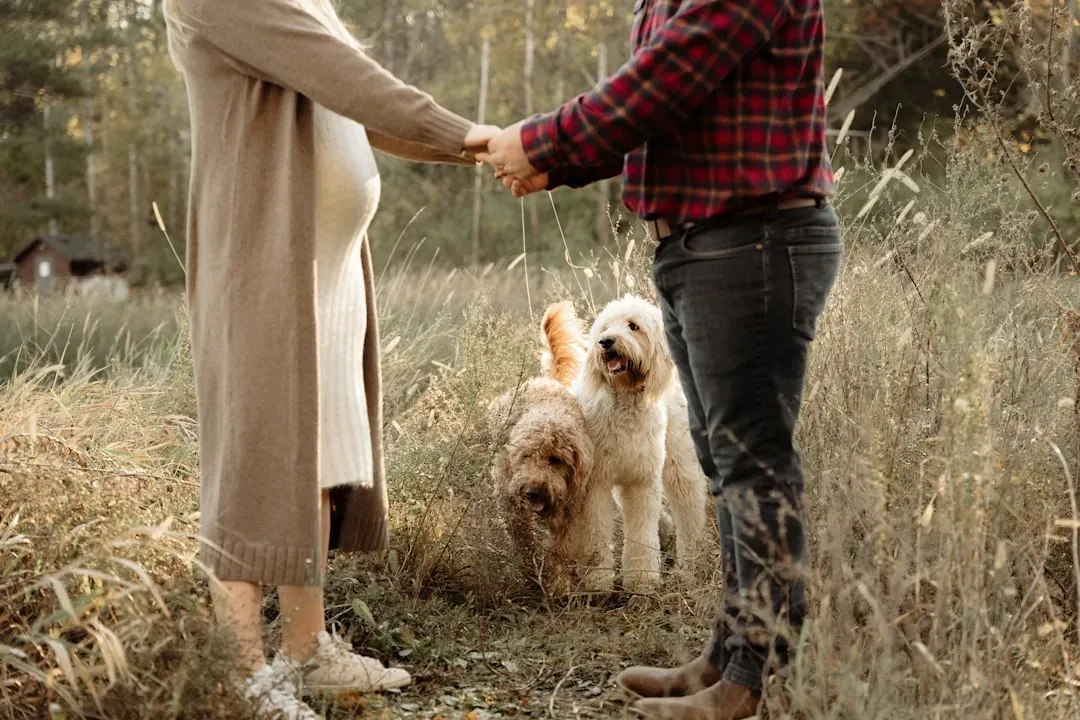
Even if you are a fairly skeptical person, there is something incredibly moving about the idea that your dog might sense a new life before you do. It plays right into the deep, centuries-long relationship between humans and dogs, where they are not just pets but family members that pick up on our moods, our routines, and our quiet changes. Knowing that your dog reacted to your pregnancy can make many people feel more seen and connected, especially in those early weeks when everything still feels secret and fragile.
I have heard more than one person say that their dog was the first to treat them differently when they were pregnant – curling up by their stomach, sleeping near them more, or guarding the bathroom door during bouts of early nausea. It is easy to romanticize that, but honestly, that emotional layer is part of what makes the science so compelling. The facts and data matter, but so does the feeling that your dog is walking through a major life transition right alongside you.
Separating Cute Stories From Real Signals: How to Think About Your Own Dog’s Behavior

If your dog suddenly starts acting strange around you and you are wondering what it means, it helps to step back and look at the whole picture. Changes in behavior can be linked to pregnancy, but they can also be related to stress in the home, shifts in routine, new smells from products or food, or even your own mood. Dogs are amazingly tuned in to human emotions, so if you are anxious, tired, or distracted, they might be responding to that as much as anything biological.
The most grounded way to think about it is this: your dog may be picking up on real, subtle cues when your body changes, and pregnancy could be one of those times. But it is still just one possible interpretation among many. If there is even a chance you might be pregnant, a home test or a visit to a healthcare provider will always tell you more than interpreting a cuddle or a bark. Let your dog’s behavior be an interesting, sometimes touching piece of the story – not the entire story.
Opinionated Conclusion: Trust the Science, Enjoy the Magic

From where we stand in 2026, the most honest position is somewhere in the middle: dogs probably can sense early pregnancy-related changes in scent, at least in some cases, but we do not have all the details pinned down yet. The biology of smell and hormones absolutely supports the idea, yet the research is not robust enough to treat your dog like a living pregnancy test. Pretending it is would be unfair both to science and to the real emotions that come with hoping for, or fearing, a positive result.
Personally, I love holding both truths at once: be clear-eyed and rational about diagnostics, but do not crush the quiet wonder of those stories where a dog seemed to “know” weeks before anyone else. Let medicine handle the answers, and let your dog handle the comfort, the companionship, and maybe the occasional mystery. In a world that measures almost everything, is it so bad to leave a little space for the possibility that your dog really did sense the earliest whisper of a new heartbeat before you ever saw two lines on a stick?


