
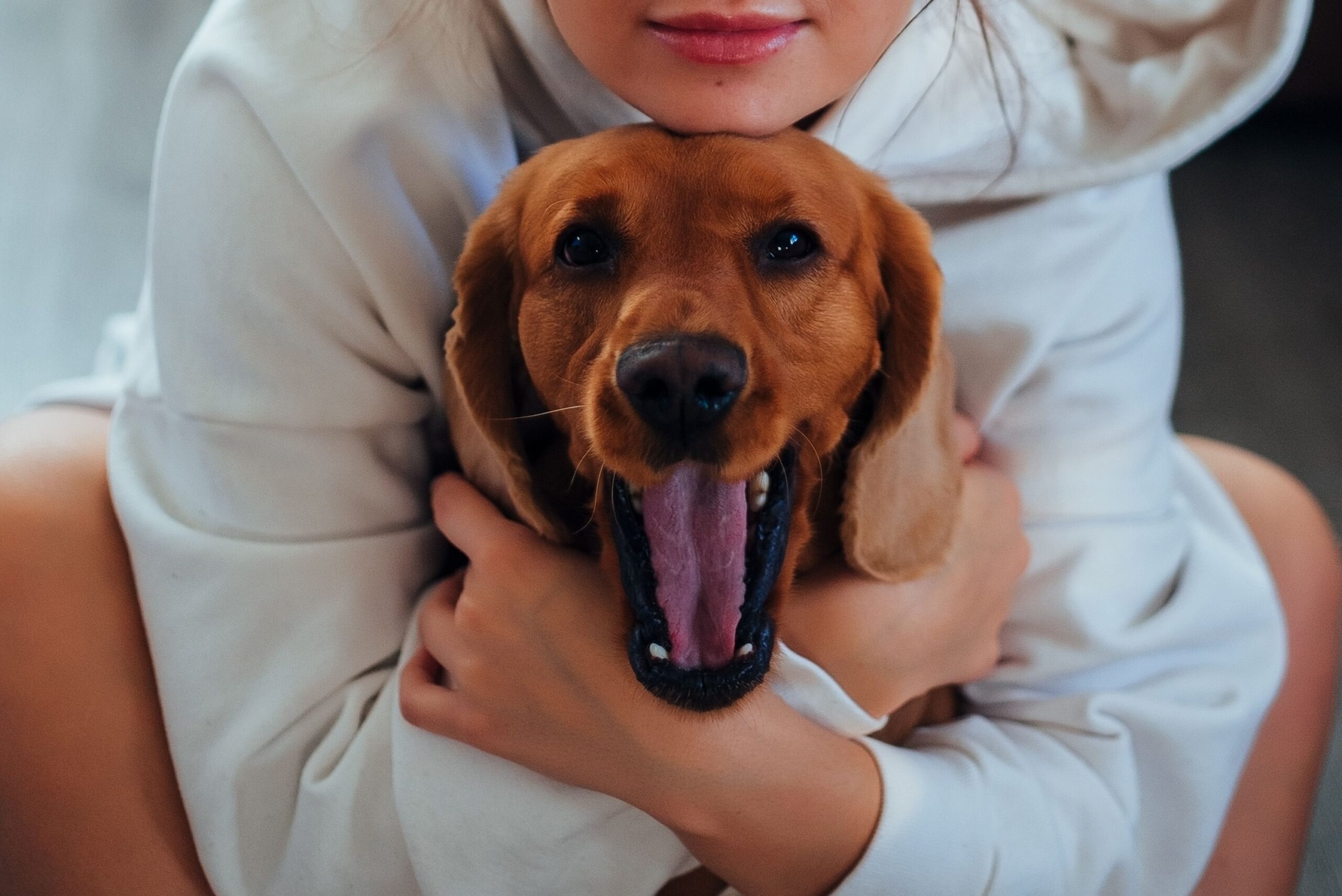
Dogs rarely need words to tell you how they feel. If you know what to look for, your dog is probably confessing their love to you dozens of times a day, in tiny, easily-missed moments between the walks, meals, and naps. Once you start seeing those signals, it can honestly change how connected you feel to them.
When I finally learned what my own dog was actually “saying” with his eyes, his paws, and even his yawns, I felt a bit guilty for how much I’d been missing. This article breaks down some of the clearest, science-backed ways dogs show affection, and translates them into something that feels a little more like a love letter and less like a mystery.
1. Soft Eye Contact: The Silent Heart-to-Heart
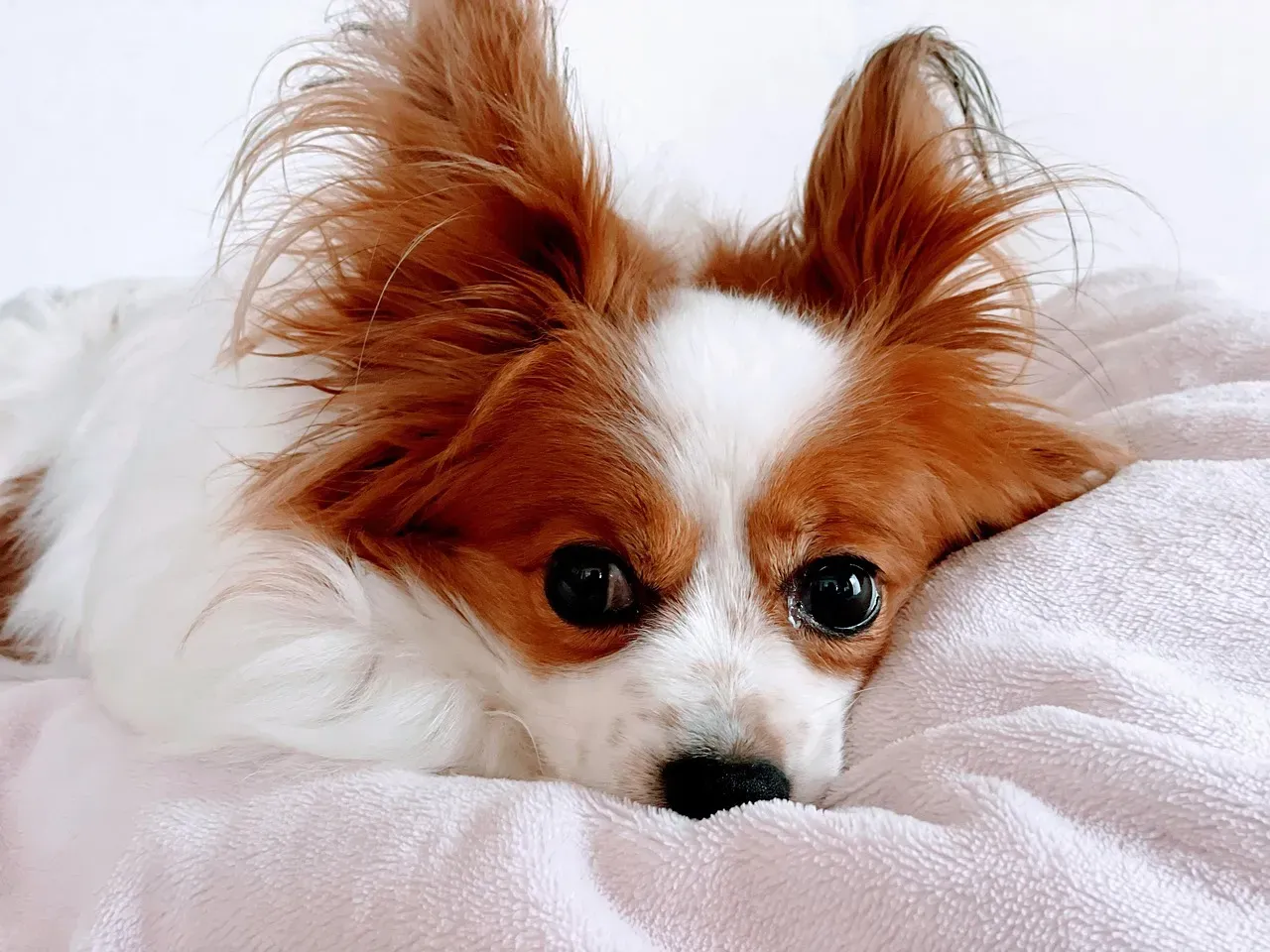
Have you ever caught your dog just quietly gazing at you, with relaxed eyelids and a soft face, and thought it was a bit emotional for a random Tuesday? That gentle, lingering eye contact is one of the clearest ways a dog says they trust and love you. In those moments, their brain can actually release oxytocin, the same bonding hormone that deepens the connection between human parents and babies.
Of course, this only counts as a love message when the eyes are soft, the face is loose, and the body language is relaxed. If the stare is hard, unblinking, and stiff, that’s not affection; that’s tension. The difference is in the details: a dog in love blinks slowly, maybe squints a bit, and often follows it with a sigh or a little shift closer to you, as if to say, “You’re my person, just making sure you know.”
2. The Slow Blink and Relaxed Face
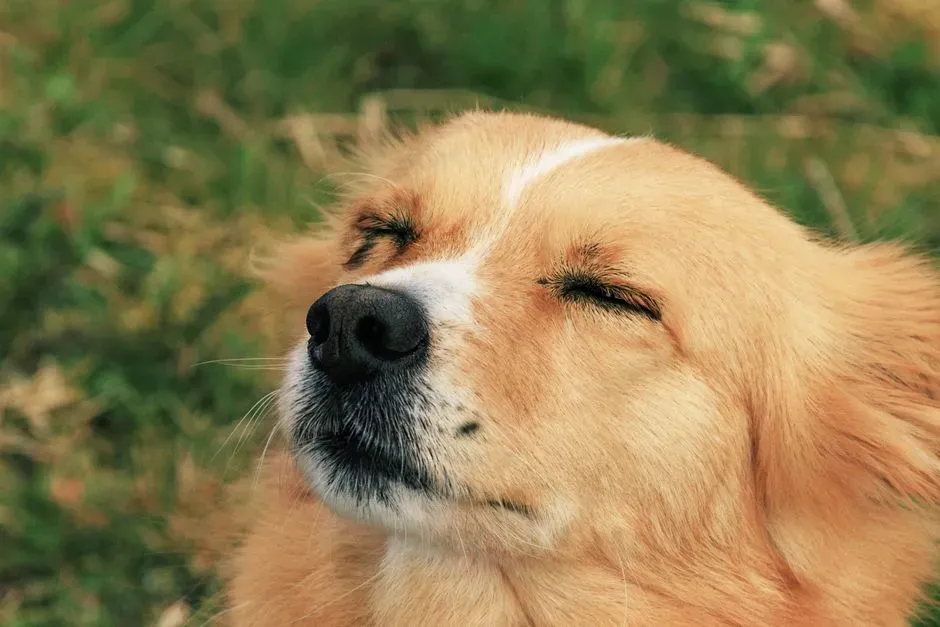
Slow blinking in cats has become a huge trend online, but dogs do their own version too. When your dog looks at you and deliberately closes and opens their eyes in a relaxed way, they’re showing you they feel safe in your presence. That relaxed expression, slightly droopy eyelids, and soft mouth tell you their nervous system isn’t on high alert; it’s in social, connected mode.
This is why you’ll often see slow blinking during quiet cuddle time, late at night, or after a good play session. Think of it as your dog “exhaling” emotionally. I sometimes mirror it back to my dog, and while we cannot prove it works like a human smile, it certainly feels like returning a little unspoken “I love you” right back.
3. Leaning Their Weight Against You
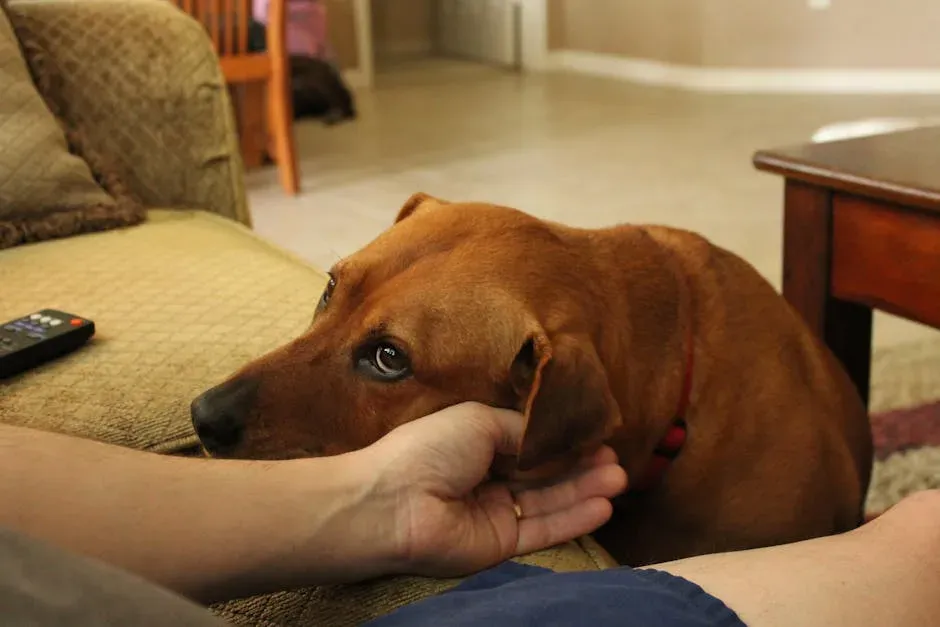
When a dog leans their full body weight into you – maybe pressing their side against your leg or sitting on your feet – it’s rarely an accident. For many dogs, leaning is their version of a hug. They’re choosing to close the distance, place their body in contact with yours, and stay there because it feels good and safe.
From a behavioral point of view, physical closeness is a powerful social glue in canines. Puppies sleep in piles for warmth and safety; adult dogs that like each other often rest touching shoulders or hips. When your dog leans on you, they’re slotting you into that circle of trusted family. It’s not clinginess for most dogs – it’s a quiet, physical “You are my safe place.”
4. Following You from Room to Room
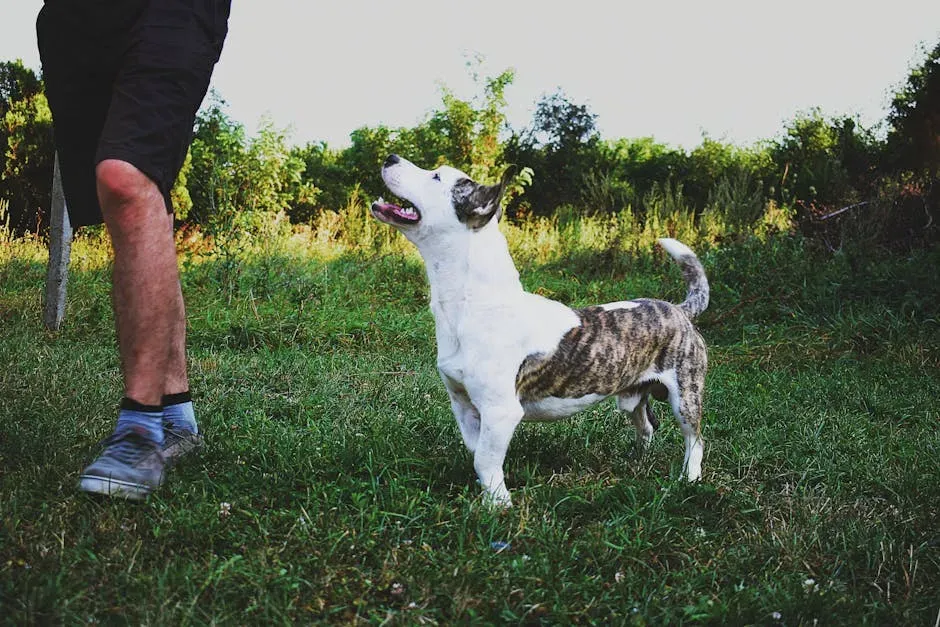
Some people joke about having a furry shadow, but that constant following is more than simple curiosity. Dogs are social animals wired to stick close to their group. When your dog gets up every time you move, pads after you to the bathroom, and curls up nearby while you work, that is attachment in motion. They do not want to miss you, and they do not want to be left out of your little world.
Now, there is a line between healthy attachment and anxiety, of course. But a dog who calmly settles wherever you settle, who checks in and then relaxes nearby, is saying, “You matter, and I like being where you are.” It’s a love language made of footsteps and quiet loyalty, not drama.
5. The Famous “Wiggle Butt” Greeting
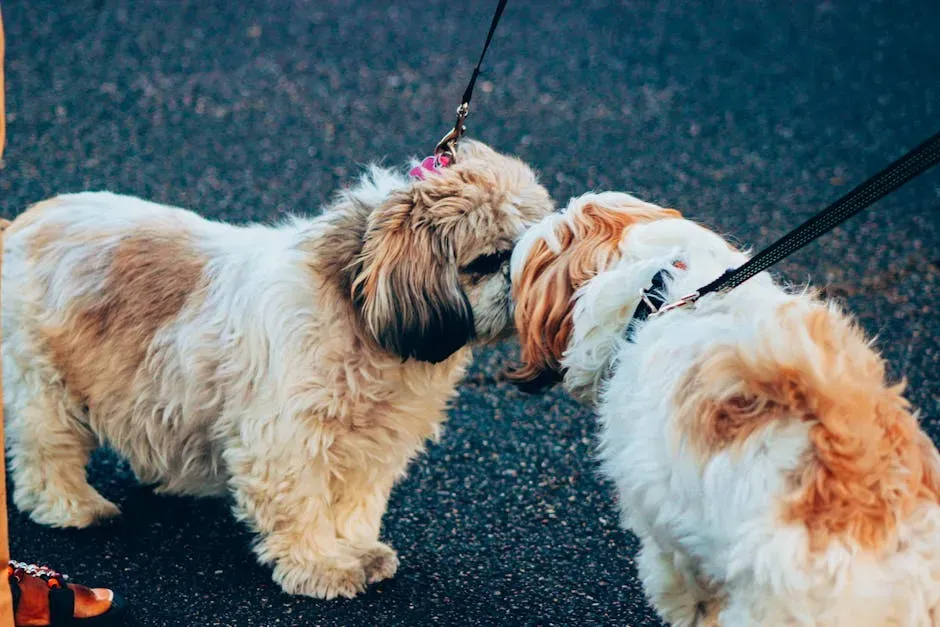
A happy tail wag is nice, but the full-body wiggle is something else entirely. When your dog greets you with loose hips, a curved spine, fast wags, and maybe even a little sideways prance, that’s their version of jumping up and shouting that they are thrilled you exist. The more wiggly and off-balance they get, the more emotional they often are.
Scientists have even found that dogs sometimes wag more to the right when they see someone they love, which is linked to the left side of the brain that handles positive emotions. You do not need a lab to read that excitement, though. The over-the-top dance at the door, even if you were gone for only ten minutes, is your dog’s way of celebrating the reunion every single time.
6. Bringing You Their Favorite Toy
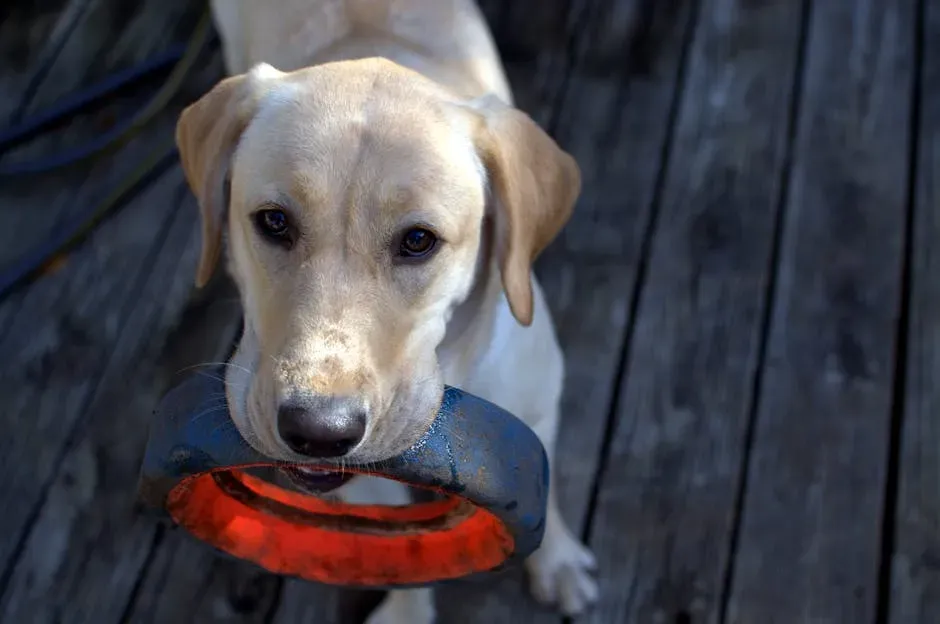
When a dog trots over with a slobbery, chewed-up toy and drops it in your lap, it can feel like they’re just demanding another round of fetch. Very often they are – but baked into that is a quiet expression of trust and affection. They’re inviting you into one of their favorite activities and sharing a resource they care about.
For many dogs, play is a social bond, not just a way to burn energy. By choosing you as their play partner, they’re saying, “You’re part of my fun, not just the one who fills the bowl.” If they consistently bring their treasures to you instead of hiding them, that is a big compliment in dog terms. You’re not just the roommate; you’re the teammate.
7. Sleeping Close – Or Right On Top of You
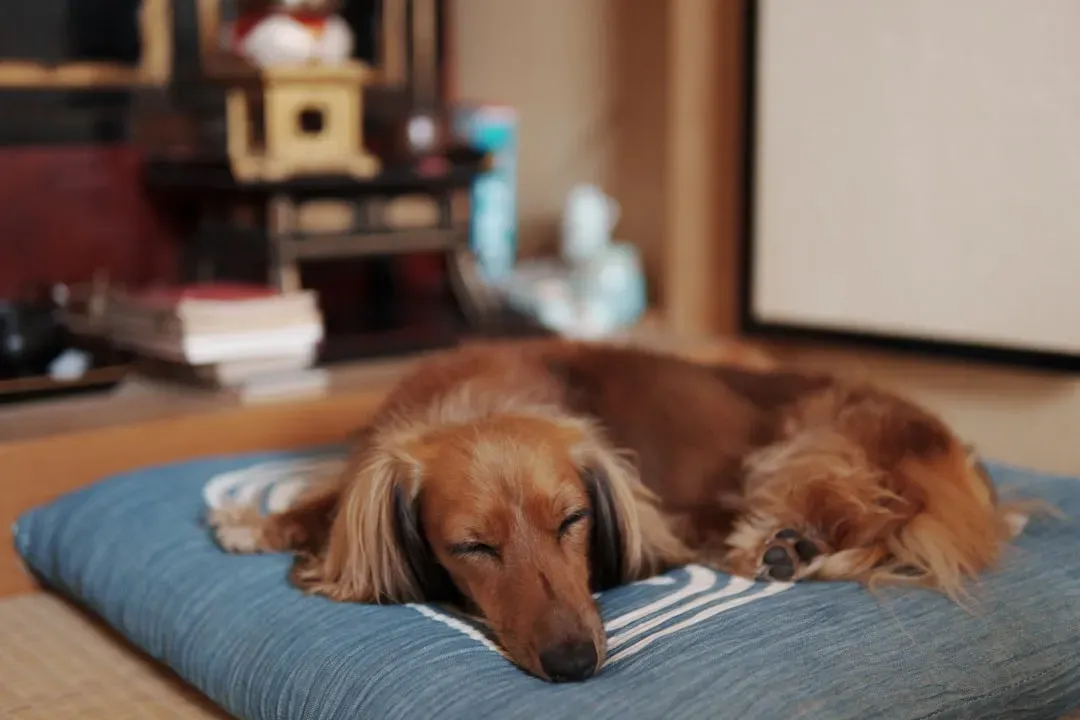
Where a dog chooses to sleep says a lot about who they trust. In the wild, canines bed down with their group for warmth and protection. When your dog picks your bed, your couch, or the exact spot where your feet go as their nesting place, they’re voting you onto their inner safety team. This is especially true when they curl up with their back to you or tuck themselves behind your knees, basically putting their vulnerable side in your care.
Some dogs take it even further and sleep directly on your chest or stomach, especially as puppies. It can be adorable and maybe a bit inconvenient, but that closeness is usually pure affection. They want your scent, your heartbeat, and your warmth. From their perspective, you are the moving, breathing home base they feel most secure against.
8. Gentle Licks and “Kisses”
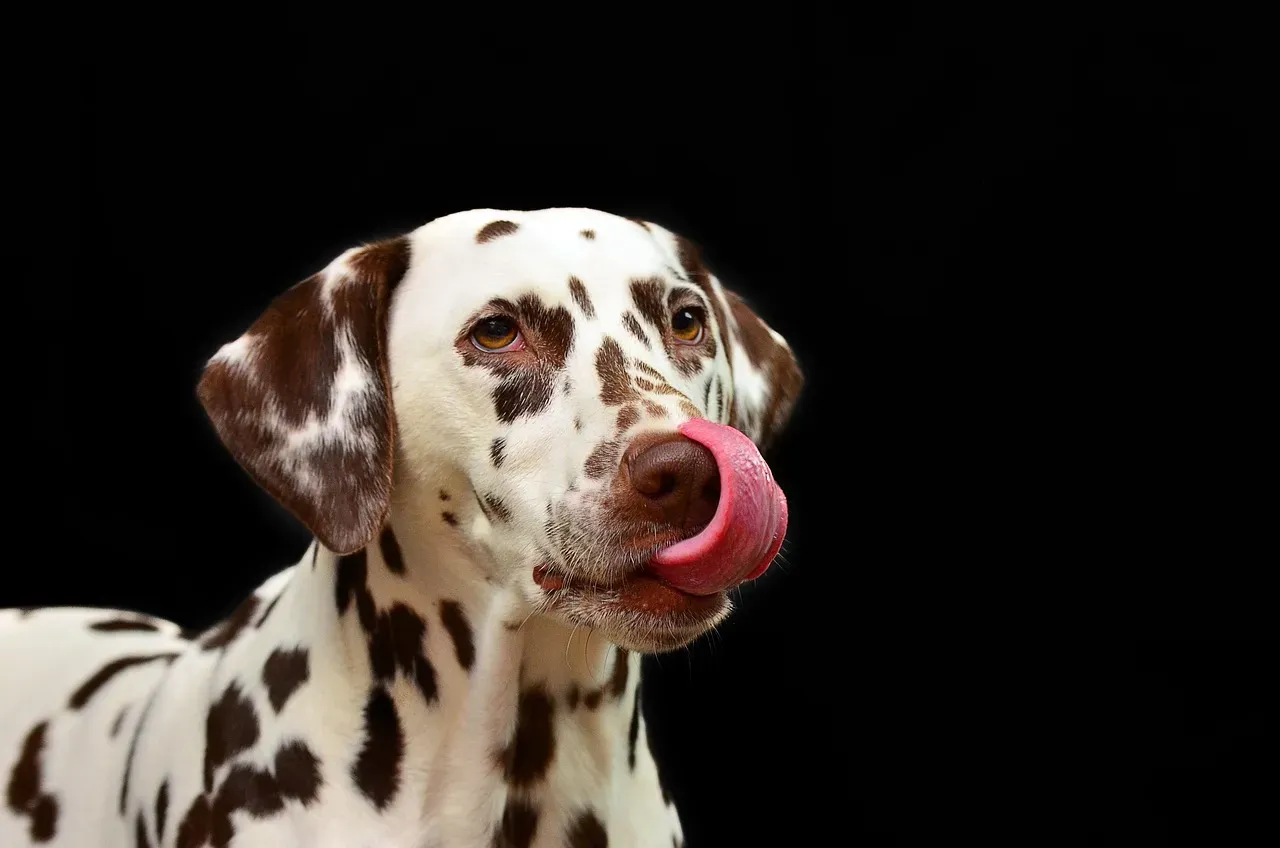
Facial licking in dogs starts early, when puppies lick around their mother’s mouth to encourage her to regurgitate food. Over time, it also becomes a social behavior that can show deference, comfort, or bonding. When your dog gently licks your hands, face, or arms in a relaxed moment, it’s often their way of saying you are family and they want to maintain that bond.
Not every lick is a deep emotional message – sometimes you really just taste like chicken or salt. But look at the whole picture: loose body, wagging tail, happy eyes, maybe a soft groan or sigh. In that context, those little licks are affectionate grooming. In their language, they are saying, “You’re mine, and I like you enough to fuss over you a bit.”
9. Happy Sighs and Contented Groans
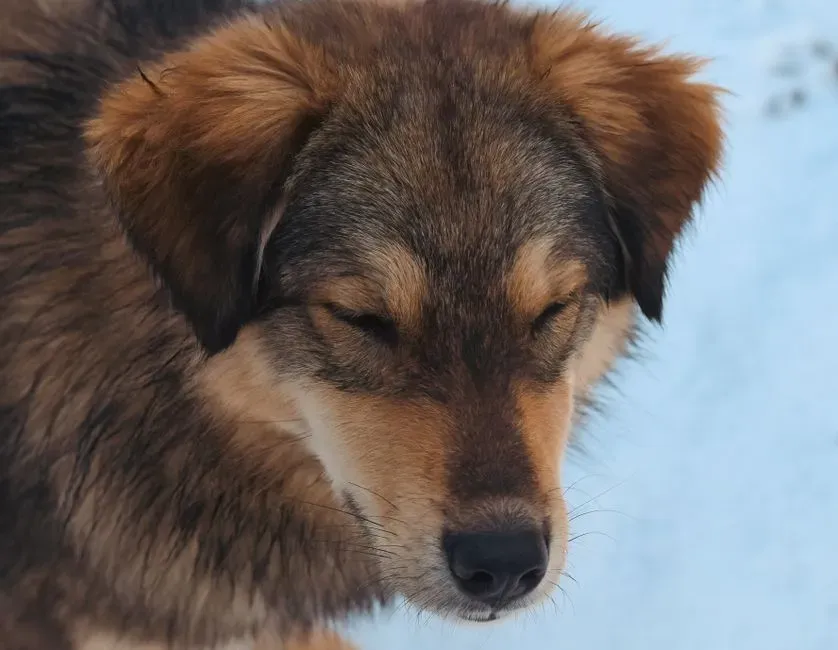
That big, dramatic exhale your dog does when they flop down next to you on the couch is not boredom – it’s relief. Dogs often sigh when they are shifting from alert mode into rest mode, especially if they feel safe and satisfied. If that sigh happens when they nestle into your side or after you start petting them, think of it as them saying, “This is good. I’m okay here.”
Some dogs add tiny groans or soft grumbles when they stretch out or change positions during cuddle time. As long as their body is loose and their face is relaxed, those sounds usually reflect comfort, not pain. In a way, their body is doing the talking: the nervous system is settling, the muscles are releasing tension, and you are at the center of that calm.
10. Mimicking Your Routine and Emotions
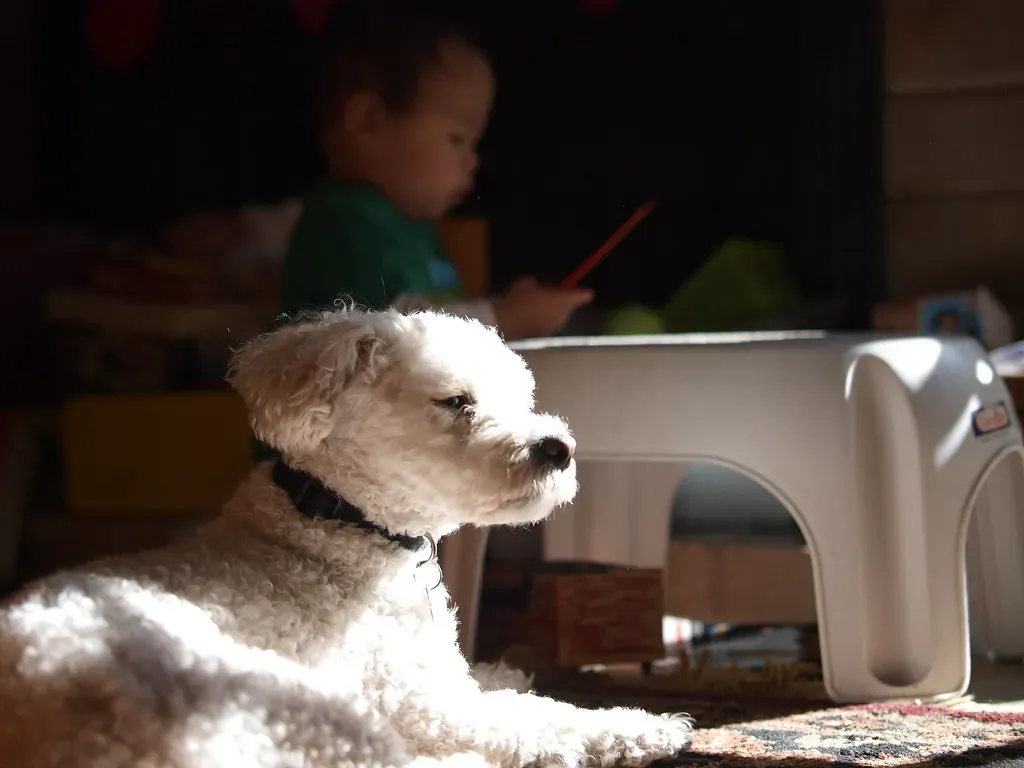
Dogs are ridiculously good at watching us, sometimes more than we realize. Many will sync their schedule to yours: they get sleepy when you wind down at night, wake up when you stir, hover when you’re stressed, and relax when you’re laughing on the couch. That emotional mirroring is not accidental; it is part of their social intelligence and attachment to you.
Living with a dog long-term can turn you into a matched pair. They learn that your yawn often means bedtime, your putting on shoes signals a walk, and your tone of voice predicts whether play or quiet is coming. When they choose to align themselves with your rhythm instead of doing their own thing in another room, that is a very practical, lived-in way of saying, “Your life is my life too.”
11. Showing You Their Belly (The Honest Version)
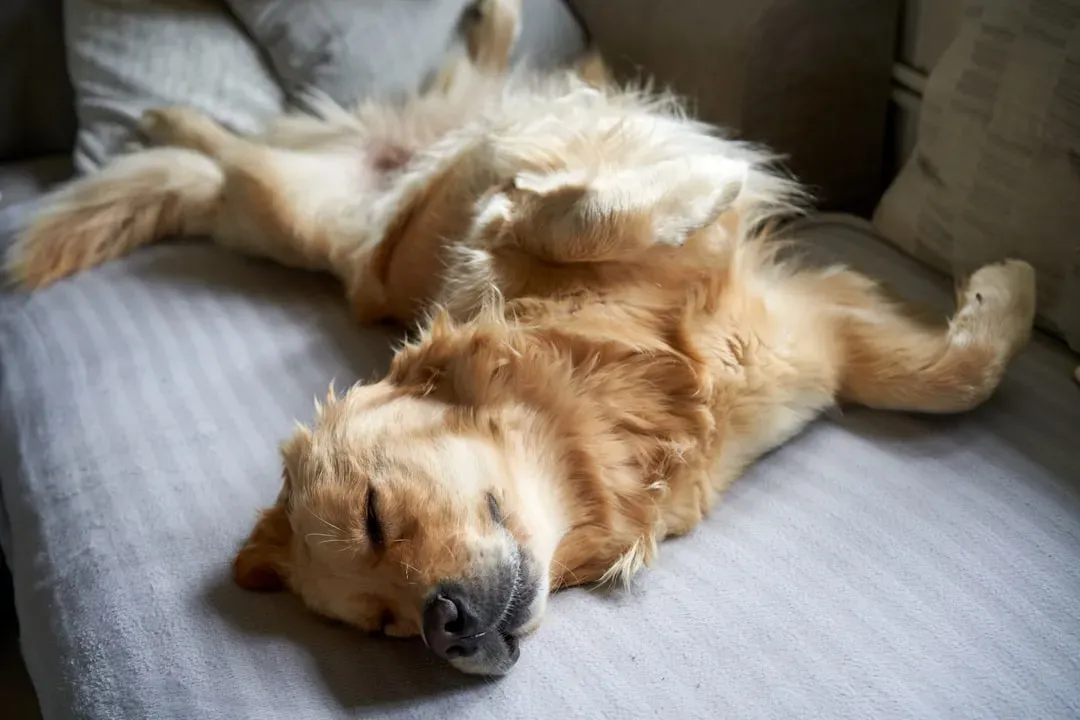
A dog flopping over and exposing their belly can mean a few different things, but when it’s paired with loose muscles, wiggly hips, and an overall happy vibe, it’s a huge sign of trust and affection. The belly is a vulnerable area; offering it up is a gesture that says they feel safe with you. Many dogs love belly rubs, but the real message is in the fact that they are comfortable enough to ask.
It’s important to read the context, though. A stiff body, tucked tail, or frozen, wide eyes paired with a belly show can signal appeasement or even stress, not love. The affectionate version looks more like a sprawled, half-twisted mess with a lolling tongue and maybe some joyful kicking when you scratch just right. When it’s genuine, the belly display is basically, “I’m defenseless around you, and I’m okay with that.”
12. Choosing You When They Are Unsure
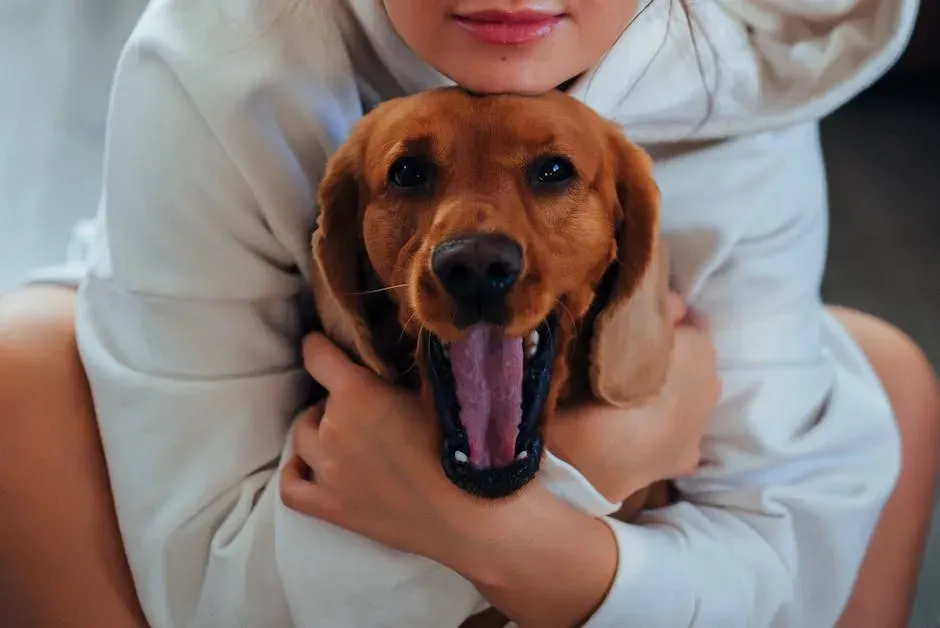
One of the most powerful, underrated ways dogs say they love you shows up when they are nervous or unsure. Think about when there’s a loud noise, a new visitor, or a confusing environment. A dog that comes over to touch your leg, hide behind you, or look up at your face for guidance is telling you, very clearly, “You are my anchor.” They are seeking your reassurance the way a child might squeeze a parent’s hand in a crowd.
This is more than dependence; it is a deep sign that your dog sees you as reliable and protective. In modern training, behaviorists often talk about the “secure base effect” in dogs, similar to what is seen in human infants. Dogs that are strongly bonded use their person as a base to explore from and a safe harbor to return to. When your dog checks back in with you during walks or runs to you when something startles them, that’s not weakness – that’s love, wrapped in trust.
Conclusion: Love in Every Small, Ordinary Moment
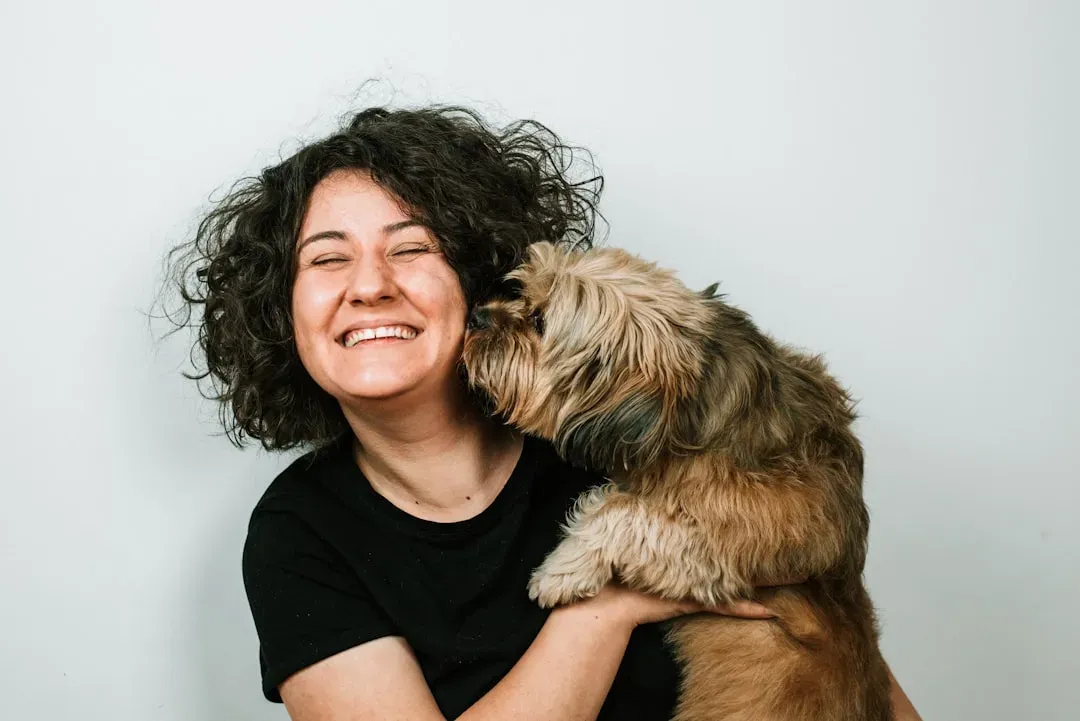
If you pay attention, your dog is basically screaming “I love you” all day long – just in a language that relies on posture, breath, distance, and choice instead of words. Soft eye contact, a leaned shoulder, a toy dropped at your feet, the way they exhale when they settle against you: none of these are flashy, but together they build a quiet, relentless proof of how important you are to them. I honestly think one of the most humbling things in life is realizing just how deeply a creature who cannot speak your language has still chosen you.
The opinion I’ve come to, after years of living with dogs and digging through the science, is this: we worry far too much about whether our dogs know we love them, and not nearly enough about whether we’re noticing how much they’re telling us they love us. The real magic is in responding – slowing down to meet their gaze, making time to play when they invite you, offering a safe place when they’re unsure. Because in the end, the relationship you have with your dog is written in these small, ordinary moments, not the big ones. Now that you know their secret signals, what will you pay attention to the next time your dog “says” I love you without making a sound?


