
Most dog owners swear their pups “remember everything” – the walk routes, the treat cupboard, the faces they like and those they don’t. But ask those same owners whether their dog remembers one random visit from a distant cousin three years ago, and suddenly it gets fuzzy. That gap between everyday pattern and one-off event is exactly where modern animal cognition research is getting really interesting.
Across labs and living rooms, scientists are finding that dogs seem wired to latch onto repeated patterns of sights, sounds and routines far more readily than isolated, stand-alone moments. The result is a kind of memory that feels almost woven into their daily life rather than pinned like a single photo in an album. Once you start looking at your own dog through that lens, a lot of “mysterious” behavior begins to make a surprising amount of sense.
Why Patterns Stick And One-Off Events Fade

Here’s the big, slightly uncomfortable idea: your dog probably does not remember their life as a highlight reel of unique episodes the way you do. Human memory is strongly episodic; we mentally replay that one birthday party or one awkward date. Dogs, in contrast, appear to be much more tuned to regularities. When something repeats – the sound of keys, the rustle of the leash, the timing of meals – it “teaches” the brain that this pattern matters enough to store long term.
From a survival point of view, that bias toward repetition makes sense. In the wild, it matters less that a single storm was loud and more that dark clouds reliably come before trouble. For domestic dogs, a lone firework might be scary in the moment, but the real learning happens when that same noise, light and smell combo happens again and again. Over time, repeated cues fuse into a durable memory network, while many one-off experiences simply drift away unless they are extraordinarily intense or traumatic.
How Dogs Encode Visual And Behavioral Routines

When you reach for the leash, you are not just triggering excitement; you are lighting up a visual-behavioral pattern your dog has encoded over hundreds of repetitions. Dogs are exceptionally good at linking what they see (your coat, your shoes, your direction of movement) with what tends to happen next. The more that sequence repeats in the same order, the more solidly it becomes written into memory. It’s like a mental GIF that gets smoother every time it loops.
Researchers testing this in controlled settings use simple, repeatable tasks: a light turns on, a person moves in a certain way, a reward appears. Dogs start anticipating outcomes not because they remember one special trial, but because the repeated pairing carves a stable expectation. At home, the same thing happens with daily micro-routines: the way you open the food cupboard, the exact route you take before bed, even your “laptop closed = attention time” pattern. Your dog is basically running a background script: see this, do that, expect this.
Repetition, Emotions, And The Glue Of Long-Term Memory
Repetition alone is powerful, but it gets turbocharged when emotions are involved. A pattern that reliably brings joy – say, the sequence of putting on running shoes followed by a jog – becomes emotionally sticky. Over time, just the early part of that pattern can trigger the whole emotional response, even if the run does not actually happen. That is why some dogs start vibrating with excitement as soon as you touch the trainers, long before you grab the leash.
On the flip side, repeated unpleasant experiences can harden into long-term fear memories just as reliably. Multiple vet visits that follow the same sensory pattern – the same clinic smell, the metal table, the needle – can establish a lasting negative association. It is not one scary jab that sticks; it is the repeated structure of the experience. This is one reason behaviorists push owners to break up or “scramble” predictable negative patterns and build new, more positive routines around the same cues.
Why Isolated Single Events Are Harder To Recall
Dogs can, in some situations, recall individual episodes, especially if they are very intense, novel or emotionally charged. But as a rule, a lone, low-intensity event has a low chance of being consolidated into stable long-term memory. Without repetition, the brain has little reason to flag it as important. Think of it as the difference between hearing a random song once on the radio versus having the same tune blasted every morning for a month – only one of those is likely to get stuck in your head.
From a dog’s perspective, that forgotten one-off event is not a “memory failure” so much as efficient filtering. Evolution favors systems that hold onto information that predicts the future. If a person appears once, pets the dog, and never shows up again, there is no pattern to build expectations around. But if that person comes over every Friday, brings the same bag and tosses the same tennis ball, the dog’s memory machinery kicks in, turning those repeats into a robust, predictive script.
What This Means For Training In The Real World
Understanding this bias toward repeated patterns is a bit of a superpower for training. Many people expect a dog to “get it” after a few tries and then blame stubbornness when the behavior does not stick. In reality, you are asking a pattern-hungry brain to form a long-term memory out of what, from its point of view, is still a fragile, underfed routine. Training works best when you commit to consistent, clear repetitions over time instead of sporadic, half-changed attempts.
That means using the same cues, the same basic movements, and the same reward structure until the behavior looks almost boringly predictable. Randomly switching words, hand signals or reward timing can make the pattern fuzzy, stretching out how long it takes to go from short-term learning to stable memory. When training is done with this in mind, things that once felt “mysteriously hard” – like a solid recall or calm greetings – start to look more like predictable outcomes of good pattern design.
Daily Routines: The Hidden Architecture Of Your Dog’s Mind

If you want proof that your dog is a pattern-processing machine, just shift their routine. Feed them an hour late, take a different turn on your usual walk, or skip the usual pre-bed ritual. Many dogs instantly react with obvious confusion, alertness or low-level stress. They are not being dramatic; you have quietly broken a memory-backed expectation about how their world works.
Over weeks and months, your daily habits become a kind of mental scaffolding for your dog. Morning coffee for you might reliably predict morning play for them. The subtle way you change clothes after work might cue an internal countdown to dinnertime. This is why big life changes – new schedules, moving house, a family breakup – can rattle dogs so deeply. You are not just changing a few events; you are tearing down and rebuilding the pattern-web their long-term memory lives inside.
How To Build Healthier, Kinder Patterns On Purpose
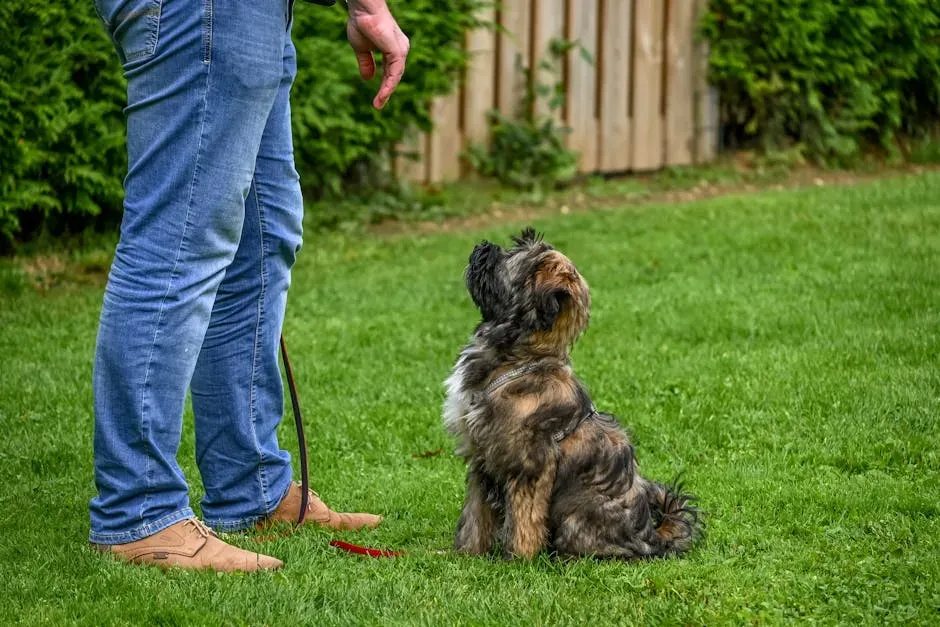
The hopeful side of all this is that you can consciously design better patterns for your dog. If your dog explodes with energy every time you grab the leash, you can introduce a new sequence: sit calmly, clip leash, wait, then move. Repeated patiently, that new pattern can overwrite the old chaos routine. Instead of fighting your dog’s love of repetition, you harness it, turning consistent micro-rituals into tools for calm and clarity.
The same strategy applies to anxiety triggers. If your dog panics at the vacuum, for example, you can build a slow pattern of the vacuum appearing without turning on, paired with distance, treats and calm. Over many exposures, the predictable structure of “see vacuum, good things happen, nothing bad follows” has a real chance to settle into long-term memory. You are basically writing a new story into their brain, one tiny repeated chapter at a time.
Opinionated Conclusion: Your Dog Is A Pattern Poet, Not A Walking Diary
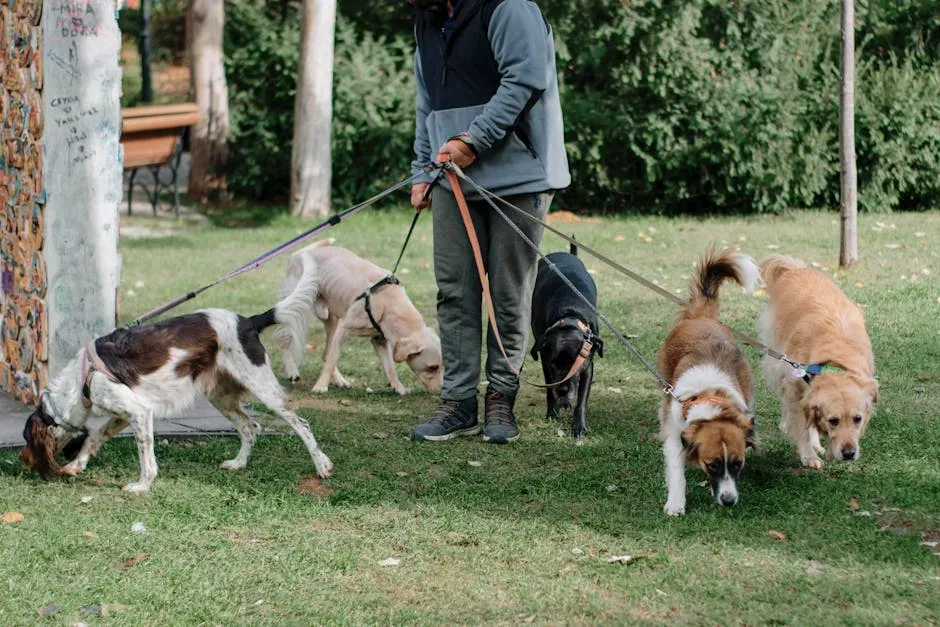
In my view, we make a real mistake when we assume dogs remember life like we do, as a string of standout moments. The evidence points to something quieter but, in a way, more beautiful: a mind that organizes the world through repeating rhythms of sight and action. Your dog is less a keeper of specific dates and more a poet of routines, reading meaning in what happens over and over again. That is why the small, repeated things you do with them matter far more than any single grand gesture.
If that is true, then the ethical takeaway is blunt: we owe our dogs good patterns. Consistent kindness, predictable safety, and stable, gentle routines are not just “nice to have” – they literally shape the architecture of your dog’s long-term memory and emotional life. One rough day will not define them, but repeated roughness will. One loving moment will warm them, but repeated love will anchor them. In the end, the question is simple and a bit confronting: if your dog’s brain remembers what you do most often, what story are you actually writing into their life?


