
Cam, a spirited golden retriever-lab mix, once faced an uncertain future after being surrendered by his owner due to illness. Yet today, he’s no ordinary rescue dog — he’s a trained disaster search dog, ready to respond when lives are at risk. What began as a story of loss has transformed into one of purpose, resilience, and hope.
A Difficult Farewell: When Illness Forces Tough Decisions
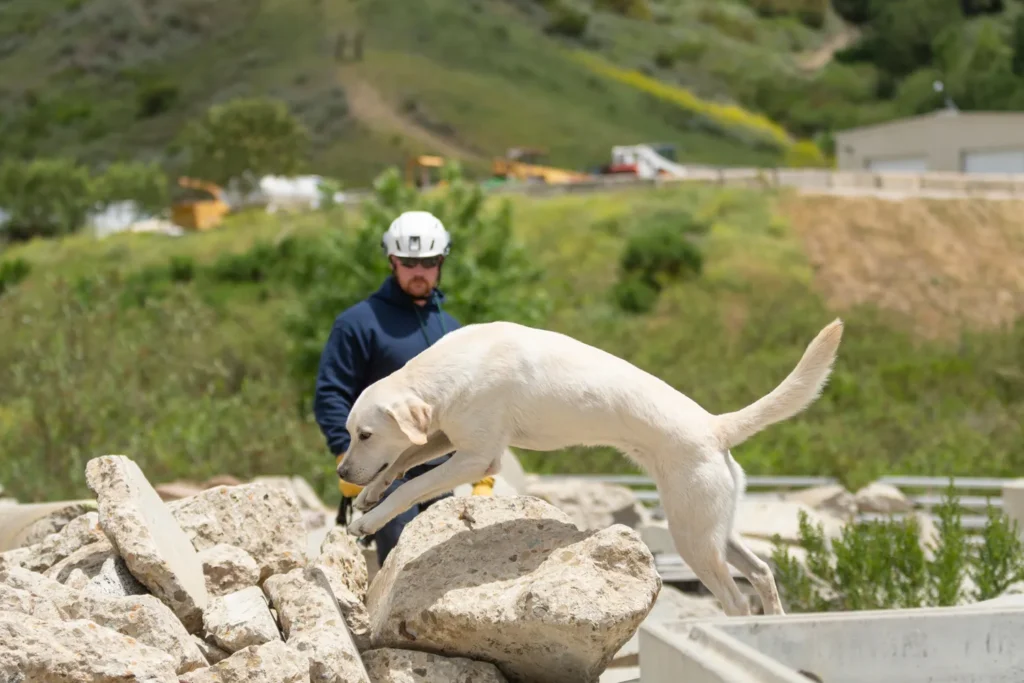
Cam’s original owner made the painful decision to surrender him, not out of neglect, but because illness made keeping a high‐energy dog untenable.
He was transferred to Delaware Valley Golden Retriever Rescue (DVGRR), where staff immediately noticed his boundless enthusiasm — he eagerly chased every toy, showed high drive, and showed readiness to engage and explore.
Rescue volunteers recognized that Cam’s energy might be a challenge in a typical home setting — but in a different kind of role, that same energy could be an asset.
The Turning Point: Discovery of a Hidden Calling
DVGRR reached out to the National Disaster Search Dog Foundation (SDF) with videos and behavioral assessments of Cam, proposing he might thrive in search training. Supported by the Rachael Ray Foundation’s Rescue Brigade, Cam was accepted into the SDF training program.
In early evaluations, his agility, rapid learning, comfort over rough terrains, and tireless drive stood out. SDF typically seeks rescue dogs with just these traits — dogs that might struggle in homes, but excel in mission-driven work.
Months of rigorous training followed: scent detection, obstacle navigation, obedience under stress, and pairing with a handler. When Cam graduated in July, he was assigned to firefighter Brock Bybee of Oklahoma Task Force 1.
“Cam has more energy than I’ve ever seen in another dog,” Bybee remarked, praising his stamina and focus.
Serving on the Front Lines: Disaster Response Duties
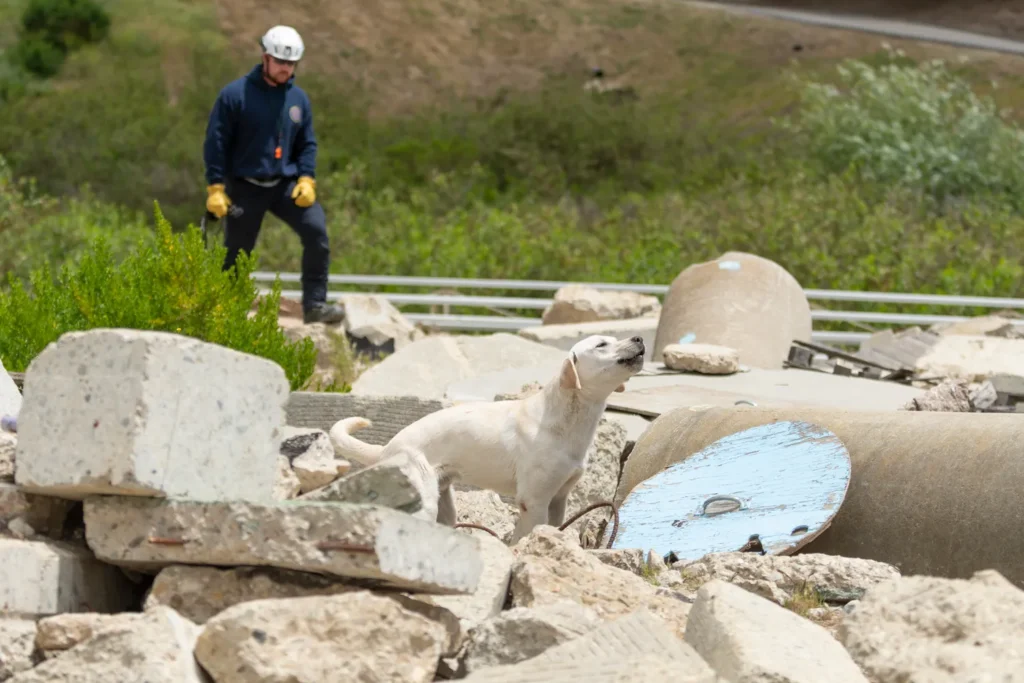
As part of his new role, Cam responds to natural disasters, building collapses, and missing-person cases. In these high-stakes operations, a search dog’s acute sense of smell, agility, and mental fortitude can mean the difference between life and death.
Bybee emphasizes that Cam’s “never quit” attitude makes him especially valuable in long, grueling missions.
Yet even heroes need downtime. At home, Cam is playful and mischievous. He bonds with the handler’s family, romps with the household’s other dog, and occasionally stubbornly refuses to sit still.
Despite his hard work, Cam is, at heart, a dog — one who deserves rest, affection, and treats like any other.
The Broader Impact: Rescue Dogs, Second Chances, and Community Awareness
Cam’s journey is more than just a feel-good story — it’s a powerful example of how rescue dogs can exceed expectations when given the right opportunity. In many cases, dogs surrendered for being “too energetic” or “too challenging” might hide untapped capabilities. Cam’s transformation underscores the importance of evaluating and training dogs for roles suited to their temperament and strengths.
His story also highlights the collaborative power of organizations: DVGRR, SDF, and the Rachael Ray Foundation united resources, vision, and commitment to give Cam a second chance with purpose.
And beyond that, Cam helps shine a light on the critical and often underappreciated work of search and rescue dogs, whose skills and bravery save lives in disaster zones around the world.

Cam’s journey from surrendered pet to a devoted search dog tells us something profound: sometimes what seems like a limitation is just a hidden gift, waiting for the right outlet. He now stands ready at the front lines — not just as a rescued dog, but as a hero in his own right.


